Collabtunes · Memorabilia
HANDWRITTEN SHEET - PAGE 21 OF 25
40 pieces on this page · every one an original · every photograph, nothing hidden · dashed lines are yours to fill
Item 976
I knew I must be someone special
A torn sheet of lined notebook paper alongside a round, segmented paper plate.
- Why it matters
- Tom writes this
- Type
- Handwritten sheet
- Collection
- Tom writes this
- Published in
- PREVIOUSLY UNPUBLISHEDSearched against the 34 albums, every book and Poems By Tom - found in none of them
- Copies
- 2 in the catalogue · also written out as number 679matched on the words by machine - Tom confirms
Price · Tier · Tom fills these
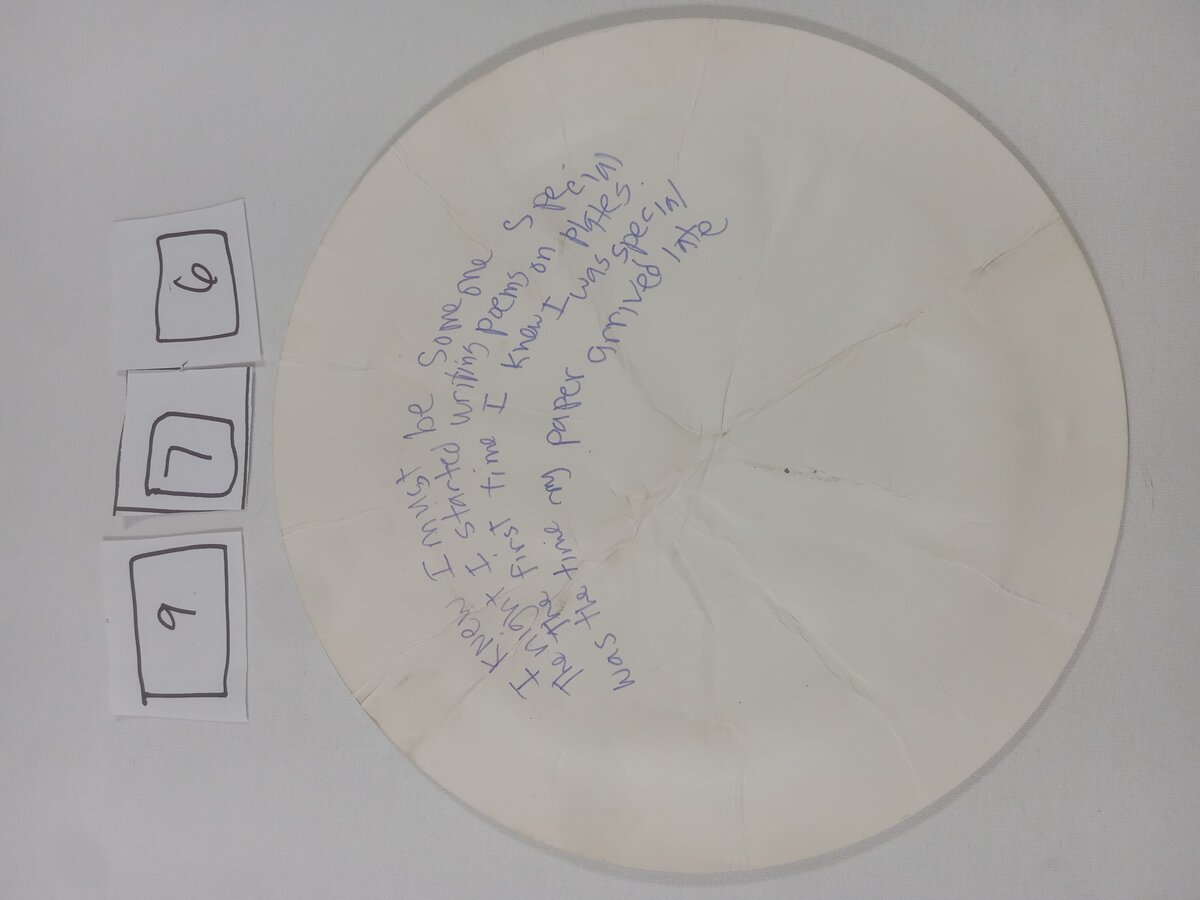
The only picture of this piece
The words on this page
I knew I must be someone special
The night I started writing poems on plates.
The first time I knew I was special
Was the time my paper arrived late
The night I started writing poems on plates.
The first time I knew I was special
Was the time my paper arrived late
Item 977
I have smoked so many cigarettes
Lined, three-hole punched notebook paper.
- Why it matters
- Tom writes this
- Type
- Handwritten sheet
- Collection
- Tom writes this
- Published in
- IN A BOOKShorter Lyrics (2013)
The 714-Page Book (2012)
The Laima Dedication Anthology (2011) - Age when written
- written by age 33 at the latestdated from the earliest book it appears in - the sheet itself may be older
- Copies
- 2 in the catalogue · also written out as number 184matched on the words by machine - Tom confirms
Price · Tier · Tom fills these
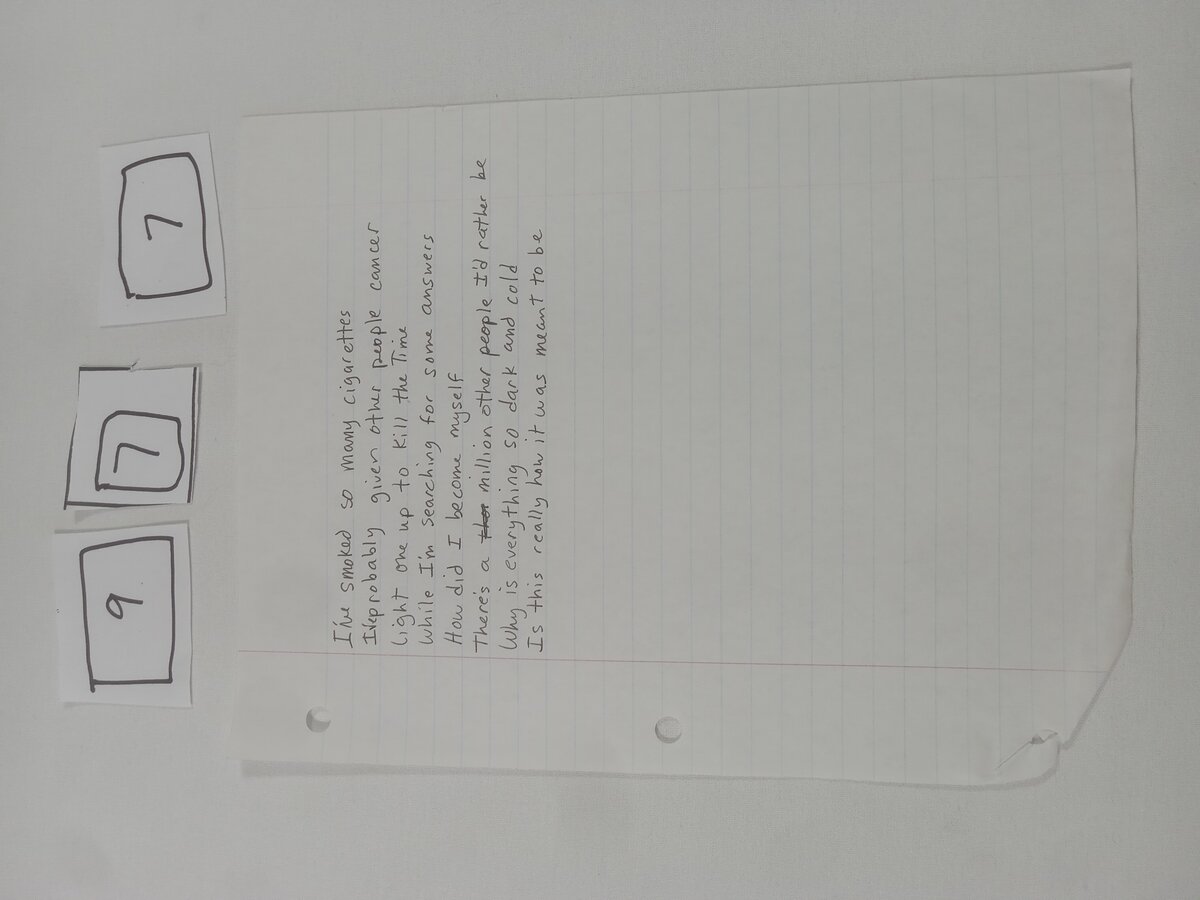
The only picture of this piece
The words on this page
I've smoked so many cigarettes
I've probably given other people cancer
Light one up to kill the Time
While I'm searching for some answers
How did I become myself
There's a [crossed out word] million other people I'd rather be
Why is everything so dark and cold
Is this really how it was meant to be
I've probably given other people cancer
Light one up to kill the Time
While I'm searching for some answers
How did I become myself
There's a [crossed out word] million other people I'd rather be
Why is everything so dark and cold
Is this really how it was meant to be
Item 978
UNTITLED - first line: That man was just like me but you must have saw him first I was just a minute late
Handwritten text on a torn piece of lined notebook paper.
- Why it matters
- Tom writes this
- Type
- Handwritten sheet
- Collection
- Tom writes this
- Published in
- IN A BOOKShorter Lyrics (2013)
The 714-Page Book (2012)
The Laima Dedication Anthology (2011) - Age when written
- written by age 33 at the latestdated from the earliest book it appears in - the sheet itself may be older
Price · Tier · Tom fills these
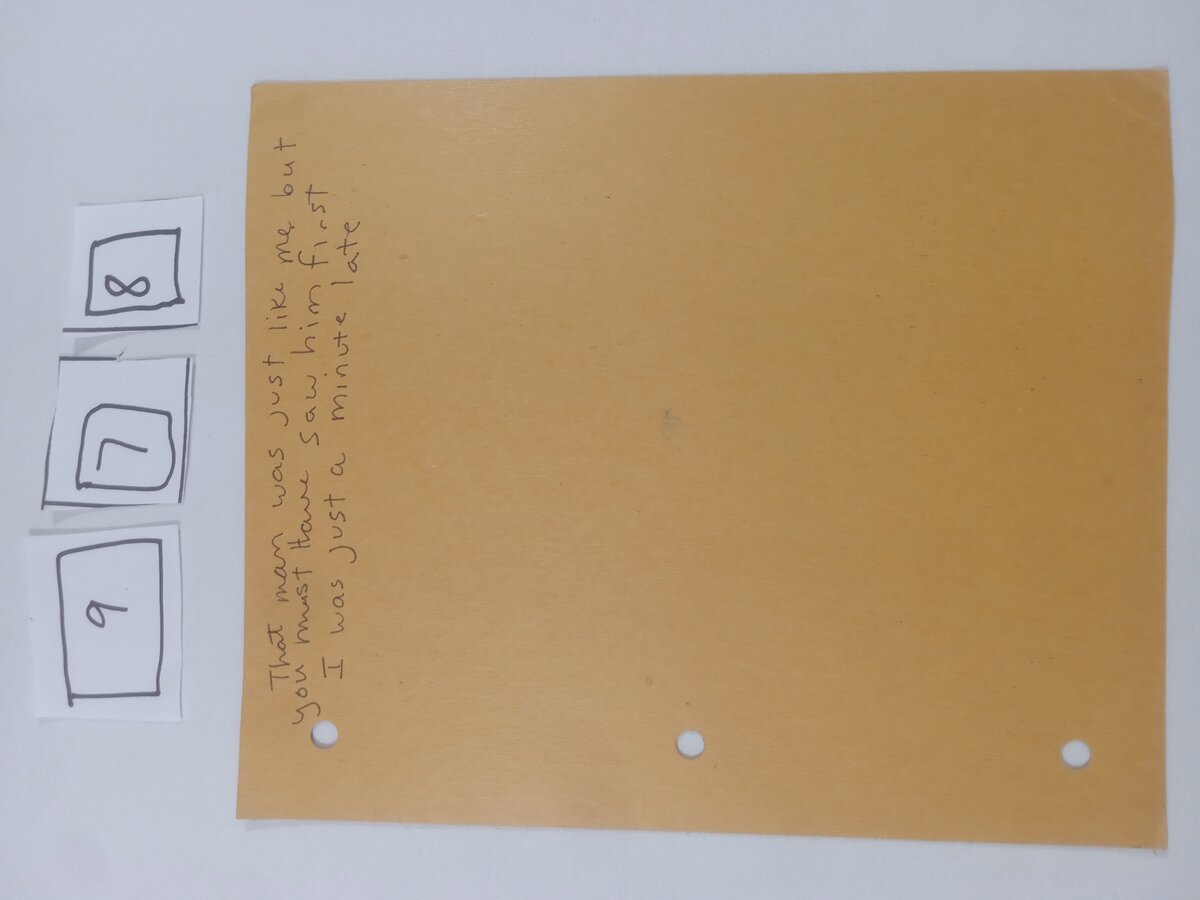
The only picture of this piece
The words on this page
That man was just like me but you must have saw him first I was just a minute late
Item 979
Deep thoughts, mixed emotions
Handwritten text in black ink on a piece of lined white paper, with three separate hand-drawn squares containing the numbers 9, 7, and 9 placed to the left.
- Why it matters
- Tom writes this
- Type
- Handwritten sheet
- Collection
- Tom writes this
- Published in
- IN A BOOKThe Laima Dedication Anthology (2011)
- Age when written
- written by age 33 at the latestdated from the earliest book it appears in - the sheet itself may be older
Price · Tier · Tom fills these
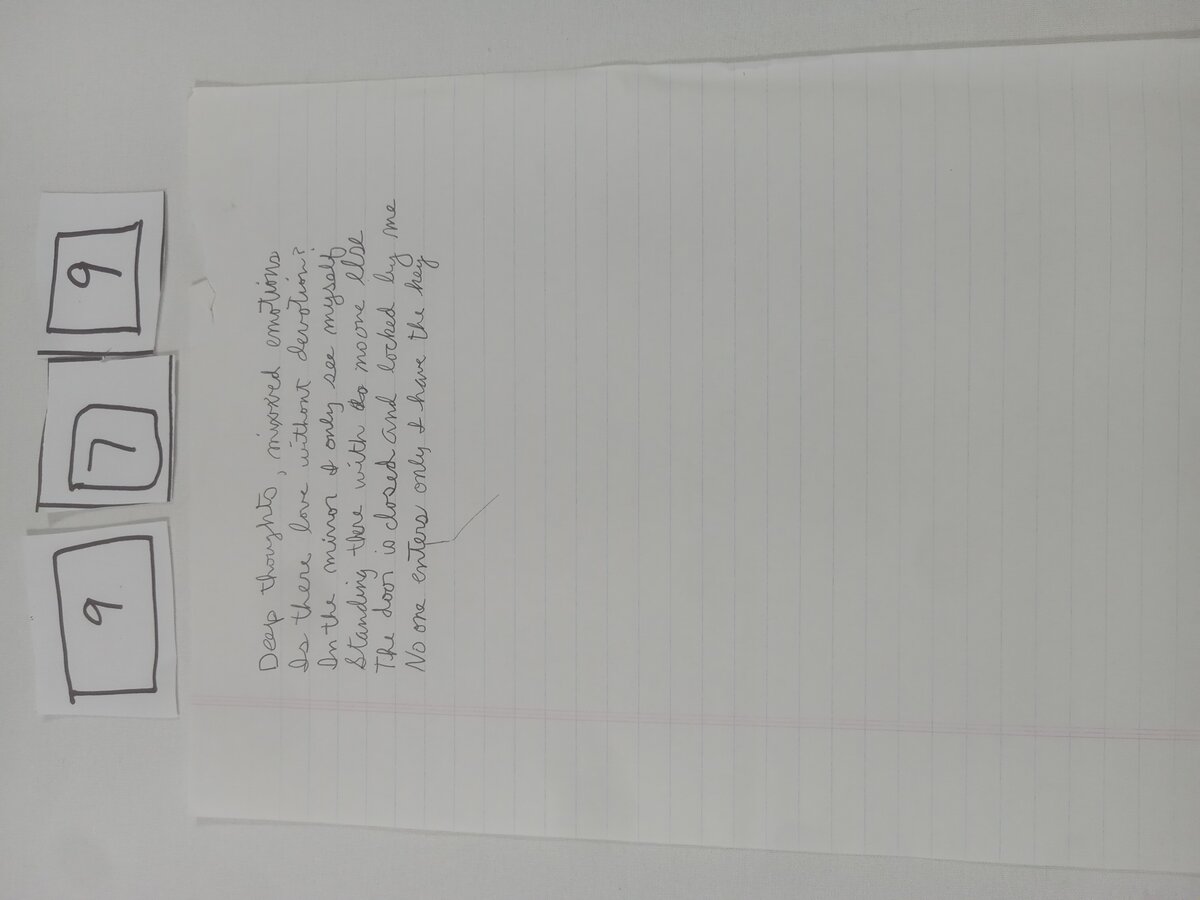
The only picture of this piece
The words on this page
Deep thoughts, mixed emotions
Is there love without devotion?
In the mirror I only see myself
Standing there with no one else
The door is closed and locked by me
No one enters only I have the hey
Is there love without devotion?
In the mirror I only see myself
Standing there with no one else
The door is closed and locked by me
No one enters only I have the hey
Item 980
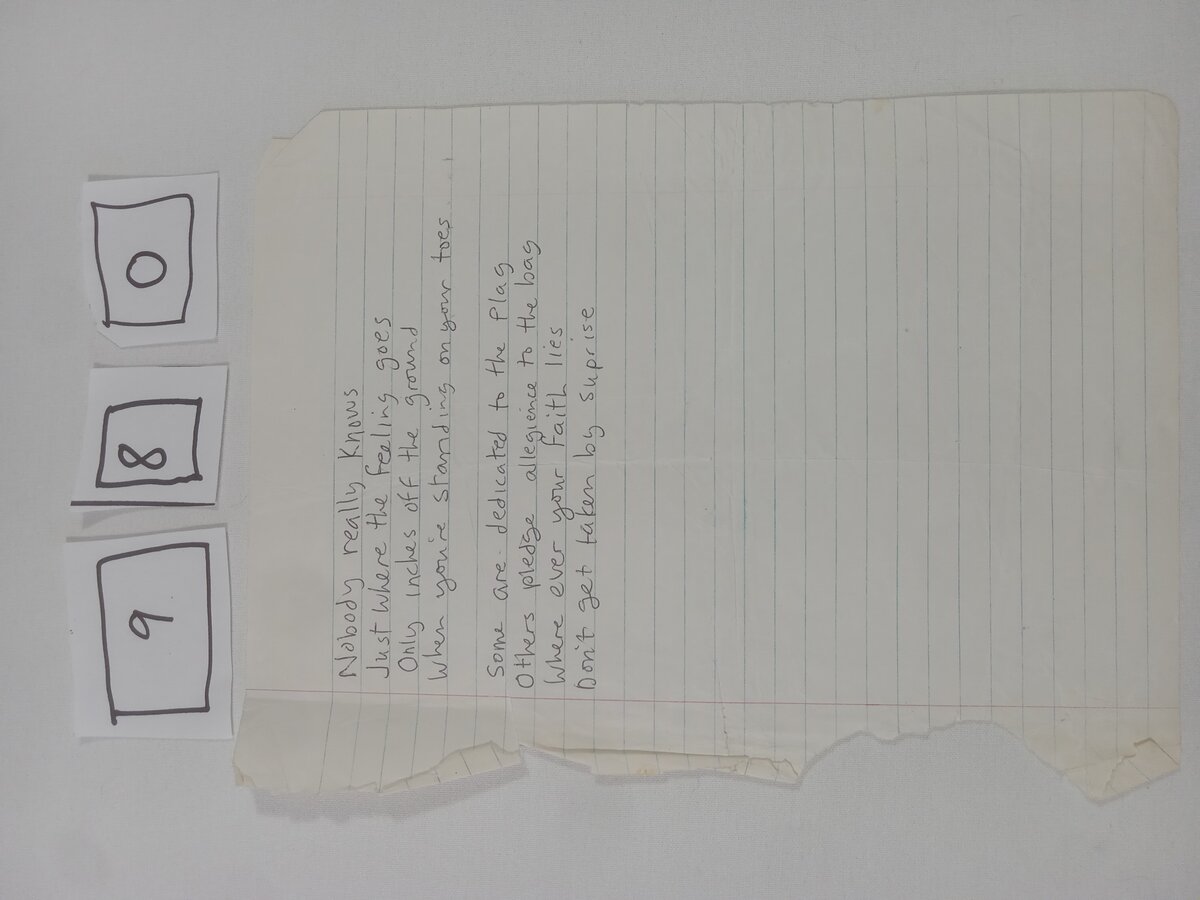
Nobody really knows
A piece of lined notebook paper with torn edges, featuring handwritten text in blue ink, accompanied by three square cards with hand-drawn numbers.
- Why it matters
- Tom writes this
- Type
- Handwritten sheet
- Collection
- Tom writes this
- Published in
- IN A BOOKTom Jensen Poem Anthology (2013)
The 714-Page Book (2012)
The Laima Dedication Anthology (2011) - Age when written
- written by age 33 at the latestdated from the earliest book it appears in - the sheet itself may be older
Price · Tier · Tom fills these
The only picture of this piece
The words on this page
Nobody really knows
Just where the feeling goes
Only inches off the ground
When you're standing on your toes
Some are dedicated to the flag
Others pledge allegiance to the bag
Where ever your faith lies
Don't get taken by suprise
Just where the feeling goes
Only inches off the ground
When you're standing on your toes
Some are dedicated to the flag
Others pledge allegiance to the bag
Where ever your faith lies
Don't get taken by suprise
Item 981
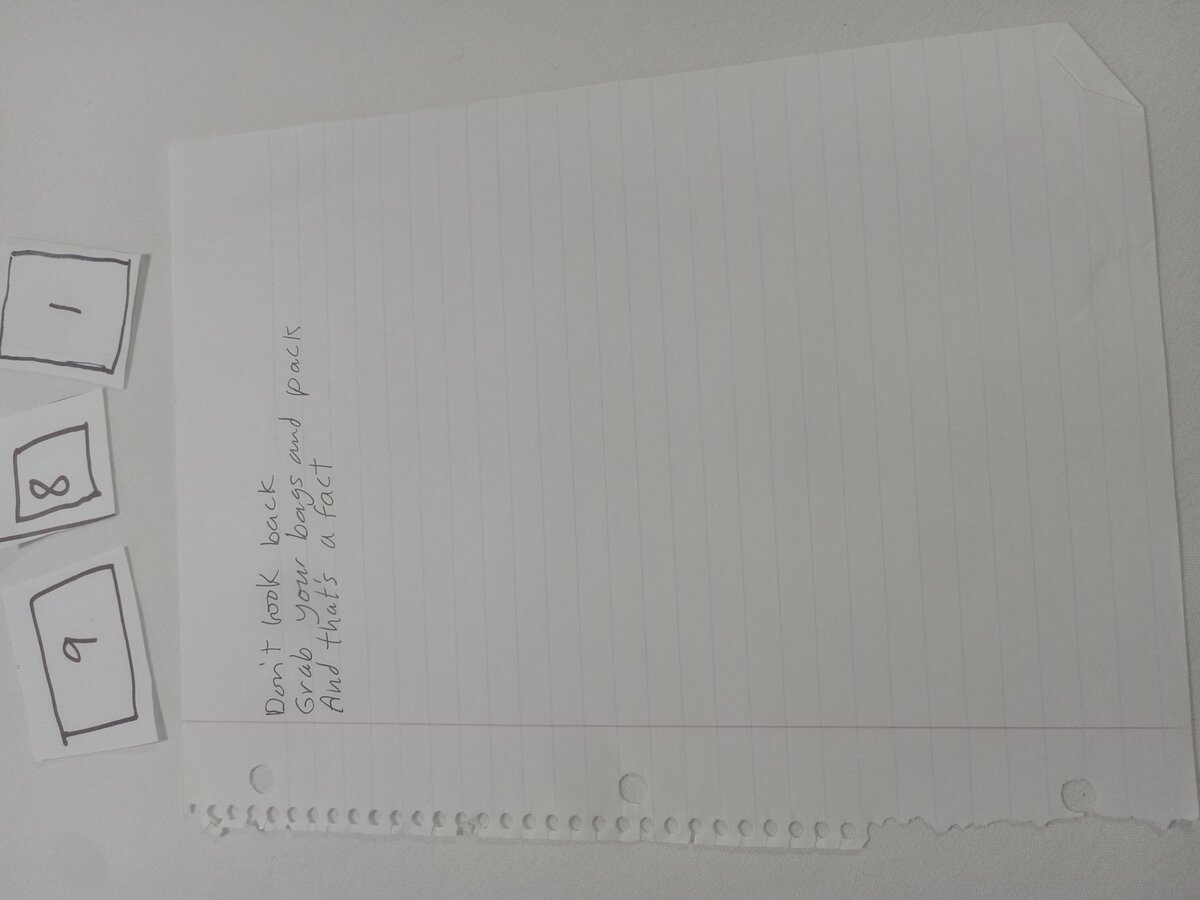
Don't look back
Torn sheet of lined loose-leaf paper.
- Why it matters
- Tom writes this
- Type
- Handwritten sheet
- Collection
- Tom writes this
- Published in
- IN A BOOKTom Jensen Poem Anthology (2013)
The 714-Page Book (2012)
The Laima Dedication Anthology (2011) - Age when written
- written by age 33 at the latestdated from the earliest book it appears in - the sheet itself may be older
Price · Tier · Tom fills these
The only picture of this piece
The words on this page
Don't look back
Grab your bags and pack
And that's a fact
Grab your bags and pack
And that's a fact
Item 982
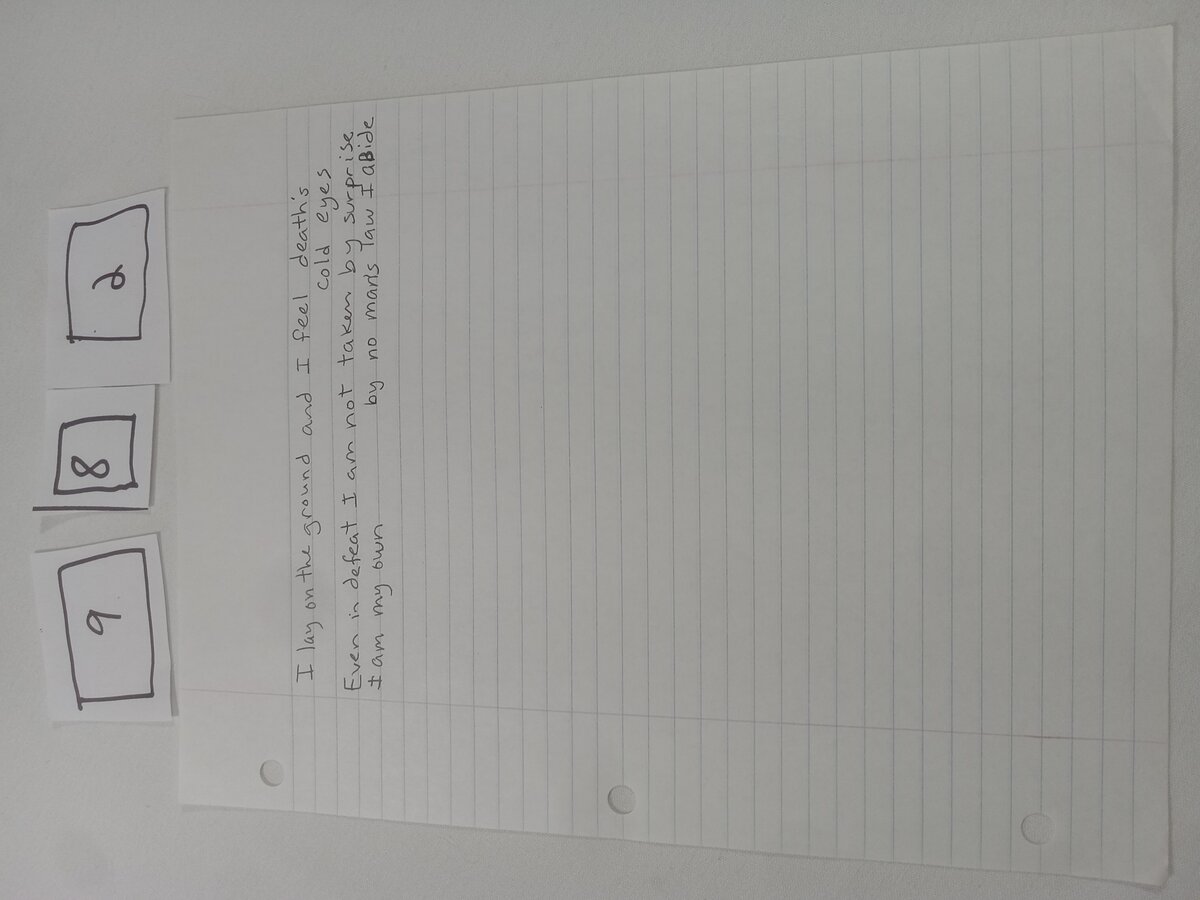
I lay on the ground and I feel death's
Black ink handwriting on a piece of lined notebook paper.
- Why it matters
- Tom writes this
- Type
- Handwritten sheet
- Collection
- Tom writes this
- Published in
- ON THE 34 ALBUMSSheila Tequila [SL2] · as the song YOU CAN NEVER RUNmatched on the words: three or more seven-word runs shared with that song
IN A BOOKThe November 2024 Collection (2024)
Finished Song Lyrics (2011)
Only The Best (2018)
A Lifetime Of Rhyme (2020)
The 714-Page Book (2012)
The Laima Dedication Anthology (2011)
34 Albums, Books 1 and 2 (2026)
Brian Rainstorm Song Lyric Book (2014)
The November 2012 Anthology (2012)
Revised 31 Albums With Index (2024) - Age when written
- written by age 32 at the latestdated from the earliest book it appears in - the sheet itself may be older
- Copies
- 3 in the catalogue · also written out as number 769, 967matched on the words by machine - Tom confirms
Price · Tier · Tom fills these
The only picture of this piece
The words on this page
I lay on the ground and I feel death's
cold eyes
Even in defeat I am not taken by surprise
I am my own
by no man's law I abide
cold eyes
Even in defeat I am not taken by surprise
I am my own
by no man's law I abide
Item 984
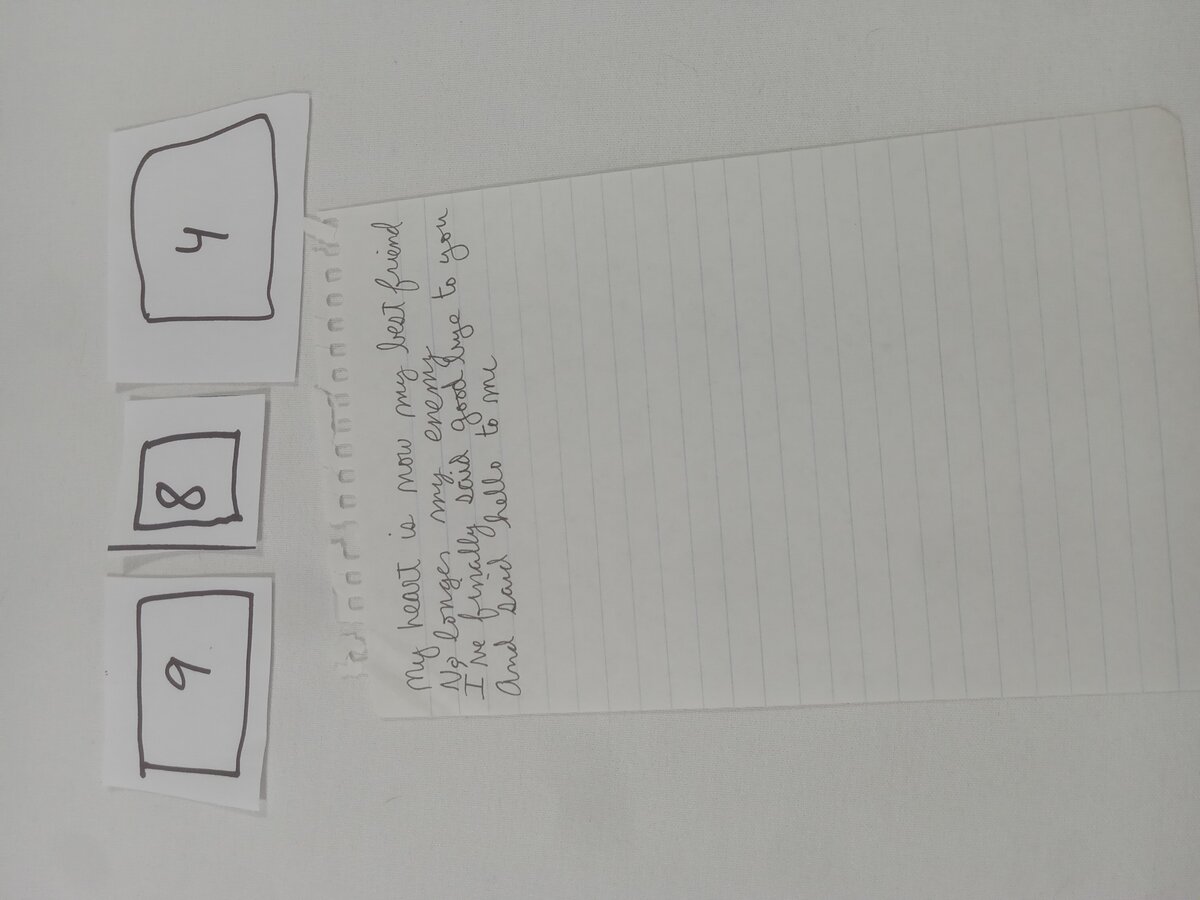
My heart is now my best friend
A piece of lined notebook paper placed next to three small numbered paper squares.
- Why it matters
- Tom writes this
- Type
- Handwritten sheet
- Collection
- Tom writes this
- Published in
- ON THE 34 ALBUMSSheila Tequila [SL2] · as the song BOTTOM OF THE LAKEmatched on the words: three or more seven-word runs shared with that song
IN A BOOKPoems By Tom (2007)
The November 2024 Collection (2024)
A Lifetime Of Rhyme (2020)
The 714-Page Book (2012)
The Laima Dedication Anthology (2011)
34 Albums, Books 1 and 2 (2026)
Brian Rainstorm Song Lyric Book (2014)
Finished Song Lyrics (2011)
The November 2012 Anthology (2012)
Revised 31 Albums With Index (2024) - Age when written
- written by age 29 at the latestdated from the earliest book it appears in - the sheet itself may be older
Price · Tier · Tom fills these
The only picture of this piece
The words on this page
My heart is now my best friend
No longer my enemy
I've finally said good bye to you
And said hello to me
No longer my enemy
I've finally said good bye to you
And said hello to me
Item 986
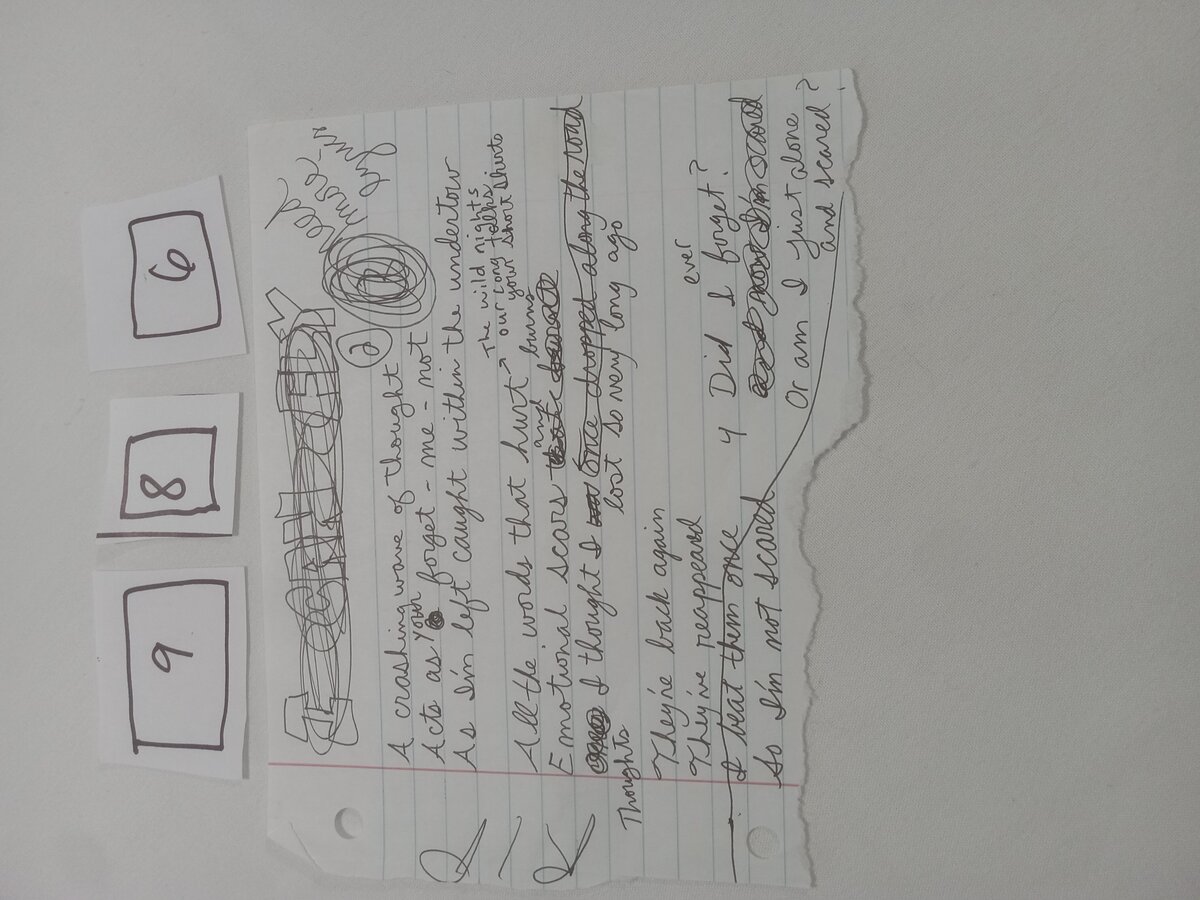
UNTITLED - first line: A crashing wave of thought
A piece of lined notebook paper with handwritten poetry and scribbles, torn on the right side.
- Why it matters
- Tom writes this
- Type
- Handwritten sheet
- Collection
- Tom writes this
- Published in
- ON THE 34 ALBUMSDella of Troy [S19] · as the song FORGET ME KNOTmatched on the words: three or more seven-word runs shared with that song
IN A BOOK200 Poems Waiting For Music (2013)
The November 2024 Collection (2024)
Tom Jensen Poem Anthology (2013)
Brian Rainstorm: Poetry Not Dead (2014)
180 Good Poems (2012)
Only The Best (2018)
A Lifetime Of Rhyme (2020)
The 714-Page Book (2012)
The Laima Dedication Anthology (2011)
34 Albums, Books 1 and 2 (2026)
Revised 31 Albums With Index (2024) - Age when written
- written by age 33 at the latestdated from the earliest book it appears in - the sheet itself may be older
Price · Tier · Tom fills these
The only picture of this piece
The words on this page
[scribbled text: "need more lyrics"]
A crashing wave of thought
Acts as your forget - me - not
As I'm left caught within the undertow
All the words that hurt [arrow pointing to "The wild nights" and "our long talks" and "your short shirts"]
Emotional scars and burns
[scribbled out text] I thought I was once dropped along the road
lost so very long ago
Thoughts
They're back again
They've reappeared
I beat them once
So I'm not scared
ever
Did I forget?
[scribbled out text]
Or am I just alone
and scared?
Item 987
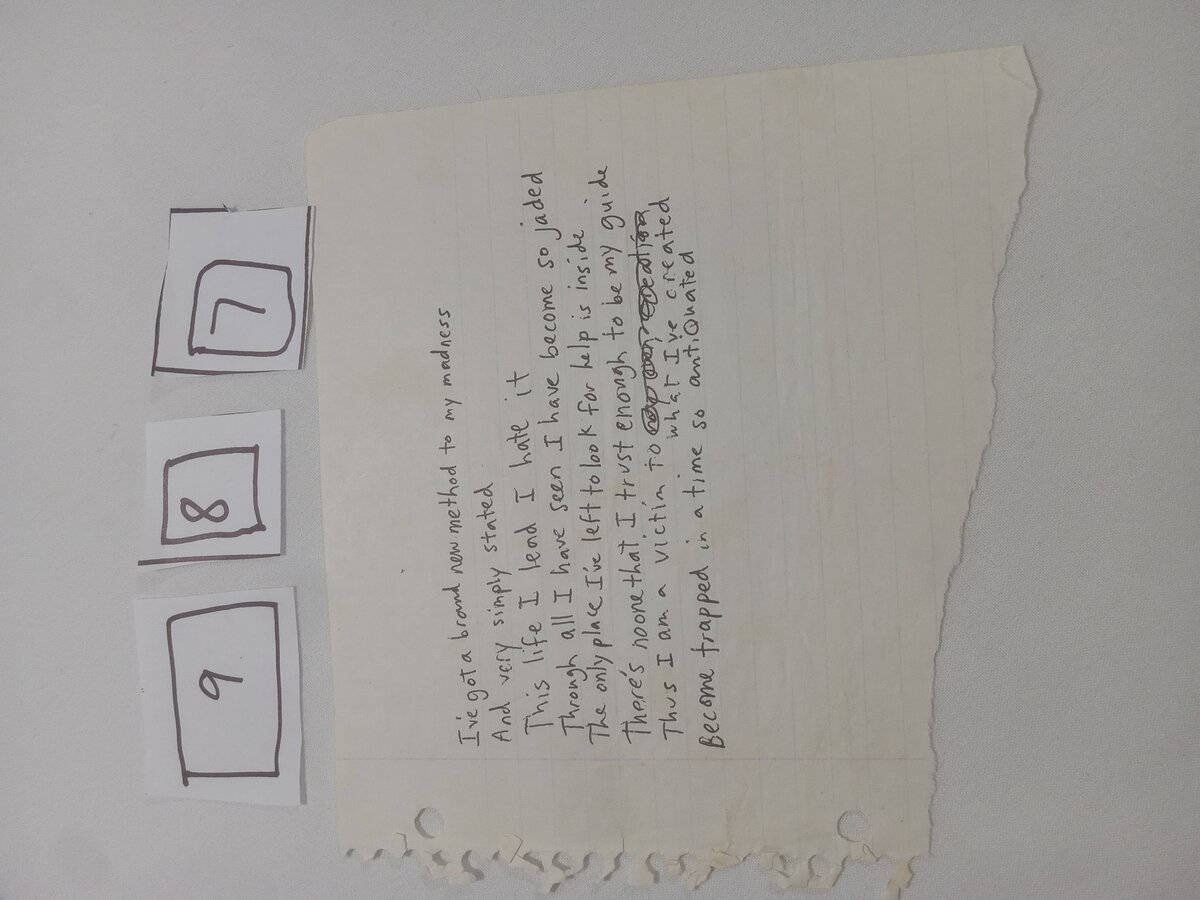
FROM A DISTANCE
Sheets of lined notebook paper, including one torn piece, written on in pencil and black ink.
- Why it matters
- Tom writes this
- Type
- Handwritten sheet
- Collection
- Tom writes this
- Published in
- PREVIOUSLY UNPUBLISHEDSearched against the 34 albums, every book and Poems By Tom - found in none of them
- Age when written
- written by age 34 at the latestdated from the earliest book it appears in - the sheet itself may be older
- Copies
- 2 in the catalogue · also written out as number 285matched on the words by machine - Tom confirms
Price · Tier · Tom fills these
The only picture of this piece
The words on this page
I've got a brand new method to my madness
And very simply stated
This life I lead I hate it
Through all I have seen I have become so jaded
The only place I've left to look for help is inside
There's none that I trust enough to be my guide
Thus I am a victim to [illegible] what I've created
Become trapped in a time so antiquated
And very simply stated
This life I lead I hate it
Through all I have seen I have become so jaded
The only place I've left to look for help is inside
There's none that I trust enough to be my guide
Thus I am a victim to [illegible] what I've created
Become trapped in a time so antiquated
Item 988
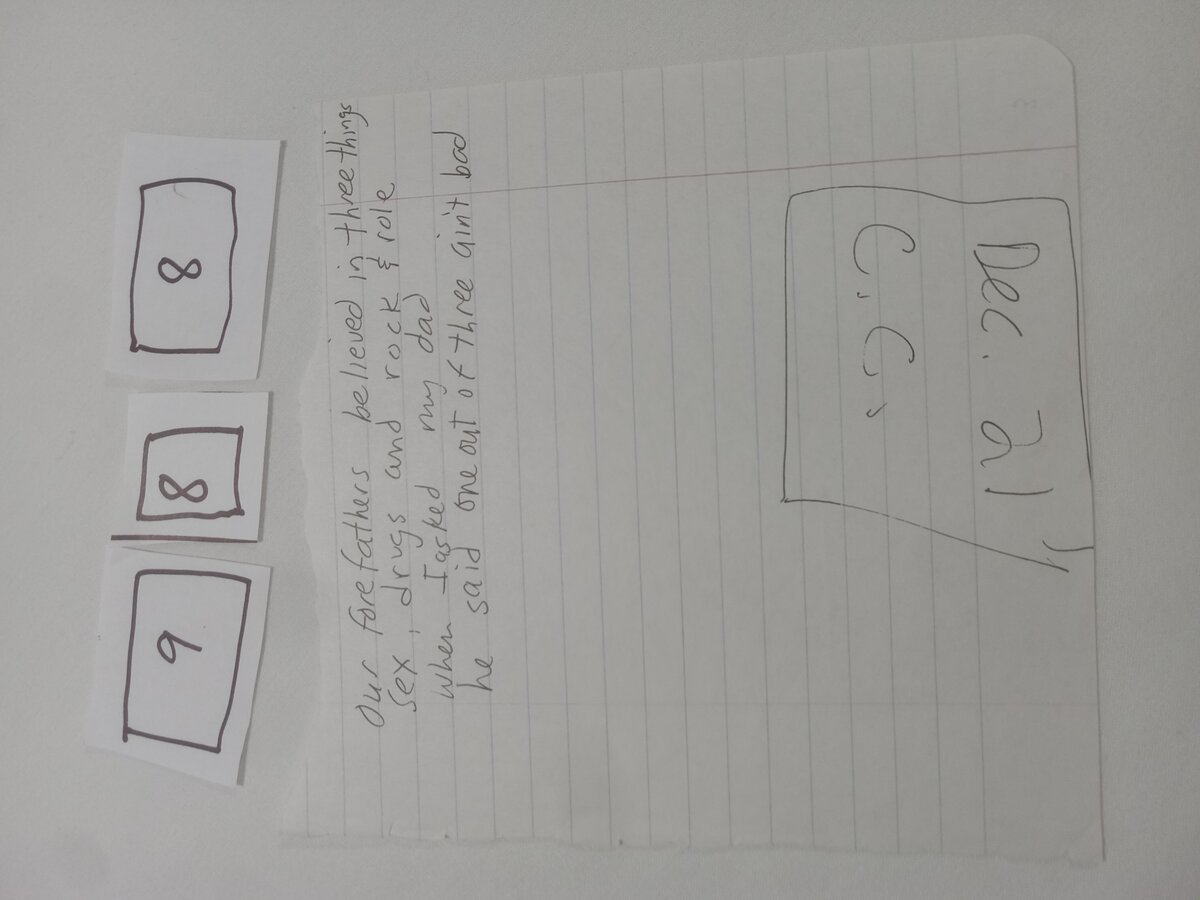
our fore fathers believed in three things
A piece of white lined notebook paper with black ink handwriting, with three small square paper cards containing handwritten numbers placed to the left.
- Why it matters
- Tom writes this
- Type
- Handwritten sheet
- Collection
- Tom writes this
- Published in
- PREVIOUSLY UNPUBLISHEDSearched against the 34 albums, every book and Poems By Tom - found in none of them
Price · Tier · Tom fills these
The only picture of this piece
The words on this page
our fore fathers believed in three things
sex, drugs and rock & role
when I asked my dad
he said one out of three ain't bad
Dec. 21
C.G.
sex, drugs and rock & role
when I asked my dad
he said one out of three ain't bad
Dec. 21
C.G.
Item 989
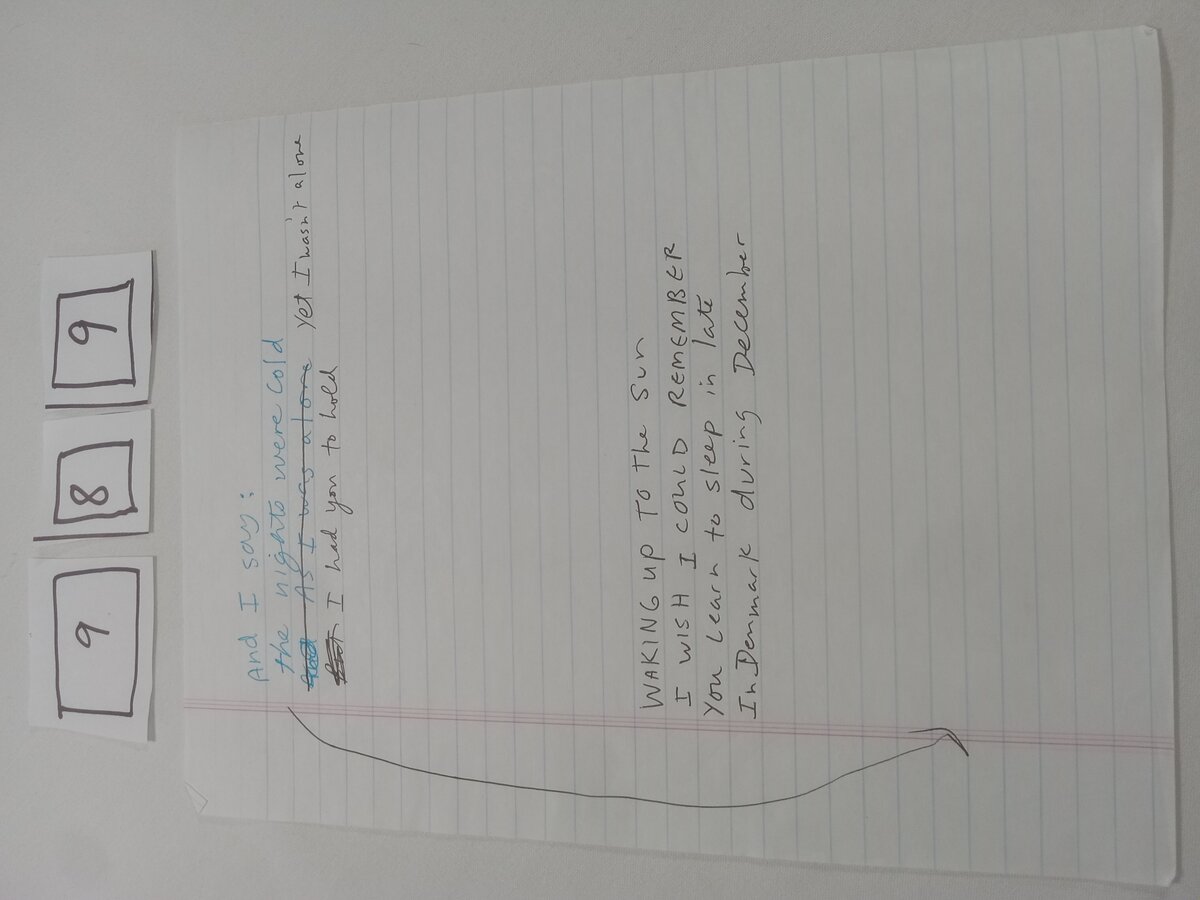
And I say:
Handwritten text on a piece of lined notebook paper.
- Why it matters
- Tom writes thison file: muse DENMARK
- Type
- Handwritten sheet
- Collection
- Tom writes this
- Published in
- PREVIOUSLY UNPUBLISHEDSearched against the 34 albums, every book and Poems By Tom - found in none of them
Price · Tier · Tom fills these
The only picture of this piece
The words on this page
And I say:
the nights were cold
And I was alone
But I had you to hold
Yet I wasn't alone
WAKING UP TO THE SUN
I WISH I COULD REMEMBER
You learn to sleep in late
In Denmark during December
the nights were cold
And I was alone
But I had you to hold
Yet I wasn't alone
WAKING UP TO THE SUN
I WISH I COULD REMEMBER
You learn to sleep in late
In Denmark during December
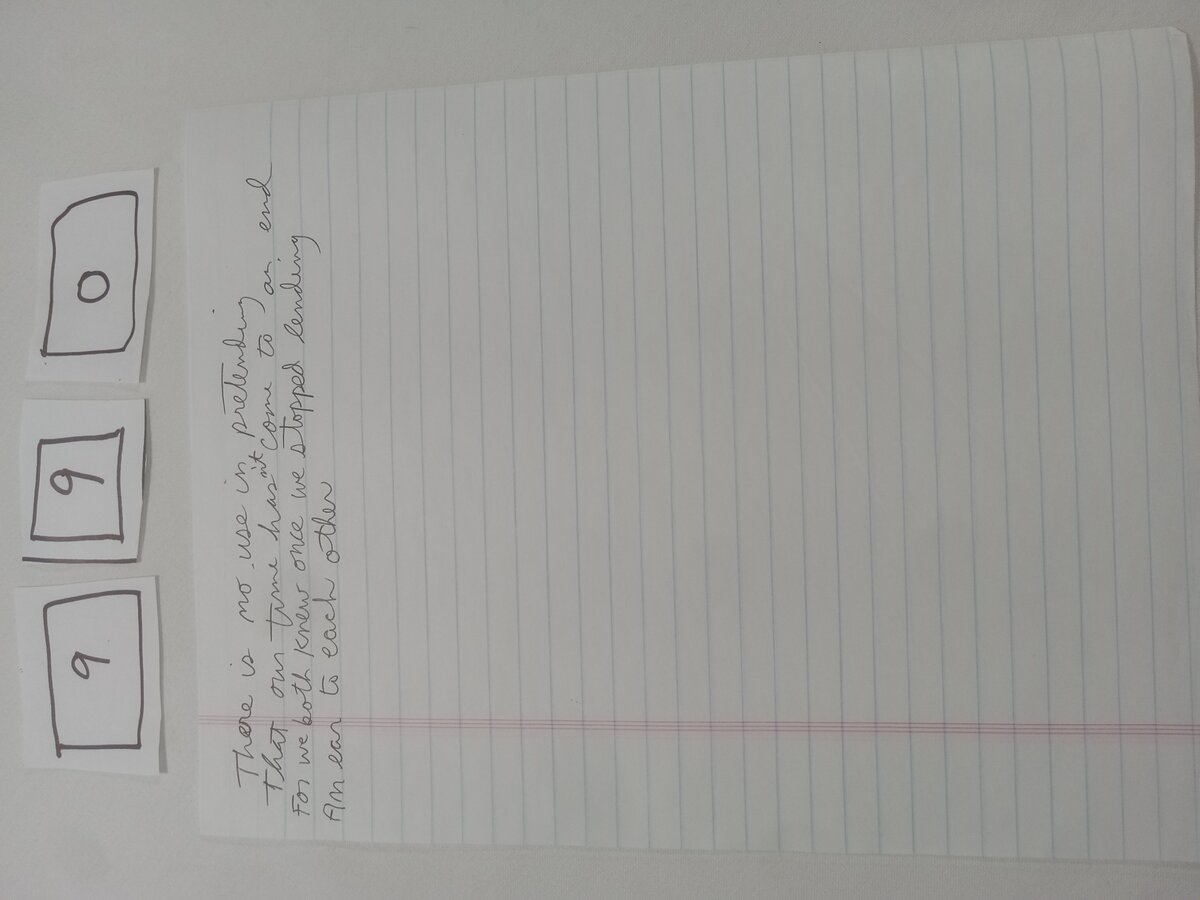
Item 990
There is no use in pretending
Handwritten text on a single sheet of lined notebook paper, accompanied by three separate small cards with hand-drawn numbers.
- Why it matters
- Tom writes this
- Type
- Handwritten sheet
- Collection
- Tom writes this
- Published in
- PREVIOUSLY UNPUBLISHEDSearched against the 34 albums, every book and Poems By Tom - found in none of them
Price · Tier · Tom fills these
The only picture of this piece
The words on this page
There is no use in pretending
that our time hasn't come to an end
For we both knew once we stopped lending
An ear to each other
that our time hasn't come to an end
For we both knew once we stopped lending
An ear to each other
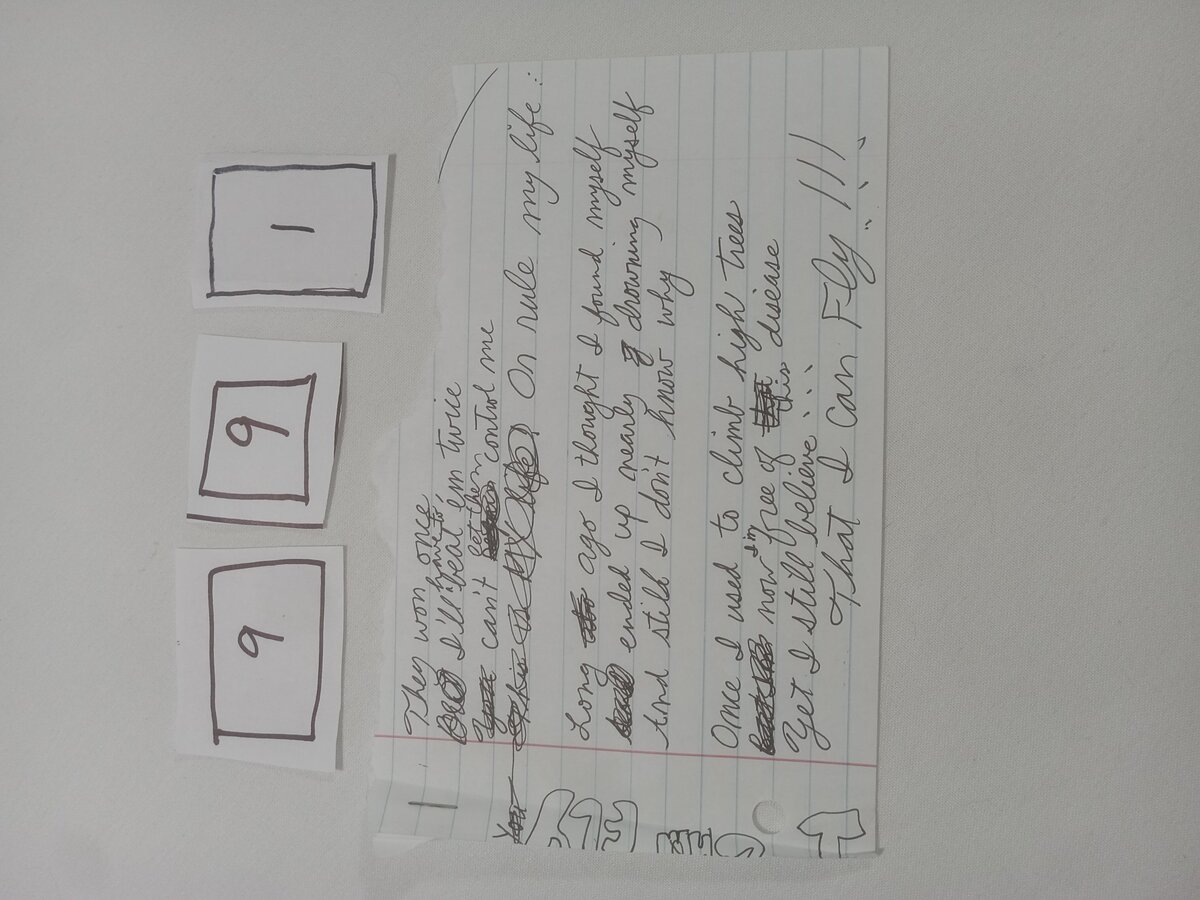
Item 991
They won once
A piece of lined notebook paper written on in pencil.
- Why it matters
- Tom writes this
- Type
- Handwritten sheet
- Collection
- Tom writes this
- Published in
- PREVIOUSLY UNPUBLISHEDSearched against the 34 albums, every book and Poems By Tom - found in none of them
Price · Tier · Tom fills these
The only picture of this piece
The words on this page
They won once
[crossed out: Do] I'll have to beat ém twice
[crossed out: You] can't [crossed out: let them] control me
[crossed out: This is] [crossed out: the] [crossed out: way] [crossed out: I] [crossed out: have] [crossed out: to] [crossed out: live] On rule my life :
Long [crossed out: ago] ago I thought I found myself
[crossed out: and] ended up nearly [crossed out: of] drowning myself
And still I don't know why
Once I used to climb high trees
[crossed out: But] [crossed out: I'm] now free of [crossed out: the] this disease
Yet I still believe ...
That I can Fly !!!
[upside down: FLY] [upside down: I]
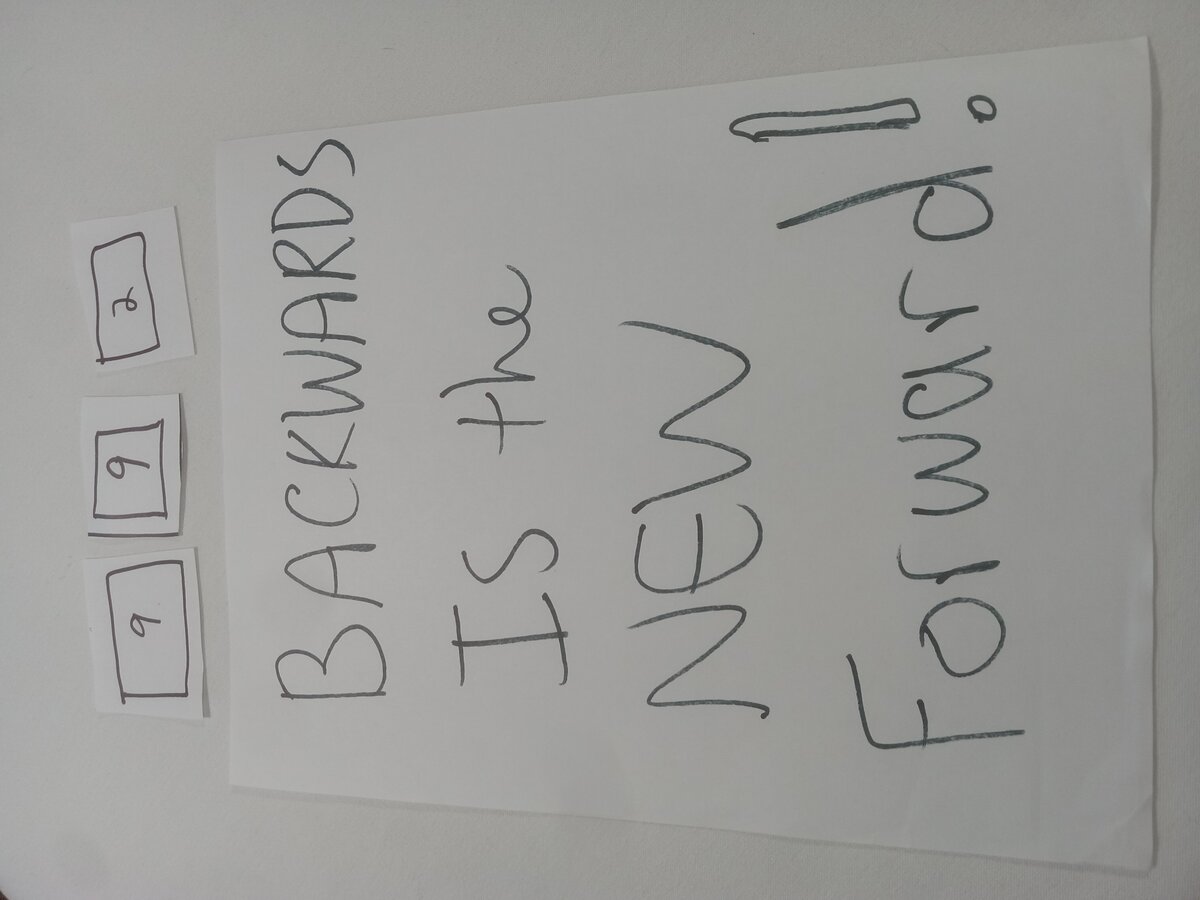
Item 992
BACKWARDS IS the NEW Forward!
Hand-lettered marker sign on a plain white sheet.
- Why it matters
- Tom writes this
- Type
- Handwritten sheet
- Collection
- Tom writes this
- Published in
- PREVIOUSLY UNPUBLISHEDSearched against the 34 albums, every book and Poems By Tom - found in none of them
Price · Tier · Tom fills these
The only picture of this piece
The words on this page
BACKWARDS IS the NEW Forward!
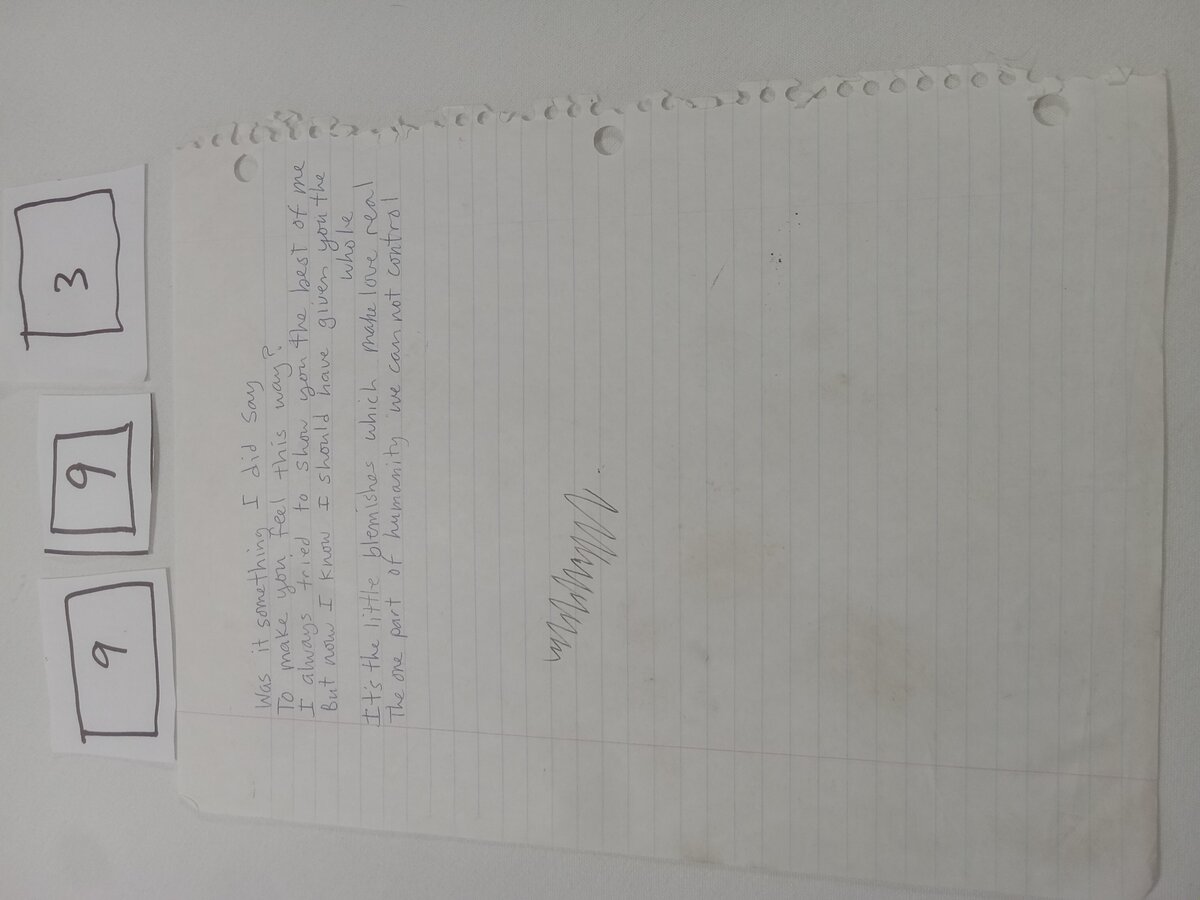
Item 993
Was it something I did say
Lined notebook paper with ragged edges, containing handwritten ink text.
- Why it matters
- Tom writes this
- Type
- Handwritten sheet
- Collection
- Tom writes this
- Published in
- ON THE 34 ALBUMSA Day at the Office [SL3] · as the song PERFECT IMPERFECTIONSmatched on the words: three or more seven-word runs shared with that song
IN A BOOK200 Poems Waiting For Music (2013)
The November 2024 Collection (2024)
Tom Jensen Poem Anthology (2013)
180 Good Poems (2012)
A Lifetime Of Rhyme (2020)
The 714-Page Book (2012)
The Laima Dedication Anthology (2011)
34 Albums, Books 1 and 2 (2026)
Brian Rainstorm Song Lyric Book (2014)
Revised 31 Albums With Index (2024)
Tom Jensen Lyrics (2019) - Age when written
- written by age 33 at the latestdated from the earliest book it appears in - the sheet itself may be older
Price · Tier · Tom fills these
The only picture of this piece
The words on this page
Was it something I did say
To make you feel this way?
I always tried to show you the best of me
But now I know I should have given you the whole
It's the little blemishes which make love real
The one part of humanity we can not control
To make you feel this way?
I always tried to show you the best of me
But now I know I should have given you the whole
It's the little blemishes which make love real
The one part of humanity we can not control
Item 994
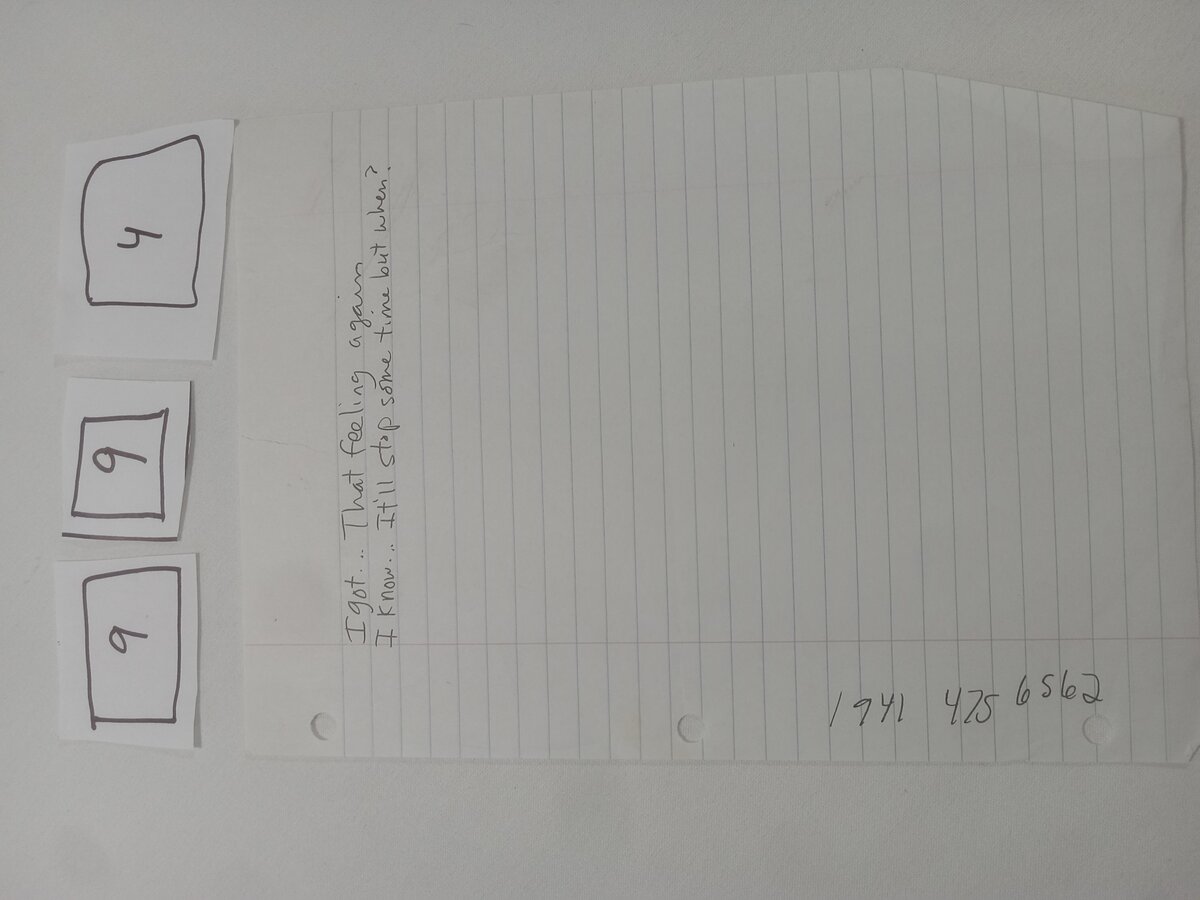
I got.. That feeling again
Lined notebook paper with separate small pieces of paper containing drawn squares.
- Why it matters
- Tom writes this
- Type
- Handwritten sheet
- Collection
- Tom writes this
- Published in
- PREVIOUSLY UNPUBLISHEDSearched against the 34 albums, every book and Poems By Tom - found in none of them
Price · Tier · Tom fills these
The only picture of this piece
The words on this page
I got.. That feeling again
I know.. It'll stop some time but when?
1941 475 6562
I know.. It'll stop some time but when?
1941 475 6562
Item 995
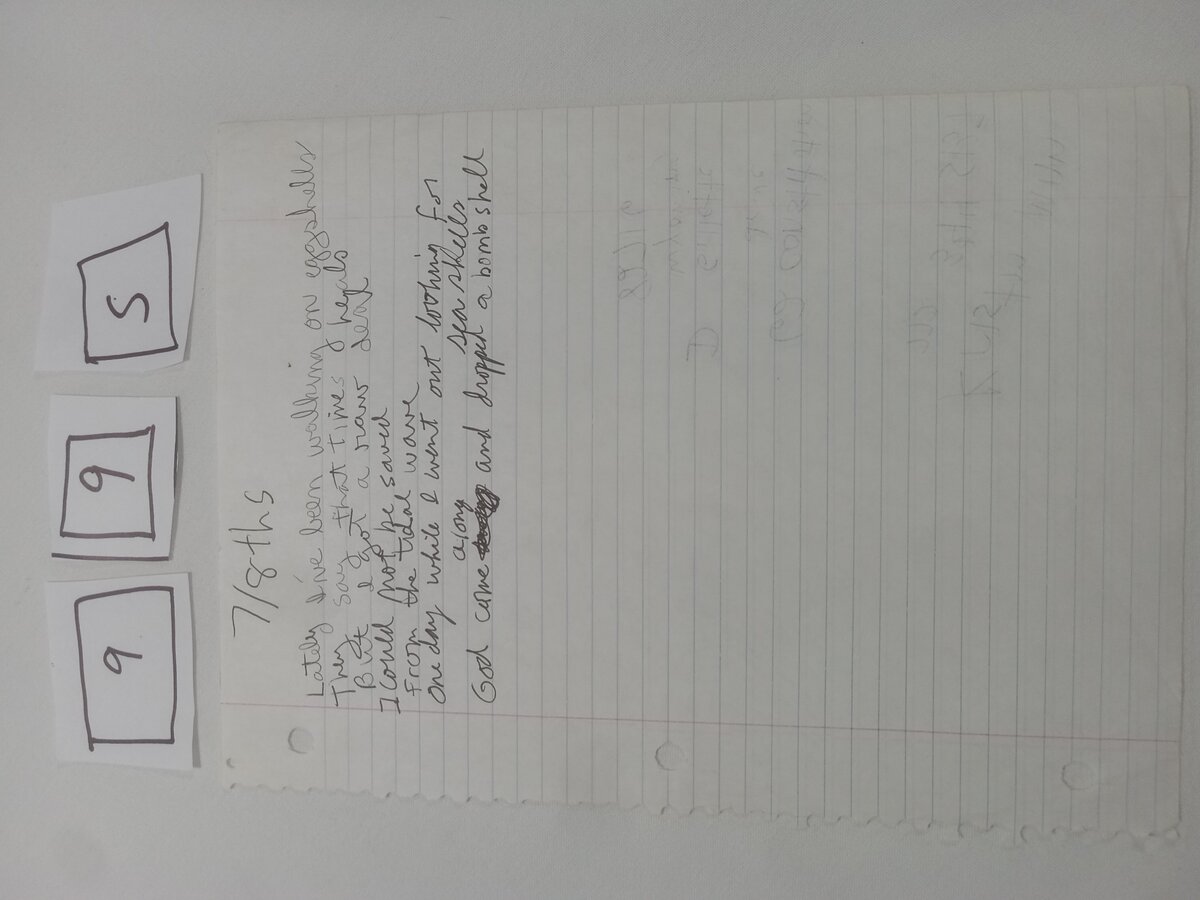
7/8ths
A piece of lined notebook paper with handwritten text in pencil and three separate paper squares with handwritten numbers.
- Why it matters
- Tom writes this
- Type
- Handwritten sheet
- Collection
- Tom writes this
- Published in
- ON THE 34 ALBUMSThe Cost of Light [S20] · as the song UNDEFEATEDmatched on the words: three or more seven-word runs shared with that song
IN A BOOKThe November 2024 Collection (2024)
Only The Best (2018)
34 Albums, Books 1 and 2 (2026)
Revised 31 Albums With Index (2024) - Age when written
- written by age 39 at the latestdated from the earliest book it appears in - the sheet itself may be older
- Copies
- 2 in the catalogue · also written out as number 599matched on the words by machine - Tom confirms
Price · Tier · Tom fills these
The only picture of this piece
The words on this page
7/8ths
Lately I've been walking on eggshells
They say that times [?] heals
But I got a raw deal
I could not be saved
from the tidal wave
One day while I went out looking for
along sea shells
God came [?] and dropped a bombshell
---
UNDEFEATED
by Tom Jensen
I AINT GOT NO PLANS this minute
So I'm seizing the moment - I'm in it
I'm not losing or winning - Just present
Not up, not down - I'm all around
From the city to the towns
to the horses and the plows
Not just the black or the white
But [crossed out: the] in the crowd
every face
If you can see it you can be it
If you wish to delete it then don't repeat it
Some Good advice to those who seek it
[crossed out: Though] Those Luckier than me might not need it
sure you can try to pin for the win
When the argument becomes heated
But a sly guy vies for the [crossed out: tie]
Because father Time's undefeated
What about space? That's a whole 'nother race
we started with moon then wouldn't you know pretty soon
It was on to Mars and that's just so far
There's more in store we keep raising the bar
I'd rather not roam stick closer to home
Preserve what we have before it's all gone!
Item 996
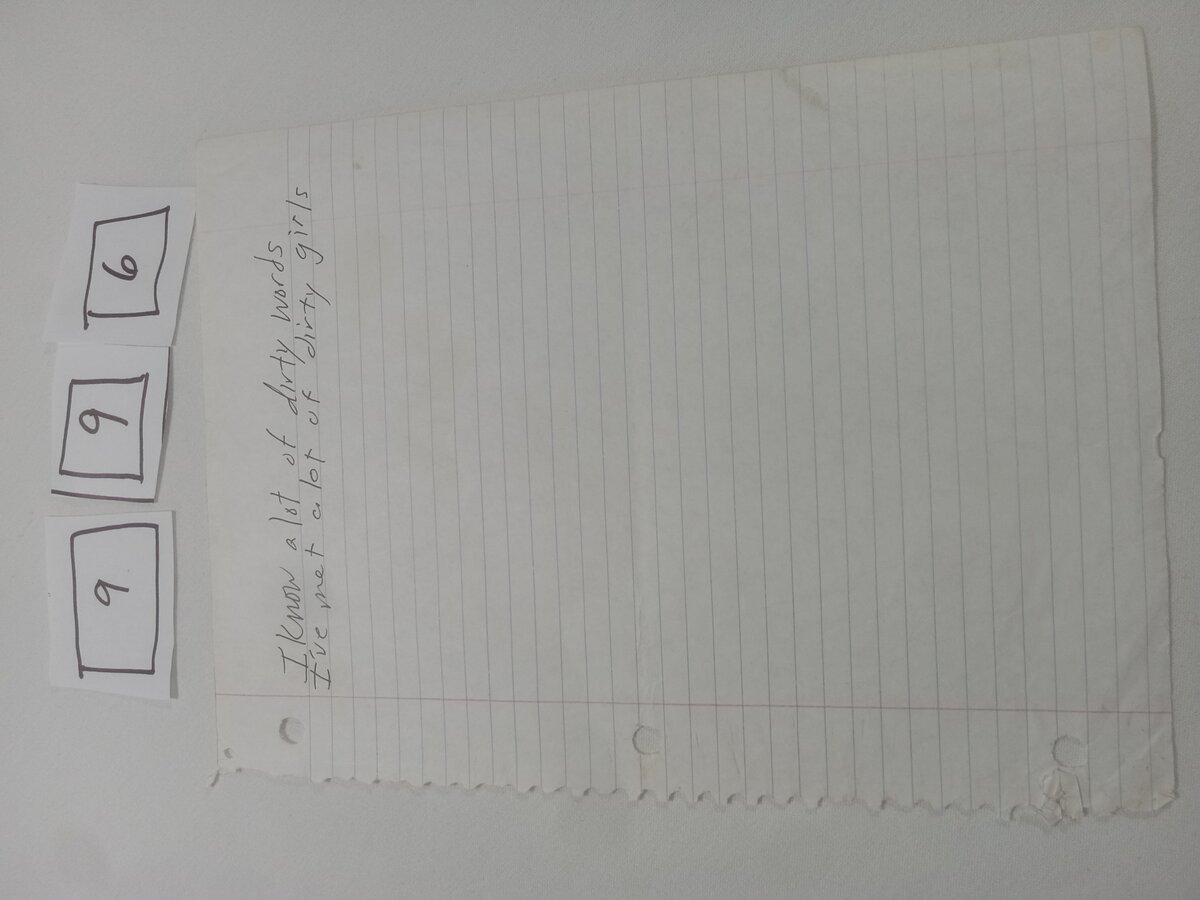
UNTITLED - first line: I know a lot of dirty words
Handwritten text on a single sheet of lined, three-hole punched notebook paper with torn edges.
- Why it matters
- Tom writes this
- Type
- Handwritten sheet
- Collection
- Tom writes this
- Published in
- PREVIOUSLY UNPUBLISHEDSearched against the 34 albums, every book and Poems By Tom - found in none of them
Price · Tier · Tom fills these
The only picture of this piece
The words on this page
I know a lot of dirty words
I've met a lot of dirty girls
I've met a lot of dirty girls
Item 997
It's time to write a song
Handwritten text on a torn-off sheet of lined notebook paper.
- Why it matters
- Tom writes this
- Type
- Handwritten sheet
- Collection
- Tom writes this
- Published in
- ON THE 34 ALBUMSNoise, Lies and Longing [S11] · as the song MOTHmatched on the words: three or more seven-word runs shared with that song
IN A BOOK200 Poems Waiting For Music (2013)
The November 2024 Collection (2024)
Tom Jensen Poem Anthology (2013)
Brian Rainstorm: Poetry Not Dead (2014)
180 Good Poems (2012)
Shorter Lyrics (2013)
A Lifetime Of Rhyme (2020)
The 714-Page Book (2012)
The Laima Dedication Anthology (2011)
34 Albums, Books 1 and 2 (2026)
Chomskian Poems (2011)
Finished Song Lyrics (2011)
Revised 31 Albums With Index (2024) - Age when written
- written by age 32 at the latestdated from the earliest book it appears in - the sheet itself may be older
- Copies
- 2 in the catalogue · also written out as number 799matched on the words by machine - Tom confirms
Price · Tier · Tom fills these
The only picture of this piece
The words on this page
Landscaper's Dream
You and me should get together
I'd cut your grass in any weather
Even though you know you could do better
Love the way you look in that pink sweater
You can work it off if you can't pay the fee
I do something for you and you do something for me
'Cause everybody knows you don't get nothing for free
I thought she knew I was joking but then she agreed
Just imagine my shock when she smiled and asked
Is that the only thing you can do is cut my grass?
Well, I'm good at many things I answered back
And with that she offered me a drink and a snack
(As she laid on her bed flat on her back)
---
It's time to write a song
About the world and where
it's gone wrong...
But awe man...
that's gonna take too long...
Item 998
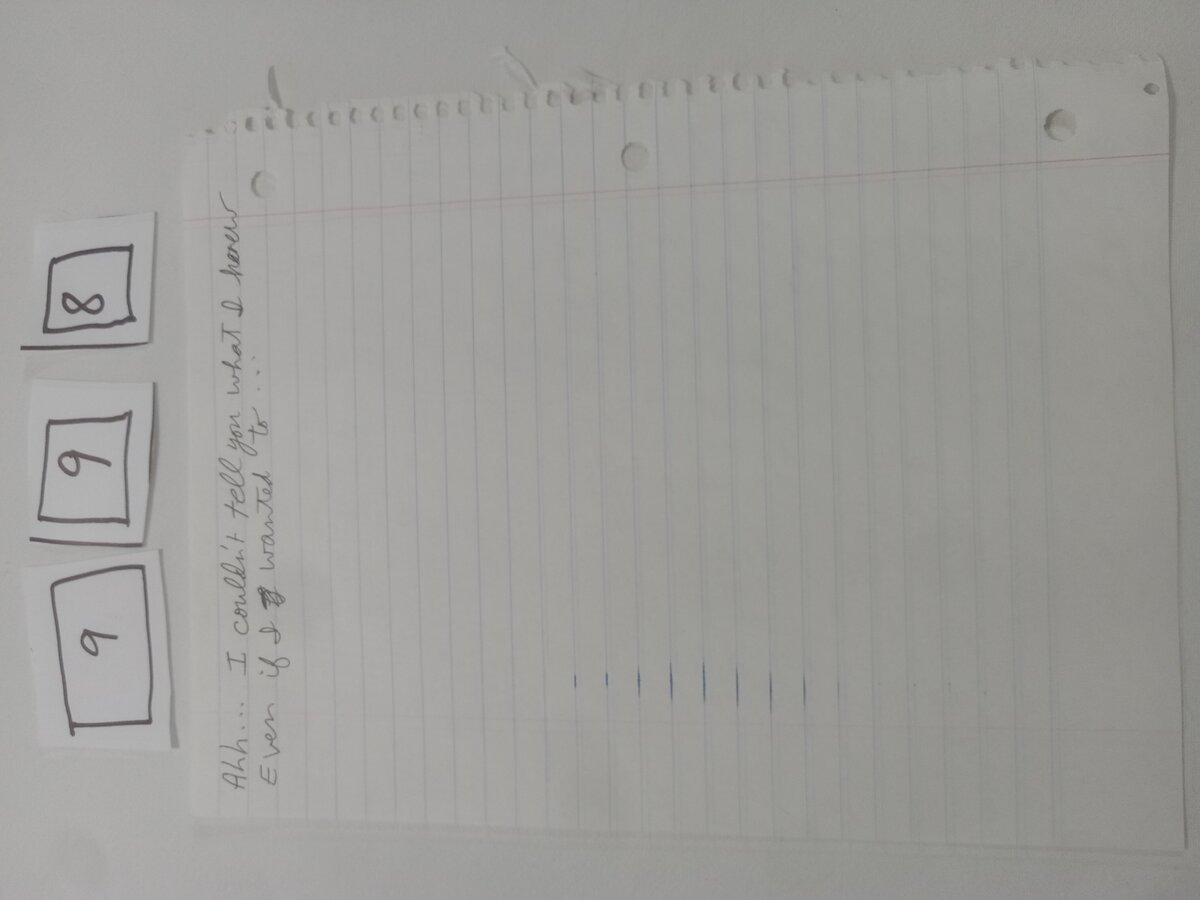
Ahh... I couldn't tell you what I knew
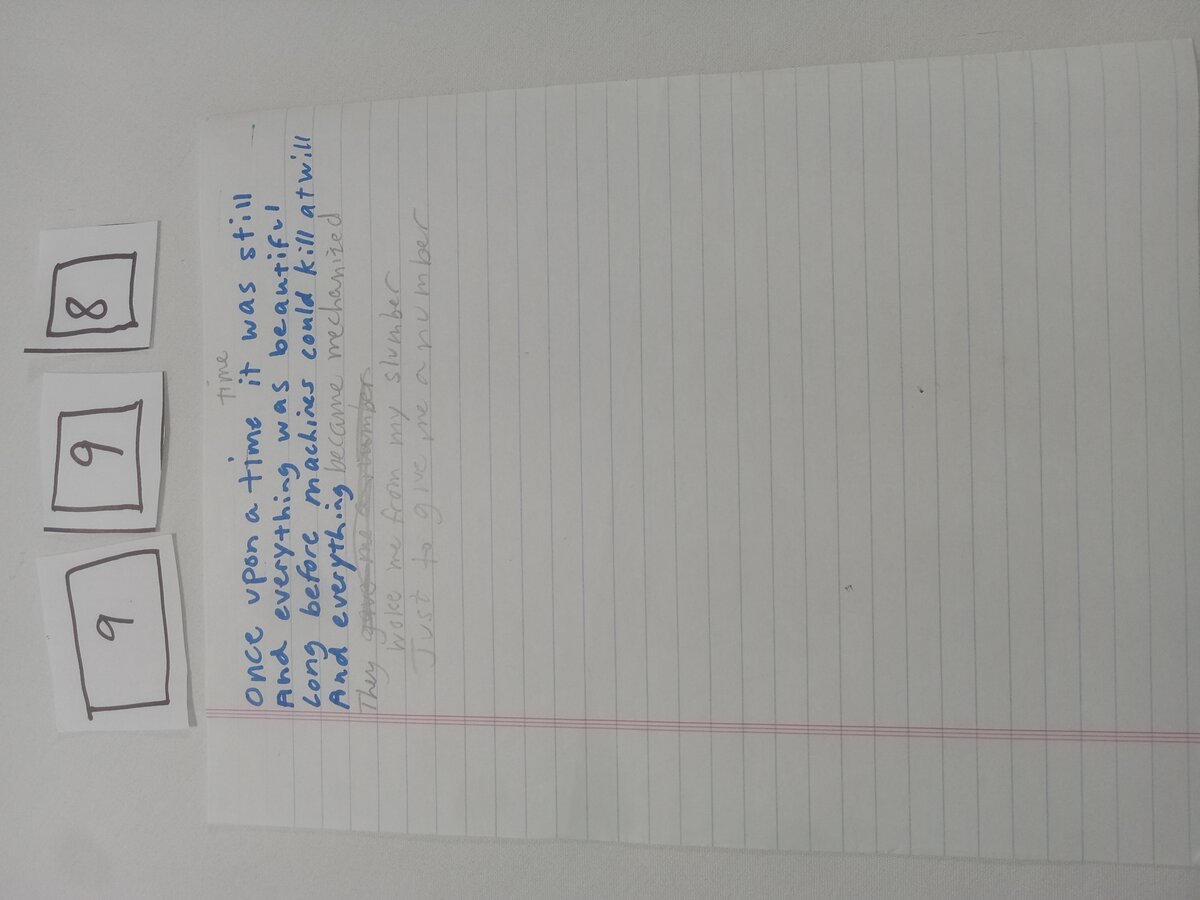
A piece of lined notebook paper with blue and pencil handwriting, along with three separate small squares of paper, each containing a single digit.
- Why it matters
- Tom writes this
- Type
- Handwritten sheet
- Collection
- Tom writes thisthe old category list says: CHOMSKIAN (not checked by Tom)
- Published in
- ON THE 34 ALBUMSNoise, Lies and Longing [S11] · as the song MOTHmatched on the words: three or more seven-word runs shared with that song
IN A BOOK200 Poems Waiting For Music (2013)
The November 2024 Collection (2024)
Tom Jensen Poem Anthology (2013)
Brian Rainstorm: Poetry Not Dead (2014)
180 Good Poems (2012)
A Lifetime Of Rhyme (2020)
The 714-Page Book (2012)
The Laima Dedication Anthology (2011)
34 Albums, Books 1 and 2 (2026)
Chomskian Poems (2011)
Finished Song Lyrics (2011)
Revised 31 Albums With Index (2024) - Age when written
- written by age 32 at the latestdated from the earliest book it appears in - the sheet itself may be older
Price · Tier · Tom fills these
Picture 1 of 2
Picture 2 of 2
The words on this page
Ahh... I couldn't tell you what I knew
Even if I wanted to...
---
Every night I stayed awake
Trying to find a cure for insomnia
But finally I had to give it a break
Best thing I ever did I'm telling ya
---
I have listened to the people
We now disregard the media
Ripped off the pulpits and tore down the steeples
Now worship false American, idols
Pin the tail on your new leader
Always keep a hand and an eye on your child
Seems you cant trust hardly any man
---
It's time to write a song
About the world and where
it's gone wrong...
But awe man...
that's gonna take too long...
---
Once upon a time it was still
And everything was beautiful
Long before machines could kill at will
And everything became mechanized
They gave me a number
Woke me from my slumber
Just to give me a number
---
time
Once upon a time it was still
And everything was beautiful
Long before machines could kill atwill
And everything became mechanized
They gave me a number
woke me from my slumber
Just to give me a number
Item 999
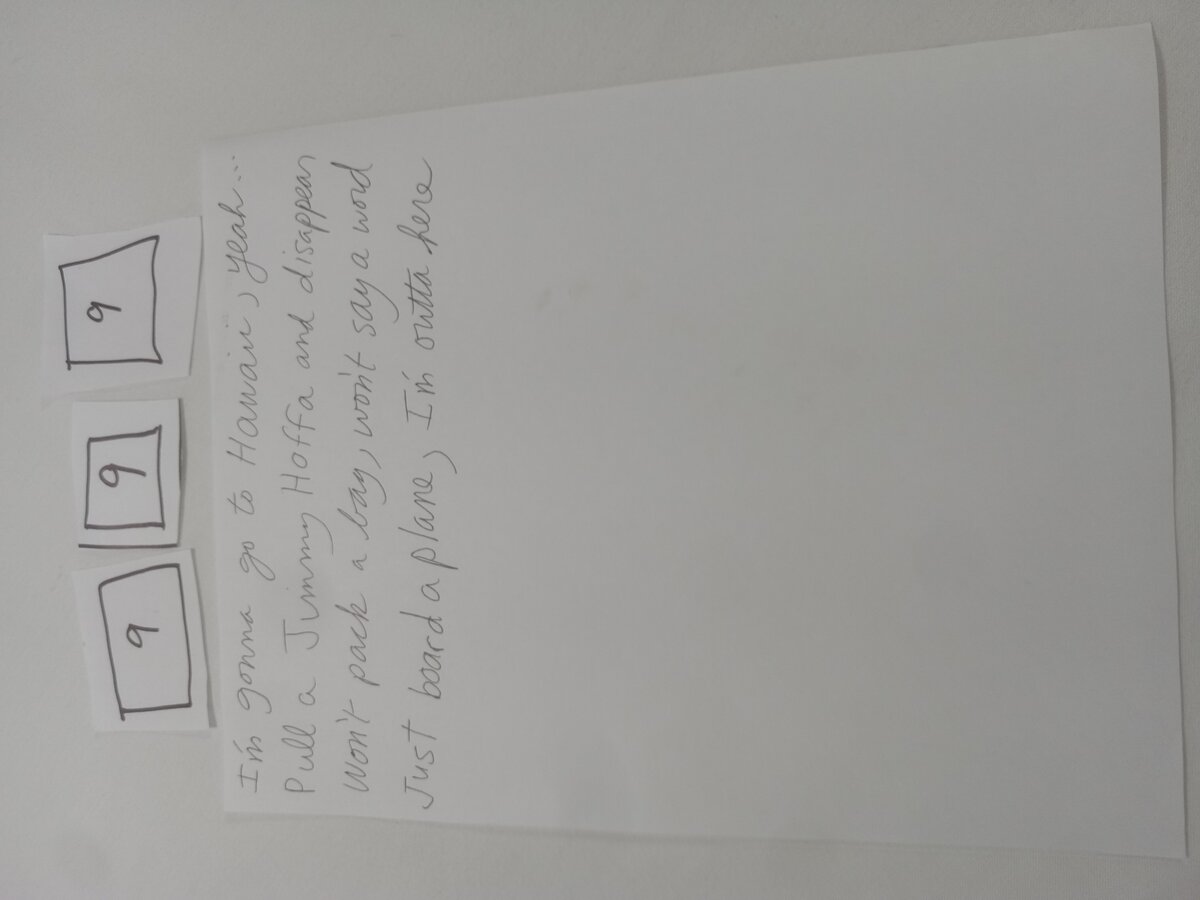
I'm gonna go to Hawaii, yeah...
Handwritten text and three small drawn squares with numbers inside on a white piece of paper.
- Why it matters
- Tom writes this
- Type
- Handwritten sheet
- Collection
- Tom writes this
- Published in
- IN A BOOKTom Jensen Poem Anthology (2013)
Brian Rainstorm: Poetry Not Dead (2014)
The 714-Page Book (2012)
The Laima Dedication Anthology (2011) - Age when written
- written by age 33 at the latestdated from the earliest book it appears in - the sheet itself may be older
Price · Tier · Tom fills these
The only picture of this piece
The words on this page
I'm gonna go to Hawaii, yeah...
Pull a Jimmy Hoffa and disappear
Won't pack a bag, won't say a word
Just board a plane, I'm outta here
Pull a Jimmy Hoffa and disappear
Won't pack a bag, won't say a word
Just board a plane, I'm outta here
Item 1000
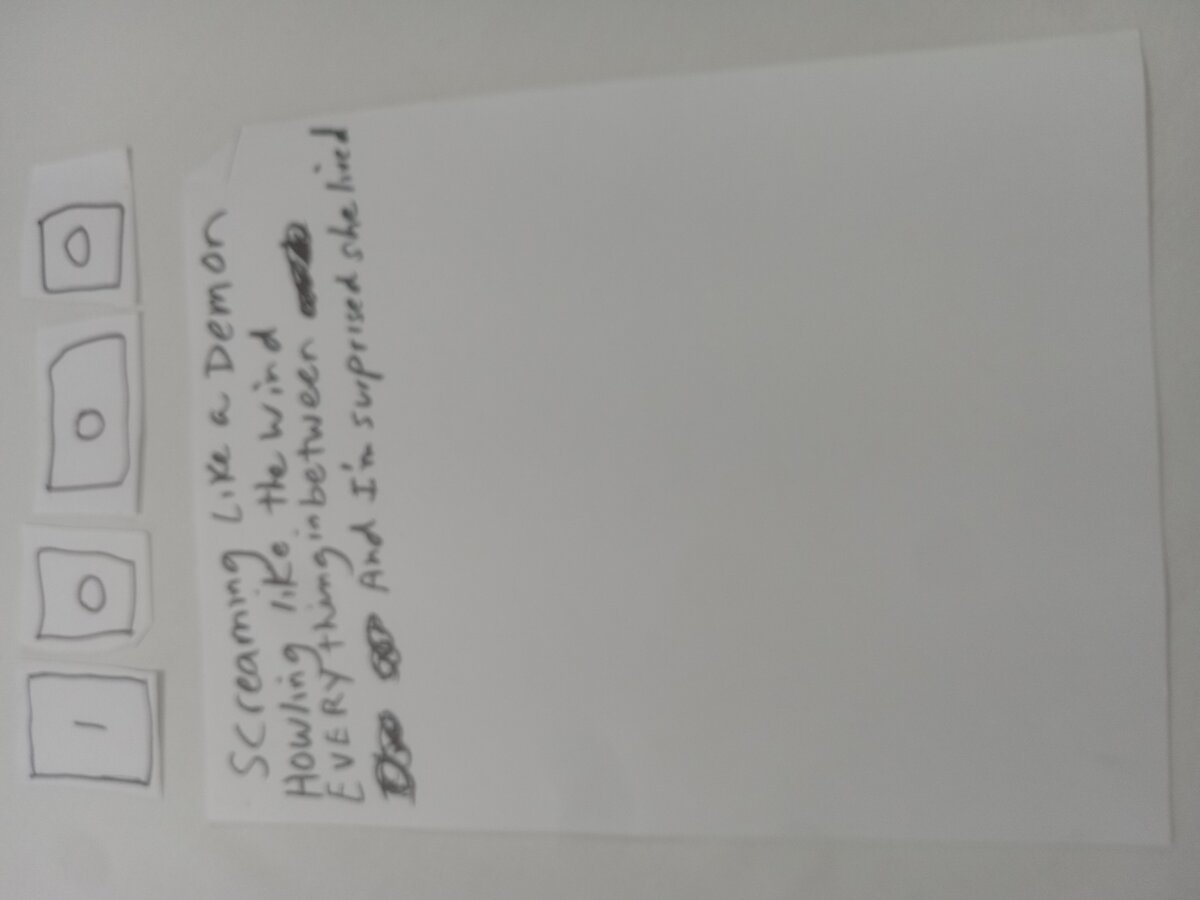
Screaming Like a Demon
A white sheet of paper written in black ink, accompanied by four small hand-drawn paper squares.
- Why it matters
- Tom writes this
- Type
- Handwritten sheet
- Collection
- Tom writes this
- Published in
- PREVIOUSLY UNPUBLISHEDSearched against the 34 albums, every book and Poems By Tom - found in none of them
Price · Tier · Tom fills these
The only picture of this piece
The words on this page
Screaming Like a Demon
Howling like the wind
EVERYTHING in between [crossed out]
[crossed out] And I'm surprised she lived
Howling like the wind
EVERYTHING in between [crossed out]
[crossed out] And I'm surprised she lived
Item 1001
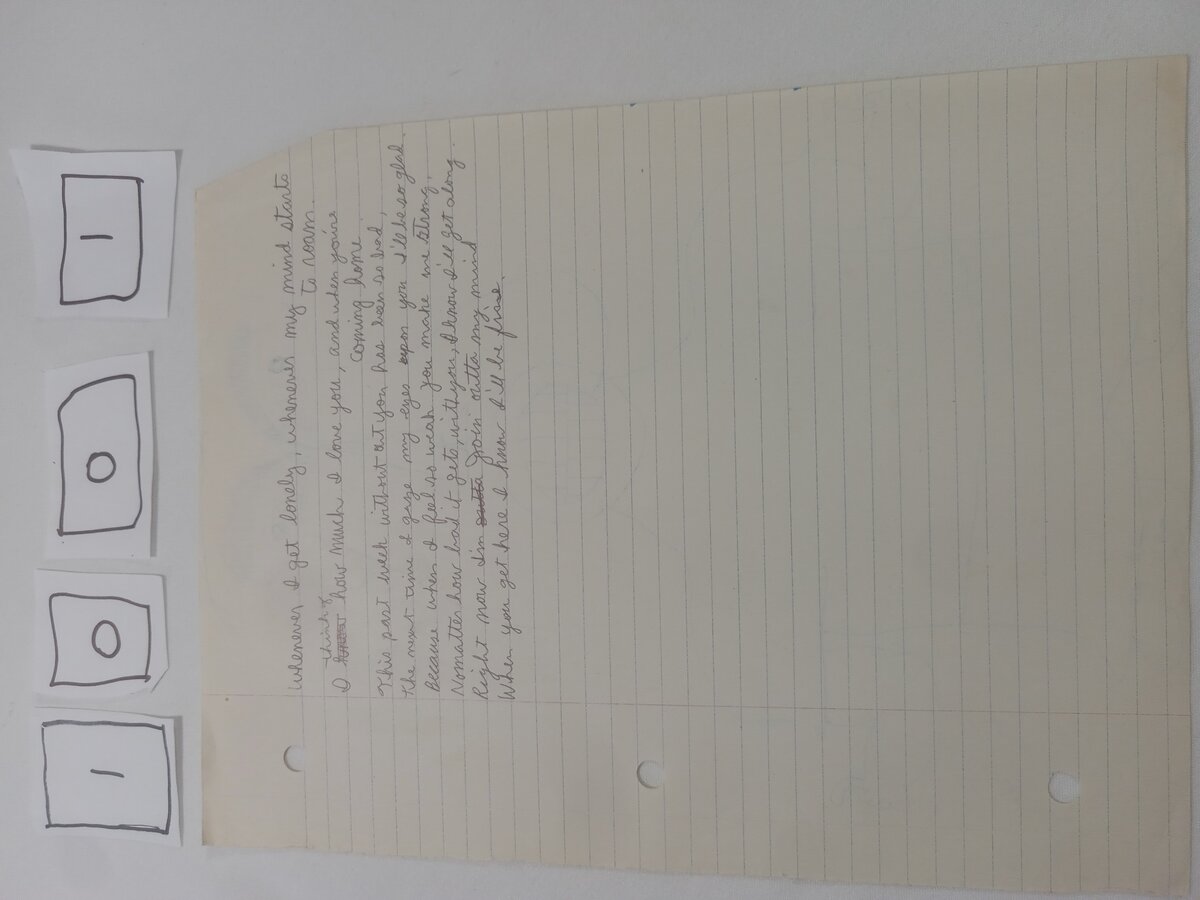
Whenever I get lonely, whenever my mind starts
A handwritten poem on a single sheet of off-white, three-hole punched lined paper.
- Why it matters
- Tom writes this
- Type
- Handwritten sheet
- Collection
- Tom writes this
- Published in
- PREVIOUSLY UNPUBLISHEDSearched against the 34 albums, every book and Poems By Tom - found in none of them
Price · Tier · Tom fills these
Picture 1 of 2
Picture 2 of 2
The words on this page
Whenever I get lonely, whenever my mind starts
to roam
I think of how much I love you, and when you're
coming home
This past week without at you has been so bad,
The next time I gaze my eyes upon you I'll be so glad.
Because when I feel so weak you make me strong,
No matter how bad it gets, with you, I know I'll get along.
Right now I'm just goin outta my mind
When you get here I know I'll be fine.
---
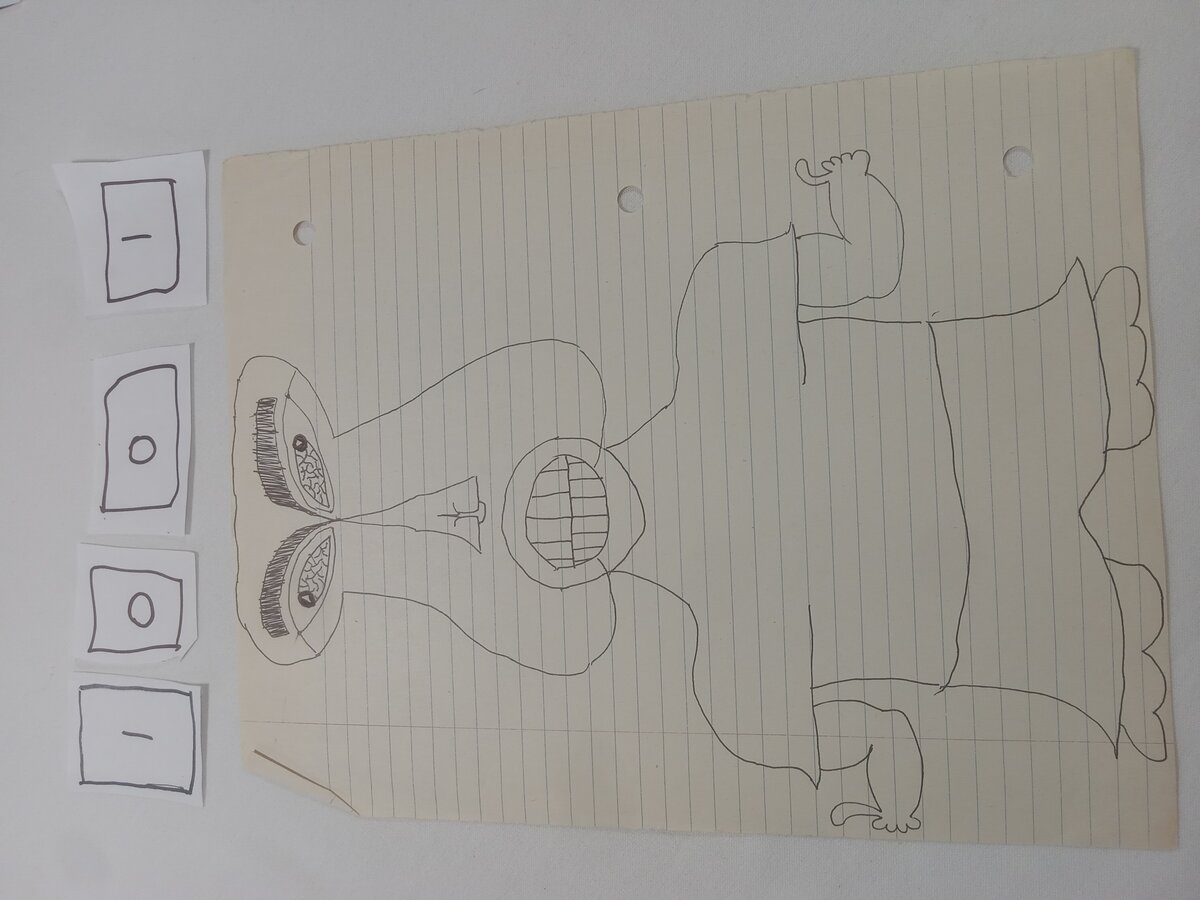
1, 0, 0, 1
Item 1002
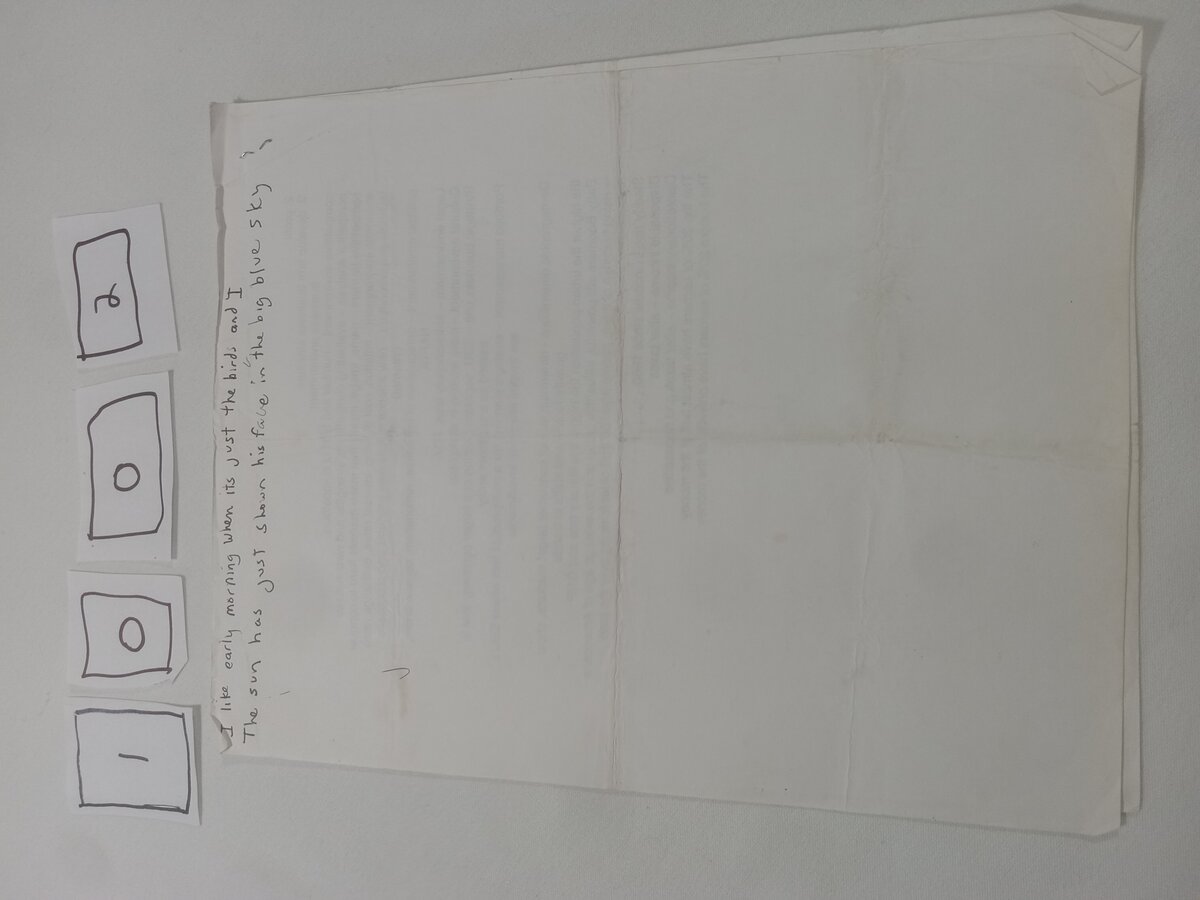
UNTITLED - first line: I like early morning when its just the birds and I
White paper sheets and one sheet of off-white paper creased from being folded into quarters.
- Why it matters
- Tom writes this
- Type
- Handwritten sheet
- Collection
- Tom writes this
- Published in
- IN A BOOKThe Laima Dedication Anthology (2011)
- Age when written
- written by age 33 at the latestdated from the earliest book it appears in - the sheet itself may be older
Price · Tier · Tom fills these
Picture 1 of 3
Picture 2 of 3
Picture 3 of 3
The words on this page
I like early morning when its just the birds and I
The sun has just shown his face in the big blue sky
---
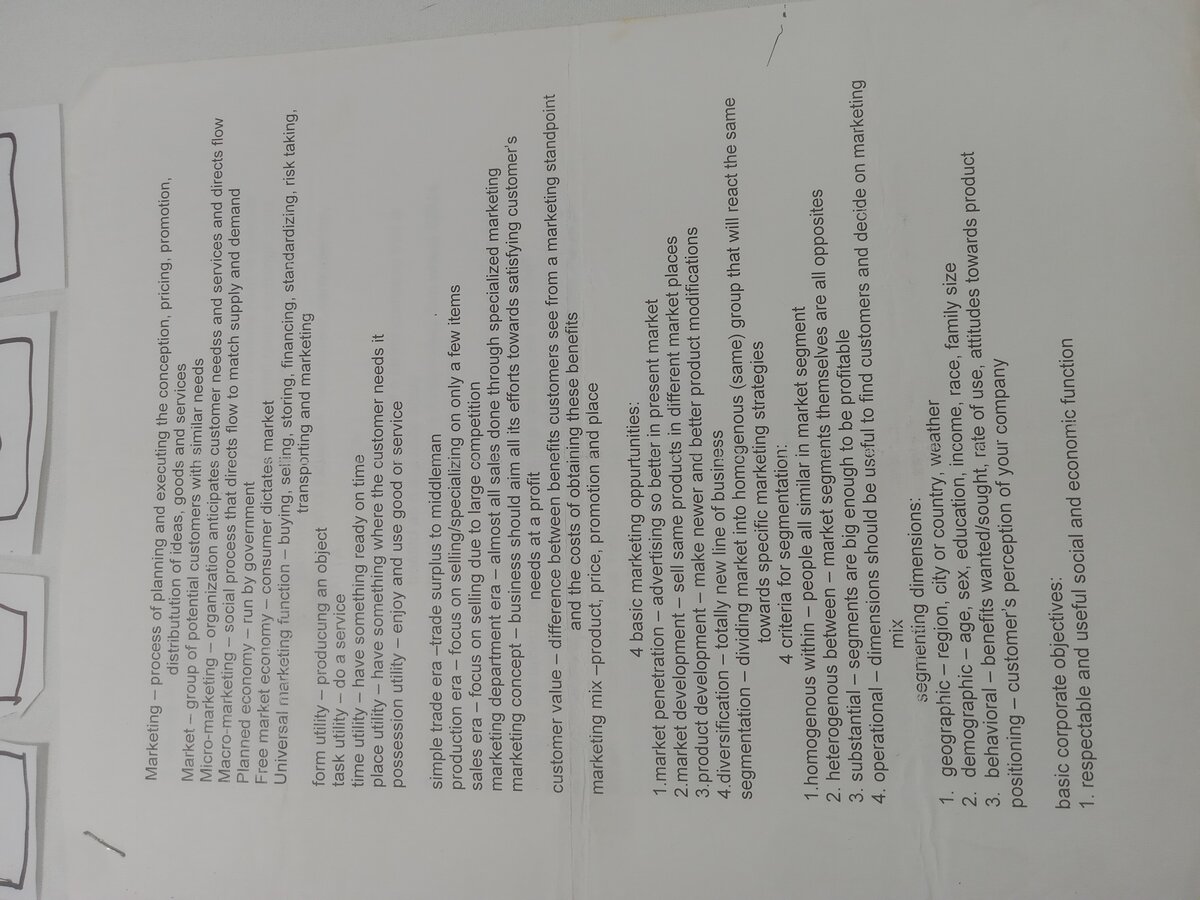
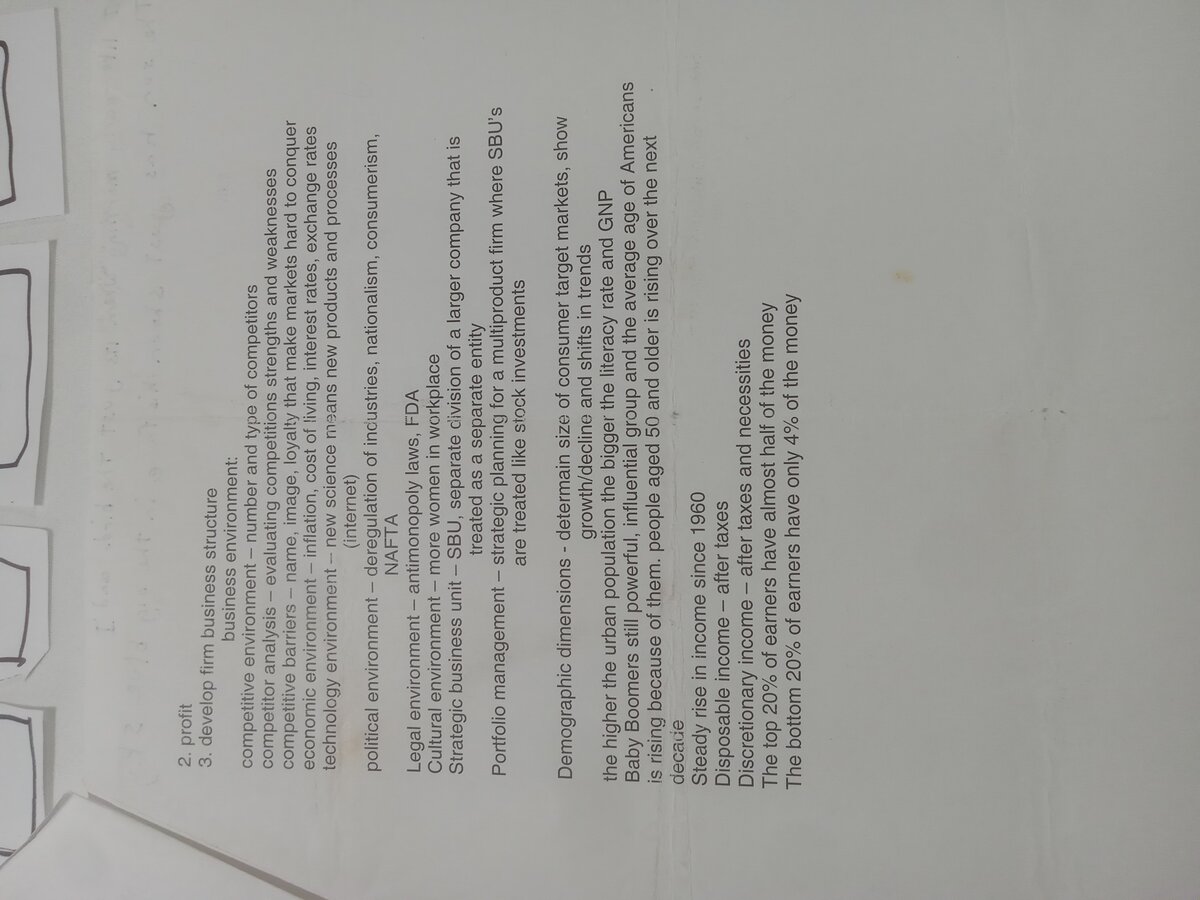
Marketing - process of planning and executing the conception, pricing, promotion,
distribution of ideas, goods and services
Market - group of potential customers with similar needs
Micro-marketing - organization anticipates customer needss and services and directs flow
Macro-marketing - social process that directs flow to match supply and demand
Planned economy - run by government
Free market economy - consumer dictates market
Universal marketing function - buying, selling, storing, financing, standardizing, risk taking,
transporting and marketing
form utility - producing an object
task utility - do a service
time utility - have something ready on time
place utility - have something where the customer needs it
possession utility - enjoy and use good or service
simple trade era - trade surplus to middleman
production era - focus on selling/specializing on only a few items
sales era - focus on selling due to large competition
marketing department era - almost all sales done through specialized marketing
marketing concept - business should aim all its efforts towards satisfying customer's
needs at a profit
customer value - difference between benefits customers see from a marketing standpoint
and the costs of obtaining these benefits
marketing mix - product, price, promotion and place
4 basic marketing oppurtunities:
1.market penetration - advertising so better in present market
2.market development - sell same products in different market places
3.product development - make newer and better product modifications
4.diversification - totally new line of business
segmentation - dividing market into homozygous (same) group that will react the same
towards specific marketing strategies
4 criteria for segmentation:
1.homogenous within - people all similar in market segment
2.heterogenous between - market segments themselves are all opposites
3.substantial - segments are big enough to be profitable
4.operational - dimensions should be useful to find customers and decide on marketing
mix
segmenting dimensions:
1. geographic - region, city or country, weather
2. demographic - age, sex, education, income, race, family size
3. behavioral - benefits wanted/sought, rate of use, attitudes towards product
positioning - customer's perception of your company
basic corporate objectives:
1. respectable and useful social and economic function
---
2. profit
3. develop firm business structure
business environment:
competitive environment - number and type of competitors
competitor analysis - evaluating competitions strengths and weaknesses
competitive barriers - name, image, loyalty that make markets hard to conquer
economic environment - inflation, cost of living, interest rates, exchange rates
technology environment - new science means new products and processes (internet)
political environment - deregulation of industries, nationalism, consumerism, NAFTA
Legal environment - antimonopoly laws, FDA
Cultural environment - more women in workplace
Strategic business unit - SBU, separate division of a larger company that is treated as a separate entity
Portfolio management - strategic planning for a multiproduct firm where SBU's are treated like stock investments
Demographic dimensions - dermain size of consumer target markets, show growth/decline and shifts in trends
the higher the urban population the bigger the literacy rate and GNP
Baby Boomers still powerful, influential group and the average age of Americans is rising because of them. people aged 50 and older is rising over the next decade
Steady rise in income since 1960
Disposable income - after taxes
Discretionary income - after taxes and necessities
The top 20% of earners have almost half of the money
The bottom 20% of earners have only 4% of the money
Item 1003
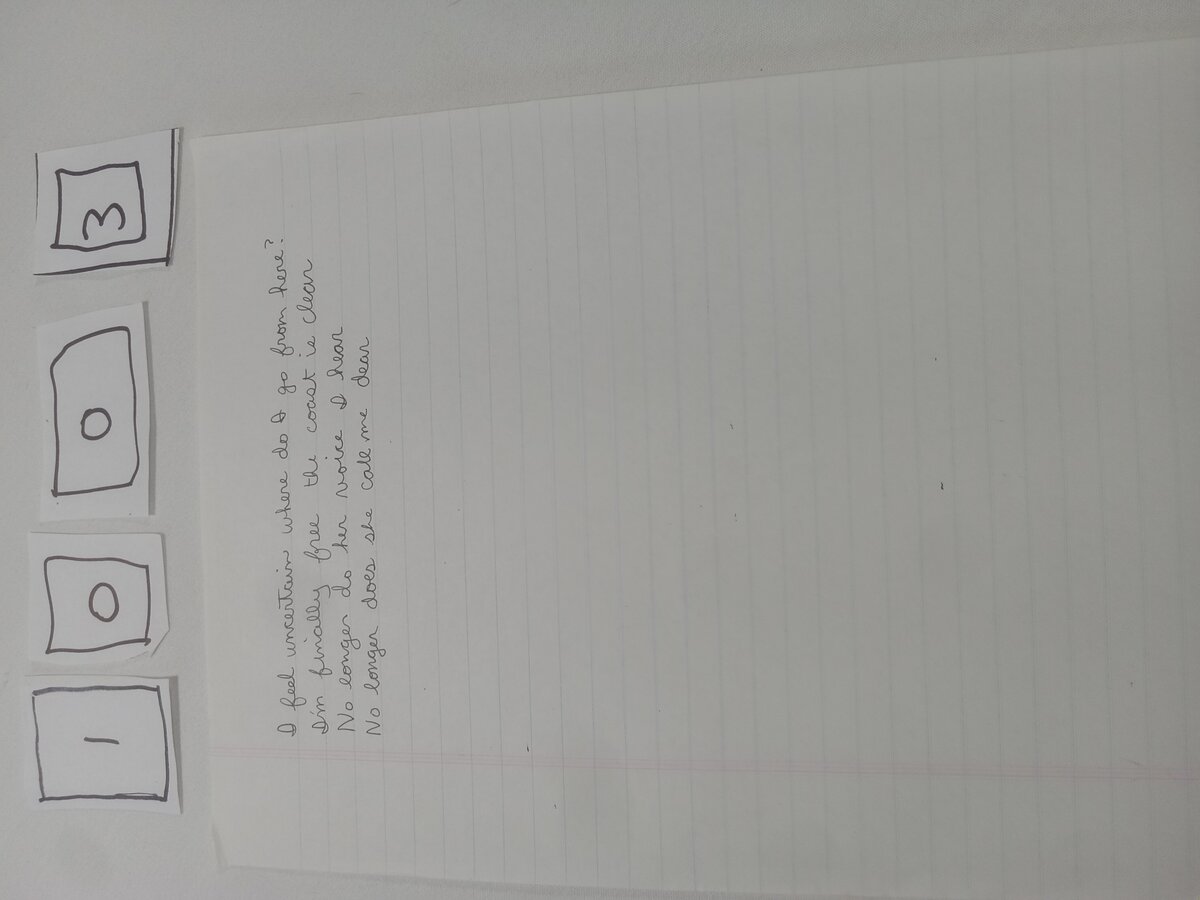
I feel uncertain where do I go from here?
A sheet of lined paper with handwritten text in ink, accompanied by four separate hand-drawn cards.
- Why it matters
- Tom writes this
- Type
- Handwritten sheet
- Collection
- Tom writes this
- Published in
- IN A BOOKTom Jensen Poem Anthology (2013)
The 714-Page Book (2012)
The Laima Dedication Anthology (2011) - Age when written
- written by age 33 at the latestdated from the earliest book it appears in - the sheet itself may be older
Price · Tier · Tom fills these
The only picture of this piece
The words on this page
I feel uncertain where do I go from here?
I'm finally free the coast is clear
No longer do her voice I hear
No longer does she call me dear
I'm finally free the coast is clear
No longer do her voice I hear
No longer does she call me dear
Item 1004
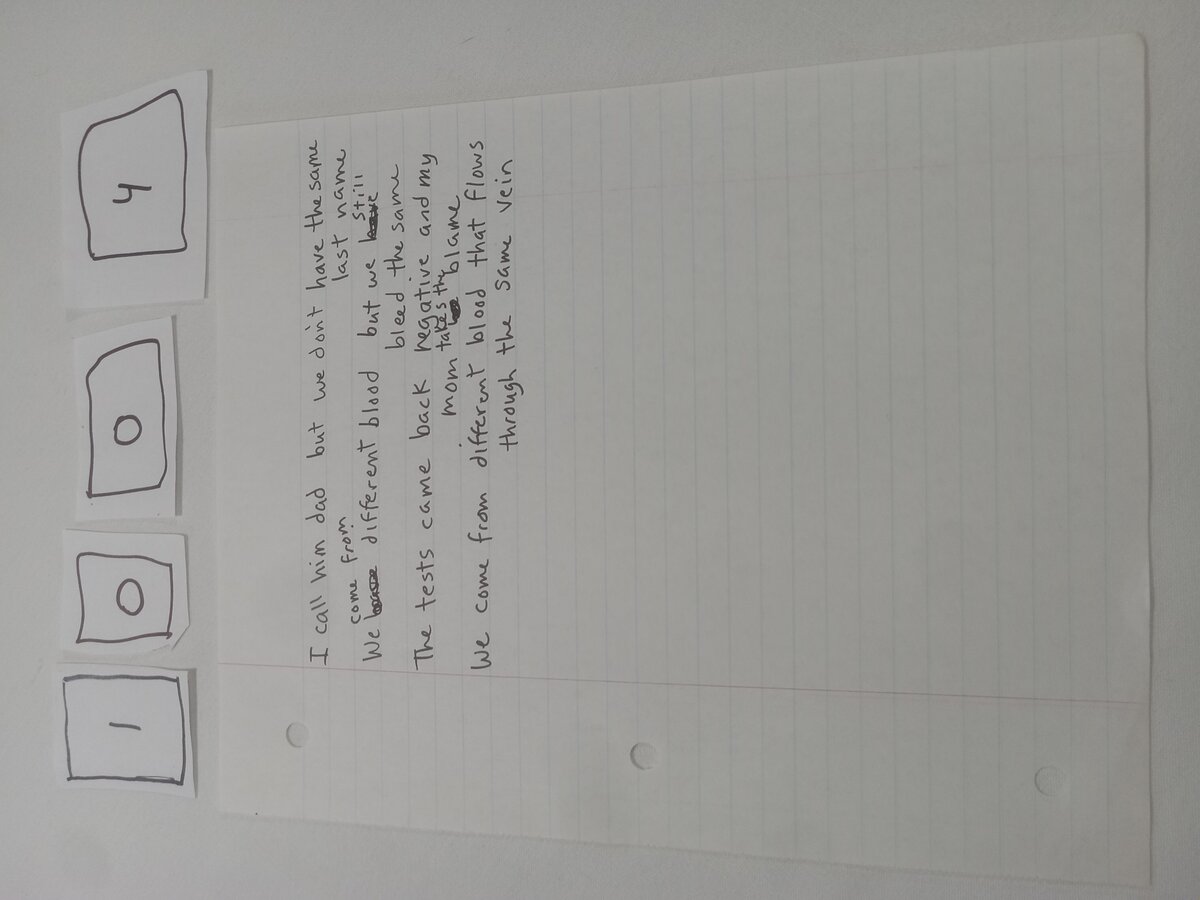
UNTITLED - first line: I call him dad but we don't have the same last name
Lined three-hole punched paper and plain white paper accompanied by small paper squares with handwritten digits.
- Why it matters
- Tom writes this
- Type
- Handwritten sheet
- Collection
- Tom writes this
- Published in
- IN A BOOKShorter Lyrics (2013)
The 714-Page Book (2012)
The Laima Dedication Anthology (2011) - Age when written
- written by age 33 at the latestdated from the earliest book it appears in - the sheet itself may be older
Price · Tier · Tom fills these
The only picture of this piece
The words on this page
I call him dad but we don't have the same last name
We come from different blood but we still bleed the same
The tests came back negative and my mom takes the blame
We come from different blood that flows through the same vein
We come from different blood but we still bleed the same
The tests came back negative and my mom takes the blame
We come from different blood that flows through the same vein
Item 1005
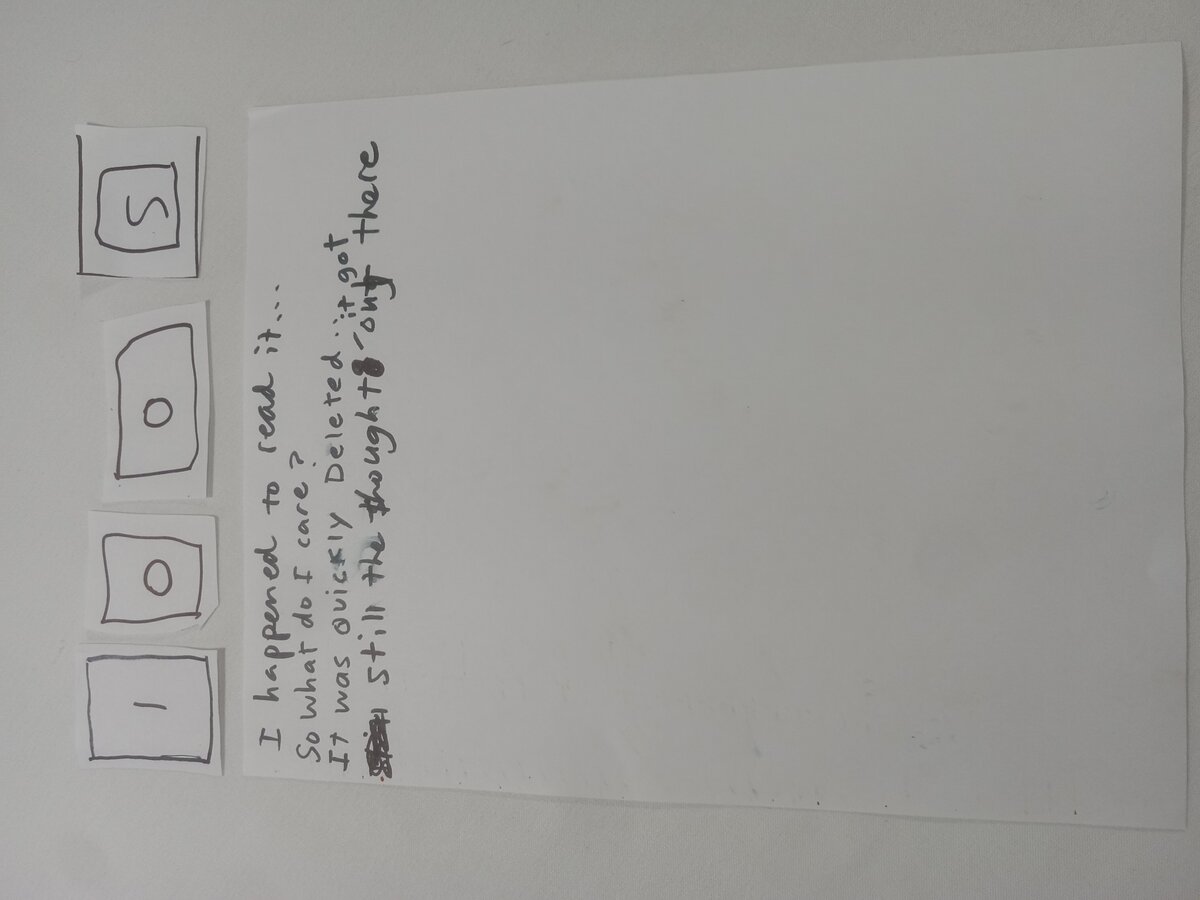
I happened to read it...
White paper with four small paper squares with characters attached vertically on the left.
- Why it matters
- Tom writes this
- Type
- Handwritten sheet
- Collection
- Tom writes this
- Published in
- PREVIOUSLY UNPUBLISHEDSearched against the 34 albums, every book and Poems By Tom - found in none of them
- Age when written
- written by age 33 at the latestdated from the earliest book it appears in - the sheet itself may be older
Price · Tier · Tom fills these
The only picture of this piece
The words on this page
I happened to read it...
So what do I care?
It was quickly Deleted... it got
still the thought out there
So what do I care?
It was quickly Deleted... it got
still the thought out there
Item 1006
I open the window
A piece of torn, lined paper.
- Why it matters
- Tom writes this
- Type
- Handwritten sheet
- Collection
- Tom writes this
- Published in
- IN A BOOKTom Jensen Poem Anthology (2013)
Shorter Lyrics (2013)
The 714-Page Book (2012)
The Laima Dedication Anthology (2011) - Age when written
- written by age 33 at the latestdated from the earliest book it appears in - the sheet itself may be older
Price · Tier · Tom fills these
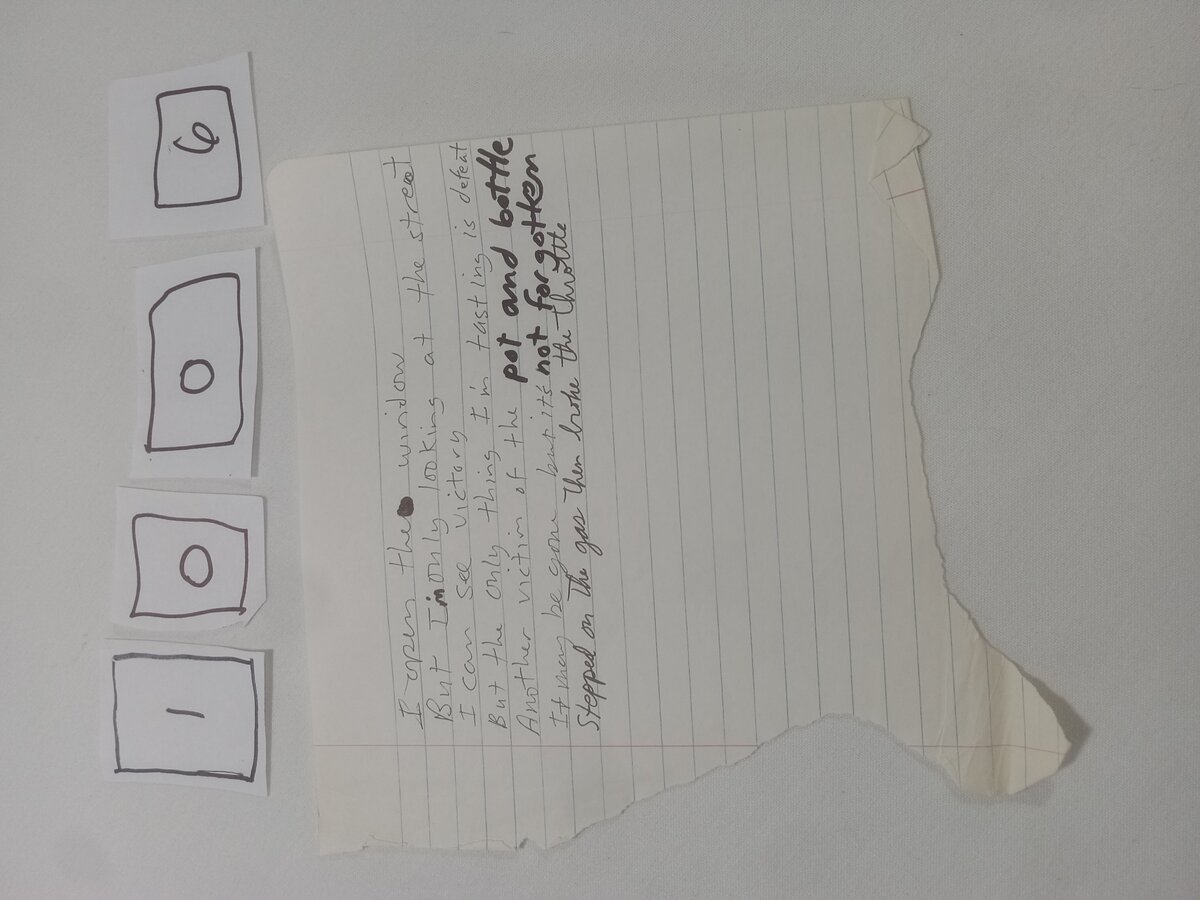
The only picture of this piece
The words on this page
I open the window
But I'm only looking at the street
I can see victory
But the only thing I'm tasting is defeat
Another victim of the pot and bottle
It may be gone but it's not forgotten
Stepped on the gas Then broke the throttle
But I'm only looking at the street
I can see victory
But the only thing I'm tasting is defeat
Another victim of the pot and bottle
It may be gone but it's not forgotten
Stepped on the gas Then broke the throttle
Item 1007
Perhaps If this world expands and contracts
A sheet of lined notebook paper with four hand-drawn, numbered squares arranged to the left.
- Why it matters
- Tom writes this
- Type
- Handwritten sheet
- Collection
- Tom writes this
- Published in
- PREVIOUSLY UNPUBLISHEDSearched against the 34 albums, every book and Poems By Tom - found in none of them
Price · Tier · Tom fills these
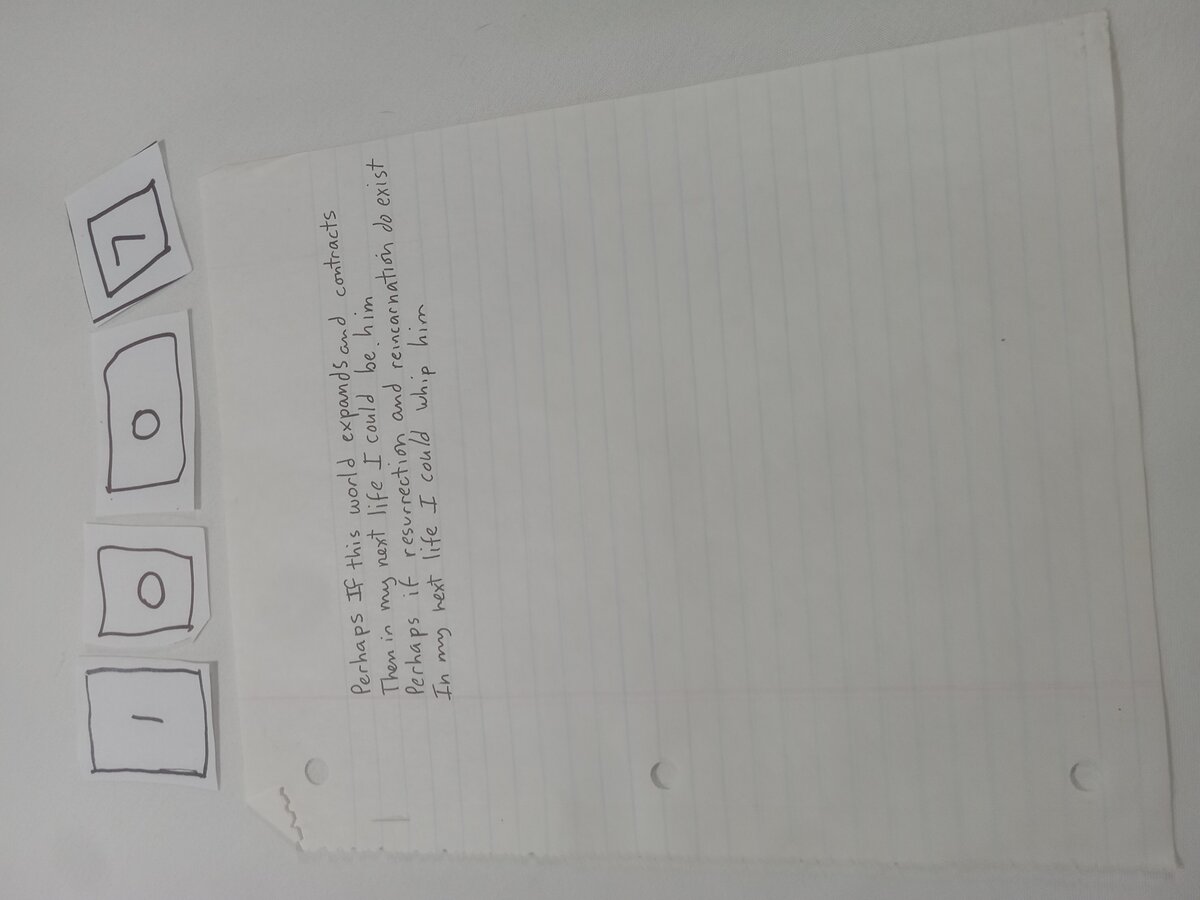
The only picture of this piece
The words on this page
Perhaps If this world expands and contracts
Then in my next life I could be him
Perhaps if resurrection and reincarnation do exist
In my next life I could whip him
Then in my next life I could be him
Perhaps if resurrection and reincarnation do exist
In my next life I could whip him
Item 1008
The only coke I keep is in the fridge
A sheet of lined notebook paper with handwriting.
- Why it matters
- Tom writes this
- Type
- Handwritten sheet
- Collection
- Tom writes this
- Published in
- PREVIOUSLY UNPUBLISHEDSearched against the 34 albums, every book and Poems By Tom - found in none of them
Price · Tier · Tom fills these
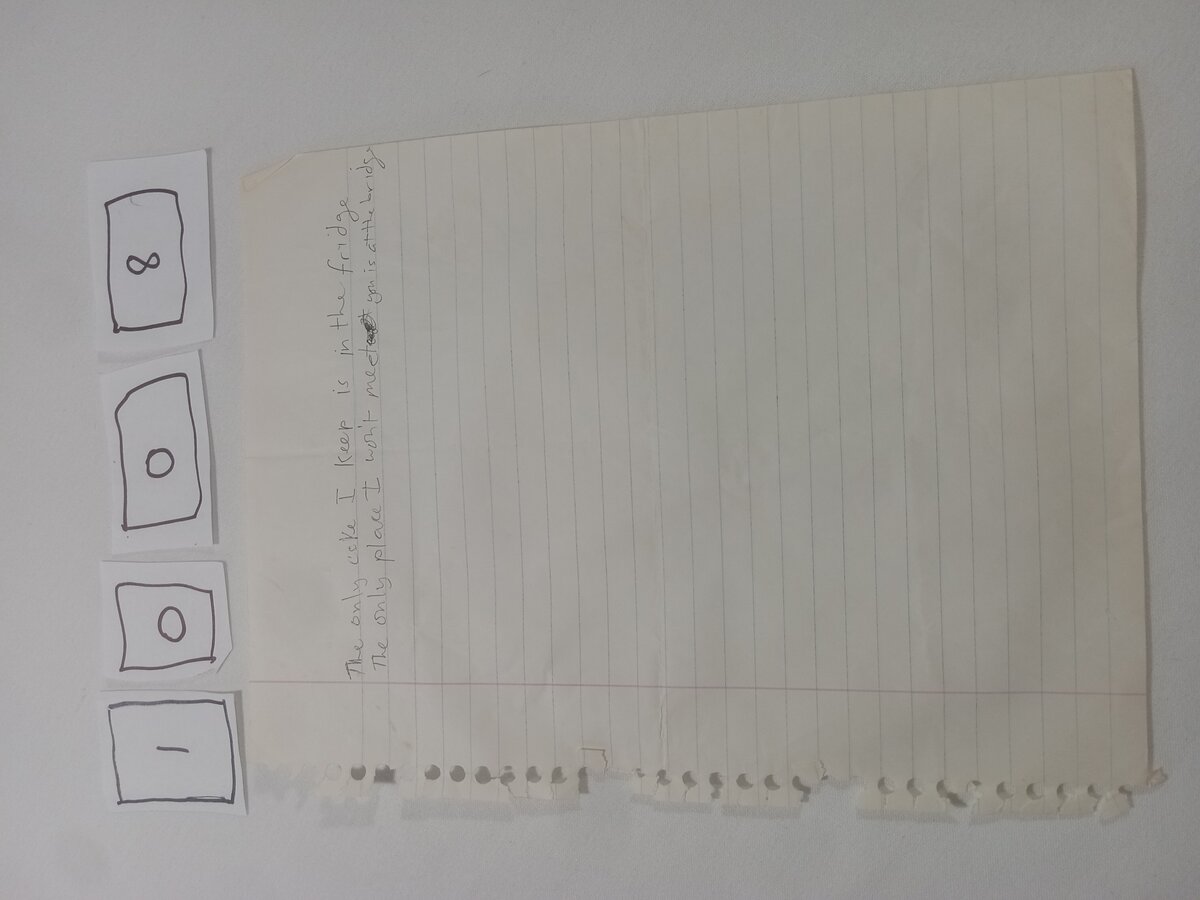
The only picture of this piece
The words on this page
The only coke I keep is in the fridge
The only place I won't meet you is at the bridge
The only place I won't meet you is at the bridge
Item 1009
You came in the door
A piece of lined paper with handwritten text, slightly crumpled and torn at the corners.
- Why it matters
- Tom writes this
- Type
- Handwritten sheet
- Collection
- Tom writes this
- Published in
- PREVIOUSLY UNPUBLISHEDSearched against the 34 albums, every book and Poems By Tom - found in none of them
Price · Tier · Tom fills these
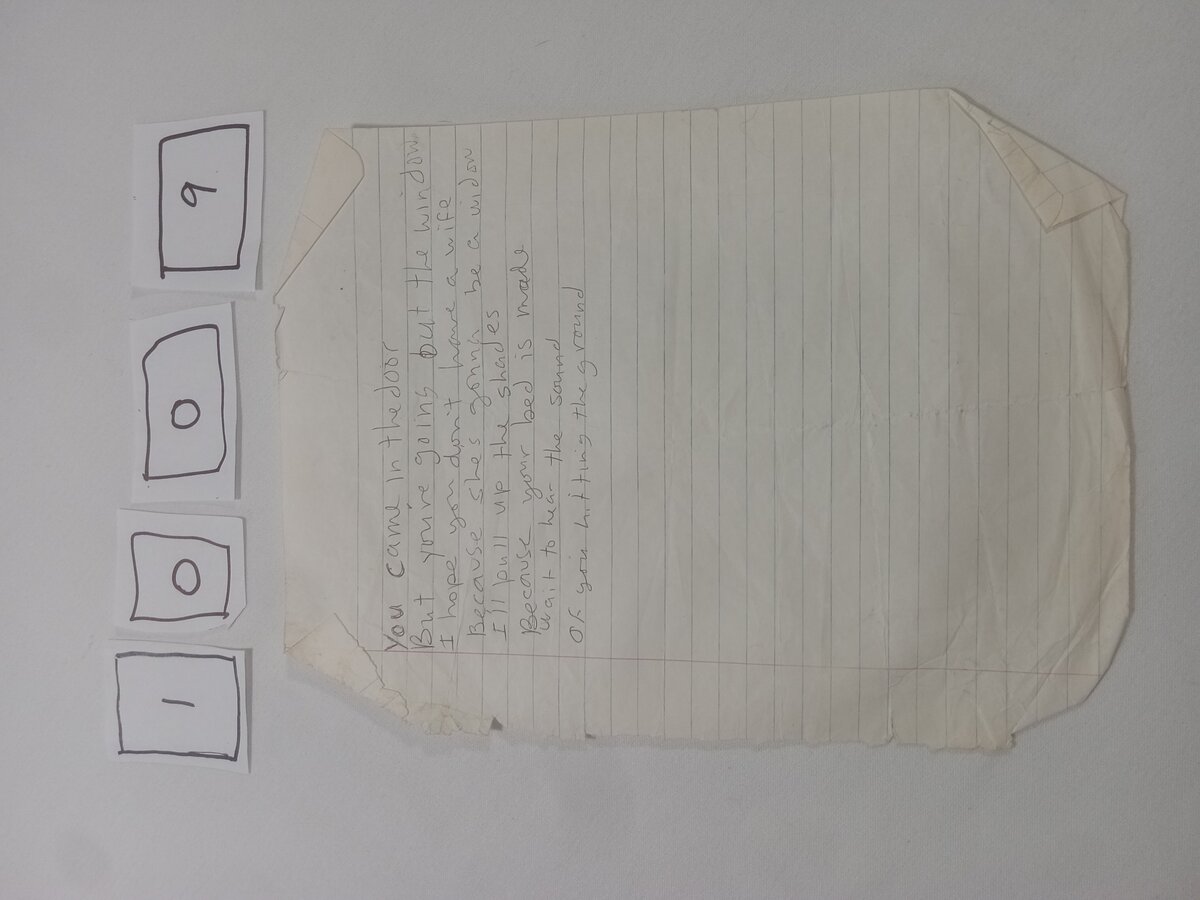
The only picture of this piece
The words on this page
You came in the door
But you're going out the window
I hope you don't have a wife
Because she's gonna be a widow
I'll pull up the shades
Because your bed is made
Wait to hear the sound
Of you hitting the ground
But you're going out the window
I hope you don't have a wife
Because she's gonna be a widow
I'll pull up the shades
Because your bed is made
Wait to hear the sound
Of you hitting the ground
Item 1010
If it's half as good as
A circular white paper plate with creases across the surface.
- Why it matters
- Tom writes this
- Type
- Handwritten sheet
- Collection
- Tom writes this
- Published in
- PREVIOUSLY UNPUBLISHEDSearched against the 34 albums, every book and Poems By Tom - found in none of them
Price · Tier · Tom fills these
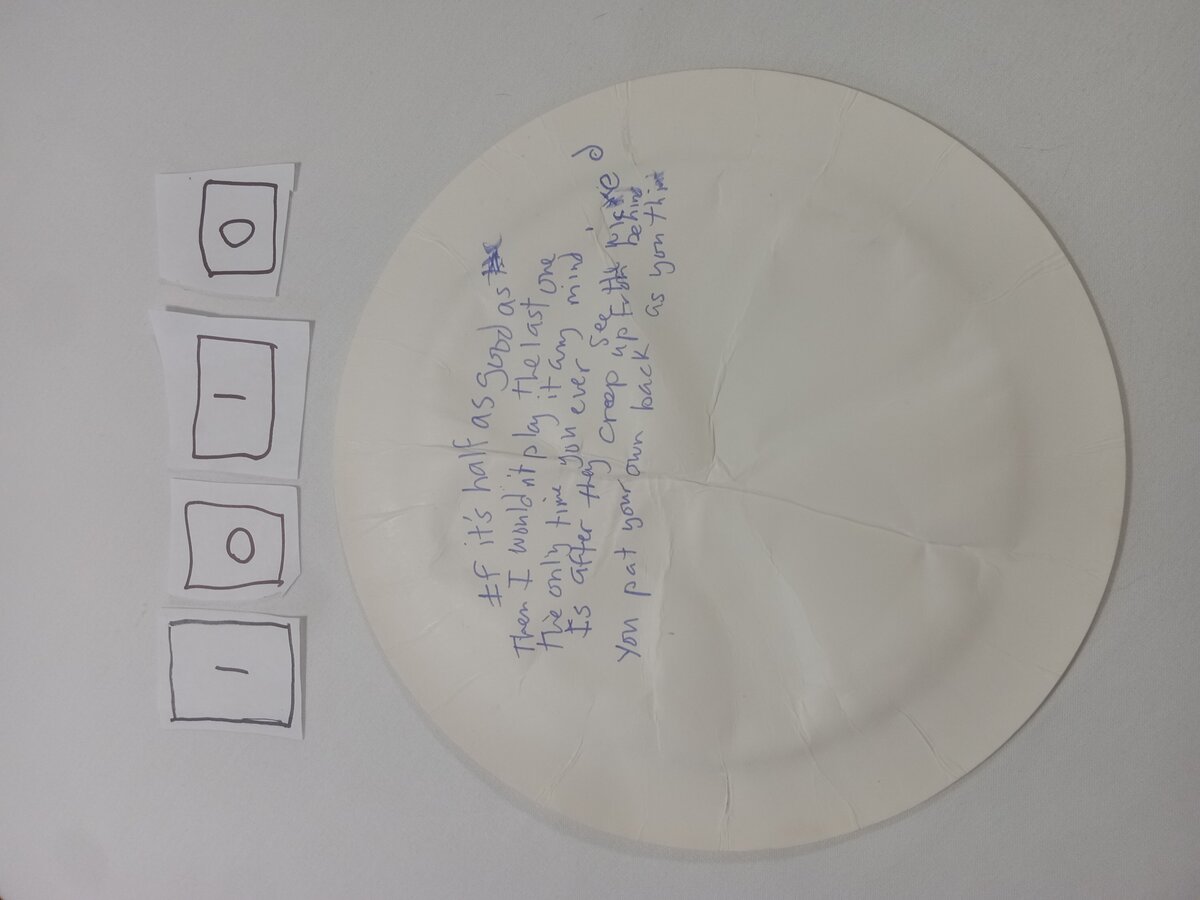
The only picture of this piece
The words on this page
If it's half as good as
Then I wouldn't play it any mind
The only time you ever see the [?]
Is after they creep up behind
You pat your own back as you think
Then I wouldn't play it any mind
The only time you ever see the [?]
Is after they creep up behind
You pat your own back as you think
Item 1011
UNTITLED - first line: Finally at the top of the hill is where I'm standing
A sheet of lined notebook paper alongside four small hand-drawn cards.
- Why it matters
- Tom writes this
- Type
- Handwritten sheet
- Collection
- Tom writes this
- Published in
- PREVIOUSLY UNPUBLISHEDSearched against the 34 albums, every book and Poems By Tom - found in none of them
Price · Tier · Tom fills these
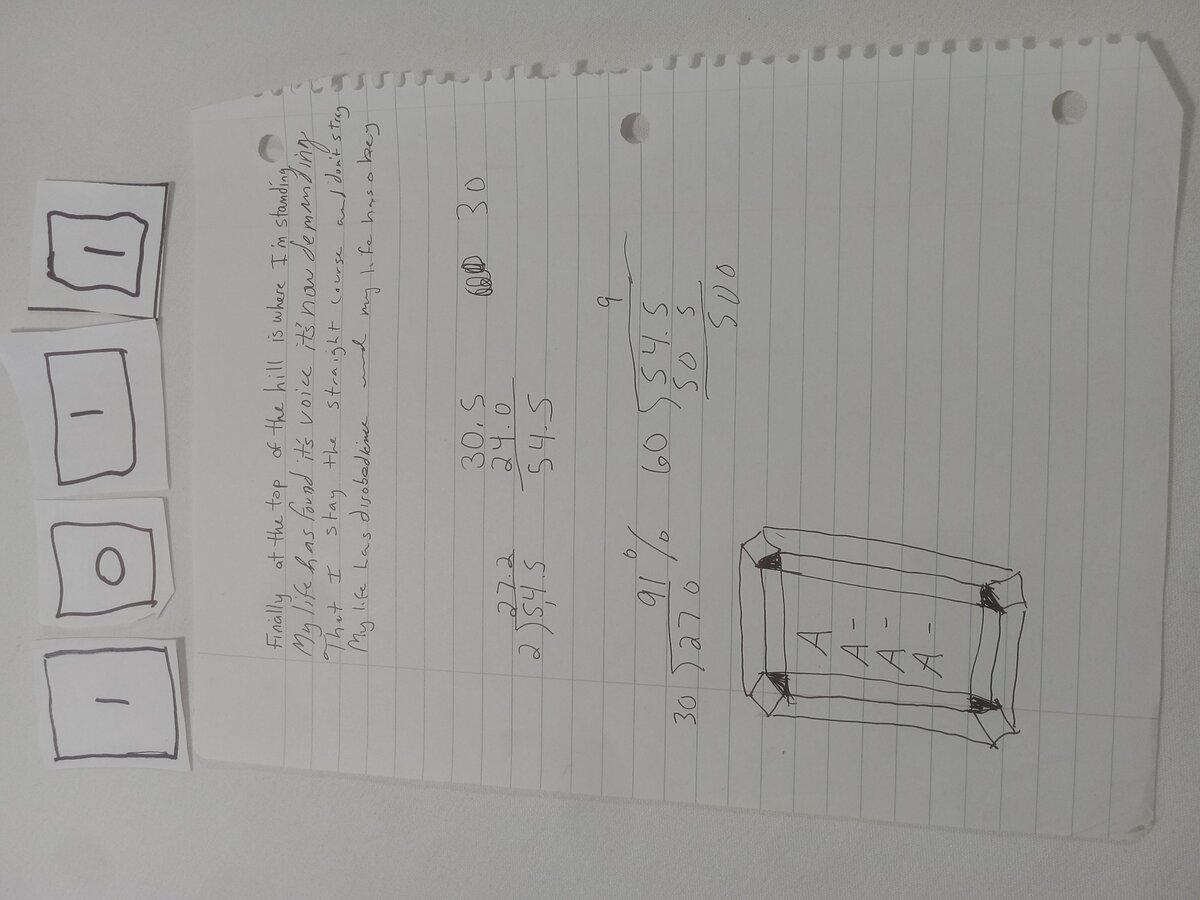
The only picture of this piece
The words on this page
Finally at the top of the hill is where I'm standing
My life has found it's voice it's now demanding
That I stay the straight course and don't stray
My life has disobedience and my life has a key
30.5
24.0
-------
54.5
27.2
2)54.5
30
---
30
91%
30)270
9
60)54.5
505
---
500
A-
A-
A-
A-
My life has found it's voice it's now demanding
That I stay the straight course and don't stray
My life has disobedience and my life has a key
30.5
24.0
-------
54.5
27.2
2)54.5
30
---
30
91%
30)270
9
60)54.5
505
---
500
A-
A-
A-
A-
Item 1012
Stand by my side
A handwritten poem on a piece of lined notebook paper, with four rectangular cards with numbers placed above it.
- Why it matters
- Tom writes this
- Type
- Handwritten sheet
- Collection
- Tom writes this
- Published in
- PREVIOUSLY UNPUBLISHEDSearched against the 34 albums, every book and Poems By Tom - found in none of them
Price · Tier · Tom fills these
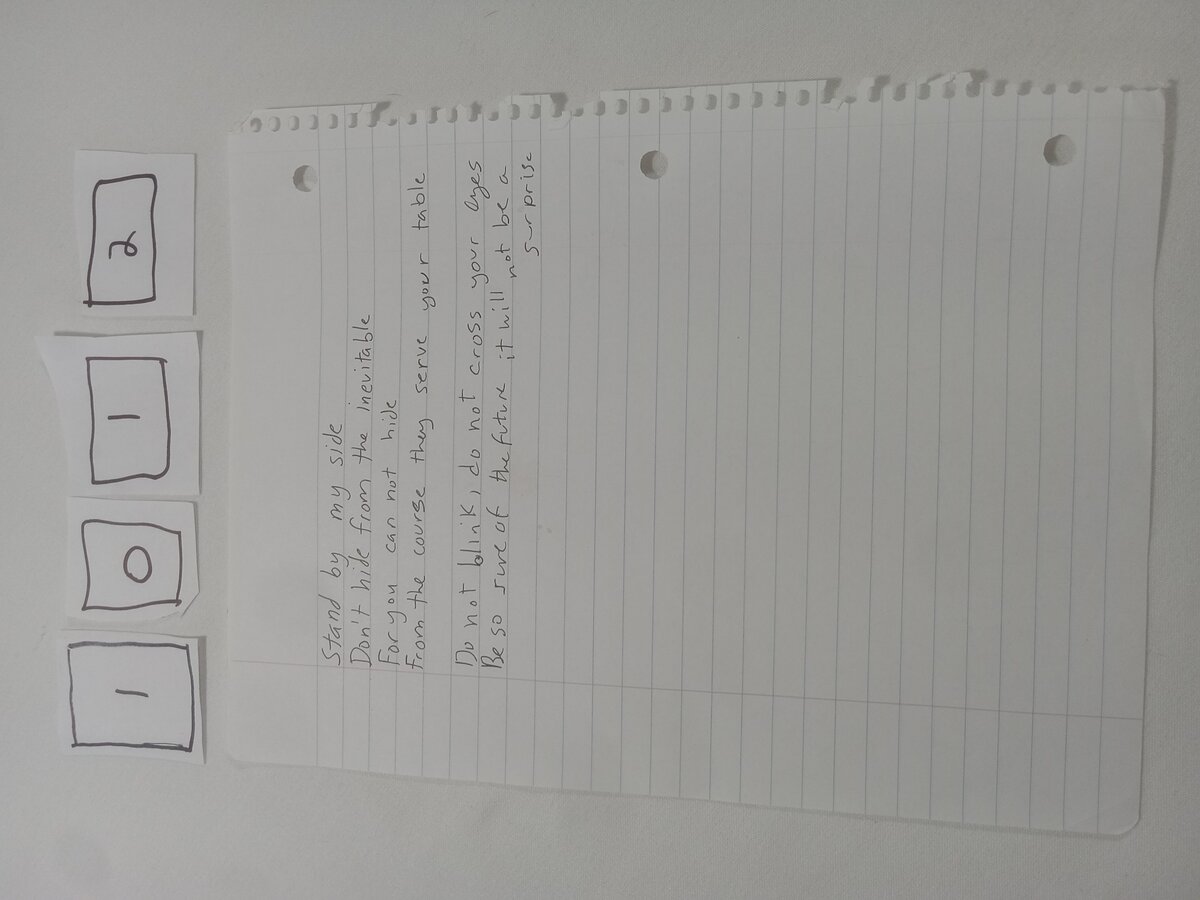
Picture 1 of 2
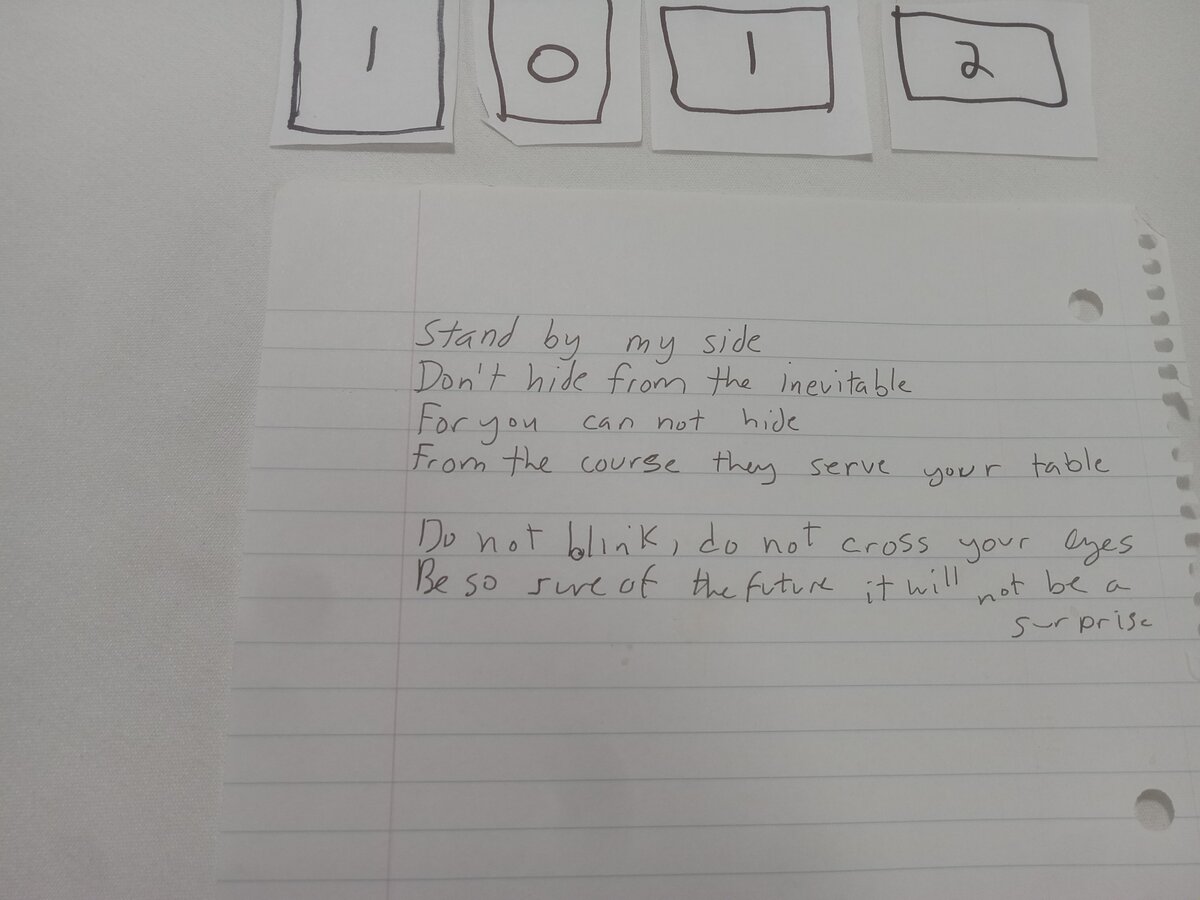
Picture 2 of 2
The words on this page
Stand by my side
Don't hide from the inevitable
For you can not hide
From the course they serve your table
Do not blink, do not cross your eyes
Be so sure of the future it will not be a
surprise
---
Stand by my side
Don't hide from the inevitable
For you can not hide
From the course they serve your table
Do not blink, do not cross your eyes
Be so sure of the future it will not be a
surprise
Don't hide from the inevitable
For you can not hide
From the course they serve your table
Do not blink, do not cross your eyes
Be so sure of the future it will not be a
surprise
---
Stand by my side
Don't hide from the inevitable
For you can not hide
From the course they serve your table
Do not blink, do not cross your eyes
Be so sure of the future it will not be a
surprise
Item 1013
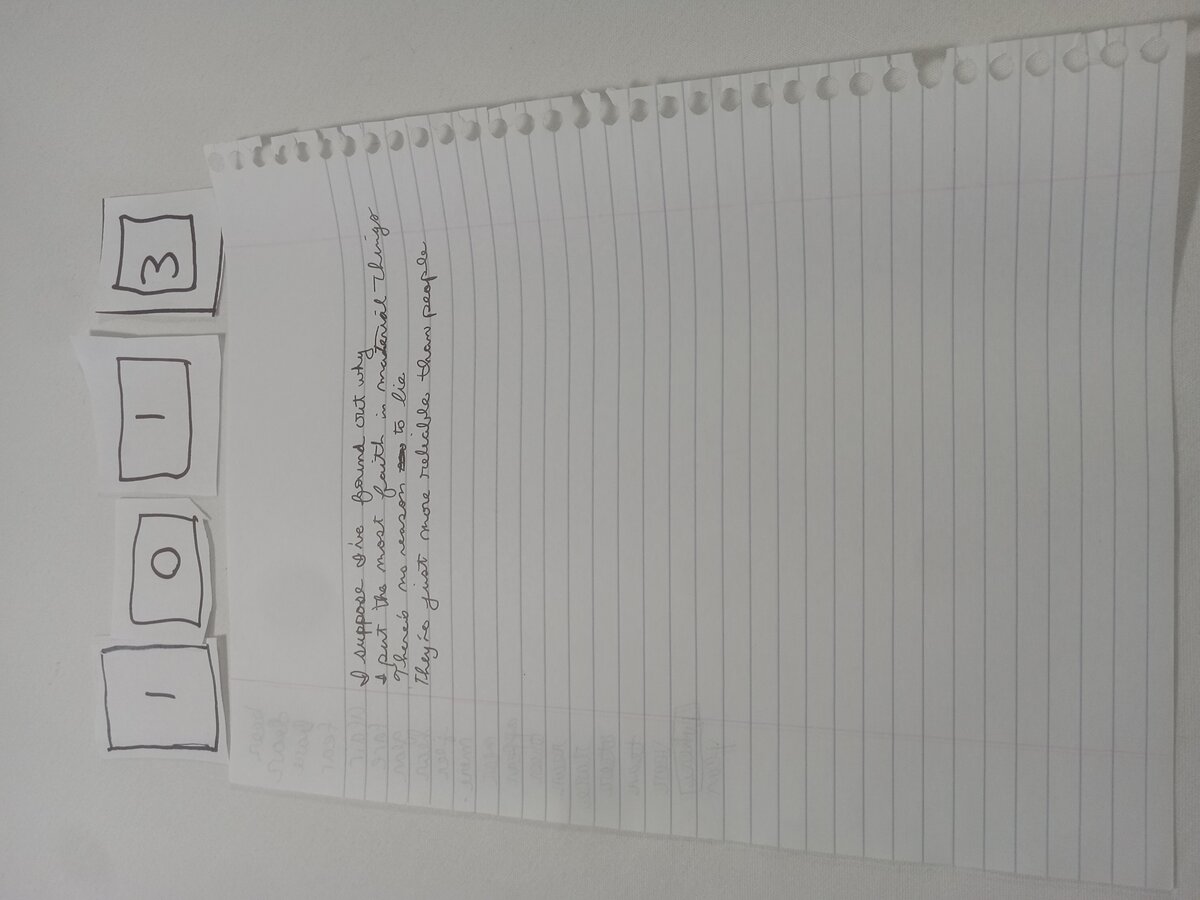
I suppose i've found out why
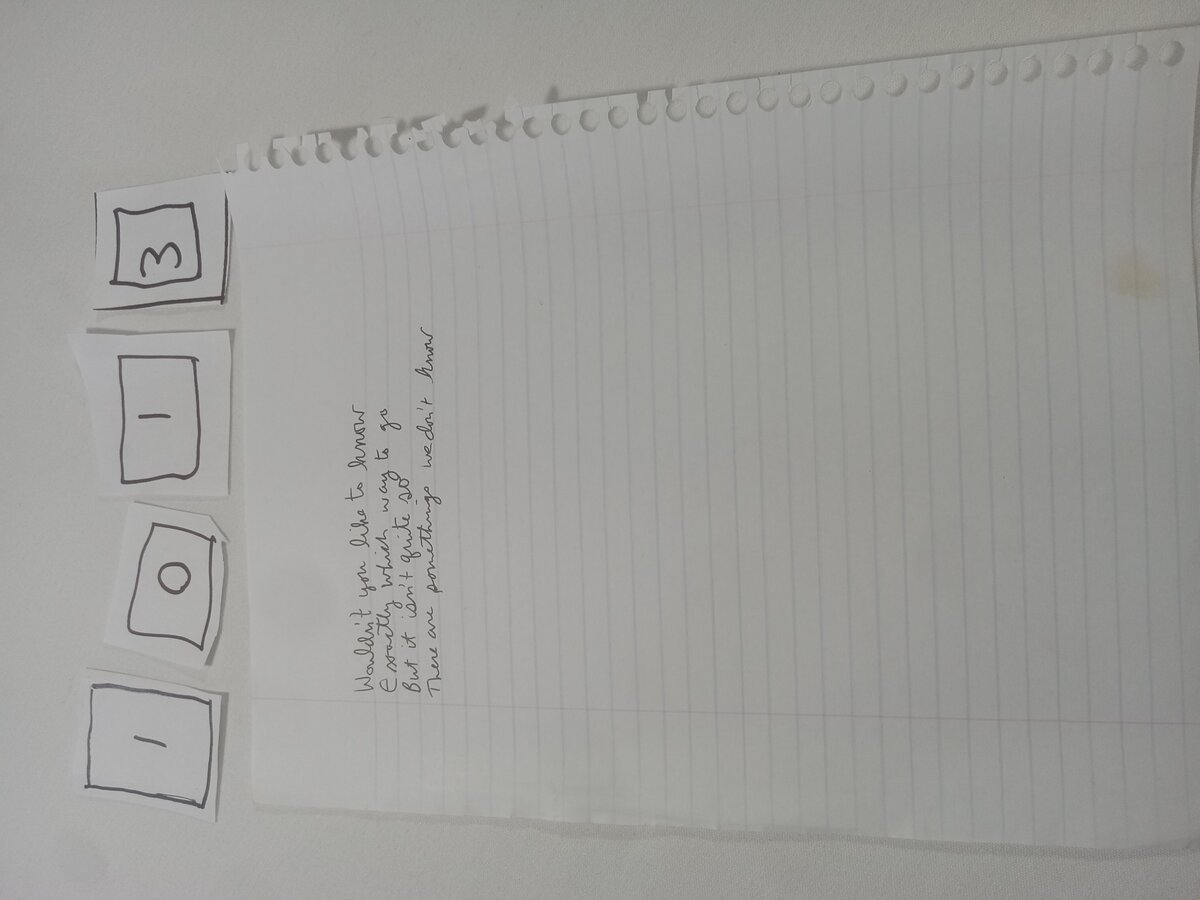
Lined notebook paper accompanied by small hand-drawn number cards.
- Why it matters
- Tom writes this
- Type
- Handwritten sheet
- Collection
- Tom writes this
- Published in
- PREVIOUSLY UNPUBLISHEDSearched against the 34 albums, every book and Poems By Tom - found in none of them
Price · Tier · Tom fills these
Picture 1 of 2
Picture 2 of 2
The words on this page
I suppose i've found out why
I put the most faith in material things
There's no reason to lie
They is just more reliable than people
---
Wouldn't you like to know
Exactly which way to go
But it isn't quite so
There are somethings we don't know
I put the most faith in material things
There's no reason to lie
They is just more reliable than people
---
Wouldn't you like to know
Exactly which way to go
But it isn't quite so
There are somethings we don't know
Item 1014
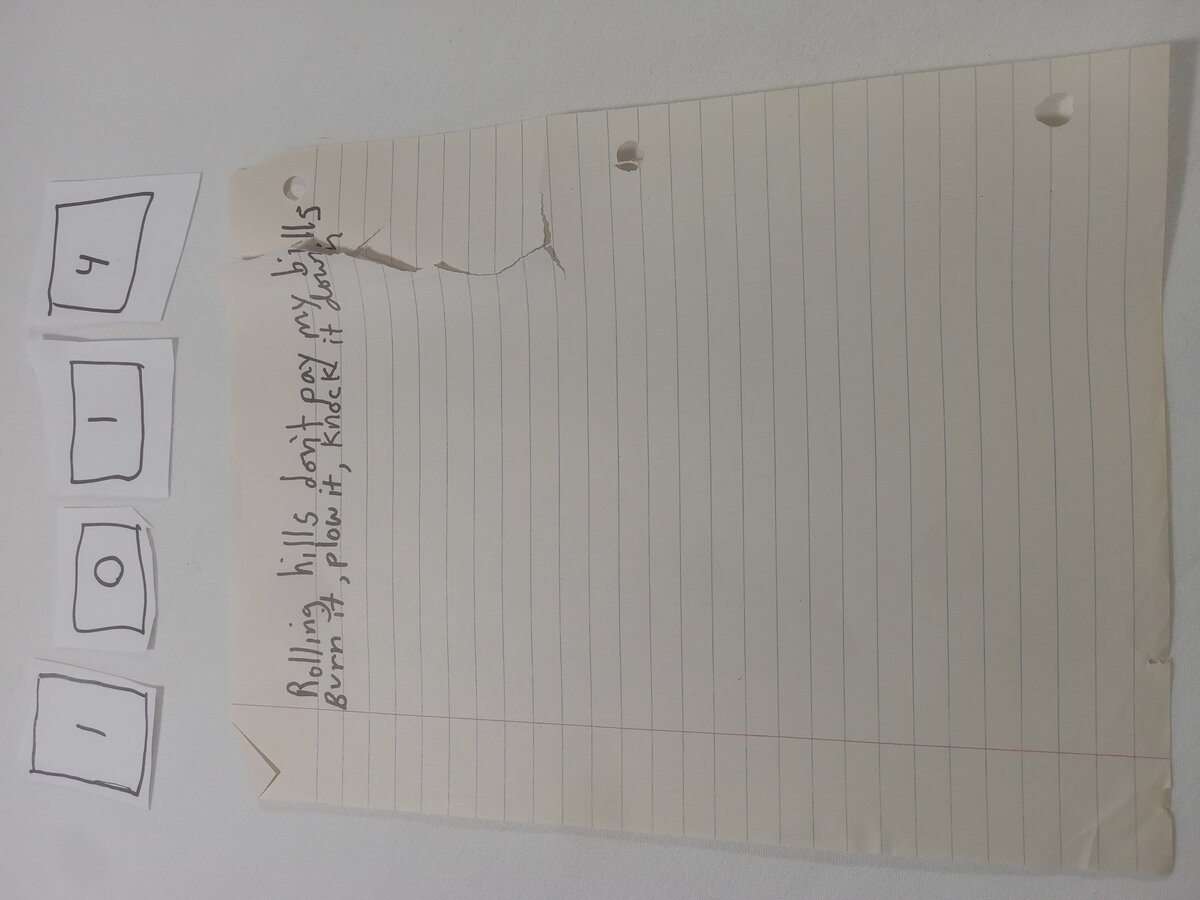
Rolling hills don't pay my bills
Lined, spiral-bound notebook paper with black ink handwriting.
- Why it matters
- Tom writes this
- Type
- Handwritten sheet
- Collection
- Tom writes this
- Published in
- PREVIOUSLY UNPUBLISHEDSearched against the 34 albums, every book and Poems By Tom - found in none of them
Price · Tier · Tom fills these
The only picture of this piece
The words on this page
Rolling hills don't pay my bills
Burn it, plow it, knock it down [?]
Burn it, plow it, knock it down [?]
Item 1015
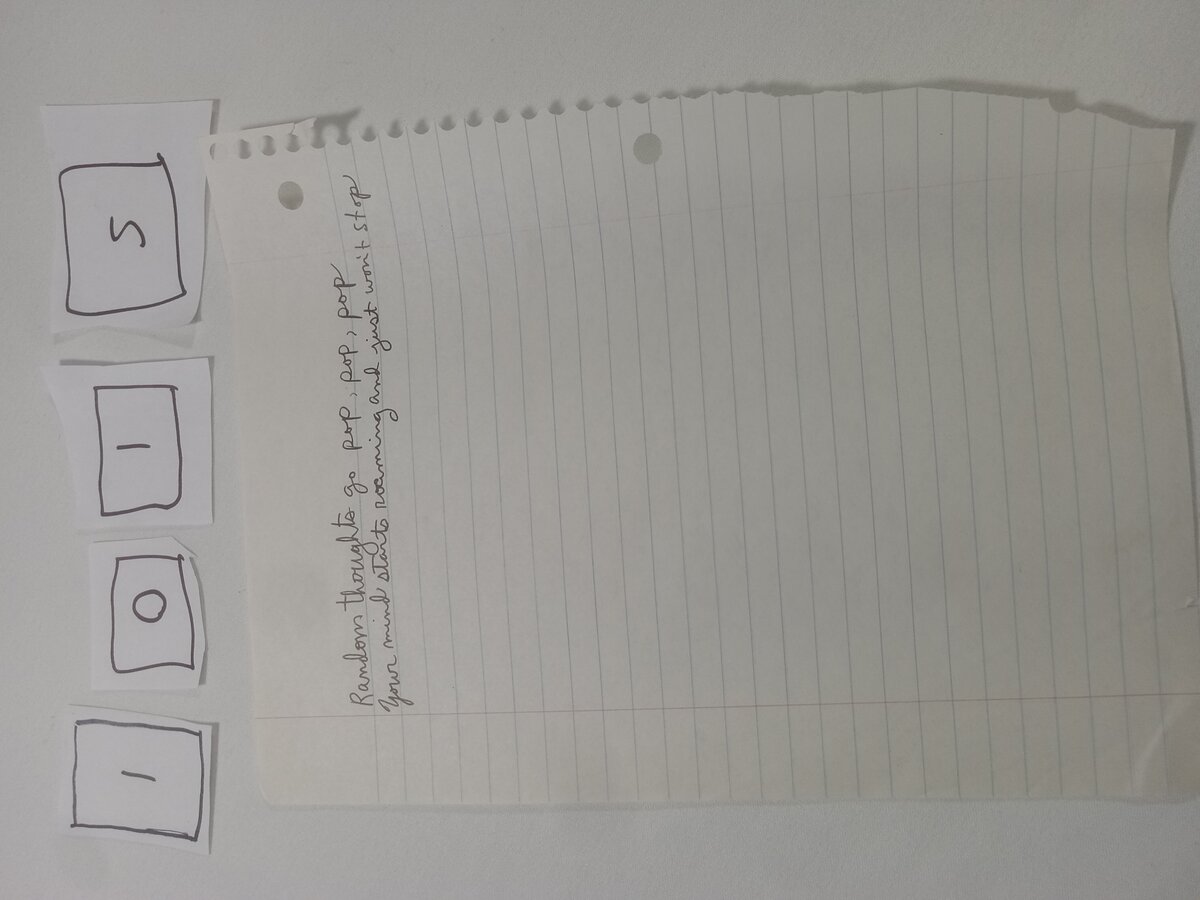
Random thoughts go pop, pop, pop
A single sheet of lined, spiral-bound notebook paper.
- Why it matters
- Tom writes this
- Type
- Handwritten sheet
- Collection
- Tom writes this
- Published in
- IN A BOOKThe Laima Dedication Anthology (2011)
- Age when written
- written by age 33 at the latestdated from the earliest book it appears in - the sheet itself may be older
Price · Tier · Tom fills these
The only picture of this piece
The words on this page
Random thoughts go pop, pop, pop
Your mind starts roaming and just won't stop
Your mind starts roaming and just won't stop
Item 1016
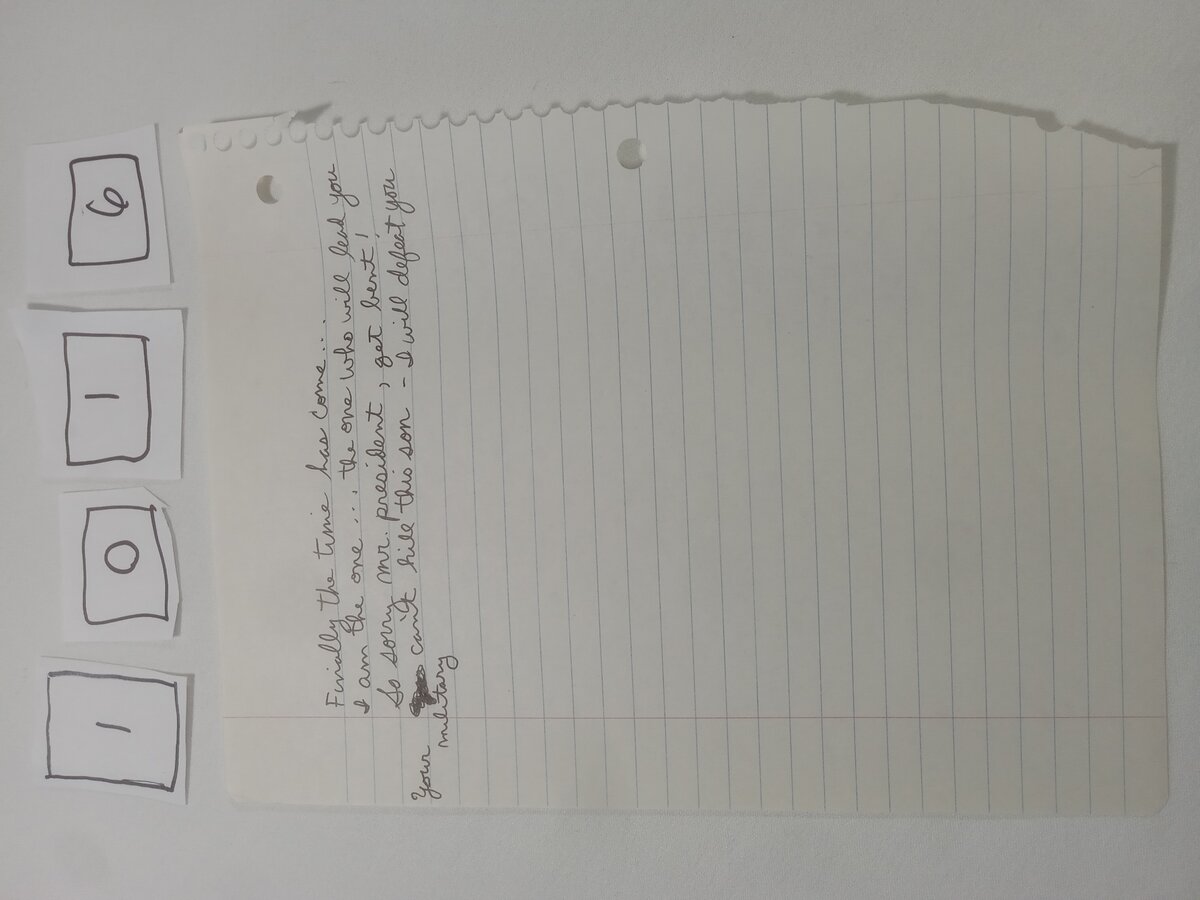
Finally the time has come...
A sheet of torn lined notebook paper with handwritten text in dark ink.
- Why it matters
- Tom writes this
- Type
- Handwritten sheet
- Collection
- Tom writes this
- Published in
- IN A BOOKShorter Lyrics (2013)
The 714-Page Book (2012)
The Laima Dedication Anthology (2011) - Age when written
- written by age 33 at the latestdated from the earliest book it appears in - the sheet itself may be older
Price · Tier · Tom fills these
The only picture of this piece
The words on this page
Finally the time has come...
I am the one... the one who will lead you
So sorry mr. president, get bent!
I can't hire this son - I will defeat your
military
I am the one... the one who will lead you
So sorry mr. president, get bent!
I can't hire this son - I will defeat your
military
Item 1017
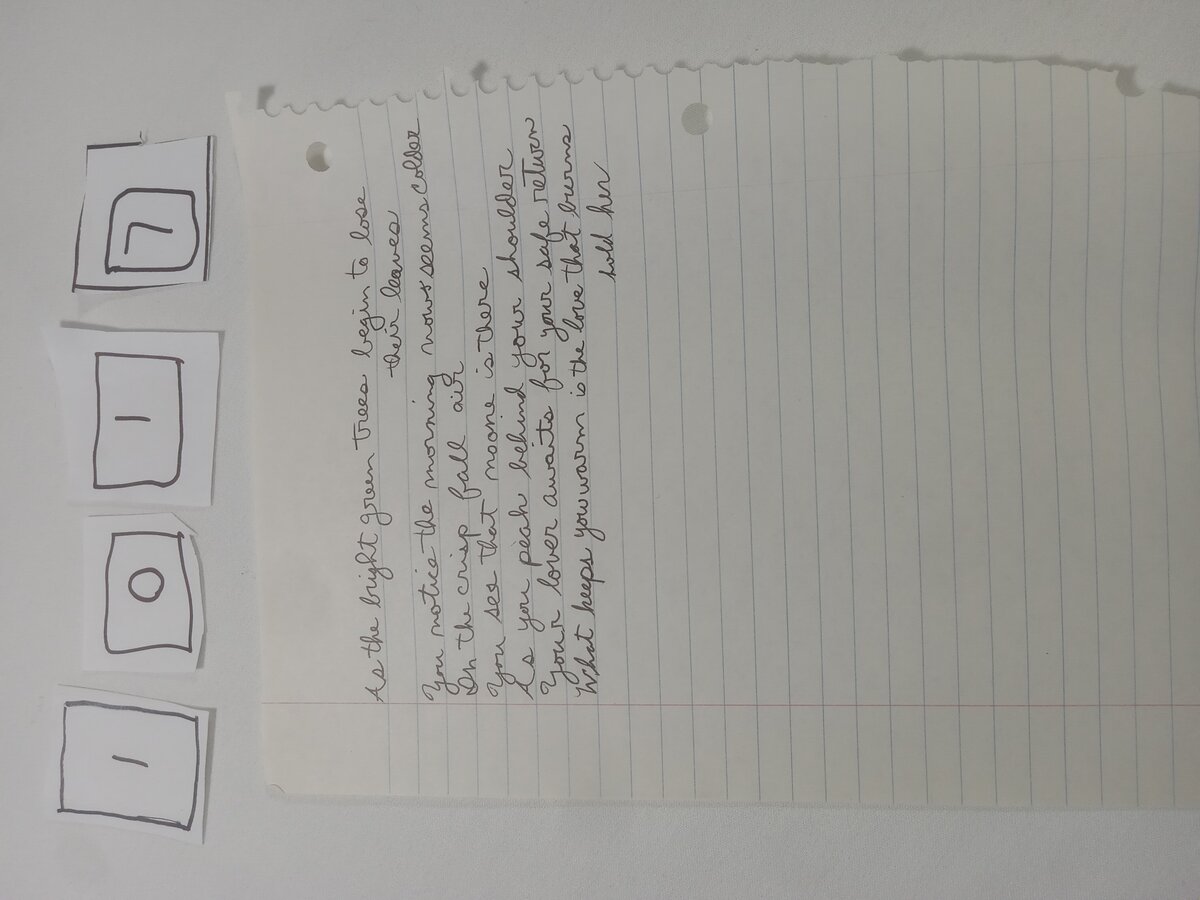
As the bright green trees begin to lose
A handwritten poem on a single sheet of lined notebook paper with ragged edges.
- Why it matters
- Tom writes this
- Type
- Handwritten sheet
- Collection
- Tom writes this
- Published in
- IN A BOOKTom Jensen Poem Anthology (2013)
The 714-Page Book (2012)
The Laima Dedication Anthology (2011) - Age when written
- written by age 33 at the latestdated from the earliest book it appears in - the sheet itself may be older
Price · Tier · Tom fills these
The only picture of this piece
The words on this page
As the bright green trees begin to lose
their leaves
You notice the morning now seems colder
On the crisp fall air
You see that moone is there
As you peak behind your shoulder
Your lover awaits for your safe return
What keeps you warm is the love that burns
hold her
their leaves
You notice the morning now seems colder
On the crisp fall air
You see that moone is there
As you peak behind your shoulder
Your lover awaits for your safe return
What keeps you warm is the love that burns
hold her