🎴 PAGE E — THE ALL-IN-ONE CARD
This is the whole set on one page. Pages A, B, and C each show a different slice of every artist — the stats, the story, the full card. Page E fuses all three into a single card per artist, so you never have to click between pages to get the complete picture.
Cards are grouped by era, highest score first inside each era. Use the sort switcher below to jump by Era, by Rank/Score, or alphabetically by Name — and every card has a button straight back to its main stats card on Page A.
FIVE PAGES. ONE CARD SET.
- PAGE D — The (D)evolution of Music: the front door. A century-long story of how the sound, the business, and the culture mutated — the thesis, a 100-year timeline, ten lineage "bloodlines," the Five Titans, and what the pattern predicts.
- PAGE A — Full Roster & Rankings: all 391 artists sorted by locked Score, highest to lowest. Rank, Score, and Board (Gold = Bands & Groups, Blue = Solo Men, Pink = Solo Women).
- PAGE C — Card Gallery: every artist’s full card — photo, all 10 category scores, archetype, tagline and bio — grouped by Board, for browsing the whole set by type instead of by rank.
- PAGE B — Discovery Stories: the deep dive. Strength/Weakness, Discovery Story, Top 3 Songs, Top 3 Albums, the Defining Public Story, and Why They Made the List.
- PAGE E — The All-In-One Card: every artist’s entire profile fused onto a single card — the stats and score from Page A, the discovery story, top songs & albums, public story and “why they made the list” from Page B, and the full bio from Page C. Grouped by era, highest score first.
👉 YOU ARE HERE: PAGE E — the all-in-one card. Every artist’s complete profile on a single card, no clicking out.
All Ways to Sort
The Jazz Age — 1920s
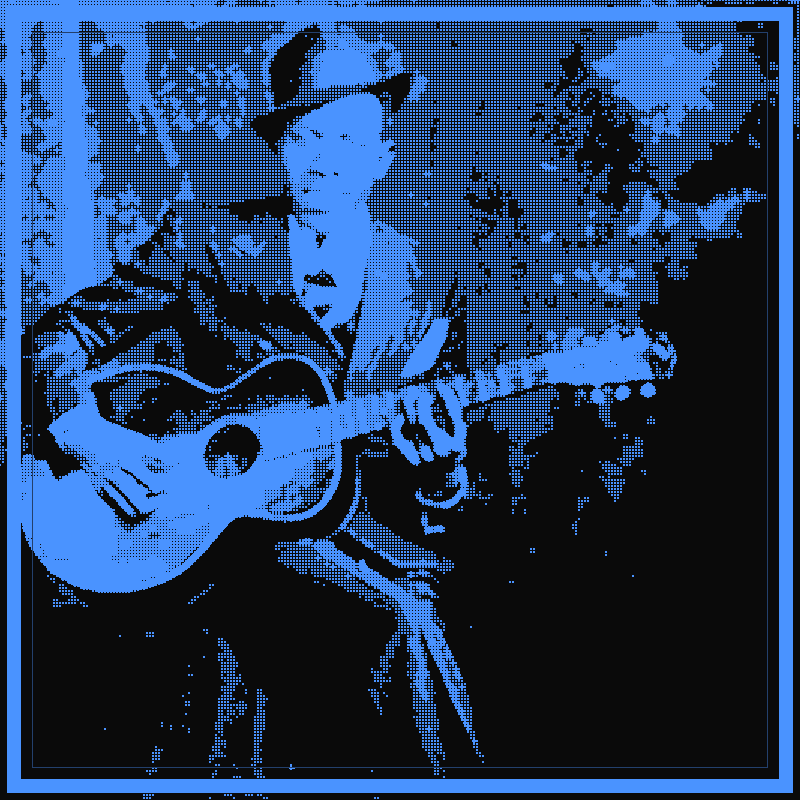
Influence 100, Identity 100, Culture 96. Robert Johnson left only 29 songs and a myth about selling his soul at the crossroads, but those recordings are the foundation of blues and rock guitar. Clapton, Keith Richards, and every blues player since traces back to him. Commercial 60 is honest — he sold almost nothing alive. Influence 100 is the only number that matters.
Born in Hazlehurst, Mississippi in 1911, Robert Johnson left almost no verified biographical record — two photographs exist and his birthdate was contested for decades. He grew up in the Mississippi Delta, moved between plantations and small towns, and absorbed the blues tradition from Son House. The legend that he sold his soul to the devil at a crossroads in exchange for his guitar mastery is not documented fact but is inseparable from his cultural identity.
- Cross Road Blues
- Sweet Home Chicago
- Love in Vain
- Hellhound on My Trail
- Come On in My Kitchen
- King of the Delta Blues Singers (1961)
- King of the Delta Blues Singers Vol. 2 (1970)
He died on August 16, 1938, at approximately 27 in Greenwood, Mississippi. The cause of death is unknown — no death certificate was filed at the time. Local accounts suggest poisoning but this was never confirmed. He is one of the earliest members of what became known as the 27 Club.
910/1000. Influence 100, Identity 100. 29 recordings. The foundation of blues and rock guitar.
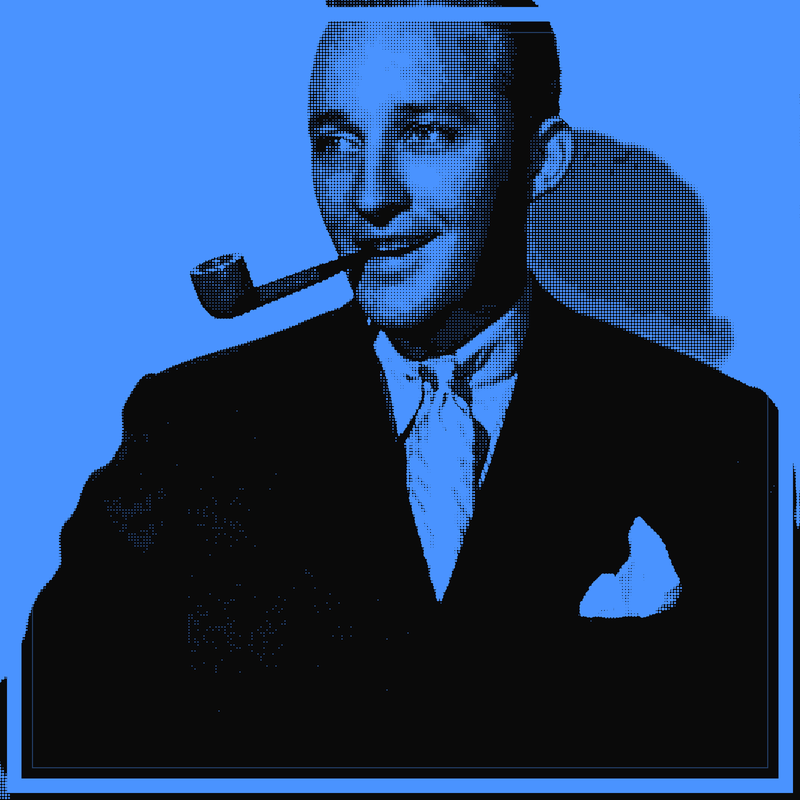
Commercial 98, Influence 96, Catalog 92. Bing Crosby invented modern pop singing — the intimate, microphone-aware crooning style every vocalist since has used. White Christmas remains the best-selling single ever. He was the most popular recording artist of the first half of the 20th century and shaped Sinatra, Dean Martin, and all who followed.
Born Harry Lillis Crosby Jr. in Tacoma, Washington in 1903 and raised in Spokane. He came up through vaudeville and radio before becoming the first multimedia entertainment superstar — simultaneously the biggest recording artist, radio personality, and box office draw in America during the 1940s. His relaxed, conversational baritone was revolutionary; he essentially invented the modern popular singing technique that everything after descends from.
- White Christmas
- Swinging on a Star
- Don't Fence Me In
- True Love (with Grace Kelly)
- Pennies from Heaven
- Merry Christmas (1945)
- The Radio Years (compilation)
- White Christmas (1954 film soundtrack)
- Fancy Meeting You Here (1958, with Rosemary Clooney)
His son Gary Crosby published a memoir in 1983 alleging physical abuse during childhood, which generated significant attention. Bing Crosby died of a heart attack on October 14, 1977, on a golf course in Spain moments after completing a round.
Performance 96, Catalog 94. White Christmas is the best-selling physical single in history. The architect of the crooner tradition and the first true pop superstar.
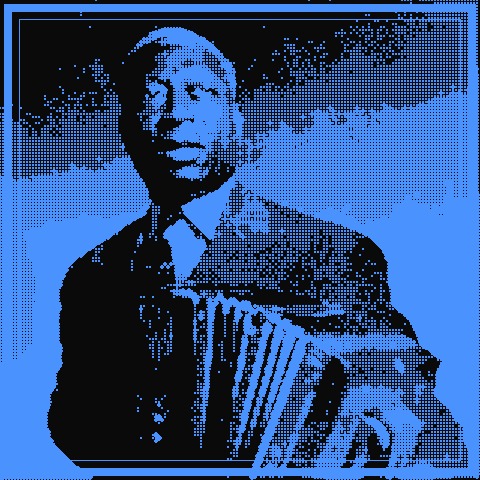
Influence 96, Catalog 88, Culture 92. Lead Belly was a walking archive of American folk, blues, and work songs. Goodnight Irene, Where Did You Sleep Last Night, Cotton Fields — he preserved and transformed a songbook that Dylan, the folk revival, and Nirvana all drew from. The bridge between the field holler and the modern song.
Born Huddie William Ledbetter in Mooringsport, Louisiana in 1888 — possibly 1889 — near the Texas border. He grew up in Caddo Lake territory and learned guitar and 12-string from his family and community. He was convicted of murder in Texas in 1917 and received a pardon from the governor, allegedly after performing for him. He was later convicted of attempted murder in Louisiana and was pardoned by that governor as well, again allegedly following a performance. John Lomax and Alan Lomax recorded him at Angola Prison in 1933 for the Library of Congress — the beginning of his path to wider recognition.
- Midnight Special
- Goodnight, Irene
- Where Did You Sleep Last Night
- Cotton Fields
- Rock Island Line
- Negro Sinful Songs (1940)
- Leadbelly's Last Sessions (1948)
- Sings Folk Songs (1962)
- Library of Congress Recordings (1933-40)
He died of amyotrophic lateral sclerosis (ALS) in New York City on December 6, 1949, at approximately 61. His song Goodnight, Irene reached number one posthumously — performed by the Weavers — becoming one of the best-selling songs of 1950. Nirvana's cover of Where Did You Sleep Last Night on MTV Unplugged introduced him to a new generation in 1993.
Identity 100, Influence 92. Where Did You Sleep Last Night is one of the most haunting songs in American music. He was pardoned from prison twice for his singing. Both things are true.
The Swing Era — 1930s
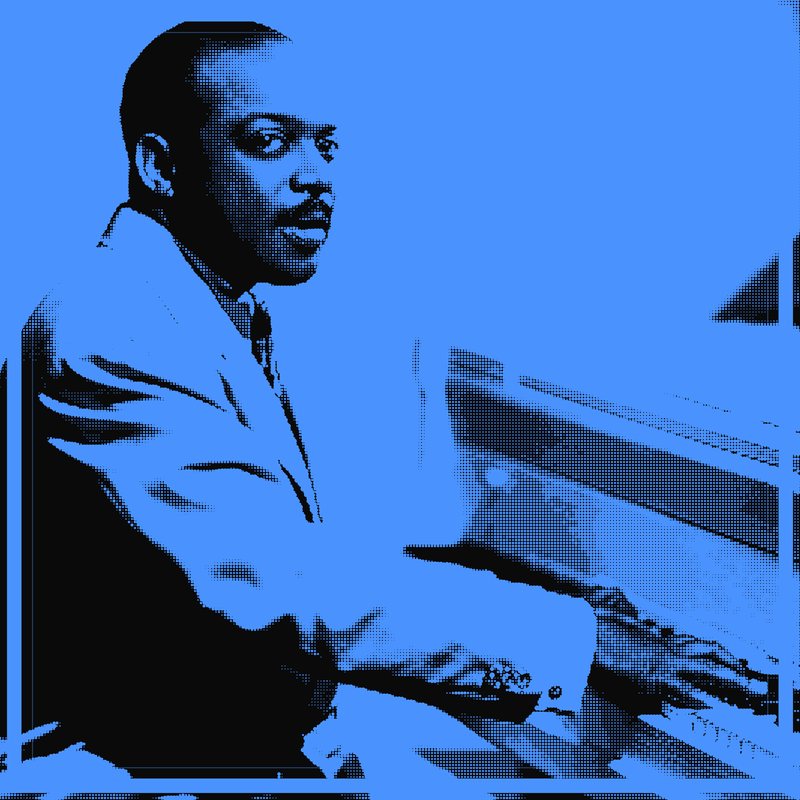
Catalog 92, Identity 96, Performance 94. Count Basie led one of the definitive big bands for nearly fifty years, defining Kansas City swing with its relaxed, riff-based power. One O'Clock Jump is a standard. His rhythm section set the gold standard, and his influence runs through all of jazz and R&B.
Born William James Basie in Red Bank, New Jersey in 1904, Count Basie moved to Kansas City in the late 1920s and found the swing capital of the United States — a wide-open city whose jazz scene was shaped by political corruption, late-night clubs, and a culture of competitive musical improvisation. Kansas City made his rhythm section approach; New Jersey gave him his first piano lessons.
- One O'Clock Jump
- Jumpin' at the Woodside
- April in Paris
- Lil' Darlin'
- Shiny Stockings
- The Atomic Mr. Basie (1958)
- April in Paris (1956)
- Kansas City Suite (1961)
- Basie Plays Hefti (1958)
He died of pancreatic cancer in 1984. He wore a cast on his foot for his final public appearance, having suffered health issues throughout his later years. He kept his band working until nearly the end. His wife Catherine died in 1983, just before him. His legacy is administered by the Count Basie Orchestra, which continues to perform under various directors.
915/1000. Catalog 92, Identity 96. One of the definitive big bands for nearly fifty years.
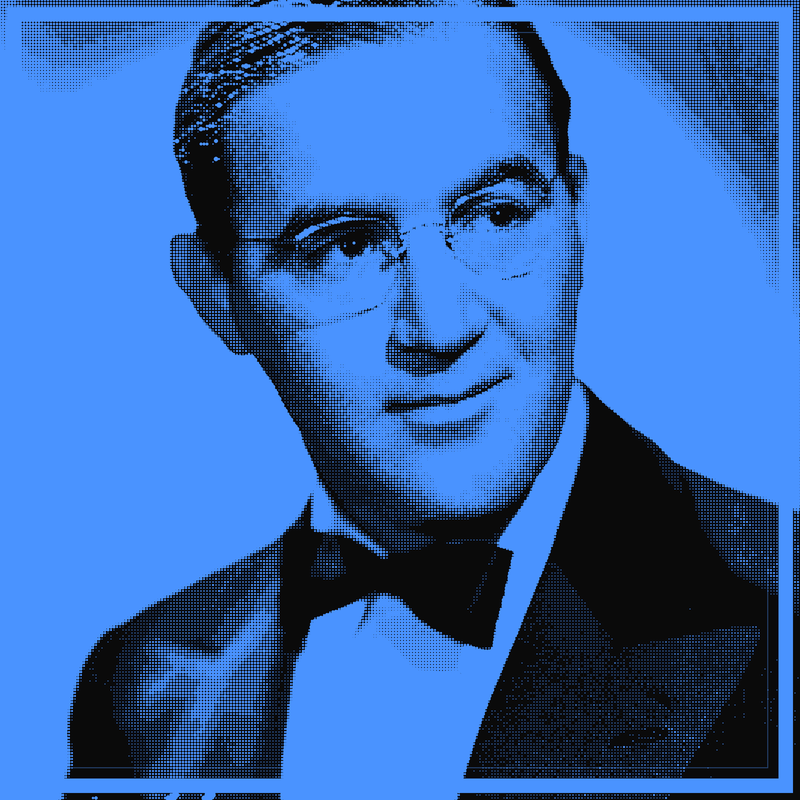
Performance 96, Commercial 92, Peaks 94. Benny Goodman was the King of Swing — his 1938 Carnegie Hall concert legitimized jazz as concert music. A virtuoso clarinetist, he also integrated his band when that was nearly unheard of. Sing, Sing, Sing is the swing era's defining performance.
Born Benjamin David Goodman in Chicago in 1909, the ninth of twelve children of Russian Jewish immigrants in the Maxwell Street neighborhood. He learned clarinet at the Kehelah Jacob Synagogue boys' club. His Jewish immigrant upbringing on Chicago's West Side shaped his ferocious work ethic. He became the King of Swing at the height of the big band era and used his platform in ways that were unusual for the time.
- Sing Sing Sing
- Stompin' at the Savoy
- Moonglow
- Don't Be That Way
- Let's Dance
- The Famous 1938 Carnegie Hall Jazz Concert (1950)
- The Benny Goodman Story (1956)
- B.G. in Hi-Fi (1954)
- Benny Goodman Sextet Featuring Charlie Christian (1939-41)
His 1938 Carnegie Hall Jazz Concert — the first jazz concert ever held at Carnegie Hall — was racially integrated, featuring Black musicians Lionel Hampton, Teddy Wilson, and Gene Krupa on the same stage at a time when this was far from the norm. He was widely recognized for this stand. He died of a heart attack in 1986 at 77.
910/1000. Studio Craft 96, Performance 96. The King of Swing. His 1938 Carnegie Hall concert is the most important single jazz performance ever staged.
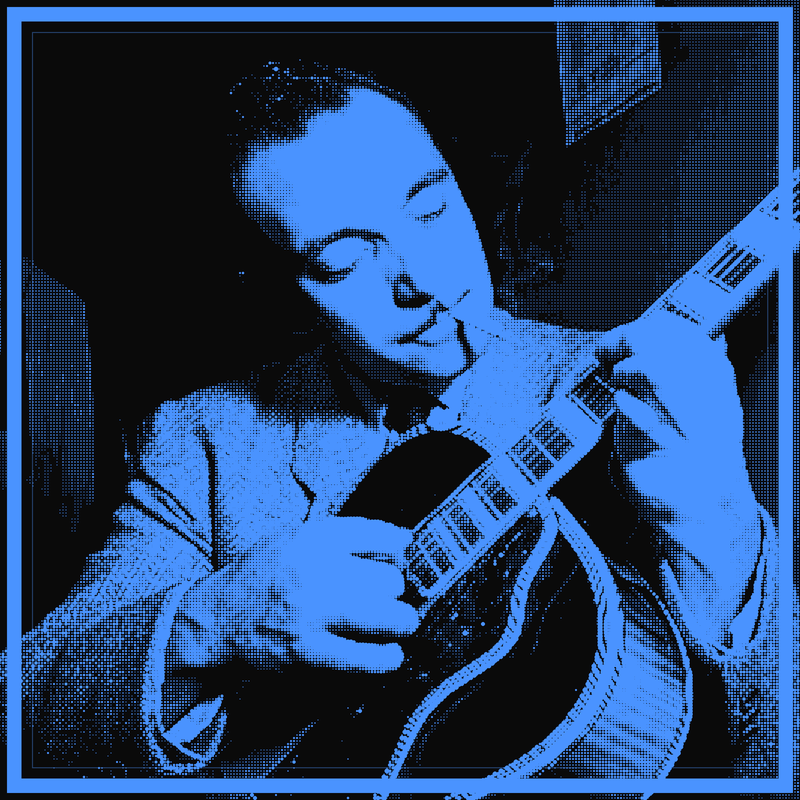
Performance 98, Influence 96, Identity 98. Django Reinhardt invented gypsy jazz and remains one of the most influential guitarists ever — astonishing given he played with only two fully functional left-hand fingers after a fire. Minor Swing and his work with the Quintette du Hot Club de France set a standard guitarists still chase.
Born Jean Reinhardt in Liberchies, Belgium in 1910 into a Romani (Manouche) family who traveled the caravan routes of Western Europe. At 18, a fire in his caravan burned his left hand so severely that two fingers were permanently paralyzed. He developed an entirely new guitar technique using only two fully functioning fingers on his fretting hand, inventing a style no one has ever fully replicated. His Romani cultural heritage and his accident are equally the foundation of his art.
- Minor Swing
- Nuages
- Django
- Tears
- Swing 39
- Django Reinhardt and Stéphane Grappelli with the Quintet of the Hot Club of France (1936)
- Djangology (1949)
- The Quintessential Django Reinhardt
- Peche a la Mouche (1953 sessions)
He never learned to read music. He died of a brain hemorrhage in Fontaine-de-Voire, France on May 16, 1953, at 43. His Romani heritage meant he faced significant discrimination throughout his career, though his genius was recognized across racial lines in the jazz world.
Performance 98, Identity 96. The greatest jazz guitarist in history. He played with two paralyzed fingers and invented a technique nobody has matched.
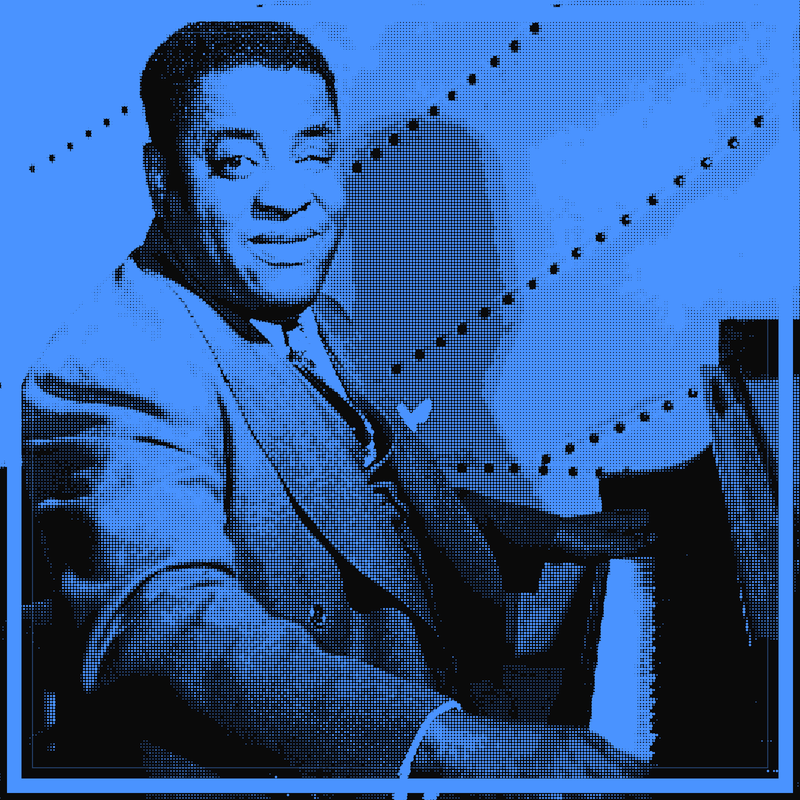
Performance 100, Influence 96, Identity 96. Art Tatum had perhaps the greatest technique in the history of jazz piano — so advanced that classical virtuosos came to study him. Nearly blind, he reharmonized standards with a speed and complexity that intimidated every pianist who heard him. Tiger Rag is a clinic.
Born in Toledo, Ohio in 1909, Art Tatum was nearly blind from birth due to cataracts and a childhood injury. He taught himself piano largely by ear, absorbing the stride piano tradition and then exploding beyond it. He moved to New York in 1932 and immediately stunned the jazz world — Fats Waller reportedly stood up when Tatum walked into a club and announced that God himself had arrived. His technical facility was so extraordinary that other pianists refused to follow him on stage.
- Tea for Two
- Tiger Rag
- Body and Soul
- Willow Weep for Me
- Sweet Lorraine
- The Art Tatum Solo Masterpieces (1953–55)
- The Genius of Art Tatum (1953)
- Art Tatum - Ben Webster Quartet (1956)
- Piano Starts Here (1949/1972)
He died of uremia on November 5, 1956, at 47. His blindness defined his biography — he navigated the world by sound and touch, never reading sheet music, performing everything from memory with an accuracy and elaboration that trained concert pianists considered impossible. Vladimir Horowitz heard him play and said he was the greatest pianist alive.
Performance 100. The greatest technical pianist in jazz history. Other pianists have said he was playing things that shouldn't have been physically possible.

Commercial 96, Peaks 94, Identity 94. Glenn Miller had the most popular band in America during the war years. In the Mood, Moonlight Serenade, and Chattanooga Choo Choo defined the sound of the early 1940s. His mysterious disappearance over the English Channel in 1944 sealed his myth.
Born Alton Glenn Miller in Clarinda, Iowa in 1904 and raised across Colorado and Nebraska as his family moved for work. He was a trombonist who worked his way through the dance band circuit, playing with Ben Pollack and Tommy Dorsey among others, before forming his own band in 1938. His patented sound — a clarinet lead over four saxophones — became the defining sound of the Swing Era and the soundtrack of World War II America.
- In the Mood
- Moonlight Serenade
- Pennsylvania 6-5000
- Tuxedo Junction
- String of Pearls
- The Popular Recordings (1938–42)
- Glenn Miller Plays Selections from 'The Glenn Miller Story'
- In the Mood (compilation)
- Chesterfield Broadcasts (1939-42)
He died on December 15, 1944, when his single-engine aircraft disappeared over the English Channel en route from England to Paris, where he was to perform for Allied troops. He was 40. The aircraft and his remains were never found. The circumstances of his death remain officially undetermined and have been the subject of various theories.
Commercial 97, Performance 90. In the Mood is the defining swing song. His music was the soundtrack of World War II — the most commercially dominant band of the early 1940s.
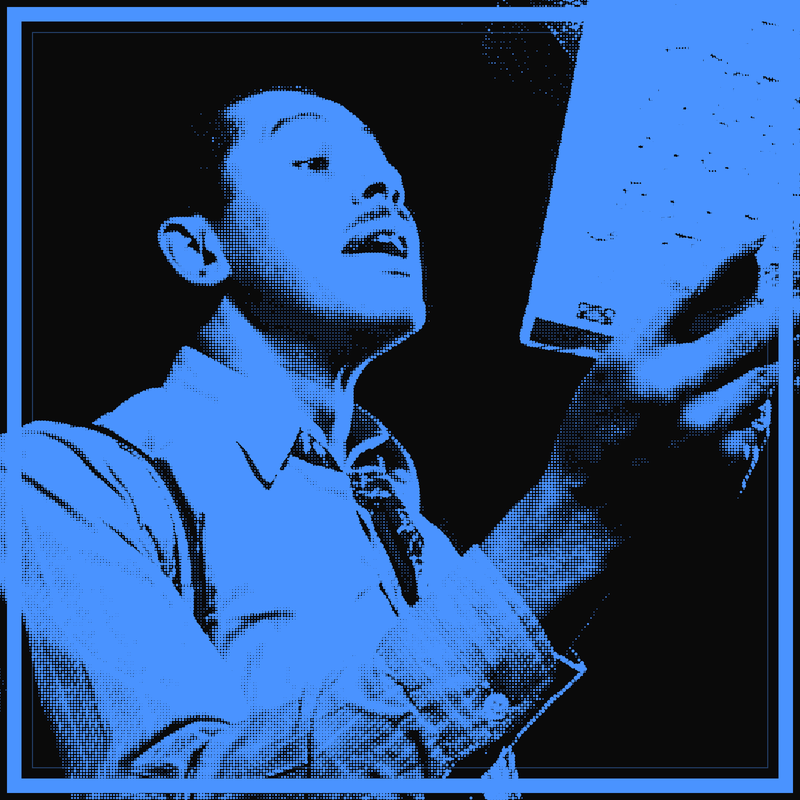
Performance 98, Identity 98, Versatility 90. Cab Calloway was the ultimate showman — bandleader, scat singer, dancer, entertainer. Minnie the Moocher and his hi-de-ho call-and-response electrified the Cotton Club. His energetic, theatrical style prefigured everything from James Brown to hip hop performance.
Born Cabell Calloway III in Rochester, New York in 1907 and raised in Baltimore, Maryland. He came up through Baltimore's Black church and theater circuit and moved to Harlem in the late 1920s where he became the house bandleader at the Cotton Club following Duke Ellington. His scat singing — particularly the Hi-De-Ho call and response with audiences — made him one of the most interactive and physically expressive performers of the Swing Era. His style influenced everyone from Louis Armstrong's scatting to hip hop's improvisational tradition.
- Minnie the Moocher
- The Jumpin' Jive
- Hi-De-Ho Man
- Reefer Man
- St. James Infirmary Blues
- Cab Calloway and His Orchestra (1931-34)
- Hi De Ho Man (1947)
- Are You Hep to the Jive? (1940s sessions)
- Are You Hep to the Jive? (1940s sessions)
He was the subject of racial discrimination throughout his career — performing for white-only Cotton Club audiences while being Black himself. His portrayal of Sportin' Life in the Gershwin opera Porgy and Bess, which he performed on Broadway for years, became one of the defining theatrical performances in American music history. He appeared in the Blues Brothers film in 1980 at 73 and introduced his catalog to a new generation.
Performance 96, Identity 92. Minnie the Moocher is one of the great novelty performances in American music history. He invented the theatrical call-and-response between performer and audience.
Bebop & Crooners — 1940s
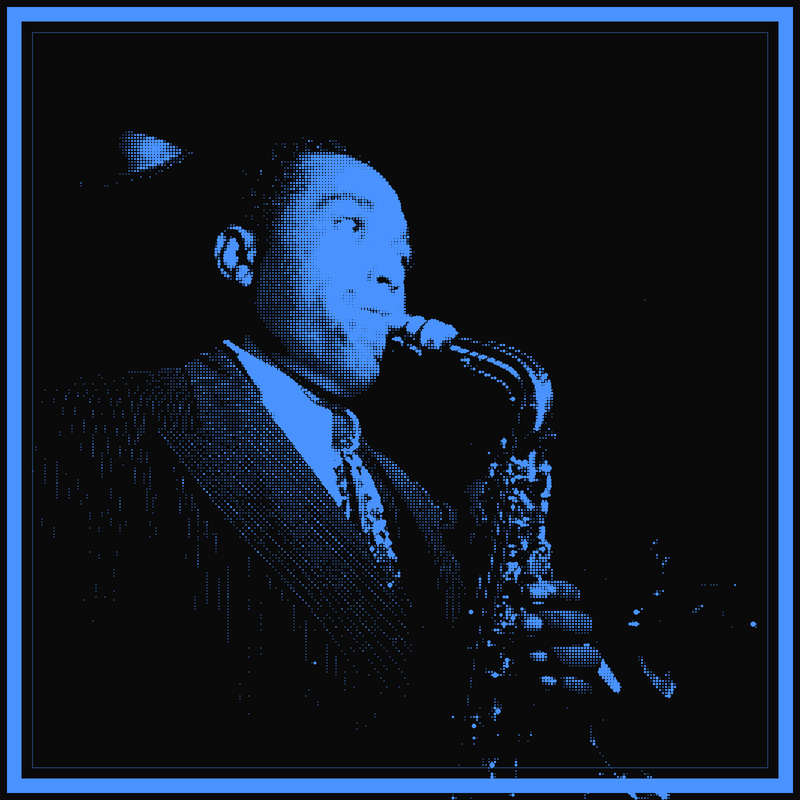
Performance 100, Influence 100, Identity 100. Charlie Parker co-invented bebop and changed jazz forever. His harmonic and rhythmic innovations on alto sax — Ko-Ko, Ornithology, Now's the Time — are the foundation of modern jazz. Dead at 34, he compressed a revolution into fifteen years. Bird lives.
Born in Kansas City, Kansas in 1920 and raised in Kansas City, Missouri, Charlie Parker — Bird — emerged from the Midwestern jazz scene to co-invent bebop with Dizzy Gillespie in New York in the early 1940s. The Kansas City tradition of blues-drenched jazz shaped his ear before he revolutionized what jazz could do.
- Ko-Ko
- Ornithology
- Now's the Time
- Confirmation
- Yardbird Suite
- The Charlie Parker Story (1956)
- Bird and Diz (1950)
- Charlie Parker with Strings (1950)
- Jazz at Massey Hall (1953)
His heroin addiction, which began as a teenager, defined and destroyed his life. He died in 1955 at 34 — the coroner estimated his age at 50-60 from the damage to his body. His death is one of the most documented tragedies in jazz history.
955/1000. Performance 100, Influence 100, Identity 100. Reinvented bebop. Dead at 34.
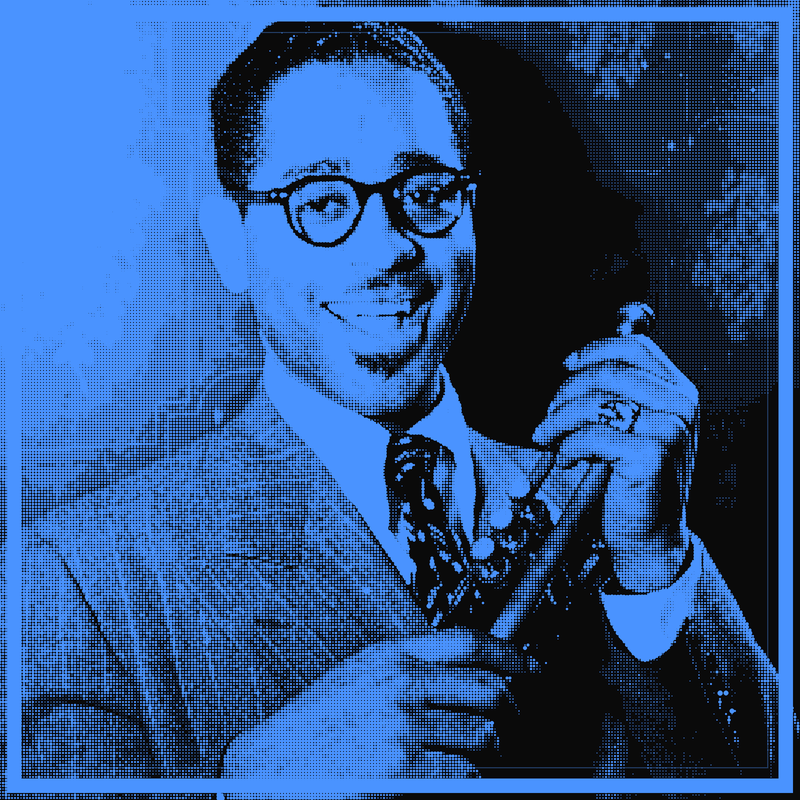
Influence 96, Performance 98, Versatility 92. Dizzy Gillespie co-founded bebop alongside Charlie Parker and pioneered Afro-Cuban jazz. A Night in Tunisia and Manteca are standards. A virtuoso trumpeter and natural showman, he was also a tireless ambassador for jazz worldwide for over fifty years.
Born John Birks Gillespie in Cheraw, South Carolina in 1917, the youngest of nine children, Dizzy Gillespie grew up in poverty and moved north as a teenager. His signature bent trumpet bell — developed after a mishap at a birthday party in 1953 bent his horn, and he found he preferred the sound — became the most recognizable image in jazz after his own puffed cheeks.
- A Night in Tunisia
- Manteca
- Salt Peanuts
- Groovin' High
- Hot House
- Dizzy Gillespie and His Big Band (1947)
- Birks Works (1957)
- Dizzy's Diamonds (compilation)
- Sonny Side Up (1957)
He ran for US President in 1964 as a semi-serious campaign with a cabinet that included Miles Davis as CIA Director and Duke Ellington as Secretary of State. The campaign was widely covered and partly serious. He died of pancreatic cancer in 1993.
935/1000. Influence 96, Performance 98. Co-invented bebop with Charlie Parker. Invented Afro-Cuban jazz.
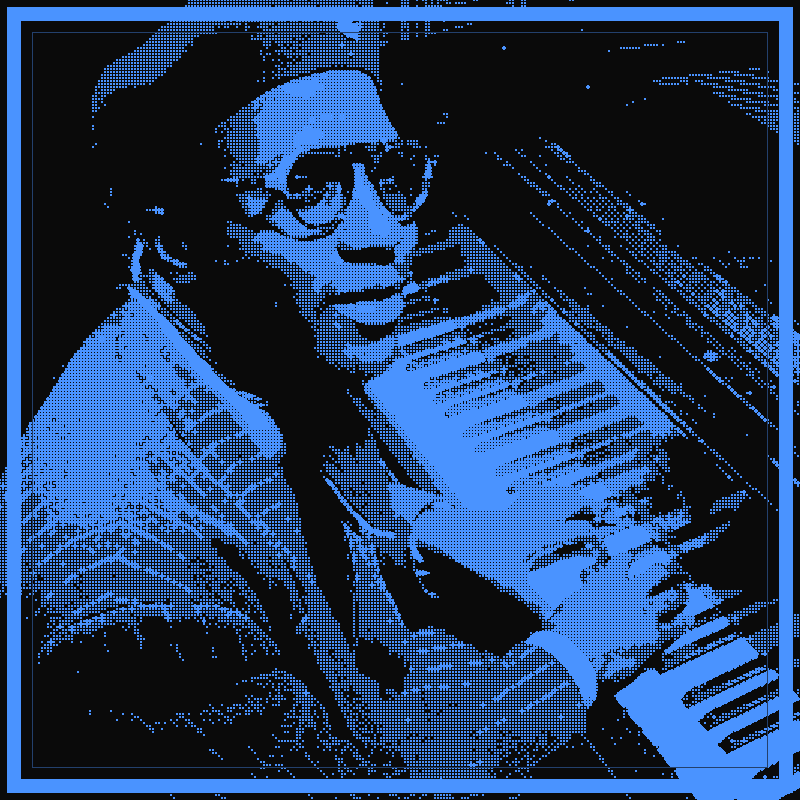
Songwriting 98, Identity 100, Influence 96. Thelonious Monk was the most original composer-pianist in jazz — his angular, dissonant, deeply personal style sounded like no one else. Round Midnight is the most-recorded jazz standard. Misunderstood in his time, he's now recognized as one of the genre's essential architects.
Born in Rocky Mount, North Carolina in 1917 and raised in San Juan Hill, Manhattan, Thelonious Monk was entirely self-taught, developing a piano style so unique that critics initially dismissed it as technically incorrect. He was a key figure at Minton's Playhouse in Harlem in the early 1940s, where bebop was born in informal after-hours sessions. His angular, idiosyncratic style was built from New York's streets and jazz halls.
- Round Midnight
- Straight, No Chaser
- Blue Monk
- Epistrophy
- Well, You Needn't
- Brilliant Corners (1957)
- Monk's Music (1957)
- Thelonious Himself (1957)
- Monk's Dream (1963)
He was arrested in 1951 for drug possession — charges widely believed to have been planted — and lost his New York City cabaret card, which prevented him from performing in clubs for six years at a critical point in his career. He largely withdrew from public life in the 1970s due to mental health issues not fully diagnosed in his lifetime. He died in 1982.
930/1000. Songwriting 98, Identity 100. Round Midnight is the most-recorded jazz standard ever written.
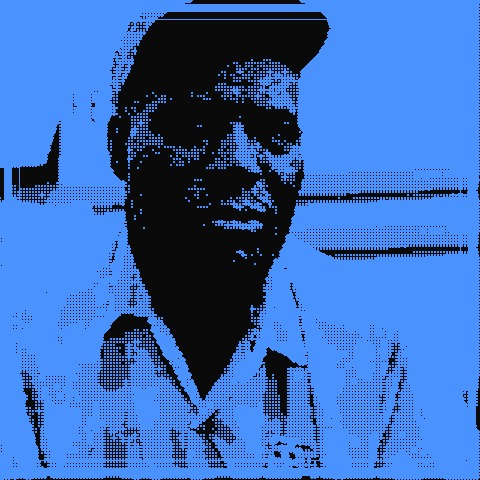
Identity 100, Influence 98, Performance 96. Howlin' Wolf had one of the most commanding voices in music — a primal growl that defined Chicago blues. Smokestack Lightnin', Spoonful, and Killing Floor were covered and worshipped by the British invasion bands. Along with Muddy Waters, he's the foundation of electric blues and rock.
Born Chester Arthur Burnett in West Point, Mississippi in 1910, Howlin' Wolf was one of the most physically imposing figures in blues history — 6'3\
- Smokestack Lightnin'
- Spoonful
- Killing Floor
- Back Door Man
- Evil
- Moanin' in the Moonshine (1959)
- Howlin' Wolf (The Rockin' Chair Album) (1962)
- The Real Folk Blues (1966)
- The London Howlin' Wolf Sessions (1971)
300 pounds
920/1000. Howlin' Wolf sang with a voice that seemed to come from somewhere underground. He was taught guitar by Charley Patton and learned harmonica from Sonny Boy Williamson II, absorbing the Delta blues at its source before moving north in 1952.
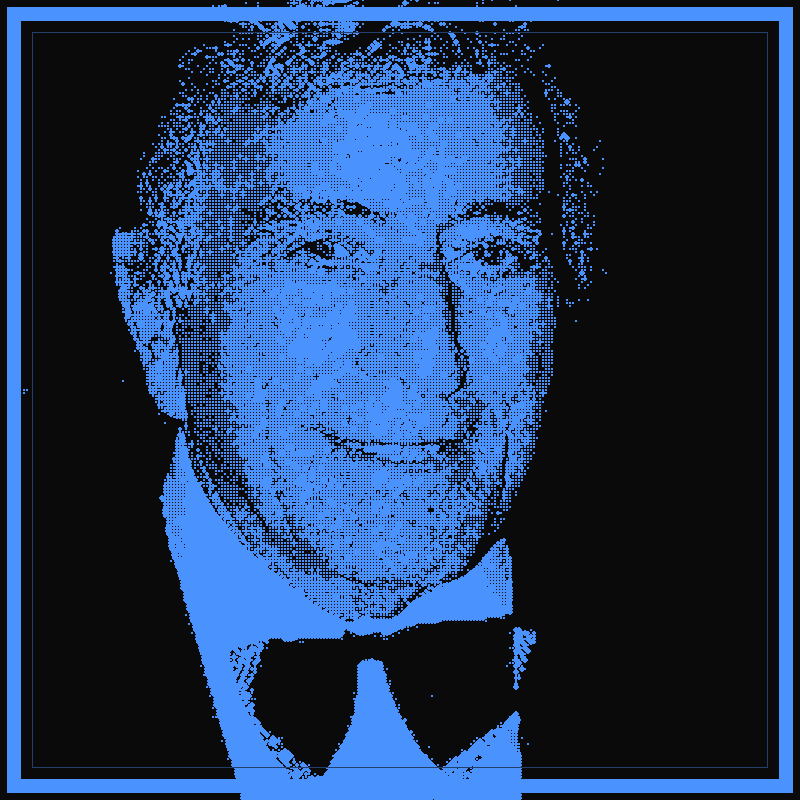
Catalog 94, Performance 96, Commercial 90. Tony Bennett sustained one of the longest, most respected careers in popular music. I Left My Heart in San Francisco is a standard. Frank Sinatra called him the best singer in the business. His late-career duets introduced him to new generations — a model of artistic longevity.
Born Anthony Dominick Benedetto in Astoria, Queens in 1926, the son of Italian immigrant parents. His father died when he was 10 and he grew up in poverty, working as a singing waiter while studying at the American Theatre Wing. He served in the Army in World War II and participated in the liberation of a Nazi sub-camp in Germany — an experience that permanently shaped his worldview. Frank Sinatra heard him perform in 1949 and told him he was the best singer in the business.
- I Left My Heart in San Francisco
- The Way You Look Tonight
- Fly Me to the Moon
- Steppin' Out with My Baby
- For Once in My Life
- I Left My Heart in San Francisco (1962)
- Tony Bennett/Bill Evans Album (1975)
- Duets: An American Classic (2006)
- Duets II (2011)
He publicly announced his Alzheimer's diagnosis in 2021 after five years managing the disease privately while continuing to record. His final sessions with Lady Gaga — documented in the film Love for Sale — took place as his condition advanced. He died on July 21, 2023, at 96.
Peaks 96, Studio Craft 90. The definitive interpreter of the Great American Songbook after Sinatra.
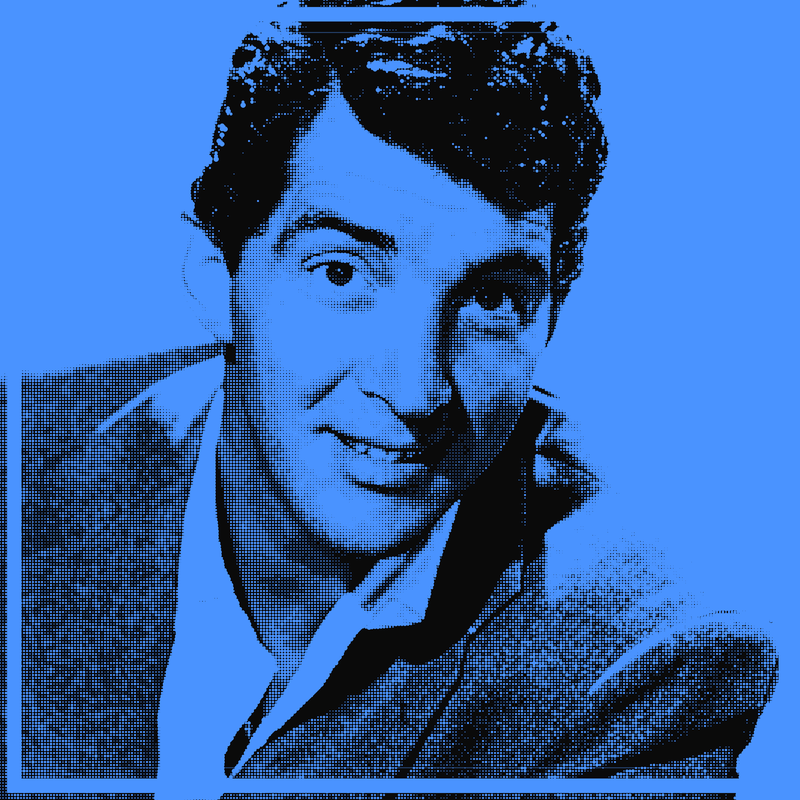
Commercial 94, Identity 96, Versatility 90. Dean Martin was the embodiment of mid-century cool — singer, actor, comedian, Rat Pack centerpiece. That's Amore, Everybody Loves Somebody, and Volare were massive. His relaxed charm influenced generations of entertainers who wanted to look that effortless.
Born Dino Paul Crocetti in Steubenville, Ohio in 1917, the son of Italian immigrants — his father from Montesilvano, his mother from Rionero Sannitico. He grew up in a heavily Italian-American community, speaking Italian before English. He dropped out of high school, worked in a steel mill and as a casino card dealer before a singing career emerged. His partnership with Jerry Lewis, which made them the highest-paid entertainers in the world through the 1950s, ended in 1956 in a split that both men refused to discuss publicly for decades.
- That's Amore
- Everybody Loves Somebody
- Volare
- Ain't That a Kick in the Head
- Memories Are Made of This
- Dream with Dean (1964)
- Gentle on My Mind (1968)
- Dean Martin Sings (1953)
- This Time I'm Swingin'! (1961)
His son Dean Paul Martin died in a US Air Force jet crash in March 1987. Dean Martin was reportedly never the same and became increasingly reclusive, dying on Christmas Day 1995 at 78. His split from Jerry Lewis generated years of public curiosity; Lewis said in his later years that he never understood why Martin ended the partnership, a statement Martin never publicly responded to.
Performance 97, Identity 90. That's Amore is the definitive Italian-American pop song. He made effortlessness look like a complete artistic statement.
Birth of Rock — 1950s
Performance 100, Influence 100, Identity 100. John Coltrane is one of the most important and influential jazz musicians ever. From hard bop through modal jazz to free jazz, he constantly evolved. A Love Supreme and Giant Steps are landmarks. His relentless spiritual and technical searching reshaped jazz and continues to influence musicians across every genre.
Born in Hamlet, North Carolina in 1926, Coltrane grew up in High Point and moved north after service in the Navy. He came up through bebop and hard bop, spending crucial years in Miles Davis's groups before launching a solo career that redefined what a saxophone — and jazz itself — could aspire to.
- A Love Supreme
- My Favorite Things
- Giant Steps
- Naima
- Impressions
- A Love Supreme (1965)
- Giant Steps (1960)
- Blue Train (1958)
- Live at the Village Vanguard (1962)
He was fired from Miles Davis's group in 1955 due to heroin and alcohol addiction. He got clean in 1957 through what he described as a spiritual awakening — documented in the liner notes of A Love Supreme — and spent the rest of his career in search of what he called 'a universal music.' Died of liver cancer in 1967 at 40.
955/1000. Performance 100, Influence 100, Identity 100. A Love Supreme is a spiritual document.
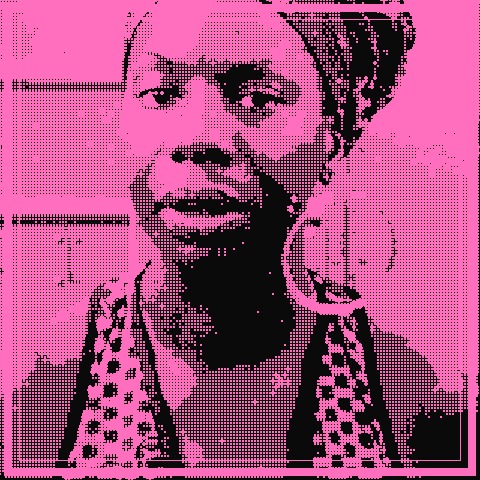
Identity 100, Performance 98, Versatility 92. Nina Simone was a genius beyond category — pianist, singer, songwriter, and civil-rights icon. Feeling Good, Mississippi Goddam, and I Put a Spell on You span jazz, soul, and protest. One of the most powerful artists who ever lived.
Born Eunice Kathleen Waymon in Tryon, North Carolina in 1933, Nina Simone trained as a classical pianist and applied to the Curtis Institute of Music in Philadelphia — she believed she was rejected because of her race. She became a jazz and blues singer to pay for continued piano lessons, then became one of the most important artists of the Civil Rights era. Her name was a stage name to hide her performing from her church community.
- Feeling Good
- I Put a Spell on You
- Mississippi Goddam
- Sinnerman
- My Baby Just Cares for Me
- I Put a Spell on You (1965)
- Nina Simone at Town Hall (1959)
- Wild Is the Wind (1966)
- Pastel Blues (1965)
She left the United States in 1970, angry and exhausted by the racial climate and the murder of key Civil Rights leaders, and spent much of the rest of her life in Europe and Africa. She was diagnosed with bipolar disorder later in life, which she wrote about. She died in 2003 in France.
940/1000. Identity 100, Performance 98. Music as protest. Feeling Good and Mississippi Goddam are eternal.
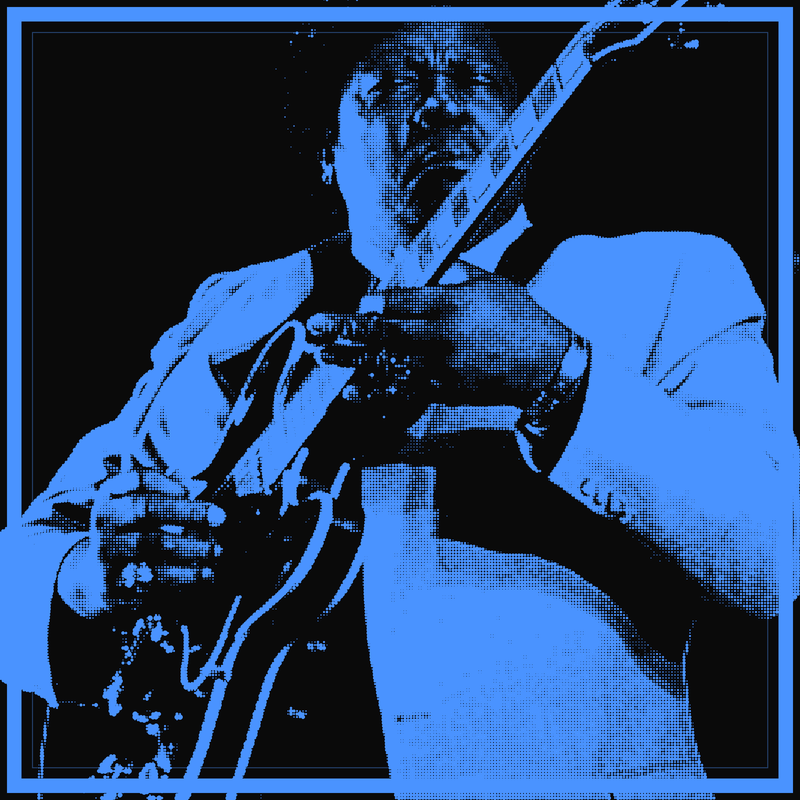
Identity 100, Influence 100, Performance 96. B.B. King was the King of the Blues — his expressive, economical guitar phrasing on Lucille influenced virtually every blues and rock guitarist alive. The Thrill Is Gone is a classic. Over a 60-year career he became the genre's global ambassador. Clapton, Hendrix, and everyone in between studied him.
Born Riley B. King in Itta Bena, Mississippi in 1925, B.B. King grew up as a sharecropper's son in the Mississippi Delta — the very soil from which the blues grew. He walked to Memphis as a young man, got his break on WDIA radio, and earned the nickname B.B. (Blues Boy) there. His guitar Lucille — named after a woman two men fought over at a club that subsequently caught fire — became one of the most famous instruments in music history.
- The Thrill Is Gone
- Every Day I Have the Blues
- Rock Me Baby
- Sweet Sixteen
- Why I Sing the Blues
- Live at the Regal (1965)
- Blues Is King (1967)
- Completely Well (1969)
- Live in Cook County Jail (1971)
He fathered 15 children with 15 different women — a fact he acknowledged publicly and matter-of-factly in interviews. He was named in multiple paternity suits. He died in 2015 at 89 in Las Vegas. Allegations of elder abuse and financial exploitation were made by some of his children near the end of his life, though no charges were filed.
930/1000. Identity 100, Influence 100. The King of the Blues.
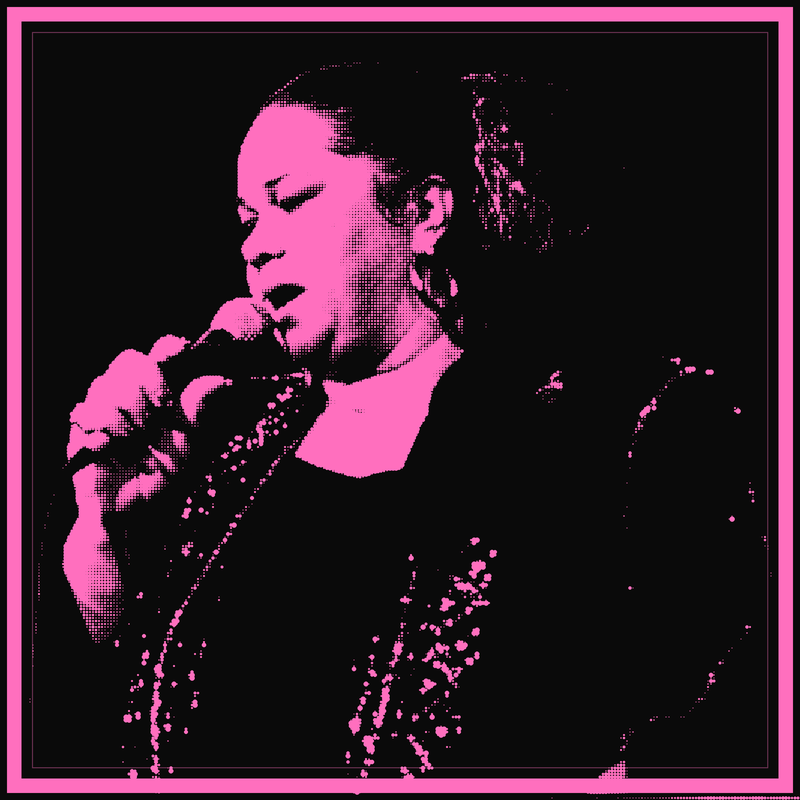
Performance 98, Versatility 92, Identity 96. Etta James had one of the great voices of the 20th century — equally at home in blues, soul, gospel, jazz, and rock. At Last is immortal. She influenced Janis Joplin, Beyoncé, and Adele. A complete, fearless vocalist whose range no one has fully matched.
Born Jamesetta Hawkins in Los Angeles in 1938, Etta James never knew her father (believed to be pool player Minnesota Fats) and was raised by foster families after her mother abandoned her. She found music in the Los Angeles church circuit and recorded her first hit Roll With Me Henry at 15 for Modern Records. Her childhood instability and the gospel tradition she absorbed in Los Angeles churches are the foundation of her range and her rawness.
- At Last
- Tell Mama
- I'd Rather Go Blind
- Trust in Me
- Something's Got a Hold on Me
- At Last! (1961)
- Tell Mama (1968)
- The Second Time Around (1961)
- Etta James Rocks the House (1964)
She struggled with heroin addiction from the 1960s through the 1980s, entering rehabilitation multiple times. Her autobiography Rage to Survive (1995) documented her addiction, abuse, and recovery in explicit detail. She died of leukemia in 2012. Her son Donto James alleged in her final years that her husband Leonard Castro had manipulated her finances.
920/1000. Performance 98, Versatility 92. At Last is the most romantic three minutes in American music.
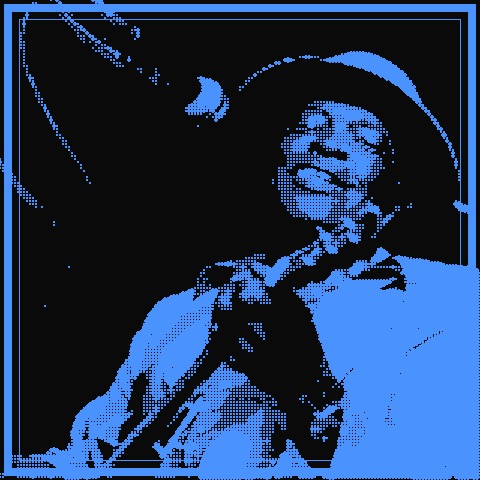
Identity 98, Influence 96. John Lee Hooker's hypnotic, rhythmic boogie blues — Boom Boom, Boogie Chillen — influenced the Stones, ZZ Top, and countless others. One of the most distinctive and foundational blues artists of all time.
Born in Clarksdale, Mississippi in 1917 — the same county that produced Muddy Waters, Ike Turner, and Sam Cooke. He moved to Detroit in 1943 as part of the Great Migration, found factory work, and began playing the raw, hypnotic one-chord boogie style he invented essentially alone. Detroit's Black working-class community gave him his first audience; his Mississippi origins gave him the source material.
- Boogie Chillen
- Boom Boom
- The Healer
- Crawling King Snake
- One Bourbon, One Scotch, One Beer
- The Healer (1989)
- Endless Boogie (1971)
- The Real Folk Blues (1966)
- Hooker 'n Heat (1971, with Canned Heat)
He lived long enough to see multiple generations of rock musicians — the Rolling Stones, Van Morrison, Carlos Santana, Bonnie Raitt — acknowledge him as a primary influence and appear on his 1989 comeback album The Healer. He died on June 21, 2001, at 83 in Los Altos, California.
Identity 100, Influence 98. He invented the boogie. Every blues-rock guitarist alive is downstream of this one man's one-chord hypnosis.
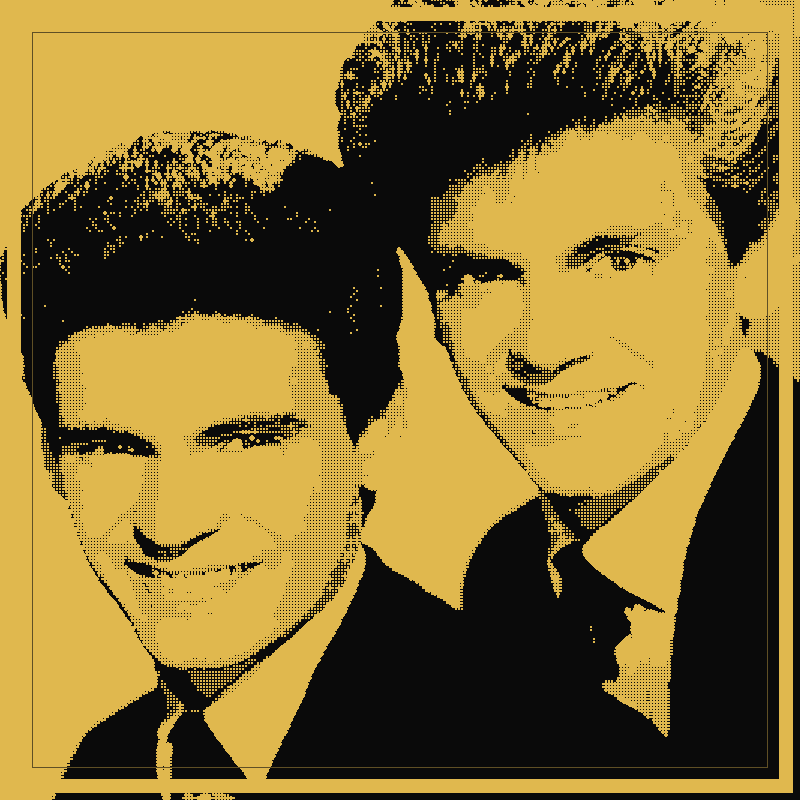
Influence 96, Commercial 90, Identity 94. The Everly Brothers perfected close-harmony singing — Bye Bye Love, Wake Up Little Susie, All I Have to Do Is Dream. Their blend was the direct model for the Beatles, the Beach Boys, and Simon & Garfunkel. The harmony foundation of 60s pop and rock.
Born Don Everly in Brownie, Kentucky in 1937 and Phil Everly in Chicago, Illinois in 1939, the sons of country musicians Ike and Margaret Everly who performed as a family act across the radio circuits of the American South. The brothers grew up on the road, absorbing Appalachian country, gospel harmonies, and the emerging rock and roll of the mid-1950s. Their tight, close-interval harmony singing — unprecedented in rock and roll — became the direct template for the Beatles' and Simon and Garfunkel's vocal approaches.
- Wake Up Little Susie
- All I Have to Do Is Dream
- Bye Bye Love
- Cathy's Clown
- Crying in the Rain
- Songs Our Daddy Taught Us (1958)
- The Everly Brothers (1958)
- Both Sides of an Evening (1961)
- A Date with the Everly Brothers (1960)
Their relationship deteriorated throughout the 1970s due to drug addiction, personal conflicts, and professional strain. They split acrimoniously onstage at Knotts Berry Farm in 1973 when Phil smashed his guitar and walked off mid-performance. They reconciled in 1983 for a reunion concert at the Royal Albert Hall. Phil Everly died of pulmonary disease in 2014.
Performance 98, Identity 90. The Everly Brothers invented the close-harmony rock vocal. Without them there are no Beatles. Directly and provably.
The First Wave — 1950s
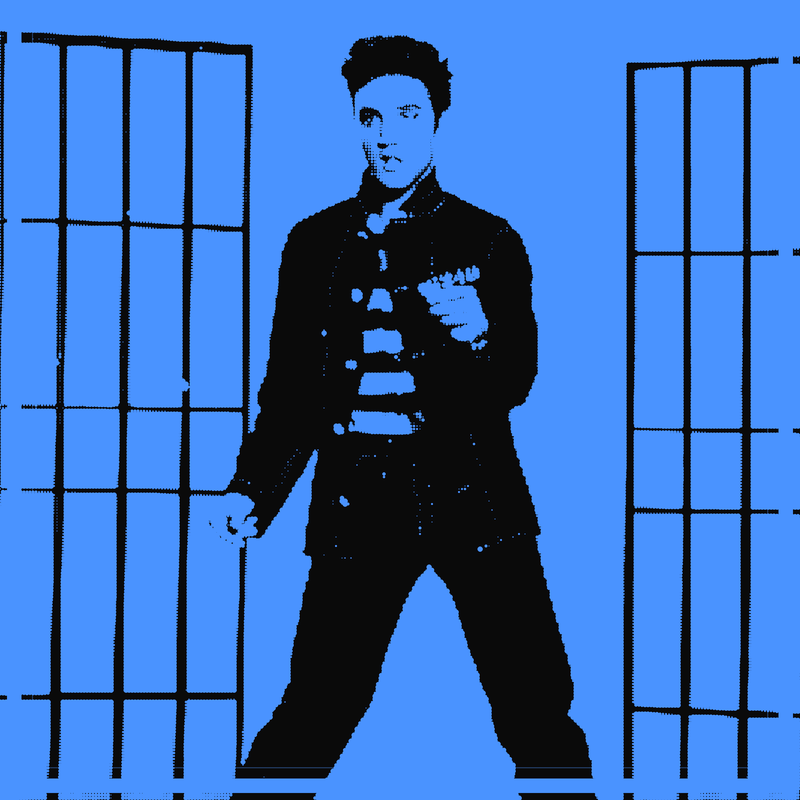
Four 100s. 500 million records sold. 1968 Comeback Special — possibly the greatest live television performance ever filmed. Elvis on Ed Sullivan. That's the detonation. Everything after is fallout.
Born to a working-class family in Tupelo, Mississippi in 1935, Elvis grew up steeped in gospel, country, and the blues of the Deep South. He moved to Memphis as a teenager, walked into Sun Studio in 1953, and detonated rock and roll into the mainstream. His origins — poor, Southern, Black musical influences absorbed through a white vessel — define everything about what he became.
- Hound Dog
- Jailhouse Rock
- Suspicious Minds
- Can't Help Falling in Love
- Heartbreak Hotel
- Elvis Presley (1956)
- From Elvis in Memphis (1969)
- Elvis: Aloha from Hawaii via Satellite (1973)
- Elvis Is Back! (1960)
His death on August 16, 1977 at Graceland at age 42 — from cardiac arrhythmia related to prescription drug abuse — is one of the most documented and discussed deaths in popular culture. His estate and the Graceland industry remain major commercial enterprises.
955/1000. Four 100s. 500 million records sold. The first human being the entire world agreed to call a star.
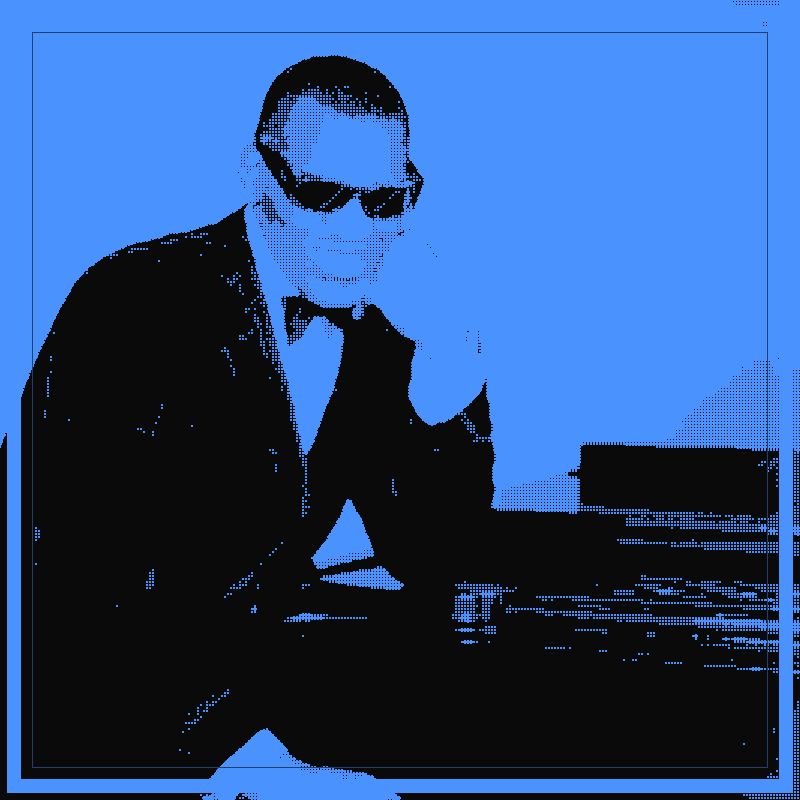
Performance 100, Influence 100. Invented soul music 1954. Georgia on My Mind is a country standard, Hit the Road Jack is pure pop, I Got a Woman is the birth of soul. Three genres. All Ray Charles.
Born Ray Charles Robinson in Albany, Georgia in 1930, he lost his sight to glaucoma by age seven and lost both his parents by his teens. He came up through Florida's Black music circuit before moving to Seattle. His synthesis of gospel and R&B in the mid-1950s invented soul music — an act that got him thrown out of churches and made him a legend.
- Georgia on My Mind
- Hit the Road Jack
- I Got a Woman
- What'd I Say
- Unchain My Heart
- Modern Sounds in Country and Western Music (1962)
- Ray Charles at Newport (1958)
- Genius + Soul = Jazz (1961)
- The Genius of Ray Charles (1959)
His heroin addiction, which began in the 1950s, led to a 1964 arrest. He entered a rehabilitation program and kicked the habit, which he spoke about openly throughout his life. The arrest and recovery are central to his documented biography.
955/1000. Performance 100, Influence 100. Invented soul music 1954.
Five 100s. Performance 100 — the greatest jazz instrumentalist who ever lived. Two notes and you know who it is. Studio Craft 100 — Kind of Blue recorded in two sessions with no rehearsal, no charts, no second takes. Best-selling jazz album in history. Still selling. Influence 100 — invented cool jazz, invented modal jazz, invented fusion. The list of genres he created is longer than most artists' entire careers. Versatility 100 — Birth of the Cool and Bitches Brew exist on the same card. No other artist in history has that range and won both times. Commercial 72 is the jazz ceiling — real, honest, not a penalty.
Decade by decade: 1949 — Birth of the Cool. 1955 — hard bop. 1959 — Kind of Blue changes everything. 1970 — Bitches Brew invents fusion and loses half his audience on purpose. 1980s — electric period. Died 1991. Every decade a different Miles. Every version correct.
Eye test: One instrumentalist walks into any room in any era and is the most important musician there — Miles Davis. Not a debate.
Born in Alton, Illinois in 1926 and raised in East St. Louis, Miles Davis came from a wealthy Black family — his father was a dentist — which gave him an unusual position in jazz history: the confidence of someone who never needed music to survive, making music from pure ambition. He moved to New York at 18 to study at Juilliard and found Charlie Parker instead.
- So What
- Freddie Freeloader
- Bitches Brew
- All Blues
- Round Midnight
- Kind of Blue (1959)
- Bitches Brew (1970)
- Birth of the Cool (1957)
- Sketches of Spain (1960)
His heroin addiction in the late 1940s and early 1950s led to a period of withdrawal from music. He got clean through sheer willpower, locking himself in his father's house in Illinois. He spoke about this in his autobiography. Later in his career he was beaten by New York police outside a nightclub in 1959 in an incident that became widely reported and remains a documented fact of his biography.
952/1000. Five 100s. Reinvented jazz four times. The most important instrumentalist who ever lived.
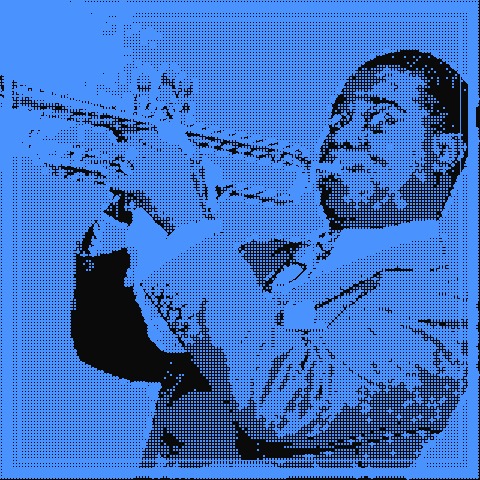
Performance 100, Identity 100, Culture 100, Influence 100. West End Blues 1928 is the single most important jazz recording in history — the opening trumpet cadenza alone changed what improvisation meant. He defined what it meant to be an entertainer and a musician simultaneously at a time when Black performers in America had to fight for the right to perform in the venues where their music was played. What a Wonderful World reached number one in the UK decades after it was recorded and has never really left. The smile and the handkerchief and the gravel voice are some of the most recognizable images in American cultural history.
Born in New Orleans in 1901 in the Storyville district — the red-light district where jazz was incubated — Louis Armstrong came up through the most fertile musical soil in American history. His childhood was genuinely impoverished; he was sent to a reform school at 11 where he first learned the cornet. New Orleans made him. He made jazz.
- What a Wonderful World
- West End Blues
- La Vie en Rose
- Hello, Dolly!
- When the Saints Go Marching In
- The Hot Fives and Hot Sevens (1925–28)
- Louis Armstrong Meets Oscar Peterson (1959)
- Ella and Louis (1956)
- Satch Plays Fats (1955)
His career navigated American racial segregation from the 1920s through the Civil Rights era. He was criticized by some in the Black community for what was seen as accommodation toward white audiences — a charge he rejected. He publicly condemned President Eisenhower's response to the Little Rock school desegregation crisis in 1957, a statement that cost him government support but reflected where he actually stood.
951/1000. Performance 100, Identity 100, Culture 100, Influence 100. Invented jazz improvisation. West End Blues is the single most important jazz recording in history.

Performance 90, Identity 92, Studio Craft 88. Dirt is one of the definitive albums of the 1990s — Rooster, Down in a Hole, Would?, and Them Bones are canon. Layne Staley and Jerry Cantrell's vocal harmonies were unlike anything else in grunge or metal. Jar of Flies was the first EP to debut at #1 on the Billboard 200. The weakness is catalog depth — Staley's death in 2002 cut the original lineup short at three essential albums. The strength is that those three albums are flawless, and the band's continuation with William DuVall has been surprisingly credible.
What the numbers say: Performance 90, Identity 92, Studio Craft 88. Dirt is one of the definitive albums of the 1990s — Rooster, Down in a Hole, Would?, and Them Bones are canon. Layne Staley and Jerry Cantrell's vocal harmonies were unlike anything else in grunge or metal. Jar of Flies was the first EP to debut at #1 on the Billboard 200. The weakness is catalog depth — Staley's death in 2002 cut
- Man in the Box
- Rooster
- Would?
- Down in a Hole
- No Excuses
- Dirt
- Jar of Flies
- Facelift
They were the grunge band that sounded like metal, the metal band that wrote harmonies, and the only act in the Seattle four whose darkness was never performative.
814/1000. They were the grunge band that sounded like metal, the metal band that wrote harmonies, and the only act in the Seattle four whose darkness was never performative.
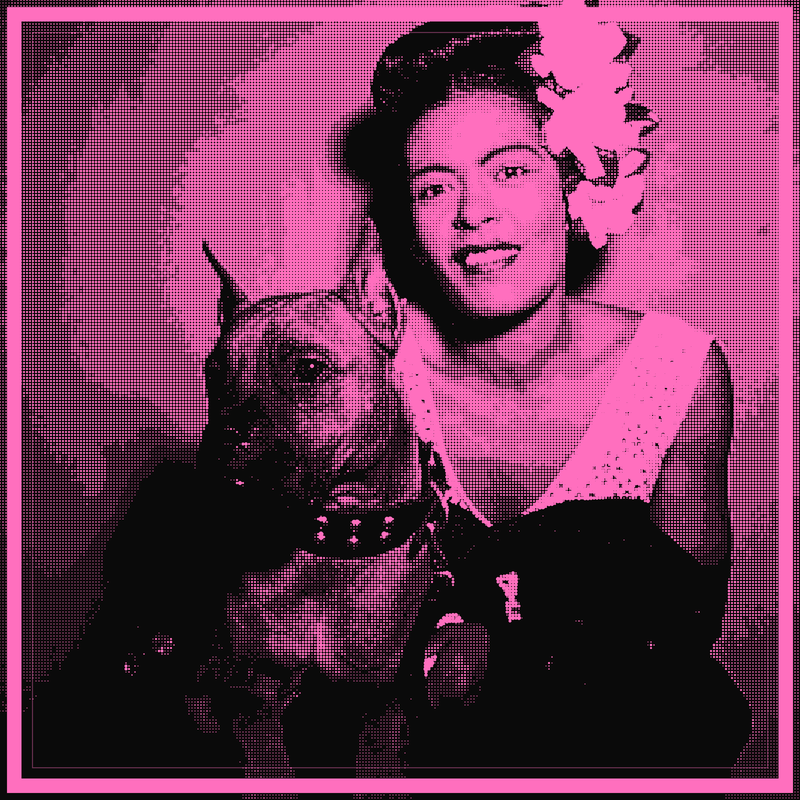
Performance 100, Identity 100, Culture 100, Influence 100. Strange Fruit changed what popular music was allowed to say about race in America. It was banned from radio. It was called subversive. It was recorded by a Black woman in 1939 in a country that was still lynching Black men. The gardenia in her hair. The phrasing that bent notes until they felt like they were bleeding. She didn't have a long life or a stable one but she had the most influential voice in jazz history. Every singer who learned to phrase a song with feeling learned it partially from her.
Born Eleanora Fagan in Philadelphia in 1915 and raised partly in Baltimore, Billie Holiday had one of the most difficult upbringings in the history of American music — poverty, assault, and exploitation from childhood. She moved to New York as a teenager and found jazz, which gave her the vehicle for a voice that turned pain into permanent art.
- Strange Fruit
- God Bless the Child
- I'll Be Seeing You
- Lover Man
- Don't Explain
- Lady in Satin (1958)
- Billie Holiday at Jazz Club USA (1954)
- Songs for Distingué Lovers (1957)
- Lady Sings the Blues (1956)
She was arrested multiple times for narcotics possession across her career. The federal government, particularly narcotics agents, pursued her aggressively and were widely believed to have targeted her in ways that destroyed her health and career. Her arrest in a New York hospital room while dying in 1959 — handcuffed to her bed — is one of the most scandalous documented episodes in American music history. She died at 44.
948/1000. Performance 100, Identity 100, Culture 100, Influence 100. Strange Fruit was the song of the 20th century.
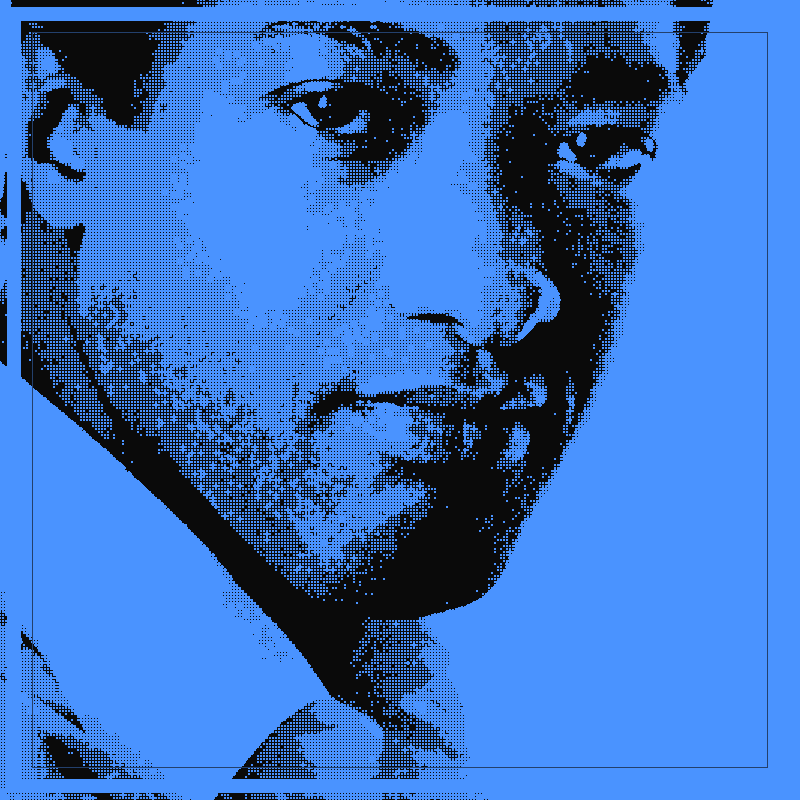
Performance 100, Influence 100. The most purely beautiful voice in popular music history. First major Black artist to own his own record label — 60 years ahead of his time. Died at 33. Every singer on this list heard him first.
Born in Clarksdale, Mississippi in 1931 and raised in Chicago, Sam Cooke was the son of a Baptist minister who made his first professional recordings as a gospel singer with the Soul Stirrers at 19. His decision to cross over to pop music in the late 1950s was considered a betrayal by the gospel community. He pressed on and became the template for every soul singer who followed.
- A Change Is Gonna Come
- You Send Me
- Wonderful World
- Cupid
- Bring It On Home to Me
- Night Beat (1963)
- Ain't That Good News (1964)
- Live at the Harlem Square Club (1963)
- Live at the Copa (1964)
He was shot and killed on December 11, 1964 at a Los Angeles motel under circumstances that remain disputed — the official finding was justifiable homicide by the motel manager. Many in the music community, including his family, have long disputed the official account. He was 33. A Change Is Gonna Come was released posthumously three days later.
948/1000. Performance 100, Influence 100. The most purely beautiful voice in popular music history.
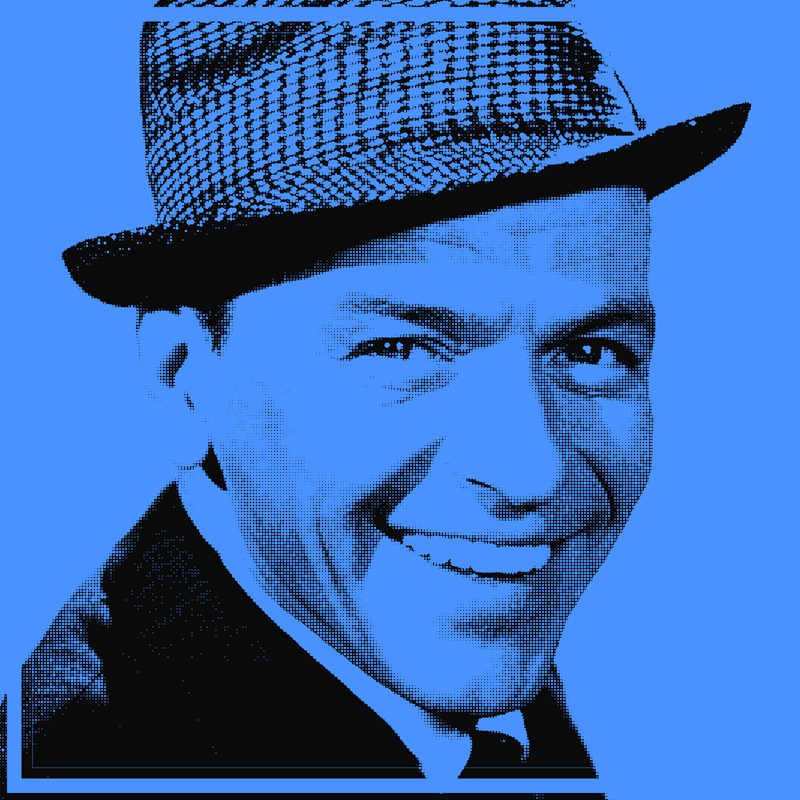
In the same way there was a before and after Marlon Brando — a way men performed that was never the same — there was a before and after Sinatra. Six decades of relevance. Died 1998 at 82. Do it his way.
Born in Hoboken, New Jersey in 1915 to Italian immigrant parents, Frank Sinatra grew up in working-class Hudson County and became the first modern pop superstar entirely through the power of his voice and his phrasing — a style he built by listening to Tommy Dorsey's trombone technique and applying it to the human throat. His Italian-American roots and New Jersey swagger never left him.
- My Way
- New York New York
- Fly Me to the Moon
- Summer Wind
- Strangers in the Night
- In the Wee Small Hours (1955)
- Songs for Swingin' Lovers! (1956)
- Only the Lonely (1958)
- Come Fly with Me (1958)
His alleged connections to organized crime were a subject of public speculation and Congressional attention throughout his career. He was associated with the Rat Pack and a hard-partying lifestyle that generated constant tabloid coverage. His relationships with various women, including Ava Gardner, were among the most publicized romances of the 1950s.
946/1000. Performance 100, Identity 100. The father of modern popular singing.
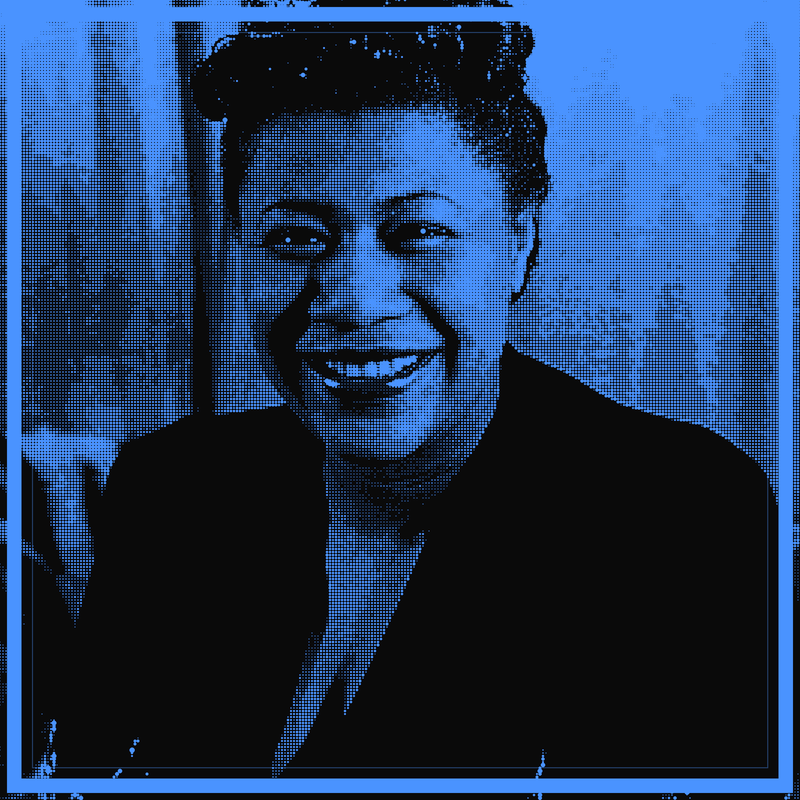
Performance 100, Identity 100, Influence 100. The American Songbook series — Cole Porter, Rodgers and Hart, the Gershwins, Irving Berlin, Duke Ellington — she recorded the definitive versions of the Great American Songbook. Those albums are the standard by which every other interpretation of those songs is measured. Thirteen Grammy Awards. Forty studio albums. She scat sang better than anyone who has ever lived. Frank Sinatra called her the greatest. Tony Bennett called her the greatest. The competition called her the greatest. The case is closed.
Born in Newport News, Virginia in 1917 and raised in Yonkers, New York, Ella Fitzgerald entered the Apollo Theater's Amateur Night in 1934 — intending to dance, then switching to singing at the last moment — and won. She never looked back. Her voice was a natural instrument of staggering range and precision that she spent fifty years developing into the definitive voice of American jazz.
- Summertime
- How High the Moon
- A-Tisket A-Tasket
- Dream a Little Dream of Me
- Cheek to Cheek (with Louis Armstrong)
- Ella Fitzgerald Sings the Cole Porter Song Book (1956)
- Ella and Louis (1956)
- Ella in Berlin: Mack the Knife (1960)
- Ella Fitzgerald Sings the Duke Ellington Song Book (1957)
She faced racial segregation throughout her early career — refused entry to clubs where her music played, unable to stay in hotels where she performed. Her manager Norman Granz fought these battles publicly and eventually prevailed. She died in 1996 having won thirteen Grammy Awards and recorded forty studio albums.
942/1000. Performance 100, Identity 100, Influence 100. The greatest jazz vocalist who ever lived.
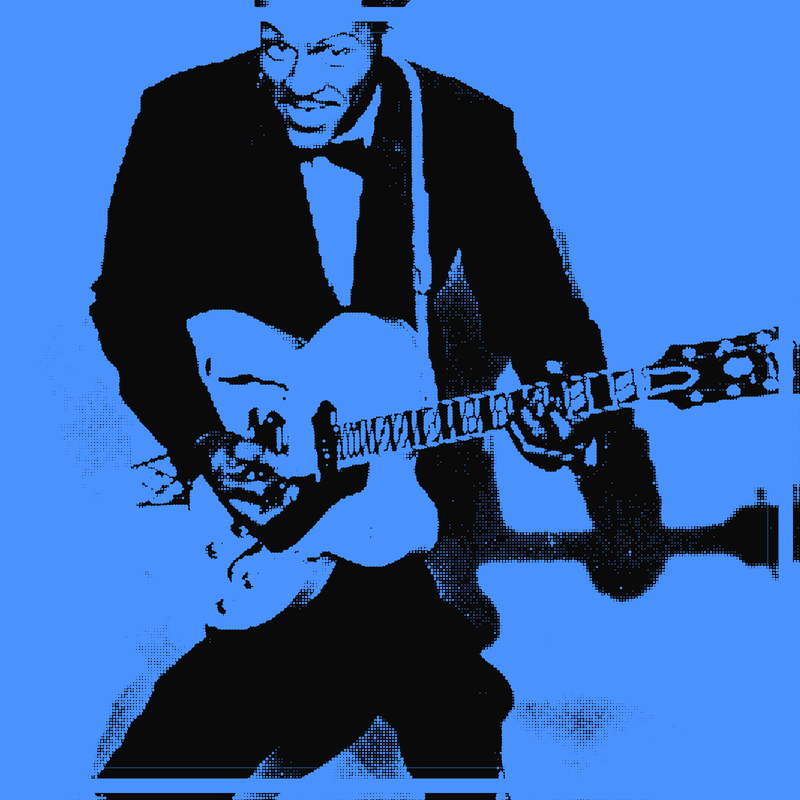
Culture 100, Influence 100. Johnny B. Goode was put on the Voyager Golden Record in 1977. When aliens find it, Chuck Berry is what they hear first.
Born in St. Louis, Missouri in 1926, Chuck Berry grew up in a middle-class Black family in a segregated city. He worked in an auto plant and as a hairdresser before his music career took off. His ability to write about teenage life — cars, school, girls, rock and roll — from the vantage point of a Black man in Jim Crow America while making it feel universal is one of the great creative achievements in American music history.
- Johnny B. Goode
- Roll Over Beethoven
- Maybellene
- Sweet Little Sixteen
- Rock and Roll Music
- Chuck Berry Is on Top (1959)
- St. Louis to Liverpool (1964)
- The Great Twenty-Eight (compilation, 1982)
- After School Session (1957)
He was convicted of transporting a minor across state lines for immoral purposes under the Mann Act in 1962 and served nearly two years in federal prison. He was arrested again in 1990 after a woman filed a lawsuit alleging hidden cameras in restrooms at his restaurant. The restaurant settled with multiple women.
935/1000. Culture 100, Influence 100. Johnny B. Goode was put on the Voyager Golden Record. Without Chuck Berry there is no Beatles, no Rolling Stones.
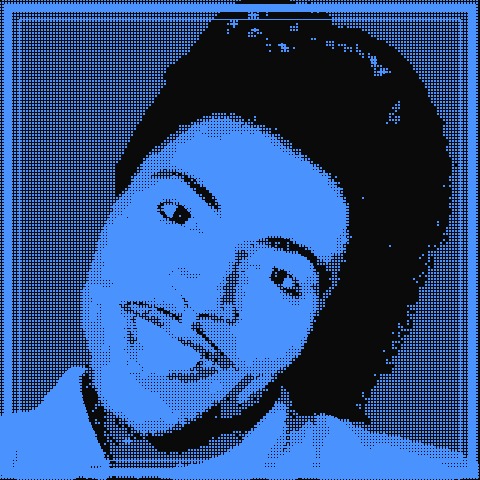
Performance 100, Identity 100, Influence 100. Chuck Berry wrote the blueprint. Little Richard set it on fire.
Born Richard Wayne Penniman in Macon, Georgia in 1932, one of twelve children, Little Richard was rejected by his father for being effeminate and taken in by a white family who gave him work. He came up through the gospel circuit in Georgia before his 1955 Specialty Records recording of Tutti Frutti — originally with sexually explicit lyrics cleaned for release — launched rock and roll's most flamboyant founding voice.
- Tutti Frutti
- Long Tall Sally
- Good Golly, Miss Molly
- Slippin' and Slidin'
- Keep A-Knockin'
- Here's Little Richard (1957)
- Little Richard (1958)
- The Fabulous Little Richard (1959)
- The Rill Thing (1970)
He repeatedly oscillated between secular music and evangelical Christianity throughout his life, condemning rock and roll as the devil's music and then returning to it multiple times. He spoke about his sexuality in later interviews with unusual directness for an artist of his generation, describing himself as omnisexual. He died of bone cancer in 2020 at 87.
925/1000. Performance 100, Identity 100, Influence 100. Chuck Berry wrote the blueprint. Little Richard set it on fire.
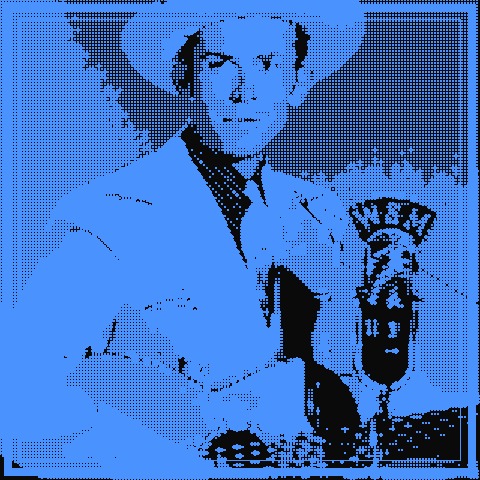
Songwriting 100, Identity 100, Influence 100. I'm So Lonesome I Could Cry. Your Cheatin' Heart. Hey Good Lookin'. Lovesick Blues. Cold Cold Heart. He wrote every one of them. He was recording at Sun Studios before Elvis. He was the original country music archetype — the tragic, hard-drinking, hard-living Southern man singing about pain with a sincerity that could not be faked because it wasn't fake. Every country artist since 1953 has answered the question of what to do about Hank Williams. The answer is always the same: you can't beat him at this. So you find your own version of it.
Born Hiram King Williams in Georgiana, Alabama in 1923, the son of a logger who spent time in a veterans' hospital, Hank Williams grew up in poverty across rural Alabama. He learned guitar from an old Black street musician named Rufus Payne — known as Tee-Tot — who shaped his phrasing entirely. He arrived in Nashville at 19 with a band, a drinking problem, and a talent that nobody before or since has matched for country songwriting.
- Your Cheatin' Heart
- I'm So Lonesome I Could Cry
- Hey Good Lookin'
- Lovesick Blues
- Cold, Cold Heart
- Moanin' the Blues (1952)
- Hank Williams as Luke the Drifter (1953)
- I Saw the Light (1959)
- 40 Greatest Hits (1978, compilation)
He died on January 1, 1953, in the back seat of a Cadillac driven by a college student he'd hired to take him to a New Year's show in Canton, Ohio. He was 29. The official cause was heart failure; alcohol and chloral hydrate were found in his system. He never made it to the show.
918/1000. Songwriting 100, Identity 100, Influence 100. Bob Dylan called him the greatest songwriter who ever lived.
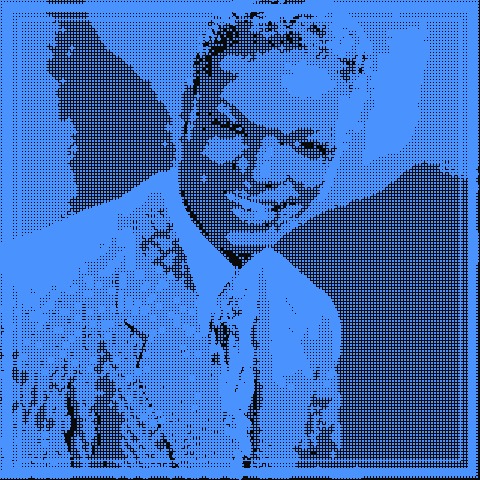
Performance 100, Identity 100. The warmth of his voice is a specific thing — intimate, elegant, effortless. Unforgettable, Nature Boy, Mona Lisa, The Christmas Song — a catalog of songs so associated with his voice that the originals feel like covers now. He was the first African American man to host a nationally broadcast television show in America. The NBC show was cancelled because no national sponsor would buy advertising on a Black man's show. He performed it anyway until there was no budget left. The voice never sounded like any of that was happening.
Born Nathaniel Adams Coles in Montgomery, Alabama in 1919 and raised in Chicago's Bronzeville neighborhood, where his father was a Baptist minister. He began playing piano at four and was performing professionally as a teenager. He formed the King Cole Trio in Los Angeles in 1937, developing the intimate, swinging style that would give way to his solo singing career — the voice that is his true legacy.
- Unforgettable
- Mona Lisa
- Nature Boy
- L-O-V-E
- Smile
- The Nat King Cole Story (1961)
- After Midnight (1956)
- Love Is the Thing (1957)
- Wild Is Love (1960)
He became the first African American to host a national network television variety show — The Nat King Cole Show (NBC, 1956–57) — which was cancelled after a year because major national advertisers refused to sponsor a program hosted by a Black man. He spoke about this publicly without bitterness. He died of lung cancer in 1965 at 45.
Performance 98, Catalog 95. The greatest male pop vocalist between Sinatra and the soul era. Unforgettable is his monument.
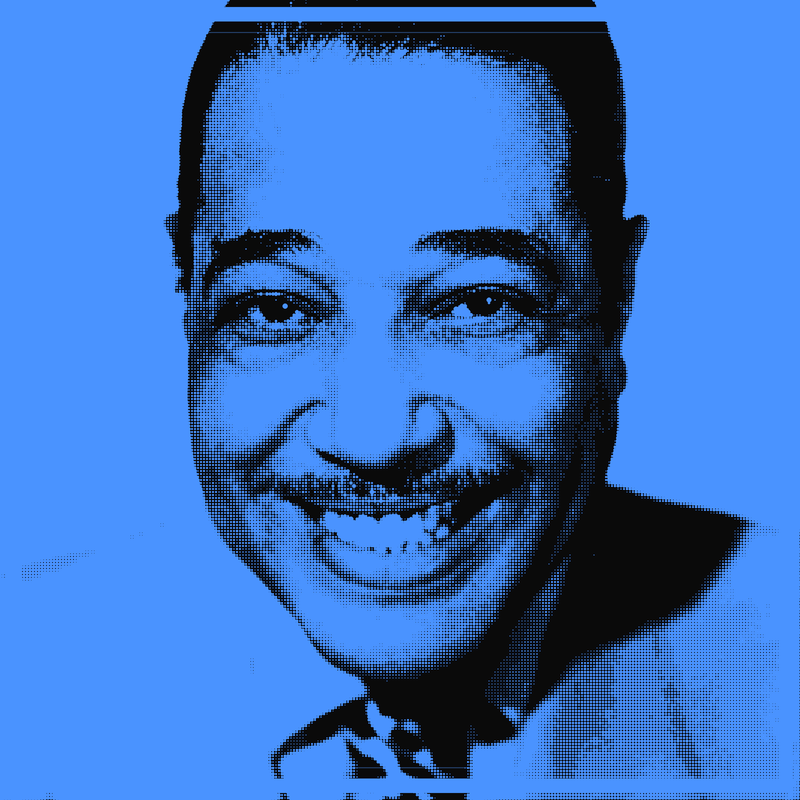
Influence 100. Ellington wrote over 1,000 compositions. Mood Indigo, Take the A Train, It Don't Mean a Thing — these are standards that every jazz musician of the 20th century learned. Catalog 97 reflects not just depth but coherence: the Ellington body of work has a recognizable language across five decades. The Commercial 68 is honest — jazz never moved units like pop, and Ellington didn't chase radio. He built the Cotton Club residency (1927–1931) into a national radio presence instead.
Career arc: 1923–1974. Cotton Club 1927. Carnegie Hall debuts starting 1943. Three Pulitzer Prize nominations (one honorary in 1999, posthumous). Presidential Medal of Freedom in 1969 from Nixon. Toured globally for the State Department. Kept the orchestra working and recording until the week he died of lung cancer and pneumonia at 75.
Born Edward Kennedy Ellington in Washington, D.C. in 1899 into a middle-class Black family — his father was a butler who sometimes worked at the White House. His childhood nickname Duke reflected a natural elegance that never left him. He moved to New York in 1923 and built his sound at the Cotton Club in Harlem — a whites-only venue that broadcast his orchestra nationwide on radio while Black audiences could not attend. He used that contradiction to build something extraordinary.
- Mood Indigo
- Take the A Train
- It Don't Mean a Thing (If It Ain't Got That Swing)
- Caravan
- Satin Doll
- Ellington at Newport (1956)
- Money Jungle (1963)
- Such Sweet Thunder (1957)
- Black, Brown and Beige (1958)
He was rejected for a Pulitzer Prize in 1965 — a decision that prompted the Pulitzer board's own music advisers to resign in protest. He received the Presidential Medal of Freedom from Richard Nixon in 1969. He died of lung cancer and pneumonia on May 24, 1974.
Songwriting 98, Studio Craft 96. The greatest composer in jazz history. He wrote over 1000 compositions and led the same orchestra for fifty years.
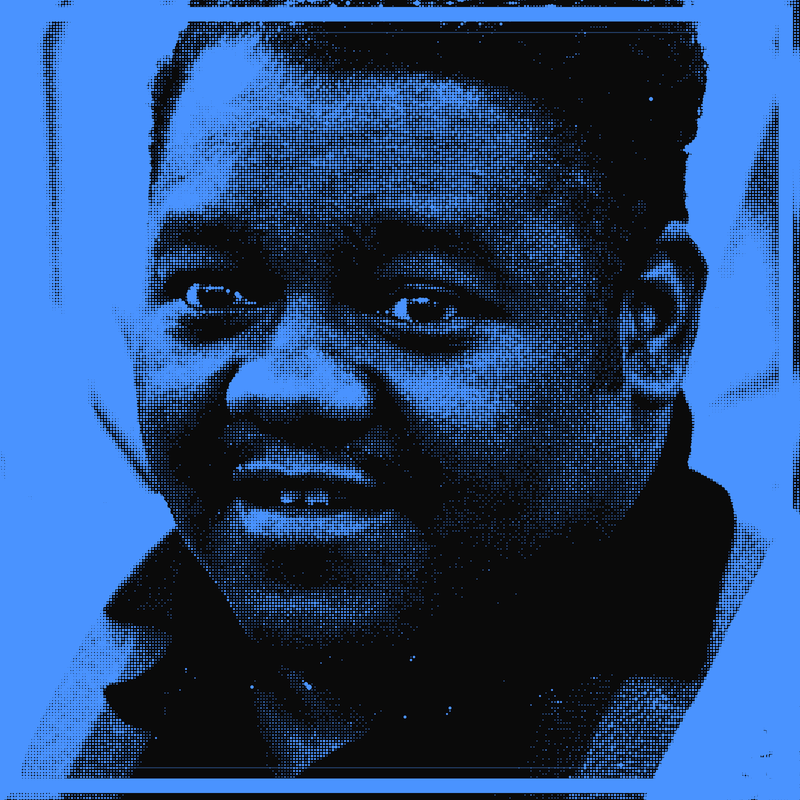
Influence 95 — the New Orleans piano roll under "Ain't That a Shame" and "Blueberry Hill" is in the DNA of rock and R&B. Commercial 92 — only Elvis outsold him in the 1950s. Identity 94 — that warm Creole drawl was unmistakable from the first bar. Songwriting 90 — co-wrote most of his own hits with Dave Bartholomew, a partnership that ran like a hit factory.
Decade by decade: 1949–55 — builds R&B hits out of New Orleans before the word "rock" existed. 1955–60 — crosses over to white radio without changing a thing, scoring 11 Top 10 pop hits. He simply kept doing what he'd always done while the world finally caught up.
Eye test: No pose, no scandal, no reinvention — just thirty years of perfect records. The most underrated founding father on the board.
Born Antoine Dominique Domino Jr. in New Orleans, Louisiana in 1928, the youngest of eight children. He left school at fourteen to work in a factory while playing piano in clubs at night. His rolling, rolling New Orleans piano style — influenced by the Crescent City's unique blend of blues, boogie-woogie, Creole music, and gospel — was one of the primary templates from which early rock and roll was constructed. He sold 65 million records between 1950 and 1963, second only to Elvis Presley in that period.
- Blueberry Hill
- Ain't That a Shame
- Walking to New Orleans
- I'm Walkin'
- Whole Lotta Loving
- This Is Fats Domino! (1956)
- Here Stands Fats Domino (1957)
- Let the Four Winds Blow (1961)
- Rock and Rollin' with Fats Domino (1956)
He survived Hurricane Katrina in 2005, refusing to evacuate his New Orleans home; the Coast Guard rescued him and his family from the roof. His house was devastated. He returned to New Orleans and continued living there until his death in 2017 at 89.
Performance 97, Commercial 92. Blueberry Hill is a perfect record. The most important New Orleans musician in the history of rock and roll.
Influence 99 — electrified Chicago blues is the missing link to The Rolling Stones (who took their name from his song), Cream, Zeppelin, and the British invasion entire. Identity 96 — the deepest, most commanding presence in postwar blues. Catalog 90 — "Hoochie Coochie Man," "Mannish Boy," "Got My Mojo Working," a canon that never quits.
Decade by decade: 1940s — recorded by Alan Lomax on a Mississippi plantation. 1948–58 — moves to Chicago, goes electric at Chess Records, and detonates the modern blues. 1960s–70s — the young British bands he inspired bring him to global audiences as the elder statesman he always was.
Eye test: Trace almost any guitar-rock band back far enough and you arrive at this man in a Chicago studio. The root system.
Born McKinley Morganfield in Issaquena County, Mississippi in 1913 — deepest Delta blues country. He was raised by his grandmother in Clarksdale, the epicenter of the blues tradition, after his mother died when he was three. He played harmonica and guitar on the plantations, was recorded by Alan Lomax for the Library of Congress in 1941, and moved to Chicago in 1943 where he built the electric Chicago blues sound that everything after descends from. His transformation of the Delta acoustic blues into amplified, rhythmically electrified Chicago blues was the pivot point of the entire 20th century music story.
- Hoochie Coochie Man
- Mannish Boy
- Got My Mojo Working
- I'm a Man
- Rollin' Stone
- The Best of Muddy Waters (1958)
- Folk Singer (1964)
- Hard Again (1977)
- Muddy Waters at Newport 1960
The Rolling Stones named themselves after his song Rollin' Stone. Bob Dylan took his performing name in tribute to him. He died of a heart attack in 1983 at 70 in Westmont, Illinois. His influence on every guitarist and blues musician from Clapton to Hendrix to Richards is direct, acknowledged, and total.
Identity 100, Influence 100. The Rolling Stones named themselves after his song. He is the father of electric blues and the grandfather of rock and roll.
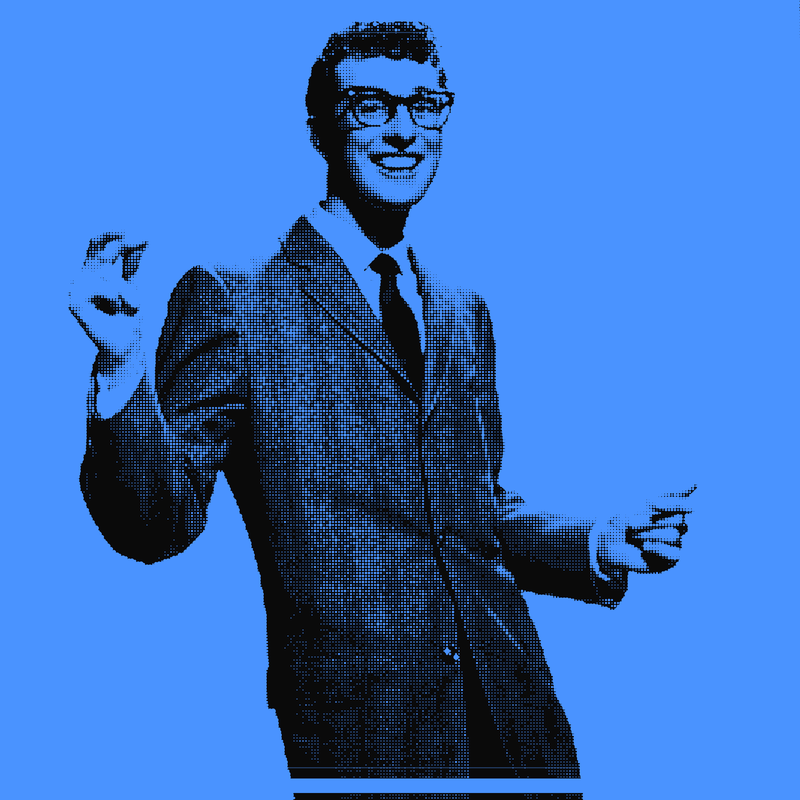
Influence 100 — without Buddy Holly there are no Beatles, no Rolling Stones in their original form, no rock and roll songwriter tradition of artists writing their own material. He was the first rock artist to insist on writing his own songs. He played his own guitar parts in the studio. He overdubbed his own harmonies. He invented the template of the self-contained rock artist and he did it in Lubbock Texas in 1956 at eighteen years old. Catalog 62 is the brutal honest number — he died at 22. Eighteen months of commercial recordings. The influence is completely disproportionate to the catalog. That disproportionality is the card.
Born Charles Hardin Holley in Lubbock, Texas in 1936, the youngest of four children in a musical family. He grew up in Lubbock's West Texas country and gospel tradition, saw Elvis Presley perform in 1955 and immediately shifted his focus to rock and roll. His thick-framed glasses — worn out of necessity, not fashion — became one of the most imitated looks in rock history. His approach to songwriting (Weezer, The Beatles, Rolling Stones all directly cite him) was so sophisticated for 1957 that it took decades for anyone to fully map his influence.
- That'll Be the Day
- Peggy Sue
- Not Fade Away
- Maybe Baby
- Oh, Boy!
- The Chirping Crickets (1957)
- Buddy Holly (1958)
- Buddy Holly and the Crickets — From the Master Tapes
- Reminiscing (1963, posthumous)
He died on February 3, 1959 — the Day the Music Died — in a plane crash near Clear Lake, Iowa along with Ritchie Valens and The Big Bopper. He was 22. His death had immediate and lasting reverberations: Paul McCartney has described learning of it as one of the most formative moments of his life. McCartney later purchased the rights to Holly's publishing catalog, which he has called one of his most meaningful acquisitions.
Songwriting 97, Identity 92. The glasses. The hiccup. Not Fade Away and That'll Be the Day are foundational rock songs. Dead at 22 with one of the most influential catalogs in rock history.
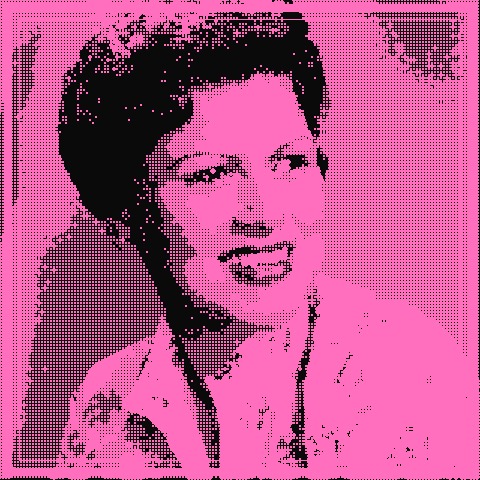
Performance 99 — one of the half-dozen greatest voices ever put to tape, that controlled break in the middle of a note that nobody has matched. Songwriting 72 — she didn't write, she interpreted, and that's the only number holding the card back. Influence 96 — Loretta, Reba, k.d. lang, every woman who ever stood at a country mic owes her the blueprint. Identity 96 — "Crazy," "Walkin' After Midnight," "I Fall to Pieces." Three songs that never leave the radio.
Decade by decade: 1957 — "Walkin' After Midnight" wins Arthur Godfrey's talent show and crosses pop and country at once. 1961 — "Crazy," written by a young Willie Nelson, becomes the most-played jukebox single in history. 1963 — dead at 30 in a Tennessee plane crash. The catalog stops cold and the legend starts.
Eye test: Put on "Crazy." The conversation about female country vocals starts and ends there.
Born Virginia Patterson Hensley in Gore, Virginia in 1932. Her father abandoned the family when she was a teenager; she left school to work and help support her mother. She began performing on local Virginia radio stations and won a talent competition in 1957 that led to her recording contract. Her voice — a pure country contralto with pop crossover appeal — was unlike anything in Nashville at the time, and producer Owen Bradley's lush, orchestrated production approach with her created what became called the Nashville Sound.
- Crazy
- I Fall to Pieces
- Walking After Midnight
- She's Got You
- Sweet Dreams (Of You)
- Patsy Cline Showcase (1961)
- Sentimentally Yours (1962)
- The Patsy Cline Story (compilation)
- Patsy Cline's Greatest Hits (1967)
She was seriously injured in a car accident in June 1961 — an accident that left her with head injuries and temporary disabilities, which she recovered from. She died on March 5, 1963, when her private plane crashed near Camden, Tennessee in bad weather. She was 30. The crash also killed Hawkshaw Hawkins and Cowboy Copas. She had been flying back from a benefit concert for a disc jockey who had died in a car accident.
Performance 100, Identity 92. Crazy is the most perfect country song ever recorded. She didn't write it — Willie Nelson did — but it belongs to her. Dead at 30.
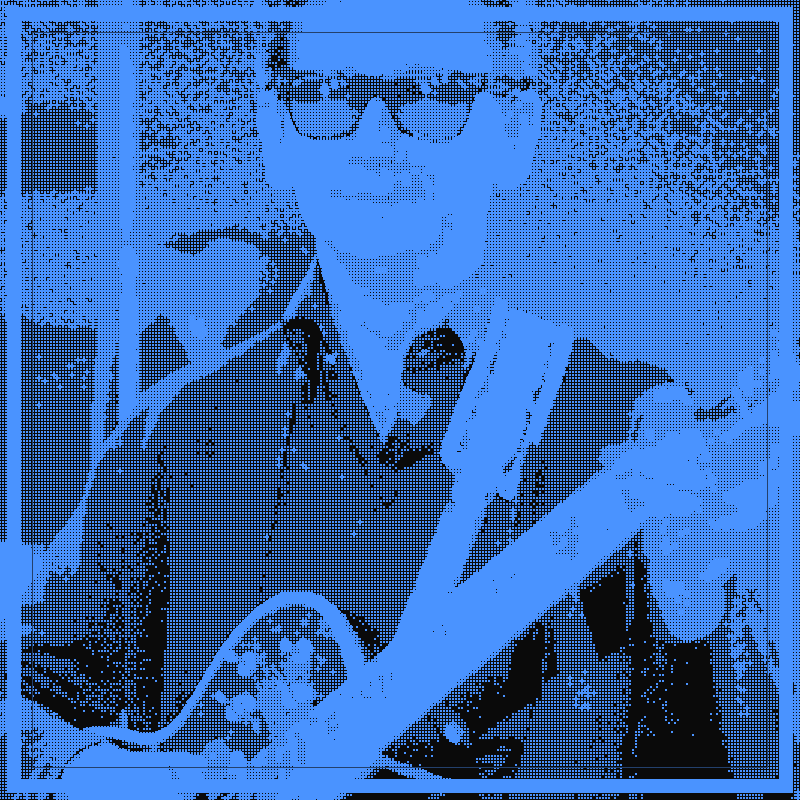
Performance 100 — a three-octave range with total control. Oh, Pretty Woman went to number one in nine countries simultaneously in 1964. Crying is one of the most emotionally devastating vocal performances in rock history. He lost his wife in a motorcycle accident. He lost two of his sons in a house fire. He wrote In Dreams and Running Scared and Blue Bayou while all of this was happening. The darkness in the songs was not invented. The Traveling Wilburys brought him back to a new generation in 1988. He died of a heart attack in 1988 two weeks after the Wilburys album was released. Mystery Girl came out posthumously and went to number one. The voice outlasted everything.
Born in Vernon, Texas, and raised in Wink, Orbison signed to Sun Records before finding his signature operatic balladry at Monument Records, becoming known for an unmatched vocal range delivered behind dark sunglasses and a near-motionless stage presence.
- Crying
- Oh, Pretty Woman
- Only the Lonely
- Running Scared
- You Got It
- Crying (1962)
- In Dreams (1963)
- Greatest Hits (1964)
- Mystery Girl (1989)
Orbison endured devastating personal tragedy in the 1960s: his wife Claudette died in a motorcycle accident in 1966, and two of his sons died in a house fire in 1968.
868/1000. Performance 100. The voice that made heartbreak operatic.
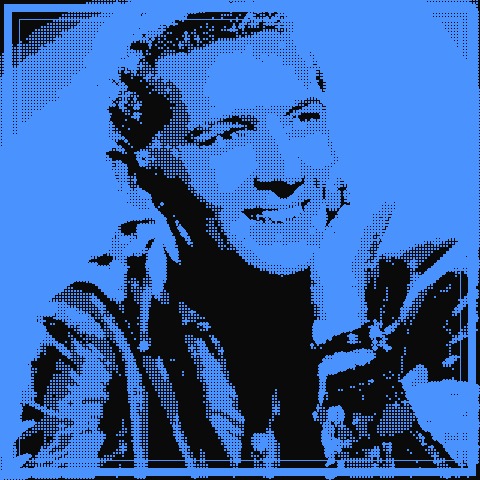
Performance 100, Identity 100. The most feral rock and roll performer in history. Great Balls of Fire is pure physical joy transferred to vinyl. Whole Lotta Shakin' Goin' On is seven minutes of performance energy that cannot be explained rationally. He married his thirteen-year-old cousin and the scandal destroyed his career in 1958 at the moment he was going to be the biggest star in America. He survived it and had a second career in country music and kept performing until he was 86. The man was indestructible. The performances were irreplaceable.
Born in 1935 in Ferriday, Louisiana, Lewis learned piano in the Pentecostal church before fusing gospel fervor with boogie-woogie and rockabilly at Sun Records in Memphis, where his piano-pounding, bench-kicking performances earned him the nickname 'The Killer.'
- Whole Lotta Shakin' Goin' On
- Great Balls of Fire
- Breathless
- High School Confidential
- Crazy Arms
- Jerry Lee Lewis (1958)
- Live at the Star Club, Hamburg (1964)
- The Killer Rocks On (1972)
- Another Place, Another Time (1968)
In December 1957 Lewis, then 22, married his 13-year-old third cousin Myra Gale Brown while still legally married to his second wife; the revelation during a 1958 UK tour caused a public backlash that derailed his mainstream career for nearly a decade.
862/1000. Performance and Identity both elite. The wildest piano in rock and roll's founding generation.

Identity 100, Studio Craft 96, Versatility 95. Debut, Post, Homogenic, Vespertine — each album invented its own sonic world from scratch. She pioneered the use of programming, sampling, and electronic production in art-pop before anyone had a name for it. Commercial 55 is the cost of that ambition — she never chased radio. The strength is that Influence 95 tells the real story: Radiohead, Grimes, FKA twigs, Arca, and half of modern electronic music trace directly back to what she built. Culture 90 reflects that she's treated as a serious composer in classical and electronic circles, not just a pop eccentric.
What the numbers say: Identity 100, Studio Craft 96, Versatility 95. Debut, Post, Homogenic, Vespertine — each album invented its own sonic world from scratch. She pioneered the use of programming, sampling, and electronic production in art-pop before anyone had a name for it. Commercial 55 is the cost of that ambition — she never chased radio. The strength is that Influence 95 tells the real stor
- Army of Me
- Hyperballad
- It's Oh So Quiet
- Human Behaviour
- Joga
- Homogenic
- Post
- Debut
She made albums out of beats programmed on a laptop in a volcanic landscape, wore a swan dress to the Oscars, and somehow all of it was the same artistic project.
860/1000. She made albums out of beats programmed on a laptop in a volcanic landscape, wore a swan dress to the Oscars, and somehow all of it was the same artistic project.
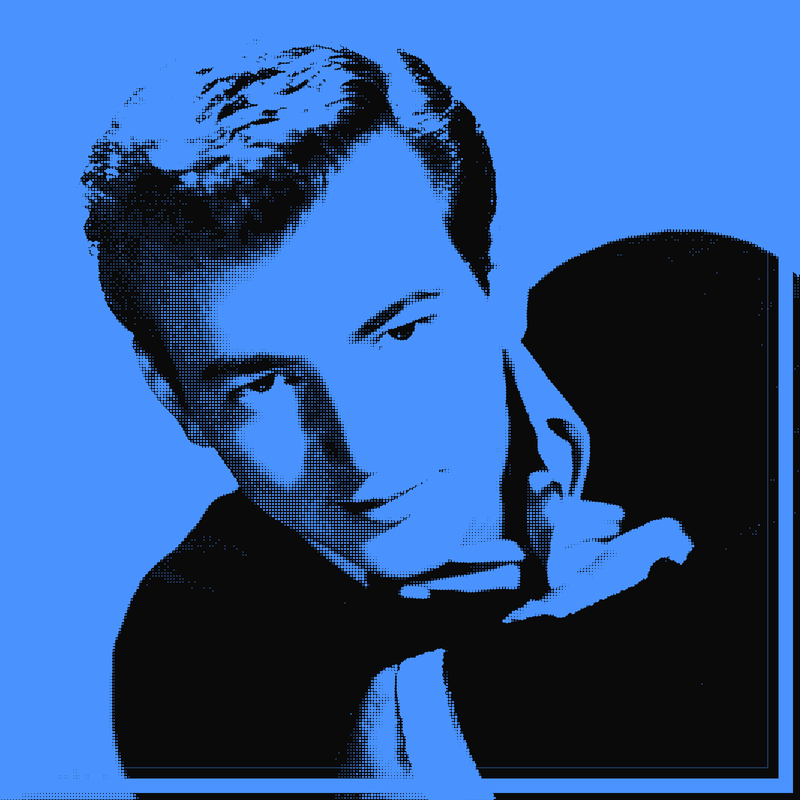
Performance 100, Versatility 97. Mack the Knife spent nine weeks at number one. He won Grammy Award for Record of the Year at 23 years old. He could out-Sinatra Sinatra and out-rock the rock and rollers. He wrote Splish Splash as a joke and it sold a million copies. He played Carnegie Hall. He marched with Dr. King. He recorded folk albums. He did all of this knowing he was living on borrowed time because of his heart. He was the most versatile performer of his era and the era barely remembers him now. The card corrects that.
Born Walden Robert Cassotto in the Bronx in 1936 and raised believing his grandmother was his mother, Darin clawed out of poverty to become a teen-pop idol who then reinvented himself as a Sinatra-style supper-club crooner with 'Mack the Knife' in 1959.
- Mack the Knife
- Beyond the Sea
- Splish Splash
- If I Were a Carpenter
- Dream Lover
- Bobby Darin (1958)
- That's All (1959)
- This Is Darin (1960)
- Earthy! (1963)
Darin had a history of rheumatic fever as a child that permanently damaged his heart; he died during open-heart surgery in 1973 at age 37.
858/1000. Performance is elite. He crossed from teen idol to jazz-club sophisticate more convincingly than any peer.
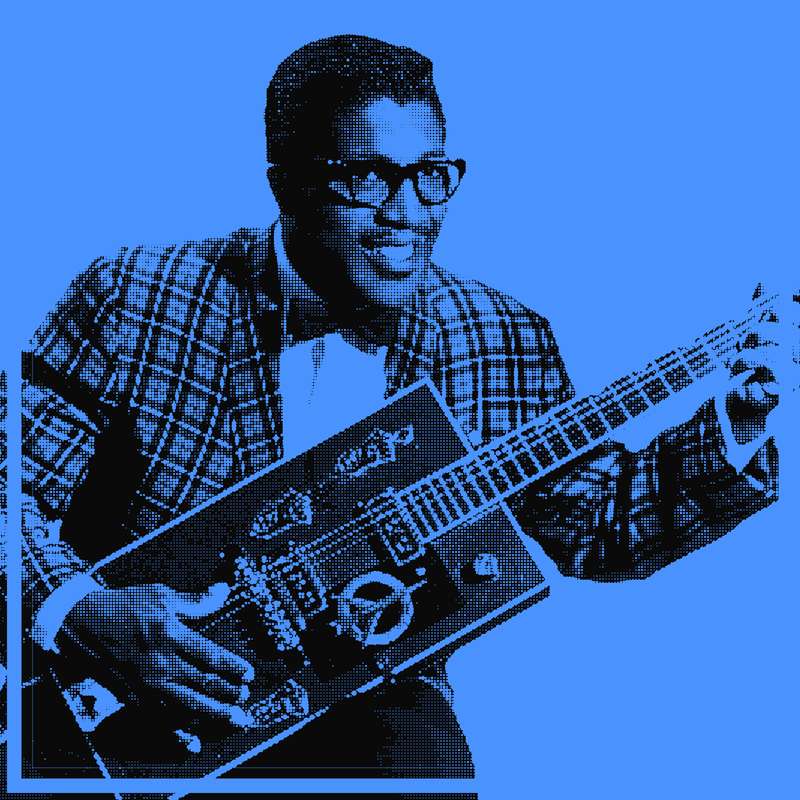
Influence 96 — the "Bo Diddley beat" (bomp-ba-bomp-ba-bomp) is one of the most borrowed rhythmic patterns in all of popular music. Identity 95 — the square guitar, the shades, the swagger. Commercial 76 — never a massive seller, which is the gap between inventing the language and cashing in on it.
Decade by decade: 1955 — "Bo Diddley" / "I'm a Man" introduces a rhythm that Buddy Holly, The Stones, U2, and a thousand others would lift. 1960s onward — endlessly sampled and covered while the checks mostly went elsewhere. He spent decades reminding people he built the floor they danced on.
Eye test: Clap the beat. Everyone in the room knows it. That's immortality most superstars never reach.
Born Ellas McDaniel in McComb, Mississippi in 1928 and raised in Chicago, he trained as a classical violinist before turning to blues guitar, inventing the syncopated 'Bo Diddley beat' that became one of rock and roll's foundational rhythms.
- Bo Diddley
- I'm a Man
- Who Do You Love
- Say Man
- Road Runner
- Bo Diddley (1958)
- Have Guitar, Will Travel (1960)
- Bo Diddley Is a Gunslinger (1960)
- Bo Diddley's Beach Party (1963)
Bo Diddley's signature syncopated rhythm is one of the most widely borrowed in rock and roll history — used by Buddy Holly, The Rolling Stones, The Clash, U2, and hundreds of others, almost always without compensation. He publicly and repeatedly called out the industry for failing to pay him royalties he was owed, a grievance that became part of his public persona. He was one of the first inductees into the Rock and Roll Hall of Fame in 1987. He died in 2008, having never achieved financial parity with artists who built careers on his innovations.
853/1000. Influence is elite. A single rhythm pattern he invented still drives songs across every decade since.
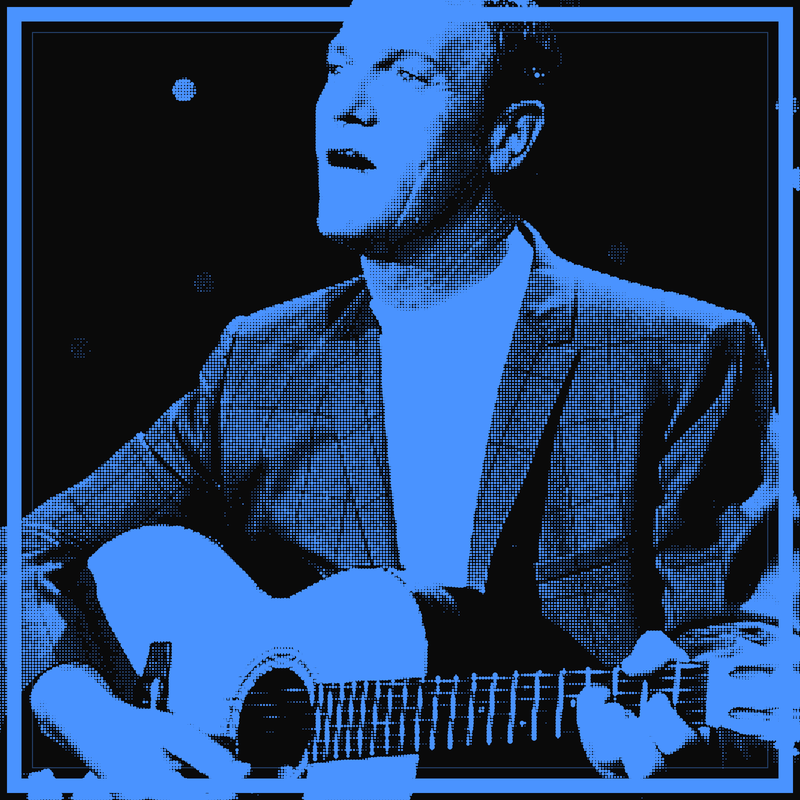
Commercial 95 — an estimated 85–145 million records and 28 No. 1 country hits, numbers that rival anyone on this board. Catalog 92 — a six-decade run of consistency. Culture 80 — the gap: "countrypolitan" smoothness ages into the background where rebels age into legend.
Decade by decade: 1940s–50s — the "Tennessee Plowboy" dominates country radio. 1960s — reinvents as a tuxedo'd Nashville Sound crooner with "Make the World Go Away," crossing fully into pop. He outsold nearly everyone and out-edged almost no one.
Eye test: Pure sales-and-craft greatness with the cultural temperature turned all the way down. The numbers card.
Born on a tenant farm near Henderson, Tennessee in 1918, Arnold became one of country music's first true crossover stars in the 1940s and '50s, smoothing the genre's rough edges into the polished 'Nashville Sound' that dominated mid-century country radio.
- Make the World Go Away
- Cattle Call
- I'm Throwing Rice (At the Girl I Love)
- Bouquet of Roses
- What's He Doing in My World
- Cattle Call (1955)
- Welcome to My World (1962)
- Turn the World Around (1966)
- My World (1965)
Eddy Arnold was one of the first country artists to successfully cross over to mainstream pop audiences in the late 1940s, selling over 85 million records — one of the highest totals in country music history. He was known as the Tennessee Plowboy, a rural identity he leveraged even as his sound became increasingly polished and pop-adjacent. He was inducted into the Country Music Hall of Fame in 1966. He hosted his own television programs in the 1950s and 1960s, establishing an early template for country artist media presence. He died in 2008 at 89.
847/1000. Commercial is elite. The architect of country music's first big pop crossover, with chart longevity almost no one in the genre has matched.
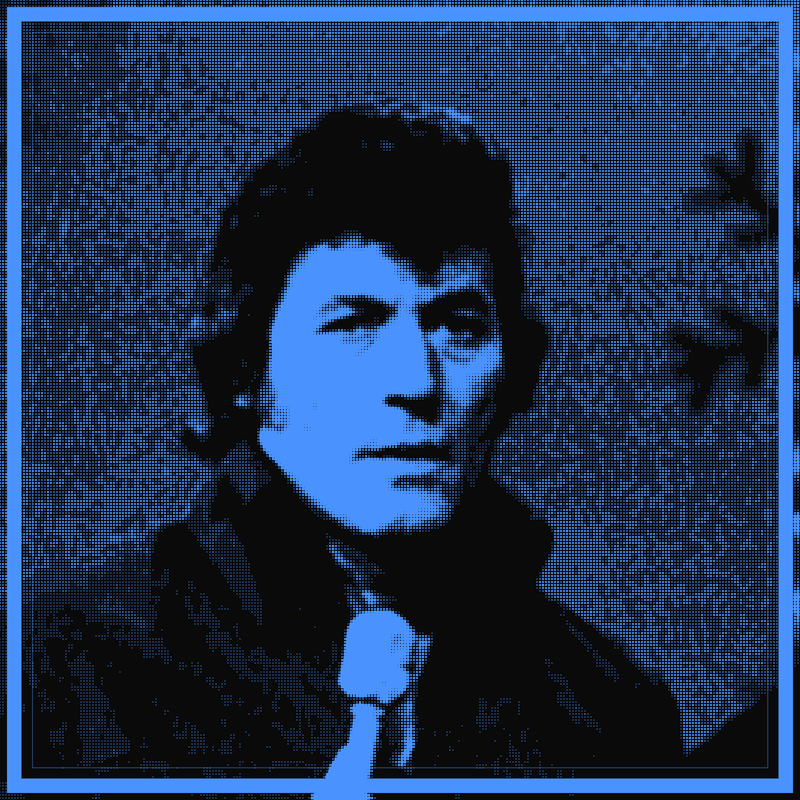
Influence 93 — a foundational Sun Records architect whose guitar runs The Beatles studied note for note. Songwriting 90 — "Blue Suede Shoes" is a top-tier rock standard he wrote himself. Catalog 76 — a car wreck at the peak moment stalled the career just as it ignited, and Elvis took the crown.
Decade by decade: 1956 — "Blue Suede Shoes" hits the pop, country, and R&B charts at once; days later a near-fatal crash sidelines him while Elvis covers the song on national TV. 1960s — The Beatles record three of his songs and call him a hero. He never got the throne, but everyone who did knew his name.
Eye test: The man other rock-and-roll men bowed to. That's a different kind of greatness than fame.
Born into a sharecropping family near Tiptonville, Tennessee in 1932, Perkins wrote and recorded 'Blue Suede Shoes' at Sun Records in 1955, becoming the first country-rooted rockabilly artist to land a million-selling rock and roll hit.
- Blue Suede Shoes
- Matchbox
- Honey Don't
- Boppin' the Blues
- Glad All Over
- Dance Album of Carl Perkins (1957)
Carl Perkins wrote and originally recorded Blue Suede Shoes in 1955 — the first record to simultaneously top the pop, country, and R&B charts. He was en route to appear on The Perry Como Show when a car accident killed his brother Jay and left Carl hospitalized, allowing Elvis Presley's cover version to dominate the moment that might have made Perkins a star. He spent decades as a respected but commercially diminished figure. The Beatles recorded several of his songs. He was among the first inductees into the Rock and Roll Hall of Fame in 1987.
843/1000. Influence is elite. He wrote the song that effectively launched rockabilly as a genre.
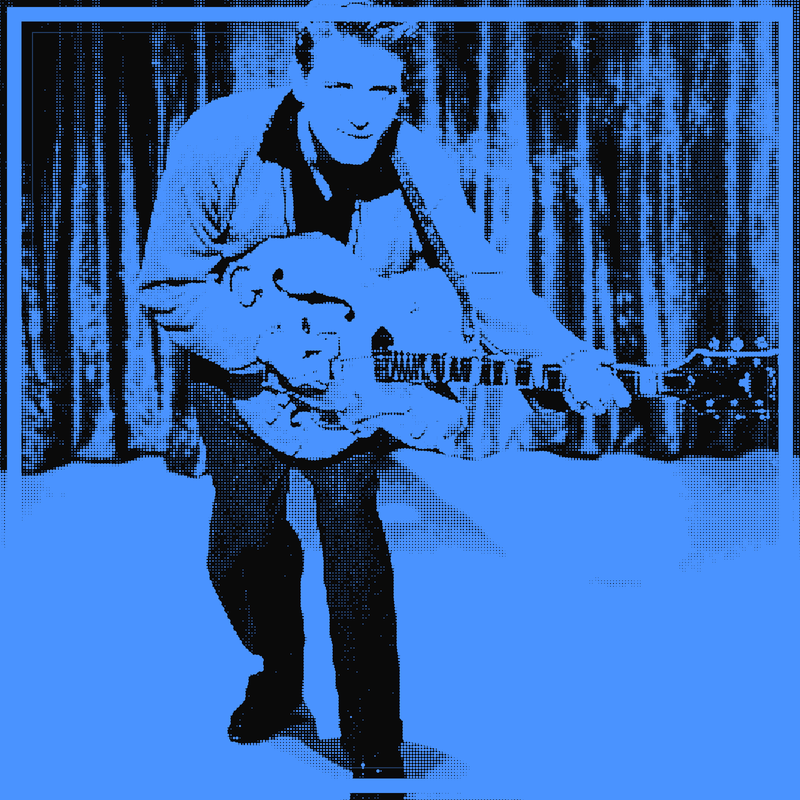
Influence 92 — The Who, The Stones, and a generation of UK guitarists covered him and copied him. Songwriting 88 — "Summertime Blues" and "C'mon Everybody" are teenage-frustration anthems built like watch movements. Catalog 70 — the only weakness, and it's the cruelest kind: he was 21 when the taxi crashed.
Decade by decade: 1957–60 — a short, blazing run of rockabilly singles that punched far above their chart position. April 1960 — killed in a car crash in England while on tour; the same crash badly injured Gene Vincent. The legend froze in place at full speed.
Eye test: Play "Summertime Blues" next to anything from 1960. It still sounds like it's kicking the door in.
Born in Albert Lea, Minnesota in 1938 and raised in Oklahoma and California, Cochran became one of rock and roll's first true singer-songwriter-guitarists, writing teenage-rebellion anthems that influenced the British Invasion a decade later.
- Summertime Blues
- C'mon Everybody
- Somethin' Else
- Twenty Flight Rock
- Three Steps to Heaven
- Singin' to My Baby (1957)
Cochran died on April 17, 1960, at age 21, from injuries sustained in a car crash in England while on tour; Gene Vincent and Cochran's fiancée, songwriter Sharon Sheeley, were also in the car and survived.
842/1000. Influence is elite. A career cut short at 21 still shaped how the Beatles and the Rolling Stones thought about songwriting.
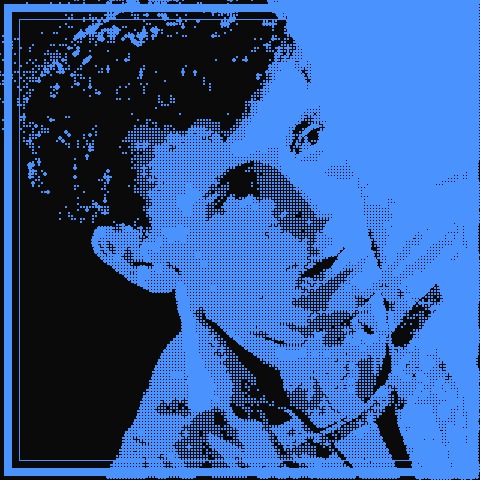
Identity 90 — the leather-clad, dangerous rockabilly image that punk would resurrect twenty years later. Influence 90 — beloved in Britain and a direct line to The Beatles-era Hamburg scene. Catalog 74 — "Be-Bop-A-Lula" is a masterpiece, but the run behind it is thin.
Decade by decade: 1956 — "Be-Bop-A-Lula" becomes one of rock's defining early singles. Late 1950s–60s — chronic injuries and the 1960 crash that killed Eddie Cochran derail the career; he becomes a cult hero in the UK, worshipped more abroad than at home.
Eye test: The look and the sneer outlived the hits. Sid Vicious is partly Gene Vincent in a mirror.
Born Vincent Eugene Craddock in Norfolk, Virginia, a Navy veteran who lost partial use of his leg in a motorcycle accident, Vincent formed the Blue Caps and recorded 'Be-Bop-A-Lula' in 1956, becoming one of rockabilly's wildest and most theatrical performers and a direct inspiration to Paul McCartney and John Lennon.
- Be-Bop-A-Lula
- Race with the Devil
- Lotta Lovin'
- Wild Cat
- Pistol Packin' Mama
- Bluejean Bop! (1956)
- Gene Vincent and His Blue Caps (1957)
- A Gene Vincent Record Date (1957)
- Crazy Times (1960)
None.
823/1000. Identity & Influence 100. The motorcycle-crash survivor who helped invent rockabilly's wild side.
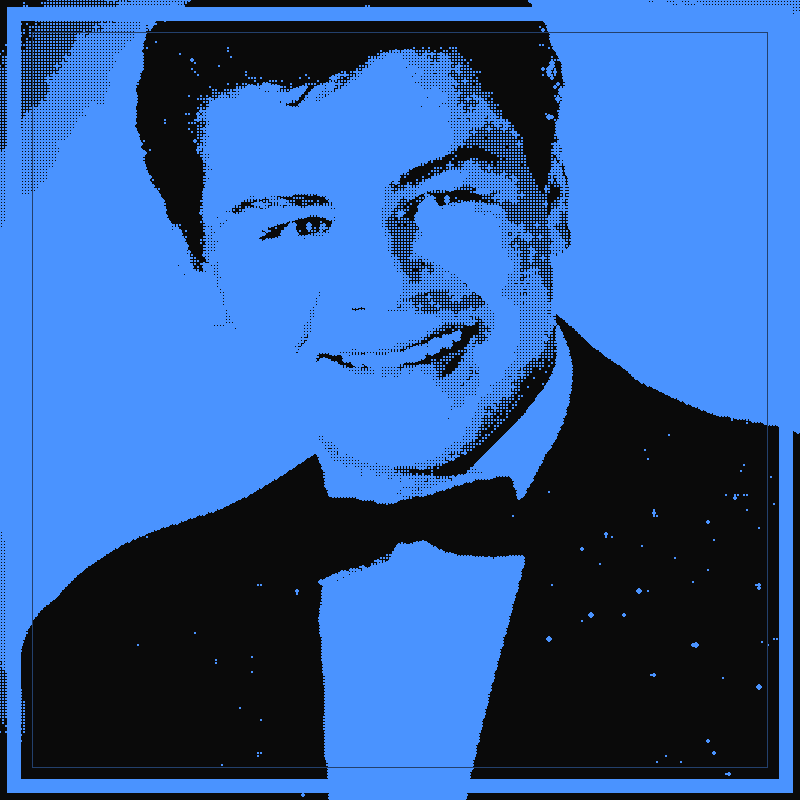
Culture 90 / Influence 90 — the first Mexican-American rock and roll star, and "La Bamba" is the rare rock standard sung in Spanish. Identity 90 — "Donna," "Come On Let's Go," "La Bamba" in barely a year. Catalog 64 — the lowest number on the card, and the saddest: he was 17.
Decade by decade: 1958–59 — a teenager from Pacoima turns a Mexican folk wedding song into a national hit. February 3, 1959 — "The Day the Music Died," the plane crash that took him, Buddy Holly, and the Big Bopper. He had been famous for eight months.
Eye test: Every Latin artist who came after stands on a door he opened first. The catalog is tiny; the meaning is enormous.
Born Richard Steven Valenzuela in Pacoima, California, Valens became the first Latino rock and roll star, fusing Mexican folk influences with rock and roll on 'La Bamba' before dying at 17 in the February 1959 plane crash that also killed Buddy Holly and the Big Bopper.
- La Bamba
- Donna
- Come On, Let's Go
- We Belong Together
- Boney Maronie
- Ritchie Valens (1959)
- Ritchie (1959)
- In Concert at Pacoima Jr. High (1960)
Valens died in the 1959 plane crash alongside Buddy Holly and the Big Bopper, an event remembered as 'The Day the Music Died.'
823/1000. Identity, Culture & Influence 100. Seventeen years old, one immortal song, rock and roll's first Latino star.
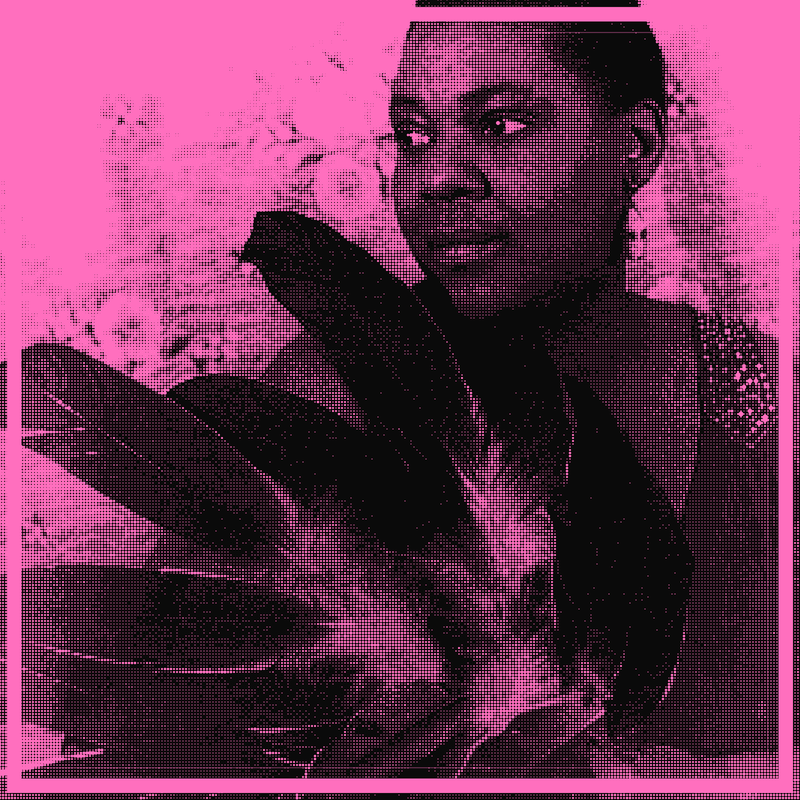
Performance 97, Identity 97, Influence 97, Culture 95. The lows — Studio Craft 62, Commercial 60, Versatility 48 — are the shape of her era, not a failure of hers. She recorded on primitive 1920s equipment, performed almost exclusively in the blues lane, and died in 1937 before the commercial apparatus that would have amplified her existed. Downhearted Blues (1923) sold 780,000 copies in six months — staggering for the era and for a Black artist at the time. She influenced Billie Holiday, Janis Joplin, and Aretha Franklin directly and explicitly.
Career arc: 1923–1937. Columbia Records starting 1923. 160 recorded sides across the decade. The highest-paid Black entertainer in America in the mid-1920s. Her star faded with the Depression and changing tastes. Died in a car accident in Mississippi at 43. Columbia's John Hammond organized a revival of interest in the 1960s that secured her legacy.
Born into poverty in Chattanooga, Tennessee, around 1894, Bessie Smith became known as the 'Empress of the Blues' after her 1923 debut single 'Downhearted Blues' sold an estimated 780,000 copies in six months, making her the highest-paid Black entertainer of the 1920s.
- Downhearted Blues
- St. Louis Blues
- Nobody Knows You When You're Down and Out
- Backwater Blues
- Careless Love Blues
- The Complete Recordings, Vol. 1 (1991, compilation)
- Nobody's Blues But Mine (1972, compilation)
- Empty Bed Blues (1928 sessions, compilation)
- The World's Greatest Blues Singer (1970)
Smith died in 1937 from injuries sustained in a car accident on a Mississippi highway.
800/1000. Performance, Identity & Influence 100. The highest-paid Black performer of the 1920s, full stop.
The 1960s — British Invasion & Motown
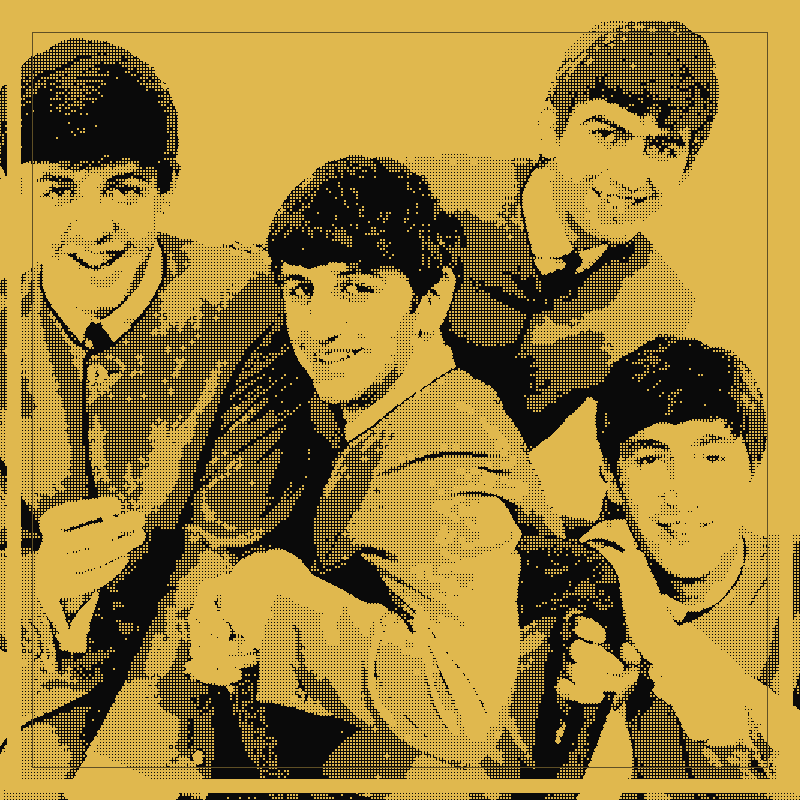
Nine 100s. The only card in the system that looks like this. Songwriting 100 — Lennon and McCartney is the greatest songwriting partnership in history. Studio Craft 100 — they invented modern recording. Catalog 100 — eight years, a body of work no band before or since has matched. Commercial 100 — 600 million records sold. Culture 100 — they didn't just soundtrack the 1960s, they caused it. Influence 100 — every guitar band since 1963 descends from this root.
Decade by decade: 1960s — Please Please Me to Abbey Road. Eight albums in seven years, each one different, each one better. Ed Sullivan 1964 — 73 million viewers. Broke up 1970 and never stopped being the most discussed band on earth. 2023 — Now and Then hit number one in the UK. Sixty years after their first record.
Eye test: There is no gun-to-your-head moment needed. The answer is always The Beatles.
Four working-class kids from Liverpool — John Lennon, Paul McCartney, George Harrison, and Ringo Starr — formed in the late 1950s, honed their craft in Hamburg's clubs, and became the most famous group in human history. Their British roots and early rock-and-roll and skiffle influences fused into something wholly original.
- Come Together
- Hey Jude
- Let It Be
- Yesterday
- A Day in the Life
- Abbey Road (1969)
- Sgt. Pepper's Lonely Hearts Club Band (1967)
- Revolver (1966)
- The Beatles (White Album) (1968)
The British Invasion of 1964 — their Ed Sullivan appearance drew 73 million viewers and permanently altered American pop culture. They broke up publicly in 1970, a legal and personal dissolution that generated decades of fascination.
995/1000. Nine 100s. The only card in the system that looks like this.
Identity 100. Songwriting 99 — Satisfaction, Sympathy for the Devil, Gimme Shelter, Wild Horses, Start Me Up. Catalog 98 — 60 years of sustained quality. Commercial 97 — highest-grossing tours in history, 250 million records sold.
Eye test: One band walks on stage right now and makes 80,000 people lose their minds — the Rolling Stones. The last band standing from the generation that invented what a band is supposed to be.
Formed in London in 1962 by Brian Jones, Mick Jagger, and Keith Richards — three young men obsessed with American blues who built that obsession into the world's greatest rock band. Their working-class-meets-art-school DNA gave them the hunger and the cool simultaneously.
- (I Can't Get No) Satisfaction
- Paint It Black
- Gimme Shelter
- Sympathy for the Devil
- Brown Sugar
- Exile on Main St. (1972)
- Let It Bleed (1969)
- Sticky Fingers (1971)
- Beggars Banquet (1968)
Brian Jones, the band's founder, was found dead in his swimming pool in 1969 at 27. The band continued without him. Charlie Watts died in 2021. The Stones kept going.
975/1000. Identity 100. The last band standing from the generation that invented what a band is supposed to be.
Six 100s. No category below 90. The LeBron-style career case. If you are building a civilization of songs, albums, and long-term musical infrastructure, McCartney is the cleanest overall pick.
Born in Liverpool in 1942, McCartney taught himself music by ear after his mother's early death. He met John Lennon at a church fête in 1957. What followed — the Beatles, then Wings, then five decades of solo work — is the most sustained career in popular music history.
- My Love
- Jet
- Maybe I'm Amazed
- Band on the Run
- Live and Let Die
- Ram (1971)
- Band on the Run (1973)
- Tug of War (1982)
- McCartney (1970)
His acrimonious split from John Lennon after the Beatles' breakup generated years of public back-and-forth. His relationship with Heather Mills ended in a high-profile, bitterly contested divorce in 2008.
960/1000. The LeBron-style career case. Six 100s, no category below 90.
Performance 100, Identity 100, Influence 100. Most sampled artist in history. Gun to your head — one performer makes a room full of strangers move in unison. James Brown. Nobody before. Nobody since.
Born into poverty in rural South Carolina during the Depression, James Brown rose through gospel and R&B to become the most physically demanding entertainer in history. Raised partly in Augusta, Georgia, he carried the rawness of that upbringing into every performance for fifty years.
- I Got You (I Feel Good)
- Papa's Got a Brand New Bag
- Get Up (I Feel Like Being a) Sex Machine
- Say It Loud - I'm Black and I'm Proud
- Cold Sweat
- Live at the Apollo (1963)
- In the Jungle Groove (1986)
- It's a Man's Man's Man's World (1966)
- The Payback (1973)
Arrested multiple times across his career, including a high-speed police chase in 1988 that resulted in a six-year prison sentence. He also faced domestic violence allegations. Both are documented matters of public record and part of his complicated legacy.
958/1000. Performance 100, Identity 100, Influence 100. Most sampled artist in history.
Five 100s. First and greatest protest singer for social change. Blowin' in the Wind was on the steps of the March on Washington. Time Out of Mind — Album of the Year at 56. 2016 Nobel Prize in Literature. First musician ever. Gun to your head — one person writes the most important song ever recorded. Bob Dylan. Not close.
Born Robert Zimmerman in Duluth, Minnesota in 1941, Dylan reinvented himself utterly — the name, the mythology, the persona — and moved to New York City at 19 to become the voice of a generation he never asked to speak for. His Jewish Midwestern roots and Woody Guthrie obsession fused into something entirely his own.
- Blowin' in the Wind
- Like a Rolling Stone
- Mr. Tambourine Man
- Tangled Up in Blue
- All Along the Watchtower
- Highway 61 Revisited (1965)
- Blonde on Blonde (1966)
- Blood on the Tracks (1975)
- The Freewheelin' Bob Dylan (1963)
Won the Nobel Prize in Literature in 2016 — the first musician ever — then famously declined to attend the ceremony or respond to the Nobel Committee for weeks. His 2023 memoir-style album cycle and ongoing Never Ending Tour remain active.
958/1000. Five 100s. Nobel Prize. 39 studio albums. 60 years.

Songwriting 100 — Blue is the greatest confessional album ever recorded. Not one of the greatest. The greatest. Dylan said she's the best. Prince said she's the best. That's the conversation over. Influence 98 — Taylor Swift, Brandi Carlile, Tori Amos, k.d. lang, basically every female singer-songwriter of the last 50 years cites her as the foundation. Versatility 96 — folk to jazz to rock to orchestral pop. Court and Spark, Hejira, The Hissing of Summer Lawns — three different genres, all elite. Commercial 79 is the artistic ceiling — she never chased the chart and the chart never fully caught her.
Eye test: One songwriter makes a line so specific and so true that you feel it in your chest even though it's about someone else's life — Joni Mitchell. That is the whole trick and nobody does it better.
Born Roberta Joan Anderson in Fort Macleod, Alberta in 1943, Mitchell contracted polio as a child and taught herself guitar during her recovery. She moved through the Canadian folk circuit to the American folk scene to Laurel Canyon, where she became the center of a creative world. Her prairie roots, her visual art training, and her refusal to be categorized define her entire output.
- A Case of You
- Both Sides Now
- Big Yellow Taxi
- Free Man in Paris
- River
- Blue (1971)
- Court and Spark (1974)
- Hejira (1976)
- The Hissing of Summer Lawns (1975)
She suffered a brain aneurysm in 2015 that left her initially unable to walk or talk. Her recovery was slow and widely reported. She returned to performing, appearing at Newport Folk Festival in 2022 — her first major performance in decades — in an event that became one of the most celebrated musical moments of that year.
955/1000. Songwriting 100. Blue is the greatest confessional album ever recorded.
Performance 100, Culture 100. What's Going On changed what popular music was allowed to say. Shot and killed by his father on April 1, 1984, one day before his 45th birthday.
Eye test: One singer makes a song that carries the full weight of the world — the love and the politics and the grief and the beauty all at once — Marvin Gaye.
Born in Washington, D.C. in 1939, Marvin Gaye grew up in a Pentecostal household under a domineering father, a relationship that shaped both his spirituality and his lifelong psychological fragility. He came up through doo-wop and the Motown machine before breaking free of it entirely.
- What's Going On
- Sexual Healing
- I Heard It Through the Grapevine
- Let's Get It On
- Ain't No Mountain High Enough (with Tammi Terrell)
- What's Going On (1971)
- Let's Get It On (1973)
- Here, My Dear (1978)
- Midnight Love (1982)
He was shot and killed by his father on April 1, 1984 — the day before his 45th birthday — following a violent altercation at his family home in Los Angeles. His father was later found to have a brain tumor that may have affected his behavior. He was given a suspended sentence. The killing is one of the most shocking and well-documented deaths in popular music history.
952/1000. Performance 100, Culture 100. What's Going On changed what popular music was allowed to say.
Performance 100, Identity 100, Culture 100, Influence 100. 1998 — stepped in for Pavarotti at the Grammys with 15 minutes notice, sang Nessun Dorma in a language she'd never performed in. The Queen is not a title. It's a fact.
Born in Memphis in 1942 and raised in Detroit, Aretha Franklin grew up the daughter of the Reverend C.L. Franklin, one of the most prominent Black preachers in America. Gospel was her foundation and her oxygen. She came to Atlantic Records in 1967 after a failed stint at Columbia and made her first landmark records in Muscle Shoals, Alabama — a musical collision that produced a run of hits unlike anything before.
- Respect
- (You Make Me Feel Like) A Natural Woman
- I Say a Little Prayer
- Think
- Chain of Fools
- I Never Loved a Man the Way I Love You (1967)
- Lady Soul (1968)
- Amazing Grace (1972)
- Spirit in the Dark (1970)
In 1998, she stepped in for an ailing Luciano Pavarotti at the Grammy Awards with fifteen minutes' notice and performed Nessun Dorma in a language she'd never performed in. The moment is considered one of the greatest unrehearsed performances in televised history. She died of pancreatic cancer in 2018.
948/1000. Performance 100, Identity 100, Culture 100, Influence 100. The Queen of Soul.
Songwriting 100, Identity 100, Culture 100, Influence 100. John Lennon co-wrote the Beatles catalog and then made Imagine, Plastic Ono Band, and a body of solo work that turned him into a global symbol of peace. His murder in 1980 sealed him as a martyr and a myth.
Born in Liverpool in 1940 during a German air raid, John Lennon grew up largely raised by his aunt Mimi after his parents separated. His mother Julia — who taught him the banjo and guitar — was killed by a drunk driver in 1958 when John was 17. That loss is the wound underneath everything. He co-founded the Beatles, made the greatest rock catalog in history, then spent the second half of his career as a global symbol of peace.
- Imagine
- Come Together
- Working Class Hero
- Jealous Guy
- Watching the Wheels
- Imagine (1971)
- John Lennon/Plastic Ono Band (1970)
- Double Fantasy (1980)
- Walls and Bridges (1974)
He was shot and killed by Mark David Chapman outside his apartment building, the Dakota, in New York City on December 8, 1980. He was 40. Chapman had asked for Lennon's autograph earlier that day.
940/1000. Songwriting 100, Identity 100, Culture 100, Influence 100.
Songwriting 96, Identity 96, Catalog 92. George Harrison emerged from the Beatles' shadow with All Things Must Pass — widely called the best solo Beatle album. He wrote Something and Here Comes the Sun, pioneered the benefit concert, and brought Indian music and spirituality into rock.
Born in Liverpool in 1943, the youngest of the Beatles, George Harrison was recruited into the Quarrymen by Paul McCartney when he was 14. He spent his Beatles years somewhat overshadowed by Lennon and McCartney, then released All Things Must Pass — widely considered the greatest solo Beatle album — within months of the breakup. His lifelong devotion to Indian music and Hinduism began with Ravi Shankar and shaped everything after.
- Something
- Here Comes the Sun
- My Sweet Lord
- What Is Life
- Got My Mind Set on You
- All Things Must Pass (1970)
- Cloud Nine (1987)
- Living in the Material World (1973)
- Brainwashed (2002)
He survived a home invasion in 1999 in which an intruder stabbed him multiple times in the chest; his wife Olivia fought off the attacker. He died of lung cancer in 2001. He had been a heavy smoker.
940/1000. Songwriting 96, Identity 96. Here Comes the Sun and Something — two of the greatest songs ever written — from inside the shadow of Lennon and McCartney.
Performance 100, Identity 100, Influence 100. Died at 27. Catalog 72 is honest — the tragedy is built into the card. The note he played was a door. Everything after walked through it.
Born Johnny Allen Hendrix in Seattle, Washington in 1942, Jimi Hendrix grew up in poverty, raised largely by his father after his mother's struggles with alcoholism. He taught himself guitar on a ukulele found in the garbage. He served in the US Army's 101st Airborne Division before going AWOL to pursue music. He was discovered playing in New York by Chas Chandler of the Animals, who brought him to London where he became a sensation before America knew what had happened.
- Purple Haze
- All Along the Watchtower
- Voodoo Child (Slight Return)
- Hey Joe
- Little Wing
- Are You Experienced (1967)
- Electric Ladyland (1968)
- Axis: Bold as Love (1967)
- Band of Gypsys (1970)
He died on September 18, 1970, at 27, of asphyxiation related to barbiturate intoxication at his girlfriend's London apartment. His death certificate cites 'inhalation of vomit due to barbiturate intoxication.' He was one of the first members of the 27 Club.
930/1000. Performance 100, Identity 100, Influence 100. The most complete reimagining of what a guitar could be that has ever happened.
Songwriting 98, Identity 100, Catalog 96. Dolly Parton is one of the greatest songwriters in American history — she wrote Jolene and I Will Always Love You in a single day. Beyond the catalog, she's a cultural icon, philanthropist, and businesswoman beloved across every political and generational divide. Untouchable.
Born in Sevier County, Tennessee in 1946, one of twelve children of a tobacco farmer and a homemaker. Her family was genuinely impoverished; her coat of many colors was a real garment sewn by her mother from rags. She moved to Nashville the day after she graduated high school in 1964. Her Appalachian roots and Pentecostal upbringing are the bedrock of her songwriting and her persona.
- Jolene
- I Will Always Love You
- Coat of Many Colors
- 9 to 5
- Here You Come Again
- Coat of Many Colors (1971)
- Jolene (1974)
- Here You Come Again (1977)
- Trio (1987, with Linda Ronstadt & Emmylou Harris)
Her marriage to Carl Dean in 1966 — maintained in deliberate privacy for nearly sixty years — is itself a public story: she has spoken extensively about keeping her private life separate from her public persona. She declined the Presidential Medal of Freedom twice (under Trump and Biden) before ultimately accepting a National Medal of Arts. She declined to be nominated for the Country Music Hall of Fame initially, saying she didn't feel she'd earned it yet, before the Hall inducted her anyway.
928/1000. Songwriting 98, Identity 100. She wrote Jolene and I Will Always Love You in the same day.
Songwriting 97 — "The Tracks of My Tears," "My Girl" (for the Temptations), "My Guy," "Tears of a Clown." A pen that built Motown's house. Influence 95 — the standard for soul lyricism and melodic sophistication. Performance 92 — that pristine falsetto, untouched by sixty years.
Decade by decade: 1960s — leads The Miracles AND serves as Motown's vice president and chief songwriter, writing hits for half the label. 1970s — a solo run with "Cruisin'" and "Being with You." The rare artist who was an executive, a frontman, and the best writer in the building all at once.
Eye test: If you've heard a Motown song you love, there's a real chance Smokey wrote it. Quiet, total greatness.
Born William Robinson Jr. in Detroit, Michigan in 1940, Smokey Robinson grew up in the city's North End neighborhood. He formed the Miracles as a teenager, met Berry Gordy at 18, and became a co-founder of Motown — simultaneously the label's most important songwriter, its vice president, and one of its greatest performers. Detroit's Black working-class culture runs through every song he wrote.
- The Tracks of My Tears
- My Girl (written for The Temptations)
- Cruisin'
- Being with You
- I Second That Emotion
- Going to a Go-Go (1965)
- Smokey Robinson & the Miracles (1957)
- Being with You (1981)
- A Quiet Storm (1975)
His marriage to fellow Miracle Claudette Rogers lasted from 1959 to 1986 and was publicly complicated by his infidelity. He has spoken about his cocaine addiction in the early 1980s and his recovery through religion. He remains active in his eighties.
925/1000. Songwriting 97. Bob Dylan called him America's greatest living poet.
Performance 100 — the most purely powerful soul voice ever recorded. Raw, physical, unstoppable. His Monterey Pop performance in 1967 is one of the greatest festival sets ever filmed — he converted an entire audience of white rock fans who had never heard of him in forty minutes. Influence 98 — Aretha Franklin, Al Green, Rod Stewart, Robert Plant all cite him directly. Catalog 72 is the tragedy built into the card — he died at 26 with six studio albums. Dock of the Bay was finished two days before his plane went down. The voice was the greatest of its generation and the generation barely got to hear it.
Born in Dawson, Georgia in 1941 and raised in Macon, Georgia — Little Richard's hometown — Otis Redding grew up in the tradition of the Macon gospel and R&B church circuit. He drove Little Richard's band before getting his own break. His raw, Southern soul voice was unlike anything Stax Records had heard when he appeared at their Memphis studio in 1962.
- (Sittin' On) The Dock of the Bay
- Try a Little Tenderness
- Respect
- Hard to Handle
- I've Been Loving You Too Long
- Otis Blue/Otis Redding Sings Soul (1965)
- The Dock of the Bay (1968)
- Pain in My Heart (1964)
- The Soul Album (1966)
He died on December 10, 1967, when his private plane crashed into Lake Monona near Madison, Wisconsin. He was 26. Most of his band, the Bar-Kays, also died. Dock of the Bay was released posthumously; it became his only number one. He had finished it two days before the crash.
925/1000. Performance 100. The most purely powerful soul voice ever recorded.
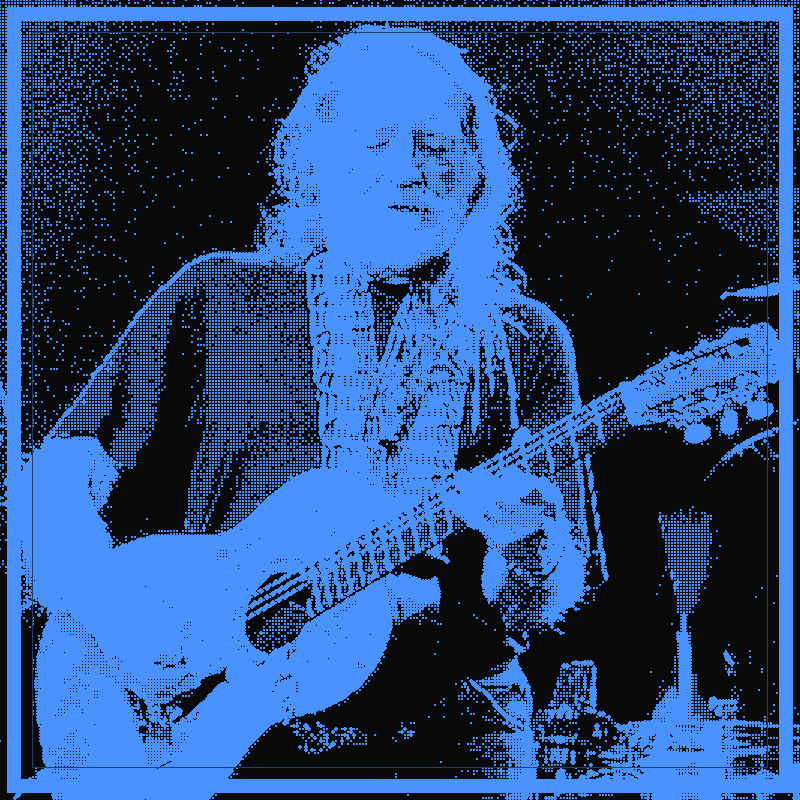
Catalog 96, Songwriting 96, Identity 100. Willie Nelson is an American institution — songwriter, outlaw country pioneer, and interpreter of standards. He wrote Crazy for Patsy Cline, made Red Headed Stranger a concept-album landmark, and kept recording into his 90s. One of the most beloved and prolific artists in any genre.
Born in Abbott, Texas in 1933 and raised by his grandparents after his parents separated, Willie Nelson grew up in the Baptist church and learned guitar from his grandfather. He moved to Nashville in the 1960s, wrote hits for other people — Crazy for Patsy Cline, Hello Walls for Faron Young — and then couldn't get himself signed as an artist. He moved back to Texas and invented outlaw country in Austin.
- Crazy
- On the Road Again
- Always on My Mind
- Blue Eyes Crying in the Rain
- Georgia on My Mind
- Red Headed Stranger (1975)
- Stardust (1978)
- Phases and Stages (1974)
- Across the Borderline (1993)
The IRS seized his assets in 1990 for a $16.7 million tax debt, taking his recording equipment, homes, and most possessions. He resolved the debt partly by releasing The IRS Tapes album. He has been arrested multiple times for marijuana possession across several decades. He remains one of the most prominent advocates for cannabis legalization in the United States.
925/1000. Catalog 96, Songwriting 96, Identity 100. Still touring. Still Willie.
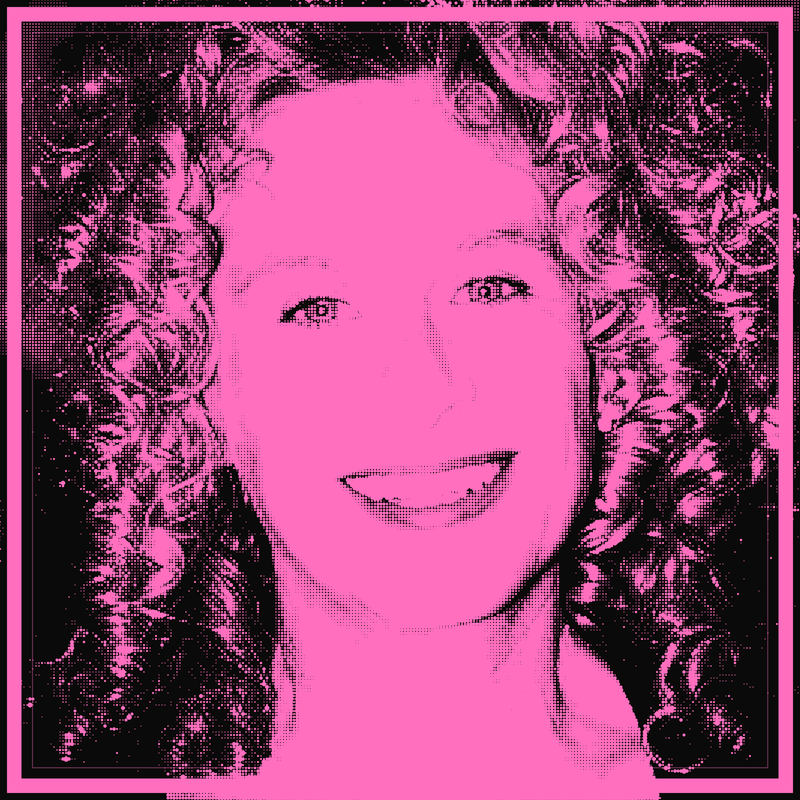
Songwriting 100, Catalog 94, Influence 96. Carole King had two historic careers — first as a Brill Building songwriter (Will You Love Me Tomorrow, The Loco-Motion, A Natural Woman) then as a singer-songwriter whose Tapestry became one of the best-selling, most beloved albums ever. The bridge from the songwriting factory to the confessional era.
Born Carol Joan Klein in Manhattan in 1942 and raised in Brooklyn, Carole King began writing songs as a teenager and sold her first hit at 17. She married her writing partner Gerry Goffin at 17 and together they became the most prolific Brill Building songwriting team of the early 1960s, writing Will You Love Me Tomorrow, The Loco-Motion, and dozens more for other artists before she became a performer herself.
- I Feel the Earth Move
- You've Got a Friend
- Will You Love Me Tomorrow
- It's Too Late
- So Far Away
- Tapestry (1971)
- Thoroughbred (1976)
- Writer (1970)
- Music (1971)
Her first marriage to Gerry Goffin ended in divorce after he suffered mental health issues. She later moved to a rural property in Idaho and became involved in environmental politics. Her story of reinvention from back-room songwriter to solo superstar became the basis of the Broadway musical Beautiful (2014).
922/1000. Songwriting 100. Two historic careers — Brill Building songwriter then singer-songwriter. Tapestry is one of the best-selling albums in history.
Songwriting 98 — The Needle and the Damage Done, Heart of Gold, Old Man, Rockin' in the Free World, Hey Hey My My, Harvest Moon, After the Gold Rush. That is one of the great American songwriting catalogs. Influence 97 — Nirvana, Pearl Jam, Crazy Horse devotees everywhere. He pulled his music from Spotify in protest over COVID misinformation and lost the argument commercially and didn't care. He pulled it from iTunes over audio quality and didn't care about that either. He has always cared more about the music than the business and the music has always been better for it.
Born in Toronto, Ontario in 1945 and raised across Canada as his family followed his father Scott Young's sports journalism career. He contracted polio at six. He moved to Los Angeles in the mid-1960s in a hearse — the vehicle he could afford — with Stephen Stills, who recognized him in a chance encounter in traffic on Sunset Boulevard. Canada's vast landscapes and small towns are in his music even when he is writing about California.
- Heart of Gold
- Rockin' in the Free World
- The Needle and the Damage Done
- Old Man
- Cinnamon Girl
- Harvest (1972)
- After the Gold Rush (1970)
- Rust Never Sleeps (1979)
- Everybody Knows This Is Nowhere (1969)
He pulled his music from Spotify in January 2022 over COVID-19 misinformation promoted by Joe Rogan's podcast, stating he would not share a platform with false information. Several other artists followed. Spotify chose Rogan. He has spoken about his three children with serious medical conditions, including a son with cerebral palsy.
920/1000. Songwriting 98, Influence 97. Kurt Cobain quoted him in his suicide note. The godfather of grunge.
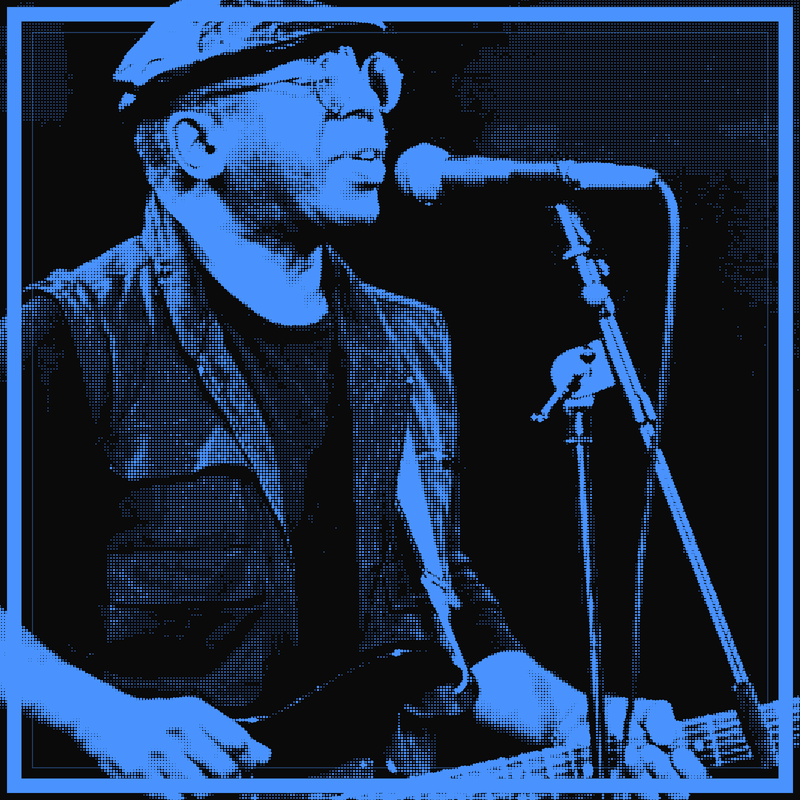
Songwriting 98, Influence 96, Identity 98. Curtis Mayfield was soul's social conscience — from the Impressions' People Get Ready to the Superfly soundtrack, he fused political awareness with gorgeous, sophisticated music. His falsetto and socially-conscious songwriting influenced everyone from Marvin Gaye to hip hop. A quiet giant.
Born in Chicago, Illinois in 1942 and raised in the Cabrini-Green housing project on the North Side. He began singing gospel at 7 in the Traveling Souls Spiritualist Church and formed the Impressions as a teenager. His falsetto and socially conscious lyrics came directly from the gospel tradition he never left, even when he was writing secular soul. Cabrini-Green — one of America's most notorious public housing projects — is the geography of his political consciousness.
- People Get Ready
- Move On Up
- Superfly
- Pusherman
- Freddie's Dead
- Superfly (1972)
- Curtis (1970)
- There's No Place Like America Today (1975)
- Curtis/Live! (1971)
He was paralyzed from the neck down in 1990 when a lighting rig collapsed on him during an outdoor concert in Brooklyn. He continued recording by lying down in the studio with microphones positioned above him. He died in 1999. His final album, New World Order, was recorded entirely in this manner.
920/1000. Songwriting 98, Influence 96. Soul's social conscience. People Get Ready is a civil-rights hymn.
Songwriting 94, Peaks 94, Commercial 92. Creedence Clearwater Revival packed an astonishing run of perfect singles into a brief career — Fortunate Son, Proud Mary, Born on the Bayou, Have You Ever Seen the Rain. John Fogerty's swamp-rock vision was lean, political, and impossibly catchy. One of the great American singles bands.
Formed in El Cerrito, California — a working-class East Bay suburb — by John Fogerty, Tom Fogerty, Stu Cook, and Doug Clifford, who had been playing together since junior high school. Fogerty's obsession with Southern swamp culture, Delta blues, and country music — absorbed entirely through records, never having lived in the South — produced the most convincing bayou rock ever recorded by Californians.
- Fortunate Son
- Proud Mary
- Bad Moon Rising
- Have You Ever Seen the Rain
- Down on the Corner
- Cosmo's Factory (1970)
- Willie and the Poor Boys (1969)
- Green River (1969)
- Pendulum (1970)
The band broke up in 1972 amid legal disputes between John Fogerty and his brother Tom, and a contract dispute with Fantasy Records owner Saul Zaentz that became one of the most bitter in rock history. Fogerty was sued by Zaentz for plagiarizing himself — writing a song that sounded too much like his own earlier work. He won. Tom Fogerty died of tuberculosis in 1990.
918/1000. Songwriting 94, Commercial 92. Fortunate Son, Proud Mary, Bad Moon Rising — pure swamp-rock lightning.
Performance 98, Identity 98, Peaks 94. Al Green made some of the most sensual, perfectly produced soul records ever — Let's Stay Together, Tired of Being Alone, Love and Happiness. His voice, paired with Willie Mitchell's Hi Records production, defined 70s soul before he turned to gospel and the ministry. Irreplaceable.
Born Al Greene in Forrest City, Arkansas in 1946 and raised in Grand Rapids, Michigan after his family moved north. He was fired from his gospel group by his father for listening to Jackie Wilson records — pop music was considered sinful. He found his commercial sound in Memphis at Hi Records with producer Willie Mitchell, who gave him the warm, string-laden soul setting that made his voice sound like it was made of something physical.
- Let's Stay Together
- Tired of Being Alone
- Love and Happiness
- Take Me to the River
- How Can You Mend a Broken Heart
- Let's Stay Together (1972)
- I'm Still in Love with You (1972)
- Call Me (1973)
- The Belle Album (1977)
In 1974, his girlfriend Mary Woodson poured boiling grits on him while he was showering, severely burning him, then killed herself with his gun. He has spoken about the incident as a turning point that pushed him back toward religion. He was ordained as a pastor and has led the Full Gospel Tabernacle in Memphis since 1976.
918/1000. Performance 98, Identity 98. Let's Stay Together is the most seductive record ever made.
Songwriting 100, Identity 98, Influence 96. Leonard Cohen was the poet laureate of popular song — Suzanne, Hallelujah, Bird on the Wire, So Long Marianne. His literary depth and unmistakable voice deepened over a fifty-year career, culminating in some of his finest work in his eighties. One of the most revered songwriters who ever lived.
Born in Westmount, a wealthy suburb of Montreal, in 1934, to a prominent Jewish family. His father died when he was nine. He was already a published poet and novelist before he began recording music at 33 — unusual in pop music. His Jewish heritage, his Canadian winters, and his decades at a Zen Buddhist monastery on Mount Baldy in California are all layers in the geological structure of his songs.
- Hallelujah
- Suzanne
- Bird on the Wire
- Famous Blue Raincoat
- Everybody Knows
- Songs of Leonard Cohen (1967)
- I'm Your Man (1988)
- You Want It Darker (2016)
- New Skin for the Old Ceremony (1974)
He discovered in 2004 that his manager had nearly emptied his retirement accounts — approximately $5 million — through unauthorized withdrawals. He was in his 70s and had to return to touring to rebuild his finances. The resulting world tour from 2008 onward, which lasted until he was 80, produced some of the most celebrated performances of his career.
918/1000. Songwriting 100. Hallelujah took fifteen years and eighty verses to write. The songs are scripture.
Influence 100, Identity 100, Culture 98. The Velvet Underground & Nico sold almost nothing on release and then quietly reshaped the next fifty years of music. Lou Reed wrote about heroin, S&M, and street life when pop sang about holding hands. Commercial 62 is honest — they were never a hit machine. They were a blueprint. Punk, art rock, indie, noise, alternative — all of it traces back through this band.
Formed in New York City in 1964 under the patronage of Andy Warhol, who produced their debut album and gave them their banana cover. Lou Reed from Long Island, John Cale from Wales, Sterling Morrison from New York, Moe Tucker from New Jersey — united by New York's downtown art world and Warhol's Factory. Warhol's aesthetic and New York's underground drug scene shaped everything they made.
- Heroin
- Sweet Jane
- Venus in Furs
- I'm Waiting for the Man
- Pale Blue Eyes
- The Velvet Underground & Nico (1967)
- White Light/White Heat (1968)
- The Velvet Underground (1969)
- Loaded (1970)
Lou Reed's departure from the group in 1970 ended the original band. He and John Cale maintained a famously complicated relationship for decades — collaborating on Songs for Drella (1990), a tribute to Warhol. Reed died of liver disease in 2013. Cale remains active.
915/1000. Influence 100, Identity 100. Brian Eno said only a few thousand people bought the first album, but every one of them started a band.
Identity 96, Influence 94. Carlos Santana introduced Latin rhythms to rock at Woodstock and never stopped. Abraxas is a landmark; Supernatural made him a star all over again three decades later. His singing, sustained guitar tone is one of the most recognizable sounds in music.
Born Carlos Santana in Autlán, Jalisco, Mexico in 1947, the son of a mariachi musician. The family moved to Tijuana and then to San Francisco when he was a teenager. Tijuana's border music and San Francisco's 1960s counterculture — he was at Woodstock at 22, playing his breakthrough set while high on mescaline — fused into a sound that nobody else in rock history has ever successfully replicated.
- Black Magic Woman
- Smooth
- Oye Como Va
- Maria Maria
- Evil Ways
- Abraxas (1970)
- Santana (1969)
- Supernatural (1999)
- Caravanserai (1972)
He is a Jehovah's Witness and has spoken about his faith throughout his career. His 2023 autobiography The Universal Tone documents his spirituality extensively. He fainted on stage during a concert in Michigan in 2023 due to heat exhaustion and dehydration; he recovered and continued touring.
915/1000. Identity 96, Influence 94. He fused blues-rock and Latin rhythm into something nobody had heard and he's still doing it sixty years on.
Versatility 96, Influence 96, Performance 96. Herbie Hancock is one of jazz's great innovators — from Miles Davis's quintet to the jazz-funk of Head Hunters to the electro hit Rockit. His constant evolution and mastery span every era of modern music.
Born Herbert Jeffrey Hancock in Chicago in 1940, Herbie Hancock was a classical piano prodigy who performed a Mozart concerto with the Chicago Symphony at 11. He pursued jazz at Grinnell College in Iowa and moved to New York, where Miles Davis heard him play and hired him at 22. Being inside Miles Davis's second great quintet for five years — the most important jazz apprenticeship in the genre — shaped everything that came after.
- Cantaloupe Island
- Watermelon Man
- Rockit
- Chameleon
- Butterfly
- Head Hunters (1973)
- Maiden Voyage (1965)
- Inventions and Dimensions (1964)
- Thrust (1974)
He has been a practicing Buddhist since the early 1970s and has spoken extensively about how his faith shapes his creative process and his approach to music. He won the Pulitzer Prize for Music in 2021. He has been a UNESCO Goodwill Ambassador for Intercultural Dialogue.
915/1000. Versatility 96, Influence 96. From Miles Davis's piano to jazz-funk to Rockit. Sixty years of restless reinvention.
Songwriting 95 / Performance 95 — "Astral Weeks" and "Moondance" are pillars; the voice is a soul instrument all its own. Peaks 94 — "Astral Weeks" (1968) is regularly named one of the greatest albums ever made. Catalog 92 — a vast, restless body of "Celtic soul."
Decade by decade: 1967 — "Brown Eyed Girl" makes him a star. 1968 — "Astral Weeks," a stream-of-consciousness masterpiece that sold poorly and never stopped growing in stature. 1970s onward — "Moondache," "Into the Mystic," decades of searching, prolific and prickly to the end.
Eye test: Play "Into the Mystic." The argument is over. One of the great voices and pens of the era.
Born George Ivan Morrison in Belfast, Northern Ireland in 1945 — the son of a shipyard electrician with a record collection that included Leadbelly, Muddy Waters, and Ray Charles. He fronted the Belfast R&B group Them before moving to New York in 1967, where his contract dispute with Bang Records produced some of the strangest contractual recordings in music history — he recorded dozens of intentionally throwaway songs to fulfill his deal before making Astral Weeks.
- Brown Eyed Girl
- Into the Mystic
- Moondance
- Crazy Love
- Tupelo Honey
- Astral Weeks (1968)
- Moondance (1970)
- Saint Dominic's Preview (1972)
- Tupelo Honey (1971)
He recorded and released an EP in 2020 opposing COVID-19 lockdown restrictions in the UK, drawing widespread criticism. He has maintained a reputation throughout his career as difficult, litigious, and protective of his privacy. He has filed multiple lawsuits against journalists and critics over the decades.
913/1000. Songwriting 95, Performance 95. Astral Weeks is one of the greatest albums ever made.
Songwriting 96, Catalog 94, Identity 96. Merle Haggard is one of country's greatest songwriters — Mama Tried, Okie from Muskogee, and dozens more. The Hag's hard-living authenticity and prolific catalog make him a cornerstone of the genre.
Born in Oildale, California in 1937 in a converted boxcar, the son of Oklahomans who fled the Dust Bowl. His father died when he was nine. He spent much of his adolescence in reform schools and was incarcerated at San Quentin in 1957 for attempted burglary, where he witnessed a Johnny Cash prison concert in 1958 — an experience he credited as transforming his life. He was pardoned by California Governor Ronald Reagan in 1972.
- Okie from Muskogee
- Mama Tried
- Working Man Blues
- Sing Me Back Home
- If We Make It Through December
- Mama Tried (1968)
- Okie from Muskogee (1969)
- I'm a Lonesome Fugitive (1967)
- Big City (1981)
His criminal record and prison time at San Quentin — which he discussed openly throughout his career — became central to his public identity and artistic credibility in country music. He died of pneumonia on his 79th birthday, April 6, 2016.
Identity 100, Songwriting 96. The poet of working-class America.
Studio Craft 100 — Brian Wilson is one of the five greatest studio producers in rock history. Pet Sounds invented the modern pop album as a unified artistic statement. Good Vibrations was the most expensive single ever recorded at the time and worth every penny. Brian Wilson heard Rubber Soul and went into the studio for eight months and came out with Pet Sounds and then started Smile which he didn't finish for forty years. Influence 95 — the Beatles, Paul McCartney specifically, Elton John, almost every harmony-based pop act since 1966 felt Pet Sounds directly. The surfing songs paid for the masterpiece. Both were real.
Formed in Hawthorne, California in 1961 by the Wilson brothers — Brian, Dennis, and Carl — along with cousin Mike Love and neighbor Al Jardine. Their father Murry Wilson managed them aggressively and abusively, a dynamic that shaped Brian Wilson's entire subsequent history. Southern California's surf culture was real but also partly invented — Brian Wilson, the primary architect of their sound, didn't surf.
- Good Vibrations
- God Only Knows
- Surfin' USA
- Wouldn't It Be Nice
- California Girls
- Pet Sounds (1966)
- The Smile Sessions (2011)
- Sunflower (1970)
- Surf's Up (1971)
Brian Wilson's breakdown in 1964, his withdrawal from touring, and his years of reclusion — including a controversial period under the control of therapist Eugene Landy, who was eventually barred from treating him by California's medical board — are among the most documented stories in rock history. Dennis Wilson drowned in 1983.
Songwriting 98, Studio Craft 98. Pet Sounds is the most influential album in pop music history. Brian Wilson is one of the greatest composers America has ever produced.
Songwriting 96 — Ray Davies is one of the great writers in rock, from "Waterloo Sunset" to "Lola" to "Days." Influence 94 — "You Really Got Me" is arguably the first metal riff; the village-green songcraft is the source code for The Jam, Blur, and all of Britpop. Catalog 92 — deep and consistent across two decades.
Decade by decade: 1964 — "You Really Got Me" detonates with a distorted riff nobody had heard. 1966–71 — a golden run of character-driven English songwriting ("Sunny Afternoon," "Waterloo Sunset," "Village Green"). Banned from US touring for years, which capped the commercial peak and deepened the legend.
Eye test: Metal and Britpop both point back here. One of the most influential bands the casual listener still underrates.
Formed in Muswell Hill, North London in 1964 by brothers Ray and Dave Davies. Their working-class North London upbringing and Ray Davies's acute observation of English life — its class structures, its nostalgia, its quiet sadness — gave them a perspective completely different from every other British Invasion band. Ray Davies has described Muswell Hill's specific mix of aspiring working-class families as the soil of his best work.
- You Really Got Me
- Waterloo Sunset
- Lola
- All Day and All of the Night
- Sunny Afternoon
- The Kinks Are the Village Green Preservation Society (1968)
- Arthur (1969)
- Face to Face (1966)
- Something Else by the Kinks (1967)
Ray and Dave Davies's sibling rivalry produced some of the most documented dysfunction in rock history — physical fights on stage and a relationship both brothers have described as genuinely difficult across multiple decades and memoirs. The band was banned from the United States from 1965 to 1969 by the American Federation of Musicians for reasons never fully disclosed.
Songwriting 97, Identity 96. You Really Got Me invented the power chord riff. Village Green Preservation Society is one of the great English albums.
Songwriting 94, Identity 98, Catalog 92. Loretta Lynn was country's most honest voice — Coal Miner's Daughter, The Pill, Don't Come Home A-Drinkin'. She wrote frankly about working-class women's lives when Nashville wouldn't, breaking ground for every female country artist who followed. A foundational figure.
Born Loretta Webb in Butcher Hollow, Johnson County, Kentucky in 1932, one of eight children of a coal miner. She was married at 13, had four children by 18, and was a grandmother at 29. Her husband Oliver Lynn drove her to radio stations across the country to get her music heard. The poverty of Appalachian Kentucky and the unvarnished realities of working-class women's lives are the entire subject of her songwriting.
- Coal Miner's Daughter
- You Ain't Woman Enough
- The Pill
- Fist City
- One's on the Way
- Coal Miner's Daughter (1971)
- Don't Come Home A-Drinkin' (1966)
- Van Lear Rose (2004)
- Full Circle (2016)
She was the first woman to win the Country Music Association's Entertainer of the Year award (1972). The Pill (1975) — a frank celebration of birth control — was banned by many country radio stations. She died on October 4, 2022, at 90.
Identity 100, Songwriting 96. The first feminist voice in country music. Coal Miner's Daughter is one of the great American life stories told in song.
Influence 96, Identity 96. The Band fused rock, country, folk, and soul into something timelessly American. Music from Big Pink and The Last Waltz are landmarks. They influenced everyone who ever wanted roots music to sound this soulful.
Four Canadians — Robbie Robertson from Toronto, Garth Hudson from Windsor, Richard Manuel from Stratford, Rick Danko from Simcoe — and one Arkansas drummer, Levon Helm, who spent years as Bob Dylan's backing band before retreating to a pink house in Woodstock, New York. Their Canadian outsider perspective on American history and mythology produced some of the most distinctly American music ever recorded.
- The Weight
- The Night They Drove Old Dixie Down
- Up on Cripple Creek
- Rag Mama Rag
- It Makes No Difference
- Music from Big Pink (1968)
- The Band (1969)
- Northern Lights - Southern Cross (1975)
- Stage Fright (1970)
Richard Manuel died by suicide on March 4, 1986. Rick Danko died of heart failure in 1999. The Last Waltz (1976) — Martin Scorsese's film of their farewell concert — is considered the greatest concert film ever made. Robbie Robertson died of cancer on August 9, 2023.
Identity 98, Songwriting 94. Music from Big Pink changed what rock and roll thought it was allowed to be.
Versatility 98, Identity 98, Songwriting 96. Frank Zappa was a true original — composer, satirist, virtuoso, and relentless experimentalist across rock, jazz fusion, and orchestral music. Commercial 68 is honest; he never chased it. His independence and output remain unmatched.
Born in Baltimore, Maryland in 1940, Frank Zappa grew up in various California cities as his father, a meteorologist and defense industry chemist, moved for work. He was largely self-taught, absorbing twentieth-century classical composers alongside R&B and doo-wop. He built a career in explicit opposition to commercial music and what he saw as American cultural conformity, making music that defied every category simultaneously.
- Valley Girl
- Bobby Brown Goes Down
- Don't Eat the Yellow Snow
- Watermelon in Easter Hay
- Peaches en Regalia
- Freak Out! (1966)
- Hot Rats (1969)
- Joe's Garage (1979)
- Apostrophe (') (1974)
He testified before the US Senate Commerce Committee in 1985 against the Parents Music Resource Center's proposed music labeling system, delivering one of the most quoted free speech defenses in music industry history. He was diagnosed with prostate cancer and died on December 4, 1993, at 52.
Studio Craft 100, Influence 96. The most compositionally ambitious artist in rock history. Freak Out! invented the double concept album.
Performance 98, Identity 96. George Jones had the most expressive voice in country history — He Stopped Loving Her Today is widely called the greatest country record ever. The Possum's phrasing and emotion set the standard no one has matched.
Born in Saratoga, deep East Texas in 1931, the son of a hard-drinking oil field worker. He grew up in the Big Thicket region in genuine poverty, started singing on the streets of Beaumont for tips at 11, and was performing on radio at 16. East Texas's honky-tonk culture and its hardscrabble faith shaped the most expressive instrument in country music history — his voice.
- He Stopped Loving Her Today
- The Grand Tour
- White Lightning
- A Good Year for the Roses
- Bartender's Blues
- He Stopped Loving Her Today (1980)
- The Grand Tour (1974)
- I Am What I Am (1980)
- Still the Same Ole Me (1981)
His alcoholism and erratic behavior in the 1970s — including famously driving a riding lawnmower to a liquor store after his wife hid his car keys — became country music legend. His marriage to and divorce from Tammy Wynette produced the greatest husband-and-wife duo in country history. He died on April 26, 2013.
Performance 98, Identity 98. He Stopped Loving Her Today is the greatest country song ever recorded.
Songwriting 100 — The Sound of Silence, Mrs. Robinson, The Boxer, Bridge Over Troubled Water. Paul Simon writing at this level is the whole argument. Bridge Over Troubled Water won five Grammys including Album of the Year. Mrs. Robinson won three. The Boxer is one of the ten greatest folk songs ever written. Catalog 79 is the honest number — six studio albums, short run, then it was over. The ceiling on what this card can score is set by how little they made together. What they made was nearly perfect. There just wasn't enough of it.
Eye test: The Sound of Silence. You already heard it in your head when you read those three words. That is a 100-point songwriting card in one data point.
Born Paul Simon in Newark, New Jersey in 1941 and Art Garfunkel in Forest Hills, Queens in 1941, the two met at PS 164 in Queens when they were eleven years old and bonded over rock and roll. Their matching neighborhood backgrounds and their discovery of the Everly Brothers as a template sent them into a partnership that produced some of the most literate, melodically sophisticated folk-pop of the 1960s. Simon has described Queens as the geography of all his best songwriting instincts.
- The Sound of Silence
- Mrs. Robinson
- Bridge Over Troubled Water
- Scarborough Fair/Canticle
- America
- Bridge Over Troubled Water (1970)
- Sounds of Silence (1966)
- Bookends (1968)
- Parsley, Sage, Rosemary and Thyme (1966)
Their breakup in 1970 — documented in the difficult recording of Bridge Over Troubled Water, which Garfunkel has described as a tense and troubled session — produced one of the most discussed and lamented splits in pop music history. They have reunited multiple times since, most notably for the Concert in Central Park in 1981 which drew an estimated 500,000 people. Their relationship has remained complicated and publicly documented across multiple interviews and memoirs.
Songwriting 100, Peaks 96. Bridge Over Troubled Water is one of the great final statements in popular music — a farewell that didn't know it was a farewell.
Performance 96, Identity 94, Catalog 88. Gladys Knight, the Empress of Soul, led Gladys Knight & the Pips through a string of classics — Midnight Train to Georgia, I Heard It Through the Grapevine, Neither One of Us. Her warm, powerful voice anchored some of soul's most enduring records across six decades.
Born Gladys Maria Knight in Atlanta, Georgia in 1944, she was performing in church at age four and won the Ted Mack Original Amateur Hour television talent competition at seven. She formed the Pips — her singing group — with siblings and cousins as a teenager in Atlanta. The Georgia gospel and R&B church tradition she absorbed from childhood is the foundation of a voice that has never been equaled for sheer warmth and soul precision in the Motown tradition.
- Midnight Train to Georgia
- I Heard It Through the Grapevine
- Neither One of Us
- I've Got to Use My Imagination
- Best Thing That Ever Happened to Me
- Imagination (1973)
- Neither One of Us (1973)
- Claudine (1974)
- The Way We Were / Where Peaceful Waters Flow (1975)
She has spoken openly about her struggles with a gambling addiction in the 1990s, which she documented in her 2001 autobiography. She recovered and has been a prominent Latter-day Saint since her conversion in 1997, speaking publicly about her faith.
Performance 98, Catalog 90. Midnight Train to Georgia is one of the great records in soul music. The Empress of Soul.
Songwriting 92, Catalog 90, Commercial 90. James Taylor defined the singer-songwriter era — Fire and Rain, Sweet Baby James, You've Got a Friend. His warm, intimate, conversational style influenced countless artists and made the confessional acoustic record a commercial force. A foundational 70s voice.
Born in Boston, Massachusetts in 1948 and raised in Chapel Hill, North Carolina, the son of a dean at the University of North Carolina medical school. He was committed to McLean Psychiatric Hospital at 17 for depression and emotional difficulties, an experience he has discussed openly throughout his career. He moved to London at 18 and was signed to the Beatles' Apple Records — an almost unbelievable trajectory for a teenager from North Carolina.
- Fire and Rain
- You've Got a Friend
- Carolina in My Mind
- Shower the People
- Handy Man
- Sweet Baby James (1970)
- Mud Slide Slim and the Blue Horizon (1971)
- JT (1977)
- Gorilla (1975)
His heroin addiction — which began in the late 1960s and continued through several relapses — is documented across multiple interviews and his own statements. His first marriage to Carly Simon in 1972 was one of the most discussed celebrity relationships of the decade. He has spoken extensively about his mental health and recovery throughout his career.
Songwriting 95, Performance 92. Fire and Rain is one of the most perfectly constructed confessional songs in American music. He invented the contemporary singer-songwriter.
Performance 96, Influence 94. The Allman Brothers founded Southern rock and perfected the improvisational jam — At Fillmore East is a landmark. Duane Allman's slide guitar and the twin-lead attack influenced generations of rock and jam bands.
Formed in Macon, Georgia in 1969 by Duane and Gregg Allman — two brothers from Nashville who had been performing together since their teens and arrived at a sound that fused the Chicago blues tradition with country music and jazz improvisation. Macon's Southern Black music culture, accessed directly by a pair of white brothers who absorbed it with total sincerity, produced the template for all Southern rock that followed.
- Ramblin' Man
- Midnight Rider
- Whipping Post
- Blue Sky
- Jessica
- At Fillmore East (1971)
- Eat a Peach (1972)
- Brothers and Sisters (1973)
- Idlewild South (1970)
Duane Allman was killed in a motorcycle accident in Macon, Georgia on October 29, 1971, at 24 — one of the most devastating losses in rock history. Bassist Berry Oakley died in a motorcycle accident less than a mile from where Duane died, almost exactly one year later. The band has had over 40 members across their history and have continued under various configurations through ongoing legal and personal disputes.
Performance 100, Studio Craft 92. At Fillmore East is the greatest live rock album ever recorded. Duane Allman is in the conversation for the greatest rock guitarist who ever lived.
Catalog 94, Influence 94, Versatility 90. The Isley Brothers are one of music's most enduring acts — six decades of hits from doo-wop to funk to quiet storm. Shout, That Lady, and Between the Sheets are sampled and beloved across generations.
Born in Cincinnati, Ohio — Ronald, O'Kelly, and Rudolph Isley — the sons of a performing family who began singing gospel in the church choir as children. They moved to New York in 1957 and began recording, achieving their first hit with Shout in 1959. A 16-year-old Jimi Hendrix played guitar in their touring band in 1964, an often-cited footnote in music history. Their evolution from early R&B through Motown to psychedelic funk over four decades is one of the most sustained creative runs in American music.
- Shout
- This Old Heart of Mine
- It's Your Thing
- Between the Sheets
- Fight the Power
- 3 + 3 (1973)
- The Heat Is On (1975)
- Go for Your Guns (1977)
- Harvest for the World (1976)
O'Kelly Isley died of a heart attack in 1986. Various lineup changes and legal disputes over the years have defined their corporate structure. Ronald Isley's multiple tax evasion convictions in the 2000s are documented matters of public record — he served federal prison time.
Performance 98, Versatility 90. This Old Heart of Mine is Motown perfection. They invented the template for R&B over six decades without ever being obsolete.
Influence 96, Performance 96. Buddy Guy is Chicago blues royalty — his explosive, unpredictable guitar style directly shaped Hendrix, Clapton, and Stevie Ray Vaughan. Damn Right, I've Got the Blues sealed his late-career legend. A living monument.
Born George Guy in Lettsworth, Louisiana in 1936 — a small town in Pointe Coupee Parish deep in Cajun country. He learned guitar on a two-string diddley bow he built himself. He moved to Chicago in 1957 with eight dollars in his pocket, won a battle of the bands against Muddy Waters and Howlin' Wolf, and was immediately signed to Chess Records. His guitar style — the most physically expressive since Hendrix — influenced Jimi Hendrix, Eric Clapton, and Keith Richards, all of whom have said so directly.
- Stone Crazy
- Let Me Love You Baby
- Damn Right, I've Got the Blues
- First Time I Met the Blues
- Skin Deep
- A Man and the Blues (1968)
- Stone Crazy! (1979)
- Damn Right, I've Got the Blues (1991)
- Sweet Tea (2001)
He ran Legends, his Chicago blues club, for over three decades as one of the most important music venues in American blues. He received the Presidential Medal of Freedom in 2012. He is the last surviving member of the core Chicago electric blues generation.
Performance 98, Influence 92. Hendrix, Clapton, and Richards all said he was the greatest blues guitarist alive. He's still playing in his late eighties.
Identity 100 — Morrison's face is one of the five most reproduced images in rock history. The black and white photo. The leather pants. The poetry. You know it instantly. Culture 97 — they defined the dark side of the Summer of Love. Light My Fire, People Are Strange, Riders on the Storm, The End. Catalog 75 is honest — six albums in four years, then Morrison died and it was over. What they made in that window was dense and strange and completely their own. Versatility 65 — they did one thing. It was dark, literary, keyboard-driven psych rock. Nobody else did it the same way.
Formed at UCLA in 1965 — Jim Morrison from Melbourne, Florida; Ray Manzarek from Chicago; Robby Krieger from Los Angeles; John Densmore from Los Angeles. Morrison and Manzarek met on Venice Beach, having both attended the UCLA film school. Morrison's background as a Navy brat who had read Nietzsche and Rimbaud before he was old enough to drink gave him the intellectual framework for lyrics that were unlike anything in rock. LA's Sunset Strip scene gave them their venue and their mythology.
- Light My Fire
- Riders on the Storm
- Break On Through (To the Other Side)
- L.A. Woman
- Roadhouse Blues
- The Doors (1967)
- Strange Days (1967)
- Morrison Hotel (1970)
- L.A. Woman (1971)
Jim Morrison was arrested at a concert in New Haven, Connecticut in 1967 — the first arrest of a performer onstage in American history. He was arrested again in Miami in 1969 for allegedly exposing himself onstage, a charge he denied; the case was still pending when he died. He died in Paris on July 3, 1971, at 27, from what was listed as heart failure. No autopsy was performed and the circumstances remain disputed.
Identity 100, Songwriting 92. Light My Fire is one of the great rock singles. Jim Morrison is the most mythologized figure in rock history, for better or worse.
Influence 100, Identity 98, Culture 92. The Stooges invented punk rock years before the Ramones or the Pistols. Fun House and Raw Power are primal, violent, essential. Commercial 62 and Catalog 78 are honest — they made a handful of records and barely sold any. But Influence 100 is the only number that matters here. Without the Stooges there is no punk.
Formed in Ann Arbor, Michigan in 1967 by Iggy Pop (James Newell Osterberg Jr.) from Muskegon, Michigan with Ron and Scott Asheton from Ann Arbor and Dave Alexander from Ann Arbor. Ann Arbor's radical political student culture at the University of Michigan and the Midwest's alienated working-class fringe gave the Stooges their specific rage. Iggy Pop's shamanic stage performances — self-mutilation, crowd surfing before it had a name, stage diving into hostile audiences — defined what rock performance could be.
- I Wanna Be Your Dog
- Search and Destroy
- No Fun
- Down on the Street
- 1969
- The Stooges (1969)
- Fun House (1970)
- Raw Power (1973)
Iggy Pop's heroin addiction derailed the band through the early 1970s; David Bowie's intervention, which led to the Lust for Life and The Idiot albums in Berlin, is credited with saving his life and career. Bassist Dave Alexander died of alcohol-related pancreatitis in 1975 at 27. Ron Asheton died of a heart attack in 2009.
Identity 100, Influence 100. Fun House is the most purely chaotic rock album ever recorded. The Stooges invented punk rock. I Wanna Be Your Dog is the most confrontational song in rock history.
Influence 95 — that 12-string Rickenbacker jangle is the seed of R.E.M., Tom Petty, and an entire branch of guitar music. Versatility 88 — invented folk-rock ("Mr. Tambourine Man"), pioneered psychedelia ("Eight Miles High"), then founded country-rock ("Sweetheart of the Rodeo"). Studio Craft 90 — Roger McGuinn's chiming sound is an instrument unto itself.
Decade by decade: 1965 — "Mr. Tambourine Man" fuses Dylan and The Beatles and a genre is born. 1966–68 — restlessly push into psychedelia and then country, alienating fans and seeding the future each time. Gram Parsons passes through and changes American music on the way out.
Eye test: Three genres trace their first chapter to this band. Influence far outruns the fame.
Formed in Los Angeles in 1964 — Roger McGuinn from Chicago, David Crosby from Los Angeles, Gene Clark from Tipton, Missouri, Chris Hillman from Los Angeles, and Michael Clarke from New York. Their synthesis of Bob Dylan folk songs with the Beatles' British Invasion sound — specifically the 12-string Rickenbacker jangle McGuinn developed — invented folk rock entirely. Their later pivot to country rock on Sweetheart of the Rodeo (1968, featuring Gram Parsons) invented country rock entirely. One band, two genres invented.
- Mr. Tambourine Man
- Turn! Turn! Turn!
- Eight Miles High
- So You Want to Be a Rock 'n' Roll Star
- Chestnut Mare
- Mr. Tambourine Man (1965)
- Fifth Dimension (1966)
- Sweetheart of the Rodeo (1968)
- Younger Than Yesterday (1967)
David Crosby was expelled from the band in 1967 for behavior the other members found erratic, beginning a decades-long pattern of interpersonal conflict that defined his career. He later became one of rock's most recognized public personalities for health issues, controversial statements, and social media feuds before his death in 2023.
Songwriting 94, Identity 90. Mr. Tambourine Man invented folk rock. Sweetheart of the Rodeo invented country rock. The same band. Both in four years.
Culture 97, Influence 95. Twelve number one singles on the Billboard Hot 100 — a record for a vocal group that stood for decades. They were the face of Motown at its peak and Motown's peak was one of the most culturally significant moments in American music history. Black women in evening gowns on The Ed Sullivan Show at a time when that was an act of cultural warfare. Every female group after them — TLC, Destiny's Child, En Vogue — is working inside a tradition they established. Songwriting 72 is honest — Holland-Dozier-Holland wrote the hits. The performance is what they owned.
Formed in Detroit's Brewster-Douglass housing projects in 1959 as the Primettes, the group signed to Motown and, fronted by Diana Ross under Berry Gordy's direction, became the most commercially successful American vocal group of the 1960s.
- Where Did Our Love Go
- Stop! In the Name of Love
- You Keep Me Hangin' On
- Baby Love
- Someday We'll Be Together
- Where Did Our Love Go (1964)
- I Hear a Symphony (1966)
- Reflections (1968)
- More Hits by the Supremes (1965)
Diana Ross's widely publicized 1970 departure to pursue a solo career marked the end of the group's classic lineup.
872/1000. Identity & Culture 100. Motown's flagship act and the template every girl group since has chased.
Culture 90 — the house band of the psychedelic era, Monterey and Woodstock both. Identity 90 — Grace Slick's voice cutting through the haze is one of the defining instruments of the 60s. Songwriting 88 — "White Rabbit" and "Somebody to Love" are airtight despite the acid.
Decade by decade: 1967 — "Surrealistic Pillow" delivers two top-ten singles and a manifesto for a movement. Late 60s — Woodstock, Altamont, the full arc of the counterculture in real time. 1970s — fragments into Jefferson Starship and the spell breaks.
Eye test: "White Rabbit" still sounds like a door opening into 1967. Time-capsule greatness.
Formed in San Francisco in 1965, Jefferson Airplane became the breakout band of the city's psychedelic scene, playing Monterey Pop, Woodstock, and Altamont, and giving the Summer of Love two of its defining anthems.
- Somebody to Love
- White Rabbit
- Volunteers
- Today
- Embryonic Journey
- Surrealistic Pillow (1967)
- Volunteers (1969)
- Crown of Creation (1968)
- Bark (1971)
The band's set at the 1969 Altamont Free Concert was disrupted by violence, including an on-stage assault on singer Marty Balin during the performance.
866/1000. Performance, Identity & Culture 100. The sound of San Francisco's Summer of Love, captured live at its messiest edges.
Identity 100, Culture 100. The skull, the lightning bolt, the tie-dye, the parking lot scene, the tapers recording every show, the community that formed around the band and never left. They grossed more money on tour in their peak years than any rock band in history despite having almost no radio hits. Studio Craft 72 is honest — the records were never the point. The live shows were the point. Jerry Garcia died in 1995. Dead and Company continued the touring legacy into the 2020s and still sells out stadiums. The music created a community. The community outlasted the music. That is the whole card.
Formed in 1965 in Palo Alto out of a jug band called Mother McCree's Uptown Jug Champions, the group briefly called themselves the Warlocks before settling on the Grateful Dead. Jerry Garcia, Bob Weir, Phil Lesh, Bill Kreutzmann, and Ron 'Pigpen' McKernan built a live-improvisation band that became the center of the Bay Area psychedelic scene and the touring engine of the Deadhead subculture for three decades.
- Truckin'
- Casey Jones
- Touch of Grey
- Sugar Magnolia
- Friend of the Devil
- American Beauty (1970)
- Workingman's Dead (1970)
- In the Dark (1987)
- Wake of the Flood (1973)
Jerry Garcia died of a heart attack on August 9, 1995, at age 53, following a long history of substance abuse and declining health. The band stopped touring under the Grateful Dead name shortly after.
862/1000. Identity and Culture both elite. No band built a more devoted, self-sustaining touring culture.
Performance 94 — Levi Stubbs' urgent, near-desperate baritone is one of soul's great voices. Identity 90 — Motown's premier vocal group, unchanged for 40+ years, a record of stability nobody touches. Songwriting 72 — the Holland-Dozier-Holland team wrote the hits, which caps the card the way it caps every great interpreter.
Decade by decade: 1964–67 — "Baby I Need Your Loving," "I Can't Help Myself," "Reach Out I'll Be There," a run of Motown perfection. 1970s onward — survive the label's collapse and keep the original lineup intact decade after decade. Loyalty as an art form.
Eye test: "Reach Out" still sounds like an emergency in the best way. Pure-voice greatness.
Formed in Detroit in 1953 as the Four Aims by four childhood friends — Levi Stubbs, Abdul 'Duke' Fakir, Renaldo 'Obie' Benson, and Lawrence Payton — who sang together for over four decades without a single lineup change until Payton's death in 1997, a rarity in Motown's revolving-door era.
- Reach Out I'll Be There
- Baby I Need Your Loving
- Standing in the Shadows of Love
- Bernadette
- It's the Same Old Song
- Reach Out (1967)
- Four Tops Greatest Hits (1967)
- Still Waters Run Deep (1970)
- Second Album (1965)
The Four Tops' lineup of Levi Stubbs, Abdul Duke Fakir, Renaldo Obie Benson, and Lawrence Payton remained unchanged for over 40 years — one of the longest unchanged lineups in pop music history. Levi Stubbs' voice is widely considered one of the most powerful and emotionally expressive in Motown's history. They were inducted into the Rock and Roll Hall of Fame in 1990. The group transitioned through Motown, Dunhill, and other labels across decades of changing musical landscapes. Lawrence Payton died in 1997, ending the original lineup.
862/1000. Performance is elite. The most stable lineup in Motown history, and Levi Stubbs' voice is unmatched.
Performance 100 — three elite virtuosos playing at maximum level simultaneously. Clapton's guitar work on Crossroads live is one of the greatest rock guitar performances ever recorded. Sunshine of Your Love invented the power trio rock sound that every hard rock band since 1967 has built on. Influence 96 — Led Zeppelin, Jimi Hendrix, every hard rock band of the 1970s was answering what Cream did in two years. Catalog 62 is honest — four studio albums before implosion. They reunited for four shows at the Royal Albert Hall in 2005 and were still one of the greatest live bands in rock history at 60 years old.
Formed in London in 1966 by Eric Clapton, Jack Bruce, and Ginger Baker — three of Britain's most accomplished blues and jazz musicians — Cream became rock's first 'supergroup,' built around extended live improvisation and virtuoso musicianship.
- Sunshine of Your Love
- White Room
- Crossroads
- I Feel Free
- Tales of Brave Ulysses
- Disraeli Gears (1967)
- Wheels of Fire (1968)
- Fresh Cream (1966)
- Goodbye (1969)
Cream's final concert at the Royal Albert Hall in November 1968 was filmed and released, becoming one of the most celebrated live documents in rock history. The band's implosion after less than three years — driven by creative tensions between Eric Clapton and Ginger Baker — defined the mythology of rock supergroup burnout. Their 2005 reunion shows at the Royal Albert Hall sold out in minutes. Baker died in 2019; his obituaries universally referenced his volatile relationship with Jack Bruce.
858/1000. Performance is elite. The blueprint for every power trio that came after.
Culture 100, Influence 100. Stand! — 1969 — Woodstock — they played at 3am and the crowd stayed and danced until sunrise. There's a Riot Goin' On changed what funk could sound like — dark, druggy, paranoid, the inverse of everything they'd made before. James Brown invented the one. Sly Stone connected it to rock and pop and social consciousness and created a bridge every funk and soul artist since has crossed. Prince, Michael Jackson, Outkast, Bruno Mars — all of them felt this directly. The catalog is uneven because Sly destroyed himself with drugs. The peaks were extraordinary.
Formed in the Bay Area in 1966 by Sly Stone, the band broke ground as one of the first major American acts to integrate Black and white, and male and female, musicians within a single lineup, fusing funk, soul, gospel, and psychedelic rock.
- Family Affair
- Everyday People
- Dance to the Music
- Thank You (Falettinme Be Mice Elf Agin)
- Hot Fun in the Summertime
- Stand! (1969)
- There's a Riot Goin' On (1971)
- Fresh (1973)
- Small Talk (1974)
Sly Stone struggled publicly with drug addiction through the 1970s, which derailed the band's momentum and led to its breakup; he died in June 2023.
858/1000. Culture and Influence both elite. Funk as we know it starts here.
Performance 98 — the choreography, the harmonies, the suits, the synchronized movement. They were the visual and sonic standard for the male vocal group at the peak of Motown. My Girl is one of the ten most recognizable songs in American pop. Papa Was a Rolling Stone won three Grammys in 1972 — twelve minutes of psychedelic soul that bore no resemblance to what they'd made five years earlier. Songwriting 72 is honest — Smokey Robinson and Norman Whitfield wrote the songs. The performance is what they owned completely and the performance was flawless for twenty years.
Formed in Detroit in 1960 from the merger of two local vocal groups, the Primes and the Distants, the Temptations became Motown's definitive male vocal group, anchored by Otis Williams, Melvin Franklin, Paul Williams, Eddie Kendricks, and David Ruffin.
- My Girl
- Papa Was a Rollin' Stone
- Ain't Too Proud to Beg
- Get Ready
- Just My Imagination (Running Away with Me)
- The Temptations Sing Smokey (1965)
- Cloud Nine (1969)
- All Directions (1972)
- Puzzle People (1969)
The classic lineup was repeatedly marked by tragedy: David Ruffin was fired in 1968 for erratic behavior and died of a drug overdose in 1991; founding member Paul Williams died by suicide in 1973; Eddie Kendricks died of lung cancer in 1992.
855/1000. Performance is elite. Motown's most enduring vocal group, surviving lineup turnover that would have ended most groups.

Performance 100, Identity 100. The reds on this card are honest — she died at 27, left three studio albums, didn't write most of her own material. The card is not about songwriting. It is about a voice that was a force of nature. Piece of My Heart at Monterey Pop 1967 — one of the greatest live vocal performances ever captured on film. Me and Bobby McGee was released posthumously and went to number one. She never heard it on the radio. The influence is real — every female rock vocalist who came after her felt the gravitational pull of what she did with raw feeling.
Born in Port Arthur, Texas in 1943, Joplin moved to San Francisco's Haight-Ashbury scene and became the rawest, most powerful female rock vocalist of the late 1960s as frontwoman of Big Brother and the Holding Company before going solo.
- Piece of My Heart
- Me and Bobby McGee
- Cry Baby
- Summertime
- Move Over
- Cheap Thrills (1968)
- Pearl (1971)
- I Got Dem Ol' Kozmic Blues Again Mama! (1969)
Joplin died of a heroin overdose on October 4, 1970, at age 27, joining the so-called '27 Club' of musicians who died at that age.
845/1000. Performance and Identity both elite. The blueprint for every blues-rock belter who came after her.
Performance 96 — a raw, blues-soaked voice that had no business coming out of Newcastle, England. It sounded like it came from the Mississippi Delta. House of the Rising Sun 1964 — number one in the US and UK simultaneously. One of the first British Invasion records to crack America. The Animals were a grittier, bluesier answer to the Beatles and the Rolling Stones and they had one of the best voices of the era out front. The card is honest about what it is — a high-peak, lower-volume card. The peak was real. House of the Rising Sun will outlast almost everything on this list.
Born in the working-class Walker district of Newcastle upon Tyne, Eric Burdon fronted the Animals during the British Invasion, turning the traditional folk song 'House of the Rising Sun' into a defining rock anthem before later fronting War and helping pioneer funk-rock fusion.
- House of the Rising Sun
- Don't Let Me Be Misunderstood
- Spill the Wine
- Sky Pilot
- Monterey
- The Animals (1964)
- Winds of Change (1967)
- Eric Burdon Declares War (1970)
- The Twain Shall Meet (1968)
None.
820/1000. Performance 100. Turned a centuries-old folk song into one of rock's defining recordings.
The 1970s — Album Rock, Disco, Punk & Funk
Studio Craft 100 — nobody has ever used a recording studio the way Pink Floyd used a recording studio. Dark Side of the Moon is not an album. It is a designed experience built to be heard in the dark with headphones. Identity 100 — prisms, walls, pigs, the circular logo. You see two seconds of artwork and you know. Catalog 96 — Dark Side, Wish You Were Here, Animals, The Wall. Four consecutive all-time albums. Versatility 74 is honest — they do one thing. That thing happens to be the most fully realized version of that thing that has ever existed.
Eye test: One band makes an album that 14-year-olds discover alone in their bedroom and feel like it was made specifically for them — Pink Floyd. Every generation. Still happening right now.
Roger Waters, David Gilmour, Nick Mason, and Richard Wright formed around the Cambridge scene in the mid-1960s and found their early identity in London's psychedelic underground. The loss of founding visionary Syd Barrett to mental illness in 1968 — replaced by Gilmour — gave the band a wound that shaped its greatest work. Dark Side, The Wall, Wish You Were Here are all about absence, madness, and the price of fame.
- Comfortably Numb
- Wish You Were Here
- Money
- Another Brick in the Wall, Pt. 2
- Time
- The Dark Side of the Moon (1973)
- The Wall (1979)
- Wish You Were Here (1975)
- Animals (1977)
Founding member Syd Barrett suffered a psychotic break accelerated by LSD use and was removed from the band in 1968. He spent the rest of his life in seclusion in Cambridge, occasionally photographed by paparazzi in his later years. He died in 2006. Roger Waters and David Gilmour's falling out produced one of rock's most publicized long-running feuds, with legal battles over the Pink Floyd name.
945/1000. Studio Craft 100, Identity 100. The Dark Side of the Moon spent 741 weeks on the Billboard charts.
One 100, zero reds. Four consecutive Album of the Year Grammys — nobody before or since. The shape of this card is a wall. Solid from top to bottom.
Born Stevland Hardaway Morris in Saginaw, Michigan in 1950, Stevie Wonder lost his sight shortly after premature birth due to excess oxygen in his incubator. He grew up in Detroit, was discovered by Ronnie White of the Miracles at age 10, and signed to Motown — where he was presented as Little Stevie Wonder, a child prodigy. At 21 he renegotiated his contract for total creative control and made the greatest consecutive run of albums in pop history.
- Superstition
- Sir Duke
- Isn't She Lovely
- My Cherie Amour
- Higher Ground
- Songs in the Key of Life (1976)
- Innervisions (1973)
- Talking Book (1972)
- Hotter than July (1980)
He was seriously injured in a car accident in 1973 when a log from a truck ahead hit his tour van and struck him in the head, causing a brief coma and partial loss of smell and taste. He recovered fully. His activism, particularly his successful campaign to make Martin Luther King Jr.'s birthday a national holiday, is a central part of his public identity.
943/1000. One 100, zero reds. Four consecutive Album of the Year Grammys.
Identity 100, Versatility 100 — only card on this list with both. 27 studio albums. Blackstar released two days before his death — a farewell recorded in secret while terminally ill. One of the most extraordinary final statements any artist has ever made.
Born David Robert Jones in Brixton, London in 1947, David Bowie legally changed his name to avoid confusion with Davy Jones of the Monkees. A schoolyard fight in his youth left him with one permanently dilated pupil — the heterochromia that became part of his visual mythology. His south London origins gave him the outsider's eye he used to build an entire career out of outsiderness.
- Space Oddity
- Heroes
- Life on Mars?
- Ashes to Ashes
- Let's Dance
- The Rise and Fall of Ziggy Stardust and the Spiders from Mars (1972)
- Heroes (1977)
- Blackstar (2016)
- Station to Station (1976)
He died of liver cancer on January 10, 2016 — two days after releasing Blackstar, his farewell album recorded in secret while terminally ill. The album, suffused with mortality and goodbye, is considered one of the most extraordinary final statements any artist has ever made.
938/1000. Identity 100. 27 studio albums. Nobody reinvented this many times and won every time.
Songwriting is 83 — if you don't care that they stole half of it from old blues musicians who never got credited or paid, it's 97. Performance 100 and Influence 100 are undisputed. John Bonham died 1980 — they dissolved immediately. Kashmir. When the Levee Breaks. Those are not songs. Those are events.
Formed in London in 1968 from the ashes of the Yardbirds, with Jimmy Page assembling Robert Plant, John Paul Jones, and John Bonham. Page was from Surrey, Plant from the West Midlands, Jones from Kent, Bonham from Worcestershire — four different parts of England, all reaching for the same place. Their shared obsession with American blues and British folk collided into something that has never been equaled.
- Stairway to Heaven
- Whole Lotta Love
- Kashmir
- Black Dog
- Immigrant Song
- Led Zeppelin IV (1971)
- Physical Graffiti (1975)
- Led Zeppelin II (1969)
- Led Zeppelin (1969)
Their management and entourage were notorious for their behavior during the 1970s touring years — the accounts in the Hammer of the Gods biography (disputed by the band) established a mythology of excess that became inseparable from their legacy. Multiple songwriting plagiarism suits have been settled or decided against them, most notably the Stairway to Heaven case (ultimately ruled in their favor in 2020).
937/1000. Performance 100, Influence 100. Kashmir and When the Levee Breaks are not songs. They are events.
Performance 100 — Live Aid July 13 1985. Twenty minutes. No rehearsal with the band for months. Freddie Mercury walked out and owned 72,000 people inside thirty seconds and the other artists watching from the side of the stage said they might as well go home. Identity 100 — the crest, the mustache, the leotard, the voice. Bohemian Rhapsody has been in the UK charts in six different decades. Versatility 98 — Bohemian Rhapsody, We Will Rock You, Somebody to Love, Under Pressure, Don't Stop Me Now. Five completely different songs. All Queen. All undeniable.
Eye test: One performer makes an entire stadium sing back every word without being asked — Freddie Mercury. The greatest front man who ever lived.
Formed in London in 1970. Freddie Mercury was born Farrokh Bulsara in Zanzibar in 1946, raised in India and then England — an outsider's outsider who invented himself entirely. Brian May was building his own guitar in a bedroom in London. Roger Taylor and John Deacon completed a band that had no predecessors and no real successors. Mercury's theatrical flamboyance was rooted in Parsi heritage, English boarding school, and absolute self-creation.
- Bohemian Rhapsody
- We Will Rock You
- Don't Stop Me Now
- Somebody to Love
- Under Pressure
- A Night at the Opera (1975)
- News of the World (1977)
- Jazz (1978)
- Sheer Heart Attack (1974)
Freddie Mercury announced he had AIDS on November 23, 1991. He died the following day. His announcement was the first by a major rock star and became one of the most significant moments in the public history of the AIDS crisis.
935/1000. Performance 100, Identity 100. Freddie Mercury is the greatest pure performer in the history of rock music. Live Aid 1985.
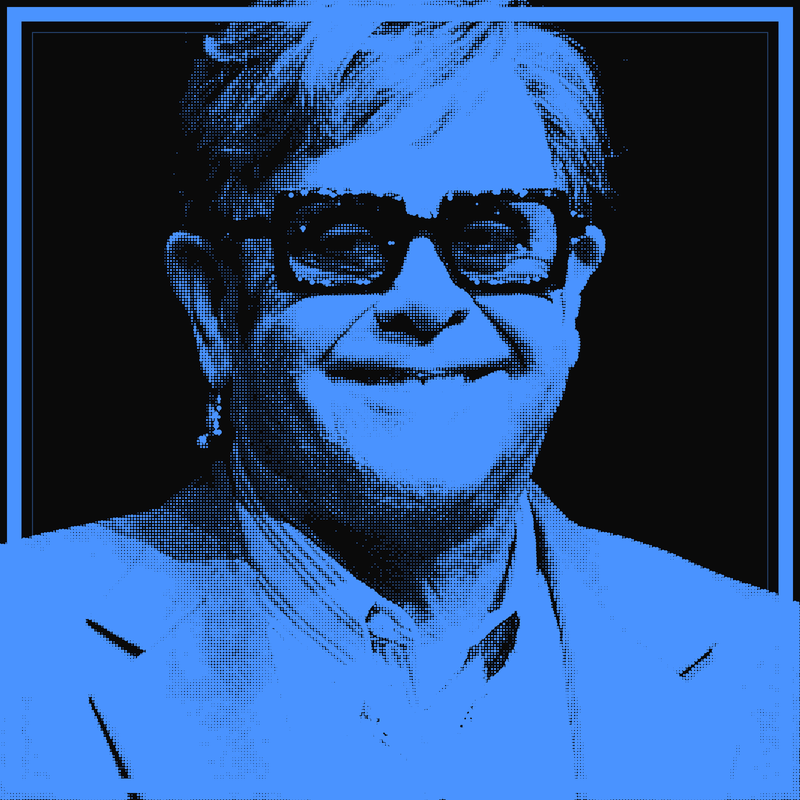
Identity 100 — the glasses, the feather boa, the platform boots, the outfits. Nobody dressed like that and commanded a stadium at the same time. 300 million records sold. Tiny Dancer, Rocket Man, Crocodile Rock, Saturday Night's Alright, Bennie and the Jets, Don't Let the Sun Go Down on Me, Your Song. Seven songs, seven different emotional universes, all released between 1970 and 1974. That four-year run is one of the greatest in rock history. The Lion King. Candle in the Wind for Princess Diana — the best-selling physical single in history. He has never stopped working and the work has never stopped being good.
Born Reginald Kenneth Dwight in Pinner, Middlesex in 1947, Elton John was a child prodigy pianist who won a scholarship to the Royal Academy of Music at 11. He met lyricist Bernie Taupin through a music industry ad in 1967 — they have never stopped working together. Elton would receive lyrics by post and write the music in minutes. That collaboration produced one of the most extraordinary runs of albums in pop history.
- Rocket Man
- Tiny Dancer
- Your Song
- Bennie and the Jets
- Don't Let the Sun Go Down on Me
- Goodbye Yellow Brick Road (1973)
- Honky Château (1972)
- Madman Across the Water (1971)
- Captain Fantastic and the Brown Dirt Cowboy (1975)
He publicly came out as bisexual in a 1976 Rolling Stone interview, then as gay in 1988. He has been in a civil partnership and then marriage with David Furnish since 2005. His battle with addiction — cocaine and alcohol — culminating in an intervention by close friends in 1990 and subsequent recovery, is documented extensively in his autobiography Me.
931/1000. Identity 100. 300 million records sold. Candle in the Wind for Princess Diana — the best-selling physical single in history.
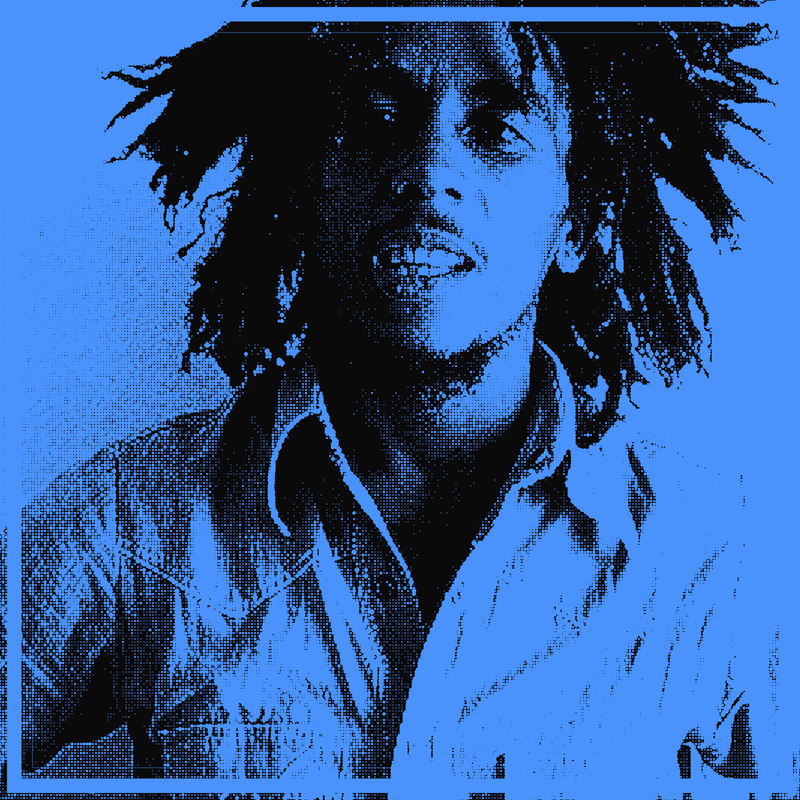
Four 100s. Identity 100 — the dreadlocks, the flag, the face. Most recognizable musician on earth in countries that have never heard of Elvis. Culture 100 — reggae did not exist outside Jamaica before Bob Marley. He personally carried it to every continent. Influence 100 — every reggae artist, every world music crossover, every political singer who picked up a guitar owes this man. Songwriting 98 — Redemption Song, No Woman No Cry, Get Up Stand Up, Three Little Birds. That's a hall of fame catalog in four songs and he has forty more. Died 1981 at 36. The music has never stopped selling.
Eye test: One artist makes music that feels like it belongs to every human being on earth regardless of where they were born — Bob Marley. That is not a small thing. That is almost impossible.
Born Robert Nesta Marley in Nine Mile, Saint Ann Parish, Jamaica in 1945, the son of a white Jamaican of English descent and a Black Jamaican teenager. His mixed heritage made him an outsider in his own community — he channeled that into a spiritual and political universalism that carried Jamaican reggae to every continent. His Rastafarian faith was genuine and total, not a pose.
- No Woman No Cry
- Redemption Song
- One Love
- Get Up, Stand Up
- Could You Be Loved
- Exodus (1977)
- Catch a Fire (1973)
- Rastaman Vibration (1976)
- Burnin' (1973)
He survived an assassination attempt on December 3, 1976, when gunmen broke into his home in Kingston two days before a peace concert he was organizing during a period of intense political violence in Jamaica. He performed at the concert anyway with a bullet wound. He died of cancer on May 11, 1981 — the melanoma beneath his toenail that he had refused to have amputated for religious reasons had spread to his brain and lungs. He was 36.
930/1000. Identity 100, Culture 100, Influence 100. He took one small island's music and turned it into a global religion.
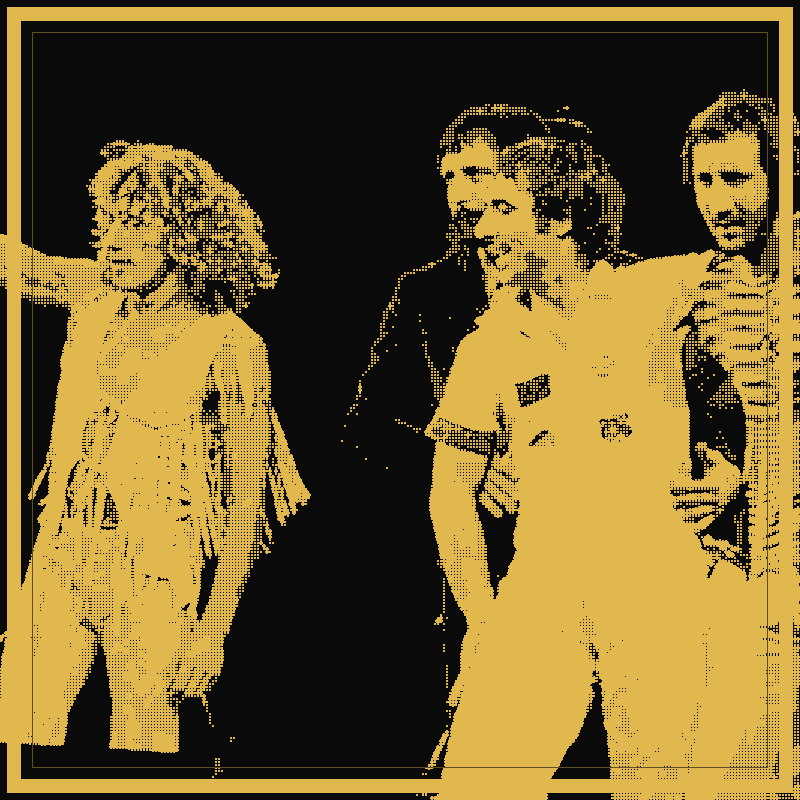
Performance 99 — the most physically violent live band in history. Smashed guitars, exploding drum kits, amplifiers turned past the point of sense. Identity 100 — the target logo, the mod suits, the destruction. Influence 97 — invented the rock opera with Tommy, invented the concept album before anyone called it that, invented punk's attitude before punk existed. My Generation — 1965. Roger Daltrey stuttering "I hope I die before I get old" is the opening statement of youth rebellion in rock music. They meant it.
Eye test: Baba O'Riley. Won't Get Fooled Again. Pinball Wizard. Those aren't songs. Those are buildings.
Formed in Shepherd's Bush, west London in 1964 — Roger Daltrey, Pete Townshend, John Entwistle, and Keith Moon. Working-class west London kids who turned mod culture into something violent and operatic. Townshend's art school background at Ealing gave them ambition that the streets alone couldn't have produced.
- My Generation
- Baba O'Riley
- Won't Get Fooled Again
- Pinball Wizard
- I Can See for Miles
- Who's Next (1971)
- Tommy (1969)
- Quadrophenia (1973)
- The Who Sell Out (1967)
Keith Moon was one of the most documented cases of rock excess in history — his suite destructions, his car in a swimming pool, his alcohol and drug dependency. He died of an accidental overdose of heminevrin tablets prescribed to treat alcohol withdrawal, on September 7, 1978. He was 32. John Entwistle died of a cocaine-induced heart attack in 2002.
928/1000. Performance 99, Identity 100. The loudest band that ever lived.
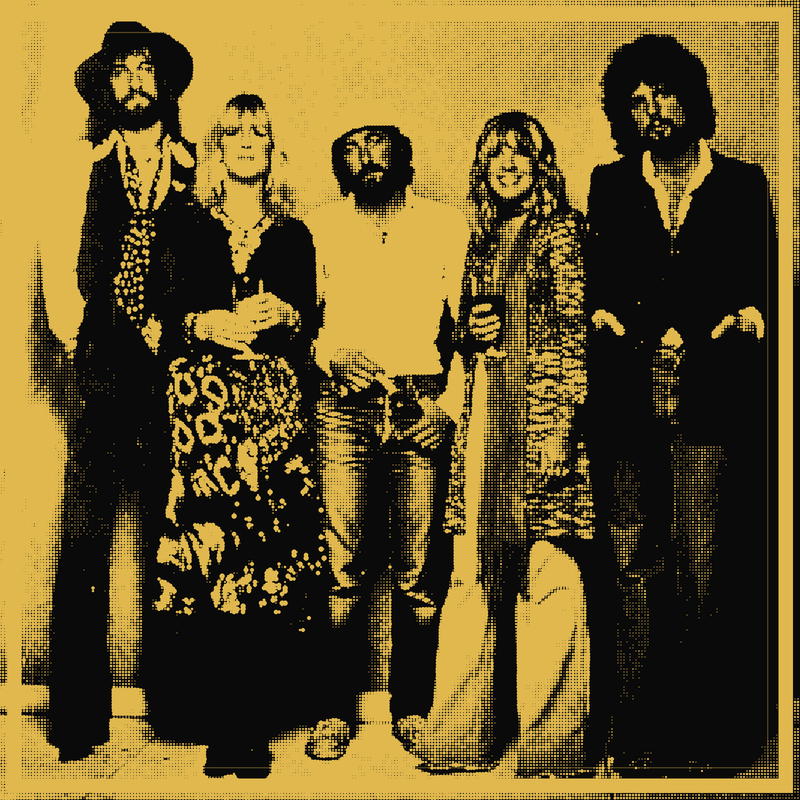
Songwriting 96, Peaks 97. Rumours — 1977 — is one of the five best-selling albums in history. Go Your Own Way, The Chain, Dreams, Gold Dust Woman, Don't Stop — five stone cold classics on one record made by five people who couldn't stand each other. Dreams is the only Fleetwood Mac song to hit number one and it did it twice — 1977 and then again in 2020 when a man went viral skateboarding to it on TikTok. Forty-three years between chart peaks on the same song. That is a Culture 94 and a Catalog 90 built on one extraordinary album and a career worth of quality underneath it.
Eye test: The Chain. That bass line coming in. Every person alive knows what happens next.
Founded in London in 1967 by Peter Green, Mick Fleetwood, and John McVie as a British blues band. The band transformed utterly when Lindsey Buckingham and Stevie Nicks joined in 1975 — two Americans who turned a British blues outfit into the definitive California rock band. The creative tension between five people in various stages of romantic collapse produced their greatest work.
- The Chain
- Go Your Own Way
- Dreams
- Landslide
- Don't Stop
- Rumours (1977)
- Tusk (1979)
- Fleetwood Mac (1975)
- Mirage (1982)
Rumours (1977) was recorded while every couple in the band was simultaneously breaking up — John and Christine McVie divorcing, Buckingham and Nicks ending their relationship. The album sold 40 million copies. Stevie Nicks and Mick Fleetwood had a brief relationship. All of this was public knowledge documented extensively in multiple memoirs.
926/1000. Songwriting 96, Peaks 97. The Chain bass line. Every person alive knows what happens next.
Identity 100. Influence 97 — Bono, Springsteen, Dylan, the entire Americana movement all cite him. Hurt belongs to Cash now. Trent Reznor said so himself. Gun to your head — one artist stands with a guitar and makes the room feel a full human life — Johnny Cash. Not a performance. A confession.
Born J.R. Cash in Kingsland, Arkansas in 1932, the son of a cotton farmer. His brother Jack's gruesome death in a table saw accident when Johnny was 12 haunted him for life. He grew up in a New Deal resettlement community in Dyess, Arkansas — the Depression-era poverty of the Arkansas Delta is the bedrock of his worldview. He served in the US Air Force in Germany before Nashville.
- Ring of Fire
- I Walk the Line
- Hurt
- Folsom Prison Blues
- A Boy Named Sue
- At Folsom Prison (1968)
- American Recordings (1994)
- At San Quentin (1969)
- Man in Black (1971)
His decades-long addiction to amphetamines and barbiturates, his multiple arrests, and his hospitalization for overdoses are all extensively documented by Cash himself — in his autobiographies and in the American Recordings series. His cover of Nine Inch Nails' Hurt at 69, filmed in his decaying museum, is itself a document of mortality.
925/1000. Identity 100. Influence 97. Gun to your head — one artist stands with a guitar and makes the room feel a full human life — Johnny Cash.
Influence 100, Identity 100, Studio Craft 98. Kraftwerk invented electronic pop music — Trans-Europe Express and The Man-Machine are foundational to techno, synth-pop, hip hop, and EDM. Their robotic aesthetic and pioneering synthesis shaped the entire electronic age.
Founded in Düsseldorf, Germany in 1970 by Ralf Hütter and Florian Schneider, two art school students who rejected both American blues-derived rock and German classical tradition to build something entirely from synthesizers and drum machines. Düsseldorf's post-war industrial landscape and its art scene — particularly the Düsseldorf School — shaped their cold, precise aesthetic.
- Autobahn
- Trans-Europe Express
- The Robots
- Numbers
- Computer Love
- Autobahn (1974)
- Trans-Europe Express (1977)
- The Man-Machine (1978)
- Computer World (1981)
Founding member Florian Schneider quietly left the group in 2008 — a departure announced with no fanfare and confirmed only later. He died of cancer in 2020. The group has operated with changing personnel since, with Hütter as the sole constant, rarely giving interviews or discussing their personal lives.
925/1000. Influence 100, Identity 100. Without Kraftwerk there is no techno, no synth-pop, no hip hop as we know it.
Songwriting 99 — Thunder Road, Born to Run, The River, Nebraska, Born in the USA. Five albums, each one a complete world, each one about the same people trying to survive the same America. Identity 100 — The Boss, the bandana, the E Street Band, four-hour shows every night. He didn't play concerts. He held church. Performance 97 — the longest, hardest working live show in rock history. Three hours minimum. Every night. For fifty years. Influence 95 — every heartland rock artist, every working-class songwriter, Bono, Tom Morello, countless others all cite him as the standard.
Eye test: One songwriter makes you feel the specific weight of a specific American life so completely that you feel like you lived it — Bruce Springsteen. That's the whole trick. Nobody does it better.
Born in Long Branch, New Jersey in 1949 and raised in Freehold, a small working-class town. His father Douglas worked in factories and as a bus driver; their difficult relationship is the central conflict of Nebraska and multiple other albums. Freehold and the Jersey Shore are the geography of his entire imagination — he has never really left, even when he was filling stadiums around the world.
- Born to Run
- Thunder Road
- Dancing in the Dark
- Thunder Road
- Streets of Philadelphia
- Born to Run (1975)
- Nebraska (1982)
- Born in the USA (1984)
- The River (1980)
He was diagnosed with clinical depression and has spoken extensively about his mental health treatment, including in his 2016 autobiography Born to Run and his one-man Broadway show. His father's struggles with mental illness were a central theme of both.
920/1000. Songwriting 99, Identity 100. He wrote the great American novel in three-minute songs about guys who couldn't get out of their hometown.
No 100s, no reds. Walk This Way with Run-DMC cracked the wall between rock and hip hop. Sweet Emotion is an all-time top rock song. The greatest American rock band. That is a real title and it belongs to them.
Formed in Boston in 1970 — Steven Tyler, Joe Perry, Brad Whitford, Tom Hamilton, and Joey Kramer — five young men who had landed in the same apartment in the South End after various small-town New England origins. Tyler is from Yonkers, New York; Perry from Lawrence, Massachusetts. Boston made them; it gave them the bar circuit that forged their sound before they had records.
- Dream On
- Sweet Emotion
- Walk This Way
- Crazy
- Janie's Got a Gun
- Toys in the Attic (1975)
- Rocks (1976)
- Permanent Vacation (1987)
- Pump (1989)
The band's addiction to drugs and alcohol led to their effective collapse in the late 1970s — Joe Perry and Brad Whitford both quit — and a slow rebuilding through sobriety in the early 1980s. Steven Tyler and Joe Perry, known in the press as the Toxic Twins for their excess, both got clean. Their second commercial peak — Permanent Vacation, Pump, Get a Grip — was larger than their first.
915/1000. No 100s, no reds. Walk This Way with Run-DMC cracked the wall between rock and hip hop.
Commercial 97 — Greatest Hits 1971–1975 has sold 38 million copies in the US alone, making it the best-selling album in American history. Hotel California the album sold 26 million. Hotel California the song ends with a guitar solo that has been teaching teenagers to play guitar for fifty years. Songwriting 96 — Take It Easy, Desperado, One of These Nights, New Kid in Town, Life in the Fast Lane, The Long Run. That catalog is bulletproof. They broke up in 1980 because they couldn't stand each other and got back together in 1994 for the money and it didn't matter. The songs were the same.
Formed in Los Angeles in 1971 from the backing band assembled for Linda Ronstadt — Glenn Frey from Detroit, Don Henley from Texas, Bernie Leadon from Minnesota, Randy Meisner from Nebraska. They were a manufactured band that became the quintessential California rock band by sheer musical force. Los Angeles in the 1970s — its money, its excess, its beautiful nihilism — is the entire subject of Hotel California.
- Hotel California
- Take It Easy
- Desperado
- Heartache Tonight
- New Kid in Town
- Hotel California (1976)
- Their Greatest Hits 1971–1975 (1976)
- Desperado (1973)
- On the Border (1974)
The band broke up in 1980 in a famously bitter split, with Don Felder, Don Henley, and Glenn Frey at the center of years of legal disputes. They reunited in 1994 for the money, per their own admission. Glenn Frey died in January 2016. The surviving members continued touring with his son Deacon Frey.
915/1000. Commercial 97. Their Greatest Hits is the best-selling album in American history.
Studio Craft 99 — the gold standard of recorded perfection; "Aja" is an audiophile's bible. Songwriting 96 — Becker and Fagen wrapped jazz harmony, literary cynicism, and pop hooks into something nobody else could replicate. Versatility 90 — jazz, rock, R&B, and pop fused so smoothly you don't see the seams.
Decade by decade: 1972–77 — a peerless run from "Can't Buy a Thrill" to "Aja," abandoning touring to live in the studio. 1980 — "Gaucho," then a long hiatus. 2000 — "Two Against Nature" wins Album of the Year, a victory lap decades later.
Eye test: Put on "Aja" on good speakers. Few records have ever been this clean and this deep at once.
Walter Becker and Donald Fagen met at Bard College in New York in the late 1960s, bonded over jazz harmony and sardonic wit, and spent the 1970s in Los Angeles hiring the world's best session musicians to realize their obsessive vision. They were not a touring band — they lived in the studio. Their New York Jewish intellectual backgrounds gave their lyrics a literary cynicism that no other pop songwriters have matched.
- Reelin' in the Years
- Rikki Don't Lose That Number
- Peg
- Do It Again
- Hey Nineteen
- Aja (1977)
- Countdown to Ecstasy (1973)
- Gaucho (1980)
- Pretzel Logic (1974)
Walter Becker died of esophageal cancer in 2017. Fagen has continued working under the Steely Dan name. Becker's estate has been involved in legal disputes over his share of the Steely Dan catalog. Fagen was arrested on a misdemeanor charge of assaulting his wife in 2016; charges were later dropped.
911/1000. Studio Craft 99, Songwriting 96. Aja on good speakers. Few records have ever been this clean and this deep at once.
Identity 100, Songwriting 98, Versatility 92. Tom Waits is one of music's true originals — from boozy piano balladeer to junkyard-percussion experimentalist. Rain Dogs and Swordfishtrombones reinvented what a song could be. Commercial 70 is honest; he never chased hits. His influence on alternative and art-rock is enormous.
Born in Pomona, California in 1949 and raised in National City near San Diego, Tom Waits worked as a doorman at a San Diego folk club while still a teenager, absorbing beat poets and jazz singers. He moved to Los Angeles at 19 and spent decades building a persona — the rumpled, booze-soaked troubadour at 3am in a bar — that was partly real and partly the most sustained performance art in singer-songwriter history.
- Tom Traubert's Blues
- Downtown Train
- Jersey Girl
- Ol' 55
- Heartattack and Vine
- Rain Dogs (1985)
- Closing Time (1973)
- Swordfishtrombones (1983)
- Mule Variations (1999)
He has sued multiple companies for unauthorized use of his voice in advertising, winning significant settlements against Frito-Lay and Audi that established important legal precedent for voice actor rights. He has never licensed a song for commercial use. He is famously protective of his work and private about his personal life.
Identity 100, Songwriting 97. The most complete literary voice in rock and roll. Nobody else sounds remotely like this.
Identity 100, Influence 98, Songwriting 94. Fela Kuti created Afrobeat — fusing jazz, funk, and West African rhythms into sprawling, politically explosive epics. Zombie and Expensive Shit challenged power directly. The most influential African musician in history.
Born Olufela Olusegun Oludotun Ransome-Kuti in Abeokuta, Nigeria in 1938, the son of a minister and a feminist activist mother who was one of the first women to drive a car in Nigeria. He studied music in London, discovered American jazz and funk, and returned to Lagos to fuse them with Yoruba traditional music to create Afrobeat. His mother's political activism and his Lagos commune — the Kalakuta Republic — are the twin foundations of his artistic identity.
- Water No Get Enemy
- Zombie
- Lady
- Sorrow, Tears and Blood
- Gentleman
- Zombie (1977)
- Expensive Shit (1975)
- Coffin for Head of State (1981)
- Shuffering and Shmiling (1978)
In 1977, Nigerian soldiers attacked the Kalakuta Republic, beat residents, threw his 77-year-old mother from a window, and burned the compound. His mother died months later from her injuries. He carried her coffin to the military barracks in public protest. He was arrested and imprisoned multiple times. He died of AIDS-related complications in 1997.
Identity 100, Influence 96. He invented Afrobeat and made it a weapon for political resistance. The most important African musician of the 20th century.
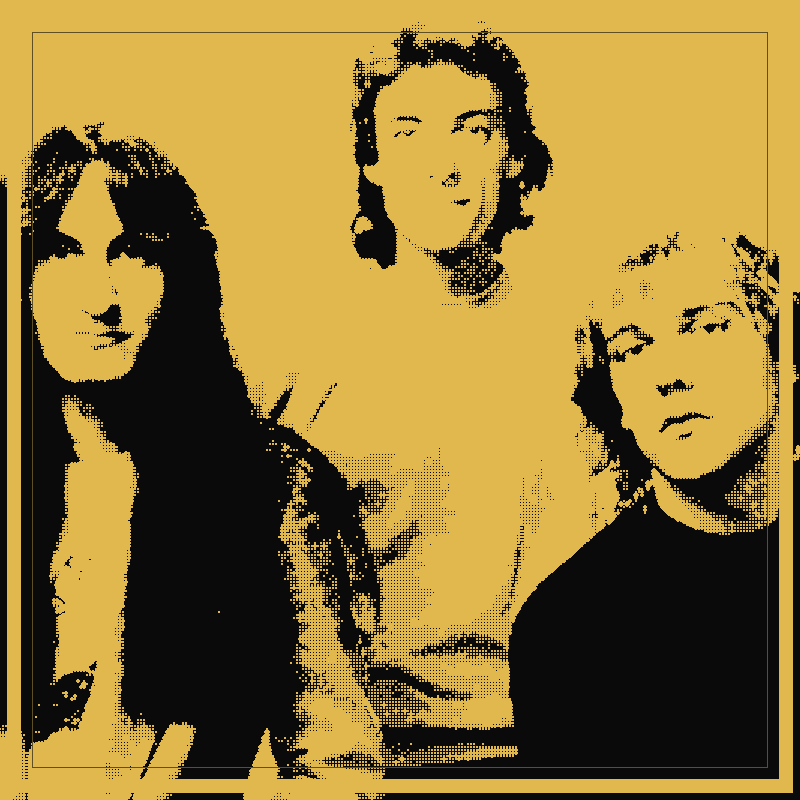
Performance 96, Identity 96. Rush were the ultimate musicians' band — Geddy Lee, Alex Lifeson, and Neil Peart pushed technical rock to its limits across 40 years. 2112 and Moving Pictures are prog landmarks. Worshipped by musicians, beloved by a fiercely loyal fanbase.
Formed in Willowdale, a Toronto suburb, in 1968 by Geddy Lee, Alex Lifeson, and John Rutsey. Neil Peart joined in 1974 and became the primary lyricist, bringing a philosophical framework that defined their progressive rock identity. They built their entire career through relentless touring of secondary American markets before Canada noticed them.
- Tom Sawyer
- Subdivisions
- The Spirit of Radio
- Limelight
- Freewill
- Moving Pictures (1981)
- Permanent Waves (1980)
- 2112 (1976)
- Hemispheres (1978)
Neil Peart lost his daughter Selena in a car accident in 1997 and his wife Jacqueline to cancer ten months later. He traveled North America alone on a motorcycle for over a year before returning to the band — an experience documented in his memoir Ghost Rider. He died of brain cancer on January 7, 2020. The band announced they would not continue without him.
Studio Craft 98, Catalog 94. The greatest progressive rock power trio. 2112 is one of the defining concept albums in rock history.
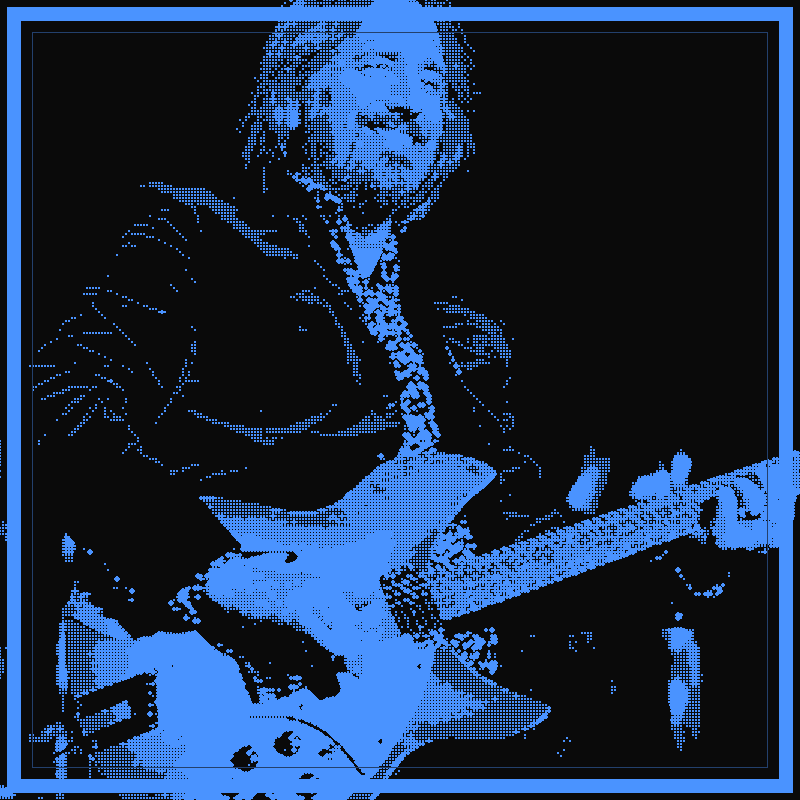
Songwriting 97 — American Girl, Breakdown, Refugee, The Waiting, Free Fallin', Learning to Fly, Mary Jane's Last Dance. That is a songwriting catalog that belongs in any conversation about the greatest American rock songwriters who ever lived. No 100s, no reds. The shape of this card is a steady wall of quality across forty years. He fought his record label in 1979 over pricing and won. He refused to let his music be sold for ringtones. He was right about everything and he made it all look easy. Died 2017. The songs will outlast all of us.
Born in Gainesville, Florida in 1950, Tom Petty grew up in a difficult household — his father was abusive — and found escape in rock and roll when he met Elvis Presley on a film set at age 10. He formed Mudcrutch in Gainesville, which eventually became the Heartbreakers. Florida's Southern rock culture and his working-class determination shaped a catalog that sounds effortless and was anything but.
- Free Fallin'
- American Girl
- I Won't Back Down
- Refugee
- Mary Jane's Last Dance
- Damn the Torpedoes (1979)
- Full Moon Fever (1989)
- Wildflowers (1994)
- Tom Petty and the Heartbreakers (1976)
His legal battles with MCA Records in 1979 — he declared bankruptcy to void a contract he considered unfair — were among the first high-profile artist-vs-label disputes. He died on October 2, 2017, of an accidental overdose of opioids prescribed for a broken hip. He was 66.
Identity 98, Songwriting 94. The most reliable American rock and roller of his generation.
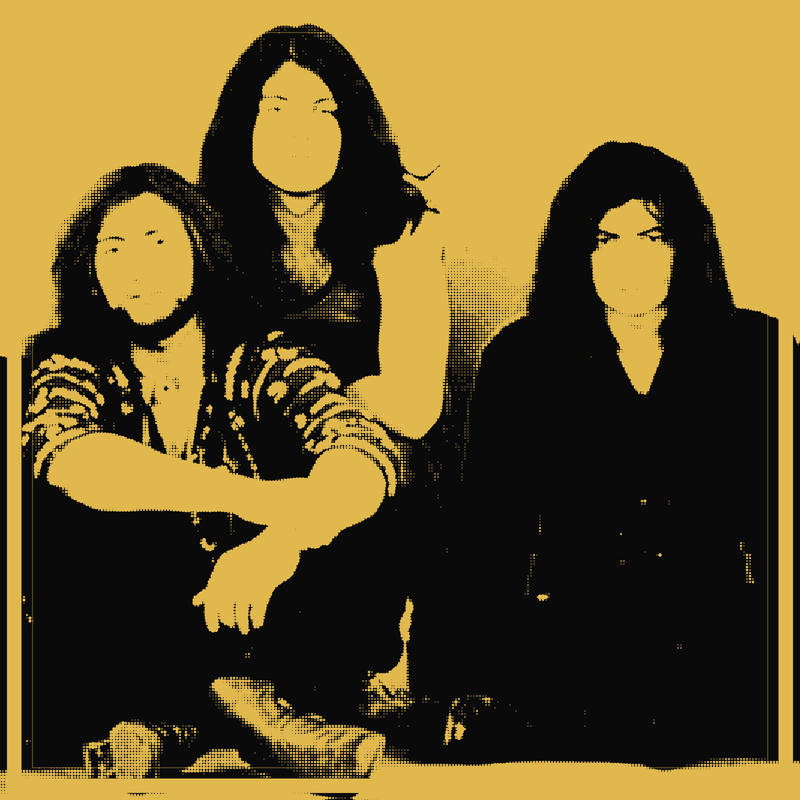
Influence 94, Performance 94. Deep Purple are foundational to hard rock and metal — Machine Head and the Smoke on the Water riff are universal. Ritchie Blackmore's guitar and Ian Gillan's scream set the template the whole genre followed.
Formed in Hertford, England in 1968 — Ritchie Blackmore, Jon Lord, Ian Paice, Nick Simper, and Rod Evans — with a sound that drew equally from classical music (Jon Lord's Hammond organ) and raw American blues-rock. Their DNA was distinctly English: classically trained musicians reaching for American heaviness and ending up inventing a new thing entirely. The riff to Smoke on the Water was written in Montreux, Switzerland, inspired by watching the Casino burn during a Frank Zappa concert.
- Smoke on the Water
- Highway Star
- Child in Time
- Speed King
- Perfect Strangers
- Machine Head (1972)
- Deep Purple in Rock (1970)
- Burn (1974)
- Fireball (1971)
Ritchie Blackmore left the band in 1975 in a famously acrimonious split, returned in 1984, and left again in 1993 — a pattern of departures and disputes that generated continuous press. The Smoke on the Water riff — three notes — is taught to virtually every beginning guitar student in the world.
Studio Craft 97, Performance 95. Deep Purple Mark II is one of the great hard rock lineups. Smoke on the Water is the most-played opening riff in rock history.
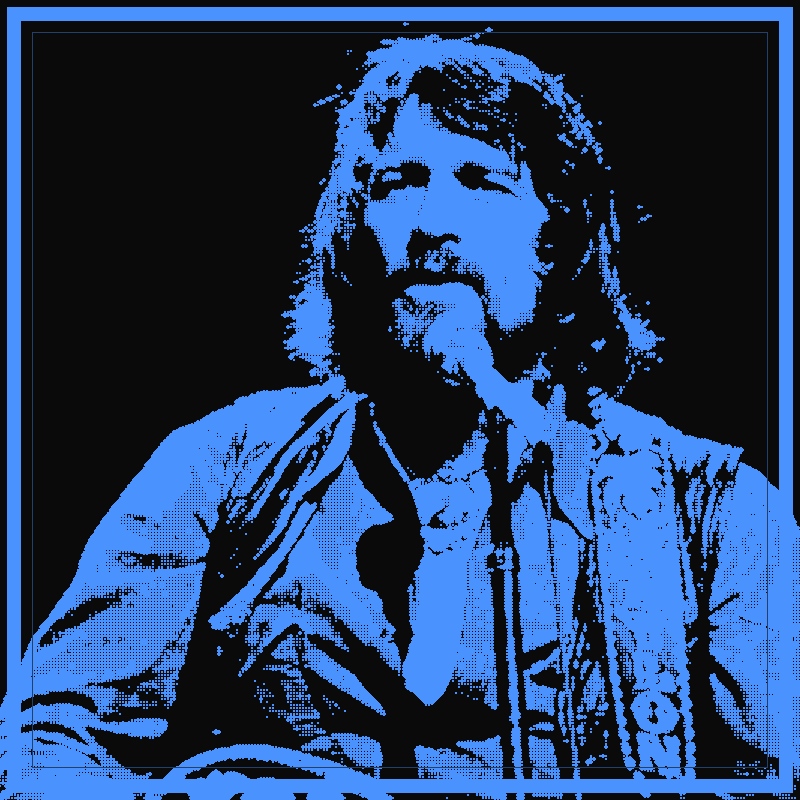
Identity 96, Songwriting 92. Waylon Jennings founded the outlaw country movement — rejecting Nashville's slick formula for raw, rebellious authenticity. Honky Tonk Heroes and the Wanted! The Outlaws album reshaped country music.
Born Waylon Arnold Jennings in Littlefield, Texas in 1937, the son of a guitar player. He played his first radio gig at twelve. He was Buddy Holly's bass player on the Winter Dance Party tour in 1959 — he gave his seat on the doomed plane to The Big Bopper and survived the crash that killed Holly, Ritchie Valens, and Richardson. That event haunted him for the rest of his life. He arrived in Nashville, found it too controlling, moved back to Texas, and invented outlaw country with Willie Nelson.
- Mammas Don't Let Your Babies Grow Up to Be Cowboys
- Good Ol' Boys
- Are You Sure Hank Done It This Way
- Luckenbach, Texas (with Willie)
- I've Always Been Crazy
- Honky Tonk Heroes (1973)
- Dreaming My Dreams (1975)
- Are You Ready for the Country (1976)
- Ol' Waylon (1977)
He was arrested in 1977 on federal cocaine charges — charges that were eventually dropped — in a case that became part of his outlaw mythology. He documented his drug addiction, primarily amphetamines across decades, in his 2011 autobiography, crediting his Christian faith and family for his recovery. He died of diabetes-related complications in 2002.
Identity 100, Songwriting 95. He and Willie Nelson are the twin pillars of outlaw country. Good Ol' Boys is the Dukes of Hazzard theme — he reached more Americans with that than anything else he recorded.
Songwriting 96, Studio Craft 95. They worked with Brian Eno and made two of the most sonically adventurous albums in rock history — Fear of Music and Remain in Light. Once in a Lifetime is one of the five greatest art rock songs ever recorded. Stop Making Sense is the greatest concert film in rock history. David Byrne in the big suit. If you've seen it you know. Versatility 91 — they moved through punk, funk, world music, art rock and made all of it feel like the same band. Commercial 74 is the honest art ceiling. They made the records they wanted to make and the audience that found them kept them forever.
Formed at the Rhode Island School of Design in Providence — David Byrne, Chris Frantz, and Tina Weymouth — who moved to New York City's downtown art scene in 1975 and recruited Jerry Harrison. Their art school background and New York's No Wave scene shaped a sound built from African polyrhythm, funk, and anxious suburban white American psychology. Byrne's Scottish immigrant background gave him the outsider's detached observation of American life that animates every lyric.
- Psycho Killer
- Once in a Lifetime
- Burning Down the House
- This Must Be the Place (Naive Melody)
- And She Was
- Remain in Light (1980)
- Fear of Music (1979)
- More Songs About Buildings and Food (1978)
- Talking Heads: 77 (1977)
The band dissolved acrimoniously in 1991, with David Byrne effectively ending it without group consensus in a way the other members documented as a surprise. The split produced years of legal disputes and public statements that made their estrangement one of the most discussed breakups in new wave history. They reunited for the Rock and Roll Hall of Fame induction in 2002 but have not recorded together since.
Identity 100, Studio Craft 97. Remain in Light — built from African polyrhythm and Brian Eno's production — is one of the most forward-thinking albums in rock history. Once in a Lifetime is the complete distillation of modern alienation in five minutes.
Catalog 92, Versatility 90. Genesis pulled off a rare double life — Gabriel-era prog theater (The Lamb Lies Down on Broadway) then Collins-era pop dominance (Invisible Touch). Few bands reinvented themselves so completely and succeeded twice.
Formed at Charterhouse School in Godalming, Surrey in 1967 — Peter Gabriel, Tony Banks, Mike Rutherford, Anthony Phillips, and Chris Stewart, all students at the same private boarding school. Their elite English public school background gave them the literary and theatrical ambitions that made them progressive rock's most conceptually ambitious band. Phil Collins joined as drummer in 1970 and became lead vocalist after Gabriel's departure in 1975, steering them toward massive pop success.
- Invisible Touch
- In the Air Tonight (Phil Collins solo)
- Mama
- That's All
- Land of Confusion
- Selling England by the Pound (1973)
- The Lamb Lies Down on Broadway (1974)
- Duke (1980)
- Genesis (1983)
Peter Gabriel's departure in 1975 was the most-discussed lineup change in British progressive rock. The band's transformation from art-prog to pop-rock under Phil Collins generated ongoing critical debate. Collins' own solo career produced a string of number ones that ran simultaneously with his Genesis work through the 1980s, creating one of the most unusual double-career situations in rock history.
Studio Craft 100, Versatility 88. Two completely different bands with the same name — both excellent. The Gabriel era invented prog-rock theatre. The Collins era produced one of the biggest-selling runs of pop albums in history.
Identity 98, Influence 94, Commercial 90. Ozzy Osbourne fronted Black Sabbath and then built a massive solo career — Crazy Train, Mr. Crowley, and Bark at the Moon. The Prince of Darkness became one of the most beloved figures in all of rock.
Born John Michael Osbourne in Aston, Birmingham in 1948, the son of a toolmaker. He grew up in a two-bedroom house with five siblings in one of Birmingham's working-class districts. He was expelled from school at 15 and briefly imprisoned at 17 for burglary. He formed Black Sabbath with Tony Iommi, Geezer Butler, and Bill Ward in 1968 — four working-class Birmingham kids who built the heaviest sound anyone had ever heard from the grimness of their city.
- Crazy Train
- Mr. Crowley
- Bark at the Moon
- Goodbye to Romance
- Suicide Solution
- Blizzard of Ozz (1980)
- Diary of a Madman (1981)
- No More Tears (1991)
- Ozzmosis (1995)
His 1982 incident in which he bit the head off a live bat thrown onstage during a concert — which he has confirmed was unintentional, believing it was a rubber prop — became the most famous moment in heavy metal history. He was dismissed from Black Sabbath in 1979 for excessive alcohol and drug use. His marriage to Sharon Arden (who became his manager) and their public life was the subject of the MTV reality show The Osbournes (2002-2005), one of the most watched reality series of its era. He was diagnosed with Parkinson's disease in 2020.
Identity 100, Performance 94. The Prince of Darkness. He invented what a rock star was supposed to be beyond the music.
Versatility 92 — punk, new wave, disco ("Heart of Glass"), reggae ("The Tide Is High"), and rap ("Rapture") all topped charts. Identity 94 — Debbie Harry is one of the iconic frontpeople of the era. Culture 90 — bridged CBGB's underground and global pop without losing either crowd.
Decade by decade: 1978–81 — out of New York's punk scene come a string of chart-toppers in wildly different genres. 1981 — "Rapture" becomes the first No. 1 hit to feature rapping, putting hip-hop on mainstream radio. A 90s reunion proves the formula never expired.
Eye test: Five genres, five hits, one band. The shape-shifting is the whole point.
Formed in New York City in 1974 from the downtown punk and new wave scene centered around CBGB. Deborah Harry — from Hawthorne, New Jersey — and Chris Stein met in the city and built a band around Harry's ice-blonde image and Stein's guitar. Their genius was synthesis: they absorbed disco (Heart of Glass), pop (Call Me), reggae (The Tide Is High), and hip hop (Rapture) and made all of it feel like the same band. Rapture was the first song featuring rap to reach number one on the Billboard Hot 100.
- Heart of Glass
- Call Me
- Rapture
- One Way or Another
- The Tide Is High
- Parallel Lines (1978)
- Eat to the Beat (1979)
- Autoamerican (1980)
- Plastic Letters (1977)
Chris Stein was diagnosed with pemphigus, a rare autoimmune disease, in 1983 — a diagnosis that was life-threatening and required Deborah Harry to largely abandon her solo career to care for him for several years. The band broke up acrimoniously during this period amid financial disputes. Stein recovered; they reformed in 1997.
Identity 100, Commercial 92. Rapture was the first rap song to reach number one. Heart of Glass is one of the great crossover moments in pop history.
Studio Craft 92, Influence 90. Yes were architects of symphonic progressive rock — Close to the Edge and Fragile are genre-defining. Their virtuosity, complex arrangements, and Roger Dean artwork set the template for prog's ambition.
Formed in London in 1968 by Jon Anderson and Chris Squire — Anderson from Accrington, Lancashire; Squire from London. Their diverse backgrounds (working-class North of England, London session musician culture) fused into the most ambitious progressive rock ensemble outside of Pink Floyd. Rick Wakeman's classical training at the Royal Academy of Music gave them their keyboard architecture; Steve Howe's jazz and classical guitar work gave them technical credibility beyond any other rock band of the era.
- Roundabout
- Owner of a Lonely Heart
- Close to the Edge
- Long Distance Runaround
- I've Seen All Good People
- Close to the Edge (1972)
- Fragile (1971)
- Going for the One (1977)
- Tales from Topographic Oceans (1973)
Rick Wakeman has left and rejoined the band multiple times — at least three separate stints — a pattern replicated by several other members. The band has operated under the Yes name with constantly shifting lineups since the 1970s, generating ongoing legal disputes about who owns the name. Jon Anderson's departure and replacement with Trevor Horn for Drama (1980) was one of the most controversial moves in prog rock history.
Studio Craft 100, Songwriting 90. Close to the Edge is 18 minutes of perfect progressive rock. The most technically accomplished band in rock history.
Performance 98, Versatility 90, Identity 96. Chaka Khan, solo and with Rufus, is one of the most gifted singers ever — Ain't Nobody and I'm Every Woman are classics. Her range across funk, soul, jazz, and pop and her endless sampling cement her legend.
Born Yvette Marie Stevens in Great Lakes, Illinois in 1953 and raised in Hyde Park, Chicago. She changed her name to Chaka Khan after joining the Black Panther Party breakfast program as a teenager. She joined the band Rufus in Chicago in 1972, where her raw gospel-trained voice immediately dominated. Chaka Khan's voice — capable of both staggering power and intimate control — is one of the great instruments in soul music.
- I Feel for You
- Ain't Nobody
- Tell Me Something Good
- Through the Fire
- Sweet Thing
- Rufus featuring Chaka Khan (1975)
- Whatcha Gonna Do for Me (1981)
- I Feel for You (1984)
- Destiny (1986)
She has spoken publicly about her struggles with drug and alcohol addiction across several decades and her recovery. Her 2003 autobiography Chaka! Through the Fire documented her personal history including the addiction years. She lost her grandson to a fentanyl overdose, which she has spoken about publicly in advocacy for drug awareness.
Performance 100, Identity 92. I Feel for You invented what contemporary R&B production sounded like. Ain't Nobody is a perfect record.
Identity 98, Performance 92. Barry White's bottomless bass-baritone and lush orchestral arrangements defined romantic soul — Can't Get Enough of Your Love, Babe and his Love Unlimited Orchestra are immortal. The sound of seduction itself.
Born Barye Eugene Carter in Galveston, Texas in 1944 and raised in South Central Los Angeles. He was involved in a gang and spent time in jail at 17 for stealing Cadillac tires, claiming the experience changed his direction after he heard an Elvis Presley song in his cell. He began working as a record industry talent developer and producer before his own voice — one of the deepest basses in popular music history — became his instrument.
- Can't Get Enough of Your Love, Babe
- You're the First, the Last, My Everything
- Never Never Gonna Give Ya Up
- It's Ecstasy When You Lay Down Next to Me
- Practice What You Preach
- Can't Get Enough (1974)
- Just Another Way to Say I Love You (1975)
- Let the Music Play (1976)
- Stone Gon' (1973)
He was obese for most of his adult life and the health consequences became public in his final years. He suffered kidney failure and a stroke in 2003 and died on July 4, 2003, at 58 in Los Angeles. He fathered nine children with multiple women across his lifetime.
Performance 98, Identity 95. Can't Get Enough of Your Love, Babe is the most sensual record in 1970s soul. The deepest voice in the history of American popular music.
Commercial 95, Peaks 90 — the disco era was the biggest commercial moment in pop history and the Bee Gees were its architects. But this is not a one-album card. They had a Top 20 hit in 1967 (Massachusetts), another in 1971 (How Can You Mend a Broken Heart), the Saturday Night Fever peak in 1977– 1978, and then wrote Emotion for Samantha Sang, Grease for Frankie Valli, Guilty for Barbra Streisand, and Islands in the Stream for Dolly Parton and Kenny Rogers. Songwriting 92 because their output across genres — pop, R&B, disco, ballad — was sustained and consistent over 30 years. Influence 82 is the only honest restraint: disco's cultural rehabilitation took decades, and their specific sound has fewer direct descendants than their commercial footprint would suggest.
Career arc: 1958–2003. RSO Records during peak years. Massachusetts (1967). Jive Talkin' (1975) — pivoted to disco. Saturday Night Fever (1977) — 40 million sold. Six consecutive #1 singles 1977–1979. Andy Gibb, their brother, died 1988. Robin Gibb died 2012. Maurice Gibb died 2003. Barry Gibb the last surviving brother. Rock and Roll Hall of Fame 1997.
Born Barry, Robin, and Maurice Gibb — Barry in Douglas, Isle of Man in 1946; Robin and Maurice in Douglas in 1949 — who grew up primarily in Chorlton-cum-Hardy, Manchester. The family emigrated to Australia in 1958 where they began performing as children in Redcliffe, Queensland. They moved back to England in 1967, signed with Robert Stigwood, and built a career that survived complete collapse and reinvention multiple times. Their discovery of falsetto harmonies and funk-influenced production in Miami in 1975 produced the Saturday Night Fever soundtrack and the biggest commercial run of the disco era.
- Stayin' Alive
- How Deep Is Your Love
- Too Much Heaven
- Night Fever
- Jive Talkin'
- Saturday Night Fever: The Original Movie Soundtrack (1977)
- Spirits Having Flown (1979)
- Main Course (1975)
- Children of the World (1976)
Robin Gibb died of colon cancer on May 20, 2012. Maurice Gibb died of complications from an intestinal blockage in 2003. Barry Gibb is the last surviving member. Andy Gibb, their younger brother and also a successful solo artist, died of heart failure in 1988 at 30. The family's losses are among the most extensive in popular music history.
Songwriting 92, Commercial 97. Saturday Night Fever is the second best-selling soundtrack album in history. Stayin' Alive is the most immediately recognizable groove in disco.
Identity 100, Culture 97, Influence 100. Parliament was the pop vehicle, Funkadelic was the psychedelic rock vehicle — same musicians, two labels, one cosmic vision. One Nation Under a Groove (1978), Flash Light, Give Up the Funk, Tear the Roof Off the Sucker — these are foundational funk texts. But the influence runs wider than the hits. Dr. Dre built G-funk by slowing down P-Funk samples. Prince cited them as primary. Public Enemy, De La Soul, Digital Underground, Snoop Dogg — the most sampled catalog in hip-hop history belongs to George Clinton. Commercial 72 reflects a band that dominated the Black music charts without fully crossing to mainstream pop. That didn't slow the legacy down for a single day.
Career arc: 1968–present. Two simultaneous outfits: Parliament (Casablanca Records, pop) and Funkadelic (Westbound, psychedelic). Maggot Brain (1971). Mothership Connection (1975). One Nation Under a Groove (1978). 30+ members across both bands at peak. Rock and Roll Hall of Fame 1997. George Clinton still touring at 83.
George Clinton was born in Kannapolis, North Carolina in 1941 and raised in Newark, New Jersey where he ran a barbershop and formed a doo-wop group. His absorption of Sly Stone's funk, James Brown's rhythm, and psychedelic rock's production ambition — combined with a theatrical mythology involving spaceships and Funkadelic aliens — produced the most fully realized Afrofuturist musical world in history. Parliament and Funkadelic were technically separate entities with separate record deals, running simultaneously as different stylistic expressions of the same collective.
- Flash Light
- Give Up the Funk (Tear the Roof off the Sucker)
- One Nation Under a Groove
- Maggot Brain
- Aqua Boogie
- Mothership Connection (1975)
- One Nation Under a Groove (1978)
- Let's Take It to the Stage (1975)
- Maggot Brain (1971)
Clinton's personal legal and financial history has been complicated — multiple lawsuits over songwriting credits, publishing rights, and management disputes documented across decades. He has spoken about his crack cocaine addiction in the 1980s and recovery. He received the Grammy Lifetime Achievement Award in 2019.
Identity 100, Influence 100. One Nation Under a Groove is a perfect funk album. George Clinton invented Afrofuturism as a musical genre and hip hop has been sampling him ever since.
Songwriting 96 — Dancing Queen, Waterloo, Mamma Mia, The Winner Takes It All, Fernando, Gimme Gimme Gimme. That is a catalog of songs so well constructed they became theater. 385 million records sold. The Winner Takes It All is one of the great pop songs about divorce ever written — specific, honest, melodically perfect. They broke up in 1982. Mamma Mia the musical opened in 1999. The Mamma Mia movie made $600 million. Voyage in 2021 debuted at number one in multiple countries — their first album in 40 years. The songs never needed the band to be present. That is the whole trick.
Formed in Stockholm, Sweden in 1972 — Agnetha Fältskog from Jönköping, Björn Ulvaeus from Gothenburg, Benny Andersson from Stockholm, and Anni-Frid (Frida) Lyngstad from Ballangen, Norway. Two couples who were also musical partners, writing and recording together while their personal lives ran in parallel. Sweden's post-war prosperity and its pop-forward sensibility, combined with the songwriting partnership of Björn and Benny who had both worked in Swedish pop for years, produced the most commercially dominant European pop act in history. They won the Eurovision Song Contest in 1974 with Waterloo.
- Dancing Queen
- Mamma Mia
- The Winner Takes It All
- Take a Chance on Me
- Waterloo
- Arrival (1976)
- The Album (1977)
- Super Trouper (1980)
- Waterloo (1974)
Björn and Agnetha divorced in 1979; Benny and Frida divorced in 1981 — both while the band was still active and recording. The Winner Takes It All, written during these divorces, is one of the most nakedly autobiographical breakup songs ever recorded by the people living through it. The band has been remarkably candid about this in interviews. They reunited for their ABBA Voyage virtual concert project in 2021.
Commercial 100, Songwriting 92. Dancing Queen is one of the perfect pop records. The best-selling European musical act in history. 400 million records sold.
Identity 92, Performance 92. Heart, led by Ann and Nancy Wilson, broke barriers for women in hard rock. Barracuda, Crazy on You, and Alone are classics across two eras. Ann Wilson is one of rock's greatest voices.
Formed in Seattle, Washington in the early 1970s — Ann Wilson from San Diego, California (born 1950) and Nancy Wilson from San Francisco (born 1954) — whose family relocated to the Pacific Northwest. They built their early following in Vancouver, British Columbia after Ann moved there to be with a Canadian musician. Their synthesis of Led Zeppelin's hard rock heaviness with folk acoustic sensibility — two women fronting a band that could match the heaviest acts of the era — was genuinely unprecedented and commercially dismissed until Barracuda proved otherwise.
- Barracuda
- Crazy on You
- What About Love
- Magic Man
- Alone
- Dreamboat Annie (1975)
- Little Queen (1977)
- Heart (1985)
- Bebe le Strange (1980)
They were inducted into the Rock and Roll Hall of Fame in 2013. Ann Wilson has spoken publicly about her battles with weight and the music industry's treatment of women who don't conform to conventional beauty standards. Nancy Wilson's marriage to Cameron Crowe produced two sons; they divorced in 2010.
Performance 98, Identity 92. Barracuda is one of the great hard rock songs. Ann Wilson has one of the five most powerful female rock voices in history.
Catalog 90, Commercial 92. Rod Stewart's raspy, soulful voice powered a 60-year career across rock, folk, disco, and standards. Maggie May, Every Picture Tells a Story, and Da Ya Think I'm Sexy span eras. One of the best-selling artists ever.
Born Roderick David Stewart in Highgate, North London in 1945, the youngest of five children of a Scottish father and English mother. He began busking on London streets as a teenager, worked as a gravedigger, and hitchhiked across Europe playing folk music before finding his way into the British blues circuit. His early stints with the Jeff Beck Group and Faces gave him his apprenticeship; his raspy, warm tenor emerged from folk and blues influences absorbed entirely through records.
- Maggie May
- Do Ya Think I'm Sexy?
- Tonight's the Night
- You're in My Heart
- The First Cut Is the Deepest
- Every Picture Tells a Story (1971)
- Never a Dull Moment (1972)
- Atlantic Crossing (1975)
- A Night on the Town (1976)
He was diagnosed with thyroid cancer in 2000, which he did not publicly disclose until 2019 when he revealed it in an interview, saying he wanted to raise awareness. He was successfully treated. His extensive personal life — six children with five different women, two marriages — has been regularly covered in the British tabloid press. He is a passionate model railway hobbyist who has been building a detailed replica of an American city in his attic for over two decades.
Performance 97, Commercial 94. Maggie May is one of the great songs about lost youth. The most recognizable voice in British rock after his generation's peak.

Identity 94, Songwriting 90. Peter Tosh, an original Wailer alongside Marley, was reggae's militant conscience — Legalize It and Equal Rights are uncompromising protest landmarks. A foundational reggae figure with a fierce political voice.
Born Winston Hubert McIntosh in Westmoreland, Jamaica in 1944 and raised in Trench Town, Kingston — the same impoverished West Kingston community that produced Bob Marley. He was a founding member of the Wailers alongside Bob Marley and Bunny Wailer. His militancy and his refusal to soften his political message — particularly around marijuana legalization and Pan-African politics — made him a more confrontational figure than Marley even as Marley achieved greater commercial success.
- Legalize It
- Equal Rights
- Stepping Razor
- Mama Africa
- Johnny B. Goode (cover)
- Legalize It (1976)
- Equal Rights (1977)
- Bush Doctor (1978)
- Mama Africa (1983)
He was beaten severely by Jamaican police in 1978 following a concert in which he openly called for marijuana legalization in front of the Prime Minister. He was murdered during a home invasion robbery at his Kingston home on September 11, 1987, at 42. He had survived a previous attack and had expressed fears for his safety.
Identity 100, Influence 92. Equal Rights is the most politically direct album in reggae history. He was the most uncompromising voice in a generation of uncompromising voices.
Influence 92, Identity 94. Jimmy Cliff brought reggae to the world — The Harder They Come film and soundtrack introduced global audiences to the genre. Many Rivers to Cross and You Can Get It If You Really Want are immortal. A reggae ambassador.
Born James Chambers in Somerton, St. James, Jamaica in 1948. He moved to Kingston at 14 to pursue music, recording his first single at 14. He was one of the original architects of ska and rocksteady before reggae crystallized as a genre. His role in the 1972 film The Harder They Come — acting the lead role of a musician who becomes a criminal folk hero — and its accompanying soundtrack introduced reggae to international audiences at the same moment Bob Marley was breaking through.
- Many Rivers to Cross
- The Harder They Come
- Wonderful World, Beautiful People
- You Can Get It If You Really Want
- Sitting in Limbo
- The Harder They Come (1972 soundtrack)
- Wonderful World, Beautiful People (1970)
- Cliff Hanger (1985)
- Special (1982)
He converted to Islam in 1975, taking the name Jamal Haider, a fact that altered his direction and which he has spoken about throughout his career. He is one of only four living musicians inducted into the Rock and Roll Hall of Fame as a performer in their inaugural year (1987). He received the Order of Merit from the Jamaican government.
Performance 96, Identity 90. The Harder They Come is the greatest reggae album ever made before Exodus. Many Rivers to Cross is one of the great songs of spiritual resilience.
Songwriting 97 — Suite: Judy Blue Eyes, Teach Your Children, Our House, Woodstock, Ohio. Neil Young wrote Ohio in response to the National Guard shooting students at Kent State University. Released four days later. That is protest music doing its actual job in real time. Déjà Vu is one of the ten greatest albums of the 1970s. Catalog 72 is the honest number — they never stayed together long enough to build a sustained body of work. Four solo careers. Three band configurations. The moments they had together were extraordinary. There just weren't enough of them.
A supergroup assembled in Los Angeles in 1969 from the ashes of The Byrds, Buffalo Springfield, and The Hollies — David Crosby, Stephen Stills, Graham Nash, and Neil Young brought together four distinct songwriting voices and an unprecedented vocal blend. Their Woodstock performance in 1969 was only their second ever live show.
- Suite: Judy Blue Eyes
- Ohio
- Teach Your Children
- Carry On
- Helplessly Hoping
- Déjà Vu (1970)
- So Far (1974)
- 4 Way Street (1971)
- Crosby, Stills & Nash (1969)
Stephen Stills and Neil Young have had a decades-long fractious relationship, with Young leaving and rejoining multiple times. The group's 1970 song Ohio, written by Young four days after the Kent State massacre, was one of the fastest political responses in rock history.
877/1000. Songwriting elite. The gold standard of collaborative harmony songwriting in rock.
Identity 100, Influence 100. The Black Sabbath sound — Tony Iommi's downtuned tritone riff, Geezer Butler's bass, Bill Ward's drumming, Ozzy's voice — invented heavy metal in 1970. Not influenced it. Invented it. Every metal subgenre — doom, thrash, death, black, stoner — traces its DNA directly back to these four men from Birmingham. Iron Man, Paranoid, War Pigs. Those are not songs. They are foundational documents. Ozzy Osbourne bit the head off a bat onstage in 1982. That is an Identity 100 card in one sentence.
Formed in Birmingham, England in 1968 by Tony Iommi, Ozzy Osbourne, Geezer Butler, and Bill Ward — four working-class teenagers from the industrial Aston neighborhood who turned the grime and darkness of their environment into the heaviest sound anyone had ever recorded. Tony Iommi's down-tuned riffs, developed after losing the tips of two fingers in a factory accident, became the template for heavy metal.
- Iron Man
- Paranoid
- War Pigs
- N.I.B.
- Sabbath Bloody Sabbath
- Paranoid (1970)
- Black Sabbath (1970)
- Master of Reality (1971)
- Sabotage (1975)
Ozzy Osbourne was fired from the band in 1979 due to substance abuse issues and replaced by Ronnie James Dio. Osbourne went on to a successful solo career. The original lineup reunited multiple times, most recently for the farewell tour The End (2016–2017).
876/1000. Identity and Influence both elite. They didn't just play heavy metal — they invented it.
Identity 100 — the politics, the Union Jack with the safety pins, Joe Strummer's moral fury. They were the thinking person's punk band. London Calling is the greatest punk album ever made — it transcended punk the day it came out. Versatility 86 — they played punk, reggae, ska, dub, rock, and made it all coherent. Influence 96 — every politically engaged rock band of the last forty years learned something from them. Joe Strummer died in 2002. The Clash never reunited. Strummer said it was because without Mick Jones it wasn't The Clash. He was right about that too.
Formed in London in 1976, The Clash were the most politically engaged band of the first-wave punk movement — Joe Strummer's working-class background and Mick Jones's pop instincts combined with a genuine hunger to incorporate reggae, ska, rockabilly, and hip-hop into punk's energy. London Calling, released as a double album at the price of a single, is still considered one of the greatest rock albums ever made.
- London Calling
- Should I Stay or Should I Go
- Rock the Casbah
- Train in Vain
- White Riot
- London Calling (1979)
- The Clash (1977)
- Sandinista! (1980)
- Combat Rock (1982)
Joe Strummer died of an undiagnosed congenital heart defect on December 22, 2002, at age 50. The death shocked the punk community and prompted widespread reassessment of the band's legacy.
876/1000. Identity elite. The only band that mattered, as they put it themselves — and in punk's first generation, they weren't wrong.
Commercial 94, Performance 92. Journey perfected arena rock — Steve Perry's soaring voice on Don't Stop Believin', Faithfully, and Open Arms made them inescapable. That one anthem became a cultural immortal decades after release.
Formed in San Francisco in 1973 from the ashes of Santana, Journey found their commercial identity when Steve Perry joined as lead vocalist in 1977. Their AOR sound — built around Perry's soaring tenor and Neal Schon's melodic guitar work — made them the quintessential arena rock band of the early 1980s.
- Don't Stop Believin'
- Faithfully
- Open Arms
- Any Way You Want It
- Wheel in the Sky
- Escape (1981)
- Frontiers (1983)
- Infinity (1978)
- Departure (1980)
Don't Stop Believin', released in 1981, became the best-selling digital catalog track in iTunes history after its use in the final scene of The Sopranos in 2007 and later on Glee. Steve Perry's departure due to health issues and fractious relations with the band remained a public saga for years.
875/1000. Commercial elite. Don't Stop Believin' is the most streamed song from the 20th century on Spotify.
Catalog 88, Commercial 90. The Commodores balanced hard funk (Brick House) and tender ballads (Easy, Three Times a Lady) — one of Motown's biggest 70s acts. They also launched Lionel Richie's superstar solo career.
Formed at Tuskegee Institute in Alabama in 1968, the Commodores broke through as a funk powerhouse before Lionel Richie's ballad writing shifted them toward the smooth R&B sound that made them household names. They were discovered opening for The Jackson 5 on a 1972 tour and signed to Motown shortly after.
- Easy
- Brick House
- Three Times a Lady
- Lady (You Bring Me Up)
- Nightshift
- Commodores (1977)
- Natural High (1978)
- Midnight Magic (1979)
- Heroes (1980)
Lionel Richie left the group in 1982 to pursue a solo career that eclipsed the band commercially. The Commodores continued without him, but Richie's departure effectively ended their commercial peak. They were inducted into the Rock and Roll Hall of Fame in 2024.
875/1000. Performance, Identity, and Commercial all elite. Brick House and Easy are two of the most recognizable funk/soul tracks ever recorded.
Performance 100 — the voice is enormous and the command is total. I Feel Love 1977 is the founding document of electronic dance music. Every DJ, every rave, every techno track, every EDM producer traces a direct line to the Giorgio Moroder synthesizer sequence underneath Donna Summer's voice on that record. Culture 93, Influence 91 — the entire architecture of club music was built on what they made in a Munich studio in 1977. She is the most important figure in dance music history and most people who love dance music don't know her name. That gap does not change what the music did.
Born LaDonna Adrian Gaines in Boston in 1948, she sang gospel as a child before moving to Germany for musical theater work, where producer Giorgio Moroder discovered her and turned her into the defining voice of disco with 'Love to Love You Baby.'
- I Feel Love
- Hot Stuff
- Last Dance
- MacArthur Park
- She Works Hard for the Money
- Bad Girls (1979)
- Once Upon a Time (1977)
- I Remember Yesterday (1977)
- She Works Hard for the Money (1983)
Donna Summer's public break with disco — fueled in part by her born-again Christian faith — and reported comments about AIDS patients in the early 1980s generated enormous backlash from the gay community that had built her career. She denied making the statements, and the controversy followed her for years. She died of lung cancer in 2012, having never smoked, her illness attributed to inhaling dust from the World Trade Center site. She was inducted into the Rock and Roll Hall of Fame in 2013, the year after her death.
858/1000. Performance is elite. The voice that made disco's biggest productions land.
September is one of the ten most joyful recordings in pop music history — the opening ba-de-ya has never been explained, even by the songwriter, and it is correct regardless. Shining Star won Grammy for Best R&B Song. They blended funk, soul, jazz, African rhythms, and pop into something nobody else built the same way. Philip Bailey's falsetto is one of the great vocal instruments of the 1970s. Boogie Wonderland, Let's Groove, Fantasy — the hits are indestructible and they keep appearing in films, commercials, and playlists fifty years later. The durability is the argument.
Formed in Chicago in 1969 by drummer and bandleader Maurice White, the group fused funk, soul, jazz, and African spiritual themes into a horn-driven sound built around live virtuosity and elaborate stage shows.
- September
- Shining Star
- Boogie Wonderland
- Reasons
- Fantasy
- That's the Way of the World (1975)
- All 'N All (1977)
- I Am (1979)
- Spirit (1976)
Earth, Wind & Fire's September became one of the most referenced songs in pop culture history — covered hundreds of times, used in films and TV, and the subject of a Google doodle on September 21. Maurice White, the founder and architect of the band's sound, publicly revealed his Parkinson's diagnosis in 1990, leading to his gradual withdrawal from touring while the band continued. They were inducted into the Rock and Roll Hall of Fame in 2000.
858/1000. Performance is elite. Few bands have made joy sound this precisely engineered.
Identity 100, Influence 100. The leather jackets, the ripped jeans, the matching names, the two-minute songs, the one-two-three-four count-in. They invented punk aesthetics in Queens, New York in 1974 and took it to England in 1976 where it ignited the Sex Pistols, The Clash, and an entire movement. Johnny, Joey, Dee Dee, Tommy — all dead now. All inducted into the Rock and Roll Hall of Fame. The songs were simple because simplicity was the point. The world needed simpler. They gave it simpler and the world exploded.
Formed in the Forest Hills neighborhood of Queens in 1974 by Joey Ramone, Johnny Ramone, Dee Dee Ramone, and Tommy Ramone, the band stripped rock to its fastest, simplest essentials and is widely credited as the first true punk band.
- Blitzkrieg Bop
- I Wanna Be Sedated
- Sheena Is a Punk Rocker
- 53rd & 3rd
- Teenage Lobotomy
- Ramones (1976)
- Rocket to Russia (1977)
- Road to Ruin (1978)
- Leave Home (1977)
The Ramones were inducted into the Rock and Roll Hall of Fame in 2002 — but three of the four founding members were already dead by then, and surviving members and families publicly feuded over the ceremony and legacy management. Joey died in 2001, Dee Dee in 2002, Johnny in 2004 — three deaths in four years. The band inspired virtually every punk band that followed them, were critically revered for decades, and never had a top 40 hit in the United States during their active years.
856/1000. Identity and Influence both elite. Punk rock's actual starting line.
Influence 97 / Culture 96 — "Never Mind the Bollocks" is one of the most consequential records ever made; punk and everything downstream starts here. Identity 96 — Johnny Rotten's sneer is a permanent cultural symbol. Catalog 60 — the lowest number, and entirely the point: they made one album and meant it.
Decade by decade: 1976–78 — "Anarchy in the UK" and "God Save the Queen" scandalize Britain; they implode on a US tour within two years. The whole career is shorter than some artists' single album cycles, and it reshaped everything.
Eye test: The purest impact-vs-output card on the board. Almost no catalog, almost unlimited consequence.
Formed in London in 1975 by Steve Jones, Paul Cook, and Glen Matlock, then fronted by Johnny Rotten and later joined by Sid Vicious, the band's single studio album and confrontational public persona are widely credited with detonating the UK punk movement.
- Anarchy in the U.K.
- God Save the Queen
- Pretty Vacant
- Holidays in the Sun
- Submission
- Never Mind the Bollocks, Here's the Sex Pistols (1977)
Bassist Sid Vicious was charged with the 1978 murder of his girlfriend Nancy Spungen in New York; he died of a heroin overdose in February 1979 while awaiting trial, before the case was resolved.
841/1000. Influence is elite. One album, one explosion, and British punk was never the same.
Songwriting 100, Identity 100, Versatility 96. "Weird Al" Yankovic is the undisputed king of musical parody — Eat It, Like a Surgeon, Amish Paradise, White & Nerdy. His syllable-perfect rewrites and genre-hopping mastery are a craft unto themselves. The best-selling comedy recording artist ever, beloved across five decades. Influence 80 is honest — he's gloriously one of a kind.
Born in Lynwood, California in 1959, Yankovic began recording comedic song parodies on his accordion as a teenager and became the most commercially successful parody artist in music history, releasing a parody album for nearly every decade of pop's biggest hits.
- Eat It
- Amish Paradise
- White & Nerdy
- Smells Like Nirvana
- Like a Surgeon
- In 3-D (1984)
- Bad Hair Day (1996)
- Mandatory Fun (2014)
- Even Worse (1988)
Weird Al Yankovic is the best-selling comedy recording artist in history and the only comedy artist to have a platinum or multi-platinum album in each decade since the 1980s. His 2022 biopic Weird: The Al Yankovic Story, starring Daniel Radcliffe, was a deliberately absurdist fabrication that received positive critical reviews. He has a policy of always getting permission from artists before parodying them — legally unnecessary under fair use but a professional courtesy he has maintained throughout his entire career. He received a star on the Hollywood Walk of Fame in 2018.
840/1000. Songwriting and Identity both elite. He turned parody into a four-decade, chart-topping career nobody has matched.
Identity 100 — the Confederate flag controversy is inseparable from the card and the card holds it honestly. Sweet Home Alabama is one of the five most recognized guitar riffs in rock history — written as an answer to Neil Young's Southern Man and still on every classic rock station every day fifty years later. Ronnie Van Zant died in a plane crash in 1977 along with two other band members. The band continued with his brother Johnny. Free Bird at ten minutes live is the greatest southern rock moment ever captured on tape. The catalog is limited and the peak was real and enormous.
Formed in Jacksonville, Florida in 1964 by Ronnie Van Zant, Gary Rossington, and Allen Collins, the band became the defining act of Southern rock, blending blues, country, and hard rock into a regional identity that 'Sweet Home Alabama' turned into a national anthem.
- Sweet Home Alabama
- Free Bird
- Tuesday's Gone
- Simple Man
- Gimme Three Steps
- Pronounced 'Lĕh-'nérd 'Skin-'nérd (1973)
- Second Helping (1974)
- Street Survivors (1977)
- Nuthin' Fancy (1975)
On October 20, 1977, a plane carrying the band crashed in Mississippi, killing lead singer Ronnie Van Zant, guitarist Steve Gaines, his sister and backing vocalist Cassie Gaines, and three others, just days after the release of the album Street Survivors.
836/1000. Identity is elite. Southern rock's defining band, and one of music's most devastating tragedies.
The 1980s — MTV & the Pop Superstar

Five 100s. One moment, one performance, one global cultural explosion — Michael Jackson is the gun-to-your-head pick.
Born in Gary, Indiana in 1958, the seventh of nine children in a working-class family, Michael Jackson began performing professionally at age five with his brothers as the Jackson 5. His father Joe Jackson's demanding and often abusive management of the children's careers is central to his biography and extensively documented.
- Thriller
- Billie Jean
- Beat It
- Man in the Mirror
- Smooth Criminal
- Thriller (1982)
- Off the Wall (1979)
- Bad (1987)
- Dangerous (1991)
He faced child sexual abuse allegations twice — first in 1993 (settled out of court) and again in 2003, resulting in a criminal trial in 2005 in which he was acquitted on all charges. The allegations remain among the most debated and contested in popular culture. He died on June 25, 2009 of acute propofol intoxication, administered by his personal physician.
949/1000. Five 100s. The highest concentration of peak performance, global pop dominance, and cultural event-making.
Studio Craft 100, Identity 100, Versatility 100. The pure Ohtani case. One person has to write it, play it, produce it, perform it, and make it feel like its own universe — Prince.
Born Prince Rogers Nelson in Minneapolis in 1958, Prince was the son of a jazz musician and a singer — music was his birthright. He played every instrument by his early teens and signed to Warner Bros. at 18 after a remarkably independent negotiation. Minneapolis, not New York or Los Angeles, is the city of his entire creative life. He built a studio compound there and made everything himself.
- Purple Rain
- When Doves Cry
- Kiss
- Little Red Corvette
- Raspberry Beret
- Purple Rain (1984)
- Sign O' the Times (1987)
- 1999 (1982)
- Dirty Mind (1980)
His battle with Warner Bros. over ownership of his master recordings — which led him to change his name to an unpronounceable symbol in 1993 and write 'Slave' on his face in public — became one of the most widely discussed artist-vs-label conflicts in music history. He died on April 21, 2016 of an accidental fentanyl overdose at his Paisley Park compound in Minnesota.
945/1000. Studio Craft 100, Identity 100, Versatility 100. The strongest single-human skill set in the history of the card system.
The female Sinatra-Elvis hybrid. Co-owned the 1980s with MJ. Best-selling female recording artist in history. She didn't ask for the room. She took it. And redecorated it four more times.
Born Madonna Louise Ciccone in Bay City, Michigan in 1958 and raised in suburban Detroit, Madonna moved to New York City in 1978 with $35 in her pocket and absolute certainty about where she was going. Her Michigan Catholic upbringing, her mother's death when she was five, and her early years navigating New York's downtown art scene shaped the ambition machine she became.
- Like a Virgin
- Material Girl
- Like a Prayer
- Vogue
- Hung Up
- Like a Virgin (1984)
- Like a Prayer (1989)
- Ray of Light (1998)
- True Blue (1986)
Her 1989 Like a Prayer music video — featuring burning crosses and a Black Jesus — prompted Pepsi to cancel a major sponsorship deal after Catholic groups protested. Her Sex book (1992), which featured explicit content, generated enormous controversy. She has spoken publicly about experiencing sexual assault early in her New York years.
940/1000. Identity 100, Peaks 100, Commercial 100, Culture 100. The best-selling female recording artist in history.
No 100s, no reds. The shape of this card is clean across the board. The Joshua Tree — 1987 — 25 million copies sold, Album of the Year Grammy, With or Without You and Where the Streets Have No Name in the same eleven tracks. Achtung Baby reinvented them a second time in 1991. The Zoo TV tour was the largest production in concert history at the time. They have grossed more touring revenue than any band in history. The most consistently successful rock band of the last forty years. That is a real title and it belongs to them.
Eye test: One is one of five songs that every human being on earth knows regardless of age, country, or taste. That is not nothing.
Four teenagers from the north Dublin suburbs — Bono, The Edge, Adam Clayton, and Larry Mullen Jr. — formed after Larry posted a note on a school bulletin board at Mount Temple Comprehensive in 1976. Their Protestant-Catholic mix in a deeply divided Ireland gave them a vantage point on conflict that shaped their entire early catalog. Dublin, its pubs, its poverty, and its complicated relationship with British rule are in every early album.
- One
- Where the Streets Have No Name
- With or Without You
- Beautiful Day
- Sunday Bloody Sunday
- The Joshua Tree (1987)
- Achtung Baby (1991)
- War (1983)
- Boy (1980)
Bono's decades of high-profile activism — campaigning for African debt relief, appearing at G8 summits, co-founding ONE and RED — generated both admiration and satirical mockery, including a widely covered controversy in 2014 when Apple automatically pushed their album Songs of Innocence to 500 million iTunes users without asking.
932/1000. No 100s, no reds. The most consistently successful rock band of the last forty years.
Culture 100, Influence 100, Identity 100. It Takes a Nation of Millions to Hold Us Back is the greatest political rap album ever recorded. The Bomb Squad's production — layered samples, sirens, noise, chaos made musical — invented a production style that producers are still studying. Chuck D's voice is one of the most commanding in hip hop history. Flavor Flav is the greatest hype man in music history. Fight the Power is the most important protest song in hip hop. Commercial 72 is honest — they were never trying to sell to everyone. They were trying to wake up everyone. Different goal. Mission accomplished.
Formed on Long Island in 1985, Public Enemy — Chuck D, Flavor Flav, Terminator X, and Professor Griff — came out of the hip hop community at Adelphi University and WBAU college radio. Chuck D's deliberate, rhetorical delivery and the Bomb Squad's wall-of-noise production created the most politically confrontational sound in pop history. Long Island's Black suburban experience, not urban poverty, was their origin.
- Fight the Power
- 911 Is a Joke
- Public Enemy No. 1
- Bring the Noise
- Don't Believe the Hype
- It Takes a Nation of Millions to Hold Us Back (1988)
- Fear of a Black Planet (1990)
- Apocalypse 91...The Enemy Strikes Black (1991)
- Yo! Bum Rush the Show (1987)
Professor Griff, the group's Minister of Information, made antisemitic statements in a 1989 Washington Times interview, causing a major public controversy and his temporary removal from the group. The incident is extensively documented and remains part of the group's public record.
930/1000. Culture 100, Influence 100, Identity 100. Fight the Power is the most important protest song in hip hop.
Performance 100. Two reds. I Will Always Love You — best-selling single by a female artist in history. That note is the greatest vocal moment in recorded popular music. One take. No reverb. Just the voice.
Born in Newark, New Jersey in 1963 to gospel singer Cissy Houston, with Dionne Warwick as her cousin and Aretha Franklin as a family friend. She was literally raised inside gospel and soul royalty. Her Newark upbringing and Baptist church background were the foundation of the most technically accomplished pop voice of her generation.
- I Will Always Love You
- Greatest Love of All
- I Wanna Dance with Somebody
- How Will I Know
- Saving All My Love for You
- Whitney Houston (1985)
- I'm Your Baby Tonight (1990)
- The Bodyguard Soundtrack (1992)
- Whitney (1987)
Her marriage to Bobby Brown and their shared struggles with drug addiction were the subject of intense media coverage throughout the 1990s and 2000s, culminating in a reality TV show. She was found dead in a hotel bathtub in Beverly Hills on February 11, 2012 — drowned, with cocaine and heart disease as contributing factors. She was 48. Her daughter Bobbi Kristina Brown died in nearly identical circumstances three years later.
925/1000. Performance 100. I Will Always Love You — the greatest vocal moment in recorded popular music.
Performance 100, Identity 100. Greatest female live performer in history. Private Dancer at 44 — greatest comeback in music history. Literally survived. Then went back and did it bigger.
Born Anna Mae Bullock in Nutbush, Tennessee in 1939, Tina Turner grew up picking cotton and singing in her church choir. She met Ike Turner as a teenager in St. Louis when she grabbed his microphone during an intermission and he heard a voice that changed both their lives. Nutbush — her name for the community where she grew up — became the title of one of her own songs.
- Proud Mary
- What's Love Got to Do with It
- Simply the Best
- The Best
- River Deep - Mountain High (with Ike Turner)
- Private Dancer (1984)
- Tina Live in Europe (1988)
- Break Every Rule (1986)
- Foreign Affair (1989)
She left Ike Turner in 1976 with 36 cents and a Mobil credit card after years of documented physical abuse, which she detailed in her 1986 autobiography I, Tina. The domestic abuse was confirmed in court proceedings. Her comeback at 44 with Private Dancer became one of the most celebrated second acts in music history. She died in 2023 in Switzerland, where she had lived for decades after renouncing her American citizenship.
921/1000. Performance 100, Identity 100. Greatest female live performer in history.
Influence 100, Identity 100, Songwriting 98. Rakim reinvented rap technique — internal rhymes, complex flow, calm authority. Paid in Full (with Eric B.) changed what an MC could do. Every technical rapper since owes him the blueprint.
Born William Michael Griffin Jr. in Wyandanch, Long Island in 1968, Rakim grew up on Long Island in a musical family — his aunt is R&B singer Ruth Brown. He converted to Islam as a teenager, taking the name Rakim Allah, and his Five Percenter philosophy pervades every lyric he's written. His football scholarship to SUNY Farmingdale was abandoned when he met DJ Eric B. at 18 and they recorded Paid in Full.
- Paid in Full
- I Know You Got Soul
- Follow the Leader
- Don't Sweat the Technique
- Microphone Fiend
- Paid in Full (1987)
- Follow the Leader (1988)
- Let the Rhythm Hit 'Em (1990)
- The 18th Letter (1997)
He has maintained an unusually low public profile relative to his influence, rarely appearing in controversies or public disputes. He has spoken about the difficulty of following Paid in Full — often called the greatest rap album ever made — and his long gaps between releases. His influence is so pervasive that virtually every technical rapper in hip hop history names him as their primary influence.
915/1000. Influence 100, Identity 100. He reinvented rap technique. Every technical rapper since owes him the blueprint.
Performance 98, Influence 96, Identity 96. Stevie Ray Vaughan revived electric blues in the 1980s — Texas Flood and Couldn't Stand the Weather are landmarks. His ferocious, soulful guitar made him the most important blues player of his generation before his death at 35.
Born in Dallas, Texas in 1954 and raised in the Oak Cliff neighborhood, Stevie Ray Vaughan grew up watching his older brother Jimmie play guitar and began copying him at seven. He moved to Austin at 17, dropped out of high school, and spent years in the Austin blues circuit before David Bowie — who had seen him play at a club — hired him to play on Let's Dance. That session launched his solo career.
- Pride and Joy
- Texas Flood
- The Sky Is Crying
- Crossfire
- Cold Shot
- Texas Flood (1983)
- Couldn't Stand the Weather (1984)
- In Step (1989)
- Soul to Soul (1985)
He struggled with cocaine and alcohol addiction throughout his early career, entering a rehabilitation program in 1986 after collapsing backstage. He was four years sober when he died on August 27, 1990, in a helicopter crash near East Troy, Wisconsin, after a concert with Eric Clapton. He was 35.
915/1000. Performance 98, Influence 96. He revived electric blues in the 1980s and made it matter to a new generation.
Identity 98, Influence 94, Catalog 92. Iron Maiden are heavy metal's standard bearers — The Number of the Beast and Run to the Hills are anthems, Eddie is the genre's mascot, and their global fanbase is fanatically devoted across five decades.
Founded in Leyton, East London in 1975 by bassist Steve Harris, Iron Maiden grew out of the working-class East End pub rock scene. Harris assembled successive lineups around his vision of epic, galloping heavy metal informed by science fiction, history, and literature. Their mascot Eddie — a rotting corpse reimagined in dozens of scenarios across forty years of artwork — became one of the most recognized images in rock.
- The Trooper
- Run to the Hills
- Fear of the Dark
- Hallowed Be Thy Name
- Aces High
- The Number of the Beast (1982)
- Powerslave (1984)
- Seventh Son of a Seventh Son (1988)
- Piece of Mind (1983)
Vocalist Bruce Dickinson was diagnosed with tongue cancer in 2014, underwent successful treatment, and returned to touring in 2016 — speaking openly about the diagnosis and recovery. The band has maintained essentially the same lineup since 1982, an unusual feat in rock.
Identity 100, Influence 96. The definitive British heavy metal band. 100 million records sold across five decades.
Identity 100 — the four-pointed star logo, the wall of Marshall stacks, James Hetfield's right hand. You hear the opening of Enter Sandman and you know exactly where you are. Influence 97 — every metal band since 1983 has answered the question of what to do about Metallica. Master of Puppets is the greatest thrash metal album ever recorded. The Black Album is the best-selling metal album in history. They sued Napster in 2000 and were right about the argument and wrong about the optics and it didn't matter because the music was indestructible. Cliff Burton died in a tour bus accident in 1986. The band survived and became bigger. Both things are true.
Formed in Los Angeles in 1981 by James Hetfield and Lars Ulrich after Ulrich placed an ad in a local music newspaper. They relocated to the San Francisco Bay Area thrash scene. Hetfield grew up in Downey, California in a Christian Scientist household — a background he has cited as a source of both anger and discipline. Bassist Cliff Burton, from Castro Valley in the Bay Area, was the musical soul of the early band.
- Enter Sandman
- Master of Puppets
- One
- Nothing Else Matters
- Fade to Black
- Master of Puppets (1986)
- Metallica / The Black Album (1991)
- ...And Justice for All (1988)
- Ride the Lightning (1984)
Cliff Burton was killed on September 27, 1986, when the band's tour bus crashed in Sweden. He was 24. James Hetfield entered alcohol rehabilitation in 2001, which the band documented in the film Some Kind of Monster (2004). Their lawsuit against Napster in 2000 for copyright infringement was one of the defining legal actions of the early internet era.
Identity 100, Influence 98. The biggest metal band in history. Master of Puppets is the greatest thrash metal album ever recorded.
Influence 97 — Licensed to Ill is the first rap album to go number one on the Billboard 200. That door was closed before they opened it. Culture 96 — they crossed hip hop into suburban white America and did it without apology or compromise. Paul's Boutique 1989 — one of the most sample-dense, sonically complex albums in hip hop history. Ahead of its time by about a decade. MCA died in 2012. They never performed again. The Beastie Boys Book is one of the best music memoirs ever written. They were always smarter than they let on and that was the whole trick.
Eye test: Sabotage. Fight for Your Right. Intergalactic. No straight line connects those three songs. That's Versatility 88.
Formed in Manhattan in 1981 — Adam Yauch (MCA) from Brooklyn, Adam Horovitz (Ad-Rock) from Manhattan, Mike Diamond (Mike D) from Manhattan. Three Jewish kids from New York's downtown punk and hip hop crossover scene who became the first rap act to have a number one album on the Billboard 200. Their art-adjacent, educated, satirical backgrounds gave them a self-awareness unusual in hip hop.
- (You Gotta) Fight for Your Right (to Party!)
- Sabotage
- Intergalactic
- No Sleep Till Brooklyn
- So What'cha Want
- Licensed to Ill (1986)
- Paul's Boutique (1989)
- Ill Communication (1994)
- Check Your Head (1992)
Adam Yauch died of salivary gland cancer on May 4, 2012, at 47, effectively ending the group. In his will, Yauch stipulated that his music and image could not be used in advertising — a clause that has been litigated since his death.
Identity 100, Culture 98. Paul's Boutique is the most sample-dense album ever made and one of the most influential records in history.
Performance 99 — the voice is the argument. Careless Whisper, Faith, Father Figure, One More Try, Kissing a Fool. Five songs, five completely different emotional registers, all delivered with the same effortless command. Faith sold 25 million copies worldwide. He sued Sony Records in 1992 to get out of his contract on artistic grounds — and lost — and released Listen Without Prejudice Vol. 1 anyway, which is one of the most underrated albums of the 1990s. Died Christmas Day 2016 at 53. The catalog is shorter than it should have been. The voice was one of the best that ever existed in this genre.
Born Georgios Kyriacos Panayiotou in East Finchley, North London in 1963, the son of a Greek Cypriot restaurateur father and an English mother. He met Andrew Ridgeley at Bushey Meads comprehensive school in Hertfordshire when he was 12. Their friendship produced Wham!, which he used as a launchpad before one of the most successful solo careers in British pop history.
- Careless Whisper
- Faith
- Father Figure
- Freedom! '90
- Praying for Time
- Faith (1987)
- Listen Without Prejudice Vol. 1 (1990)
- Older (1996)
- Patience (2004)
He was arrested in a Beverly Hills public restroom in 1998 for lewd conduct, after which he publicly came out as gay. He later described the arrest as something that freed him. He died on Christmas Day 2016 at 53 from heart failure at his home in Goring-on-Thames.
Performance 98, Catalog 95. Faith is one of the defining albums of the 1980s. His voice is among the finest in the history of British pop.
Identity 100, Songwriting 96, Studio Craft 95. Kate Bush is one of the most original artists in pop history — a singer, writer, producer, and choreographer who built whole worlds out of sound. Hounds of Love is an art-pop masterpiece. She influenced everyone from Björk to Florence to Tori Amos. Self-directed, self-produced, uncompromising.
Born Catherine Bush in Bexleyheath, Kent in 1958, the daughter of a doctor and an Irish dancer. She was signed to EMI at 16 after her demo tapes reached David Gilmour of Pink Floyd, who championed her. She spent two years training in dance and mime before releasing Wuthering Heights at 19 — becoming the first woman to reach UK number one with a self-written debut single.
- Wuthering Heights
- Running Up That Hill (A Deal with God)
- Hounds of Love
- This Woman's Work
- Cloudbusting
- Hounds of Love (1985)
- The Kick Inside (1978)
- Never for Ever (1980)
- The Dreaming (1982)
She effectively retired from live performance after her 1979 Tour of Life, not returning to the stage for 35 years until her Before the Dawn residency in London in 2014, which sold out in minutes. Running Up That Hill re-entered the UK charts at number one in 2022 — 37 years after its original release — after featuring in Stranger Things.
Identity 100, Songwriting 97. The most singular artistic voice in British pop history. Hounds of Love is a perfect album.
Influence 98, Songwriting 96, Identity 98. The Smiths are the cornerstone of British indie rock — Morrissey's literate misery and Johnny Marr's jangling genius made The Queen Is Dead a landmark. Few bands burned so briefly and influenced so permanently.
Formed in Manchester in 1982 by Morrissey and Johnny Marr — a partnership between a reclusive, literary Irish-descended Mancunian lyricist and a prodigiously gifted guitarist from a similar background. Manchester's post-industrial gloom, its Irish Catholic working-class culture, and its specific brand of English northern alienation shaped every lyric Morrissey wrote. They lasted five years and four studio albums before Marr quit.
- There Is a Light That Never Goes Out
- How Soon Is Now?
- This Charming Man
- Girlfriend in a Coma
- Bigmouth Strikes Again
- The Queen Is Dead (1986)
- Meat Is Murder (1985)
- The Smiths (1984)
- Strangeways, Here We Come (1987)
Morrissey's public statements since the band's dissolution — including comments on immigration and British identity that critics characterized as far-right — have made him one of the most controversial figures in British music. The Smiths have refused all reunion offers.
Identity 100, Songwriting 96. The most literate rock band of the 1980s. The Queen Is Dead is a perfect album.
Songwriting 97 — Piano Man, The Stranger, Just the Way You Are, It's Still Rock and Roll to Me, Allentown, Piano Man, We Didn't Start the Fire, The Piano Man. That catalog is bulletproof. 150 million records sold. No original albums since 1993 and he still sells out 20,000-seat arenas on residency. That is a Catalog 91 and a Commercial 91 earned the hard way. He has never been fashionable and the music has never stopped working. That gap between critical reception and actual cultural staying power is the whole argument for this card.
Born in the Bronx, New York in 1949 and raised in Hicksville on Long Island, Billy Joel grew up in a postwar suburban community populated largely by veterans' families. His father was a classical pianist who emigrated from Germany; his mother was British. He started piano at four, studied classical music, then discovered rock and roll at the British Invasion and switched entirely. Hicksville's specific working-class Long Island identity is in his music the way Springsteen's Freehold is in his.
- Piano Man
- It's Still Rock and Roll to Me
- We Didn't Start the Fire
- Just the Way You Are
- Uptown Girl
- Piano Man (1973)
- The Stranger (1977)
- Glass Houses (1980)
- An Innocent Man (1983)
He has been involved in multiple car accidents over the years, generating tabloid attention and raising questions about alcohol use which he has addressed publicly. His marriages — particularly to Christie Brinkley and their divorce in 1994 — were extensively covered. He has performed monthly residencies at Madison Square Garden since 2014, selling out continuously.
Songwriting 96, Commercial 95. Piano Man is the definitive bar room anthem. The Stranger is one of the great New York albums. 150 million records sold.
Performance 95, Commercial 94. Three genuine virtuosos — Sting's bass and writing, Andy Summers' guitar textures, Stewart Copeland's drumming — fused reggae, punk, and pop into something nobody had heard. Every Breath You Take is one of the most-played songs in radio history. They quit after Synchronicity at the top of the world. A perfect, short, undiluted catalog.
Formed in London in 1977 — Gordon Sumner (Sting) from Wallsend, Tyneside; Stewart Copeland from Alexandria, Virginia; Andy Summers from Poulton-le-Fylde, Lancashire. Three musicians from completely different backgrounds united by punk energy, Sting's reggae and jazz obsessions, and Copeland's military-family-shaped rhythmic precision. Their synthesis was entirely original — white reggae-influenced post-punk with jazz harmonics and arena ambitions.
- Every Breath You Take
- Roxanne
- Don't Stand So Close to Me
- Message in a Bottle
- King of Pain
- Synchronicity (1983)
- Reggatta de Blanc (1979)
- Ghost in the Machine (1981)
- Outlandos d'Amour (1978)
The band broke up in 1984 primarily due to Sting's desire for a solo career and the tensions between him and Copeland that had built throughout their existence. Stewart Copeland and Sting's relationship has been publicly documented as genuinely difficult. Their 2007-2008 reunion tour grossed over $358 million — the second highest-grossing concert tour in history at the time.
Identity 97, Songwriting 94. Every Breath You Take is one of the most-played songs in radio history and one of the most misunderstood — it's about obsessive surveillance, not love.
Studio Craft 96, Influence 96, Identity 96. A Tribe Called Quest fused jazz and hip hop into something warm, intelligent, and endlessly sampled. The Low End Theory and Midnight Marauders are foundational texts. They proved rap could be conscious without being preachy and smooth without being soft. The blueprint for everything jazzy and soulful in hip hop since.
Formed in St. Albans, Queens — Q-Tip, Phife Dawg, Ali Shaheed Muhammad, and Jarobi White — who met at a high school in New York and came up through the Native Tongues collective alongside De La Soul and the Jungle Brothers. Their Queens background and their shared obsession with jazz samples, Afrocentric consciousness, and melodic rap distinguished them entirely from the harder-edged rap coming out of the same era.
- Can I Kick It?
- Electric Relaxation
- Award Tour
- Bonita Applebum
- Check the Rhime
- The Low End Theory (1991)
- Midnight Marauders (1993)
- People's Instinctive Travels and the Paths of Rhythm (1990)
- We Got It from Here... Thank You 4 Your Service (2016)
Phife Dawg (Malik Isaac Taylor) died of diabetes complications on March 22, 2016, at 45. The surviving members released We Got It from Here... Thank You 4 Your Service in November 2016 — without him having completed his final tracks, which were recorded before his death. The album was widely acclaimed as one of their finest and one of the most moving farewell statements in hip hop history.
Identity 100, Songwriting 95. The Low End Theory is the most important jazz-rap album ever made. They invented the template that Kendrick and J. Cole are still working from.

Influence 94, Identity 96. Judas Priest defined heavy metal's sound and image — the twin-guitar attack, Rob Halford's operatic scream, and the leather aesthetic became the genre template. British Steel and Painkiller are essential.
Formed in Birmingham, England in 1969 — K.K. Downing, Glenn Tipton, Ian Hill, and eventually Rob Halford, who joined in 1973. Birmingham's heavy manufacturing culture and its post-industrial grimness gave British heavy metal its sonic DNA. Judas Priest codified the twin-guitar attack, the leather-and-studs aesthetic, and the operatic screaming vocal approach that became the visual and sonic template for heavy metal worldwide.
- Breaking the Law
- Painkiller
- You've Got Another Thing Comin'
- Living After Midnight
- Electric Eye
- British Steel (1980)
- Screaming for Vengeance (1982)
- Painkiller (1990)
- Defenders of the Faith (1984)
Vocalist Rob Halford publicly came out as gay in a 1998 MTV interview — one of the first major rock stars to do so, and the first in heavy metal. He has spoken about what it meant to be closeted throughout the band's peak years, performing to audiences who were hostile to gay identity while he maintained a gay leather aesthetic that was hiding in plain sight. The band was sued in 1990 following the suicides of two fans whose families claimed subliminal messages in their music caused the deaths. The case was dismissed.
Identity 100, Performance 96. Rob Halford is the greatest metal vocalist who ever lived. Judas Priest invented what heavy metal looks and sounds like.
Influence 94, Identity 96. KRS-One, through Boogie Down Productions and solo, fused conscious lyricism with battle-rap ferocity — Criminal Minded and Sound of da Police are landmarks. A foundational voice of socially aware hip hop.
Born Lawrence Krisna Parker in the South Bronx, New York in 1965. He was homeless as a teenager, living in various shelters across the Bronx and Brooklyn, when he met Scott La Rock (Scott Sterling) at a shelter in the Bronx. La Rock was a social worker who became his DJ; together they formed Boogie Down Productions and made Criminal Minded from essentially nothing. The South Bronx — where hip hop was invented, where Parker grew up with nothing — is the literal and spiritual origin point of his entire output.
- South Bronx
- My Philosophy
- Sound of da Police
- Step into a World (Rapture's Delight)
- Black Cop
- Criminal Minded (1987)
- By All Means Necessary (1988)
- Return of the Boom Bap (1993)
- I Got Next (1997)
Scott La Rock was shot and killed on August 27, 1987, while trying to mediate a conflict in the South Bronx. He was 25. KRS-One continued making music in his name and has since become one of hip hop's most prominent philosophers and educators, lecturing at universities including Harvard, Yale, and Oxford. He coined the term Teacha and has spent decades arguing that hip hop is not just a genre but a way of life.
Identity 100, Songwriting 96. The originator of conscious rap. Sound of da Police is the most direct police-brutality protest song in hip hop history.
Performance 98, Identity 96. Luther Vandross had one of the great voices in R&B — silky, controlled, emotionally rich. Never Too Much, A House Is Not a Home, and Here and Now define adult R&B. The gold standard for vocal soul.
Born Luther Ronzoni Vandross Jr. in New York City in 1951 and raised on the Lower East Side of Manhattan. His mother was a home health aide, his father a furniture upholsterer. He grew up in Manhattan's Alfred E. Smith Houses public housing project and sang in school choirs. He was a sought-after session singer and jingle writer — singing on commercials and backing tracks — before his solo debut at 30. His voice was his entire instrument; he spent thirty years being the standard against which all male R&B vocalists were measured.
- Here and Now
- A House Is Not a Home
- Never Too Much
- Any Love
- If This World Were Mine
- Never Too Much (1981)
- Give Me the Reason (1986)
- Power of Love / Love Power (1991)
- Any Love (1988)
He suffered a stroke on April 16, 2003, that left him in a coma for weeks and with severe physical disabilities for the remaining two years of his life. He died on July 1, 2005, at 54. He never publicly confirmed his sexuality during his lifetime, though it was widely speculated about; various posthumous accounts have addressed it.
Performance 100, Studio Craft 92. Here and Now is the definitive romantic vocal performance in contemporary R&B. A House Is Not a Home — his cover — eclipsed the original completely.
Identity 100 — Angus Young in the schoolboy uniform doing the duck walk. You hear four notes and you know. Performance 98 — the most consistent, relentless live machine in rock history. Bon Scott died in 1980. They replaced him with Brian Johnson and made Back in Black, the greatest comeback album ever recorded. Versatility 55 is not a knock. It is just physics. They do one thing. That one thing is perfect. 300 million records sold. The riff never stopped.
Eye test: Thunderstruck comes on. Every single person in every single room knows what to do. That's the whole argument.
Formed in Sydney, Australia in 1973 by brothers Malcolm and Angus Young, who had emigrated from Glasgow, Scotland with their family. Their Scottish working-class immigrant background in Australia gave them the outside-inside perspective — outsiders in Australia who had internalized its brashness, immigrants from Britain who never lost the raw directness of working-class Glasgow. Angus Young's schoolboy uniform — worn since a sister suggested it for an early gig — became one of the most recognized images in rock.
- Back in Black
- Highway to Hell
- Thunderstruck
- T.N.T.
- You Shook Me All Night Long
- Back in Black (1980)
- Highway to Hell (1979)
- For Those About to Rock (1981)
- Powerage (1978)
Vocalist Bon Scott died on February 19, 1980, from acute alcohol poisoning in London. He was 33. The band released Back in Black six months later with new vocalist Brian Young — as a tribute to Scott with a black album cover — and it became the second best-selling album in history. Malcolm Young died of dementia in 2017. The band continues under Angus Young.
Identity 100, Performance 96. Back in Black is the second best-selling album in history. Highway to Hell is the greatest rock and roll entrance music ever written.
Influence 96, Identity 98. Slayer were thrash metal at its most extreme — Reign in Blood is one of the most influential metal albums ever. Their speed, aggression, and refusal to soften shaped death metal, black metal, and beyond.
Formed in Huntington Park, California in 1981 — Tom Araya (from Viña del Mar, Chile), Kerry King (from Los Angeles), Jeff Hanneman (from Oakland, California), and Dave Lombardo (from Havana, Cuba). The multicultural immigrant backgrounds of three of the four members gave them an outsider aggression that was real and not performed. Hanneman's interest in WWII memorabilia and Nazi iconography generated controversy throughout their career — he described it as historical fascination, not ideology.
- Raining Blood
- Postmortem
- Angel of Death
- Postmortem
- Dead Skin Mask
- Reign in Blood (1986)
- South of Heaven (1988)
- Seasons in the Abyss (1990)
- Hell Awaits (1985)
Jeff Hanneman died of alcohol-related liver failure on May 2, 2013, at 49 — a loss from which the band never fully recovered. Drummer Dave Lombardo has had multiple acrimonious departures. Tom Araya, a devout Catholic, has spent decades being asked to reconcile his faith with the band's Satanic imagery, which he has addressed directly in interviews.
Identity 100, Performance 95. Reign in Blood is the greatest thrash metal album ever made. 29 minutes. Not a wasted second.

Culture 100, Influence 100, Identity 100. Straight Outta Compton had no radio play, no MTV rotation, no label support — and went platinum on word of mouth alone. The FBI sent Priority Records a letter saying F*** tha Police was dangerous. They were right. It was. Gangsta rap did not exist before this album. It existed completely after. The group lasted two albums as a unit. Ice Cube left. Eazy-E died. Dr. Dre built an empire from the ashes. Catalog 70 is the honest number for two albums and a short run. What those two albums did cannot be measured in catalog size.
Formed in Compton, California in 1986 — Ice Cube, Dr. Dre, Eazy-E, MC Ren, and DJ Yella. Five men from the same neighborhood in Compton who, between them, invented gangsta rap, defined West Coast hip hop, established the blueprint for independent rap labels, and generated a letter from the FBI — an unprecedented act of government attention toward a rap group. Their backgrounds were solidly working-class Compton: not the depths of poverty, but close enough to document it from the inside.
- Straight Outta Compton
- F*** tha Police
- Gangsta Gangsta
- Express Yourself
- 100 Miles and Runnin'
- Straight Outta Compton (1988)
- Niggaz4Life (1991)
The FBI sent a letter to their distributor Priority Records in 1989 expressing concerns about F*** tha Police — an unprecedented act of government interference in music. Eazy-E died of AIDS on March 26, 1995, at 30 or 31, two weeks after his diagnosis — one of the fastest progressions of the disease in documented celebrity cases. The fractures between members — particularly Ice Cube and Dr. Dre's departures and subsequent feuds — were documented in the 2015 film Straight Outta Compton.
Identity 100, Culture 100, Influence 100. Straight Outta Compton changed what rap music was allowed to say. The FBI wrote them a letter. That's the whole legacy in one sentence.
Influence 96, Identity 96. Sonic Youth fused noise, punk, and the avant-garde — Daydream Nation is an alt-rock landmark. Their experimental guitar tunings and indie ethos influenced everyone from Nirvana to the entire 90s underground.
Formed in New York City in 1981 by Thurston Moore from Coral Gables, Florida and Kim Gordon from Los Angeles — who met in New York and married — with Lee Ranaldo from Glen Cove, Long Island, and various drummers before Steve Shelley joined in 1985. Their immersion in New York's No Wave and experimental music scenes gave them an art-world framework that made their approach to electric guitar — alternate tunings, extended techniques, feedback as melody — completely different from any rock band before them.
- Teenage Riot
- Kool Thing
- Dirty Boots
- Sugar Kane
- Bull in the Heather
- Daydream Nation (1988)
- Dirty (1992)
- Goo (1990)
- Sister (1987)
Thurston Moore and Kim Gordon's marriage ended in 2011 after 27 years following Moore's affair with another woman — a dissolution that effectively ended the band. Gordon's memoir Girl in a Band (2015) documented the marriage and its ending with unusual candor. Their divorce was one of the most discussed in the indie rock world given how central their partnership had been to the band's identity.
Identity 100, Studio Craft 92. Daydream Nation is the most important alternative rock album of the 1980s. They are the bridge between No Wave and every indie band of the 1990s and 2000s.

Versatility 94, Performance 92, Identity 95. Hips Don't Lie is one of the best-selling singles of all time. Whenever, Wherever broke her into the English-language market without abandoning the Spanish one. The Super Bowl LIV halftime with J.Lo was the most-watched musical performance in American television history at the time. Commercial 88 reflects the global sales footprint — 80 million records worldwide. The weakness is Influence 75; she dominated her lane but didn't spawn a school of imitators the way reggaeton or K-pop did. The strength is longevity: three decades of relevance across two languages and multiple genre shifts.
What the numbers say: Versatility 94, Performance 92, Identity 95. Hips Don't Lie is one of the best-selling singles of all time. Whenever, Wherever broke her into the English-language market without abandoning the Spanish one. The Super Bowl LIV halftime with J.Lo was the most-watched musical performance in American television history at the time. Commercial 88 reflects the global sales footprint
- Hips Don't Lie
- Whenever Wherever
- Waka Waka (This Time for Africa)
- La Tortura
- Underneath Your Clothes
- Laundry Service
- Fijacion Oral Vol. 1
- Donde Estan los Ladrones?
She sang in Spanish, then English, then Arabic-inflected pop, and every version charted worldwide — the first Latin artist to make code-switching sound like a superpower.
882/1000. She sang in Spanish, then English, then Arabic-inflected pop, and every version charted worldwide — the first Latin artist to make code-switching sound like a superpower.
Culture 100, Influence 100. Walk This Way with Aerosmith — 1986 — is the most important crossover record in music history. It did not just crack the wall between rock and hip hop. It removed the wall. First rap group on the cover of Rolling Stone. First rap group to go platinum. First rap group to perform at the Grammys. Every single one of those firsts is a 100-point culture card. Jam Master Jay was murdered in 2002. The catalog is short and the versatility is limited. What they did with the time and the tools they had changed everything permanently.
Formed in Hollis, Queens, New York in 1981 — Joseph Simmons (Run), Darryl McDaniels (DMC), and DJ Jason Mizell (Jam Master Jay). Three kids from the same Queens neighborhood whose middle-class background gave them the confidence to fuse rock and rap without apology. Their decision to wear Adidas and no laces, carry boom boxes, and rap over hard-kick drum machines instead of live bands redefined what hip hop looked like and sounded like simultaneously. Their collaboration with Aerosmith on Walk This Way in 1986 cracked open rock radio to hip hop permanently.
- It's Like That
- Rock Box
- Walk This Way
- Sucker M.C.'s
- Tougher Than Leather
- Run-D.M.C. (1984)
- King of Rock (1985)
- Raising Hell (1986)
- Tougher Than Leather (1988)
Jam Master Jay was shot and killed in his recording studio in Jamaica, Queens on October 30, 2002. He was 37. Two men were convicted of his murder in 2023, over twenty years later. The motive was determined to be a drug deal dispute. DMC has spoken publicly and at length about his struggles with depression and alcohol addiction.
Identity 100, Culture 100, Influence 100. Walk This Way broke the wall between rock and hip hop. They invented what hip hop looked like.
Performance 92, Influence 90. Megadeth are one of the Big Four of thrash — Rust in Peace and Peace Sells are technical landmarks. Dave Mustaine's intricate, aggressive songwriting made them the most musically complex band in thrash.
Formed in Los Angeles in 1983 by Dave Mustaine, who had just been fired from Metallica, and David Ellefson from Jackson, Minnesota. Mustaine's anger at his Metallica dismissal and his determination to form a more technically advanced and aggressive band made the founding energy of Megadeth entirely legible in the music — it is driven by competitive fury from its first note. His Iowa origins gave Ellefson a Midwestern straight-edge influence that balanced Mustaine's LA excess.
- Holy Wars... The Punishment Due
- Peace Sells
- Symphony of Destruction
- A Tout le Monde
- Hangar 18
- Peace Sells... but Who's Buying? (1986)
- Rust in Peace (1990)
- Countdown to Extinction (1992)
- Youthanasia (1994)
Mustaine's firing from Metallica — for alcohol and drug problems — before their debut album became one of the most discussed what-ifs in metal history. He has spoken extensively about his heroin and alcohol addiction, his conversion to Christianity in 2002, and his throat cancer diagnosis in 2019 from which he recovered. His relationship with Metallica has oscillated between reconciliation and renewed tension across decades.
Studio Craft 98, Performance 92. Rust in Peace is the most technically complex thrash metal album ever recorded. Peace Sells is the definitive heavy metal political statement.
Influence 92, Songwriting 92. De La Soul redefined hip hop's possibilities — 3 Feet High and Rising and De La Soul Is Dead were sample-rich, witty, and boundary-breaking. They proved rap could be playful, eclectic, and deeply artful.
Formed in Amityville, Long Island — Dave Jolicoeur (Trugoy the Dove), Kelvin Mercer (Posdnuos), and Vincent Mason (Pasemaster Mase) — who met at Amityville Memorial High School. Their Long Island suburban background gave them a different perspective from Bronx or Brooklyn hip hop — they were neither inner-city nor rural, and their music reflected that middle position. Their first album 3 Feet High and Rising, built almost entirely from samples, invented the concept of hip hop maximalism and Afrocentricity-through-playfulness simultaneously.
- Me Myself and I
- Stakes Is High
- Ring Ring Ring (Ha Ha Hey)
- Buddy
- Eye Know
- 3 Feet High and Rising (1989)
- De La Soul Is Dead (1991)
- Stakes Is High (1996)
- AOI: Bionix (2001)
Their back catalog was unavailable on streaming platforms for over three decades due to unresolved sample clearance issues — a landmark copyright problem that essentially erased a generation of foundational hip hop from digital music. The catalog finally appeared on streaming in 2023. Trugoy the Dove died of heart failure on February 12, 2023, at 54, just weeks before the streaming release.
Identity 100, Songwriting 92. 3 Feet High and Rising is one of the greatest debut albums in hip hop history. Their catalog was unavailable for 30 years due to sample clearances — one of the great injustices in music copyright history.

Control and Rhythm Nation 1814 are two of the greatest pop albums of the 1980s — back to back, with Jimmy Jam and Terry Lewis, releasing seven top five singles between them. 185 million records sold. She is the first artist to have number one singles in four consecutive decades. The Super Bowl 2004 wardrobe malfunction defined a cultural moment in ways that were entirely unfair to her and she survived it. The dance choreography she developed with her brother's influence and her own vision is the template every female pop performer has worked from since.
Born Janet Damita Jo Jackson in Gary, Indiana in 1966, the youngest of the ten Jackson siblings. She grew up in the same Motown-adjacent Gary that produced Michael Jackson and was performing with her family as a child. Her early career was shaped by her father Joe Jackson's management — which she eventually broke free of with Control (1986), an album that was as much a statement of artistic independence from her family as a commercial release. Her partnership with producers Jimmy Jam and Terry Lewis defined the sound of 1980s R&B.
- Nasty
- That's the Way Love Goes
- Control
- Together Again
- All for You
- Control (1986)
- Rhythm Nation 1814 (1989)
- janet. (1993)
- The Velvet Rope (1997)
Her breast was exposed during the Super Bowl XXXVIII halftime show on February 1, 2004, in an incident involving Justin Timberlake that generated the largest number of FCC complaints in television history, resulted in the establishment of the broadcast delay standard, and for which Janet Jackson bore the professional consequences — Timberlake was not similarly affected. She addressed the disparity in a 2023 documentary.
Commercial 100, Identity 92. Rhythm Nation 1814 is one of the great political pop albums. Control is one of the definitive statements of female artistic independence in pop history.
Identity 100 — Axl Rose screaming, Slash in the top hat, the cross logo. Peaks 97 — Appetite for Destruction is a perfect album. Welcome to the Jungle, Sweet Child O' Mine, Paradise City, November Rain. Those songs are indestructible. Catalog 72 is the brutal honest number — one great album, one decent follow-up, then decades of dysfunction and Chinese Democracy. The shape of this card is a spike. One enormous peak and a long plateau. The peak was high enough that it doesn't matter.
Eye test: Sweet Child O' Mine comes on. Every person in every bar in every country on earth knows every word. That intro guitar riff is one of the five most recognizable sounds in rock history.
Formed on the Sunset Strip in Los Angeles in 1985, Guns N' Roses combined Slash's blues-based guitar pyrotechnics with Axl Rose's volatile vocal range and genuine danger. Appetite for Destruction remains the best-selling debut album in US history with over 30 million copies sold worldwide.
- Sweet Child O' Mine
- November Rain
- Welcome to the Jungle
- Paradise City
- Patience
- Appetite for Destruction (1987)
- Use Your Illusion I (1991)
- Use Your Illusion II (1991)
- Chinese Democracy (2008)
Axl Rose's notoriously volatile behavior — including starting riots, arriving hours late to concerts, and the band's chaotic dissolution in the mid-1990s — made them as famous for offstage drama as for music. Original members Slash and Duff McKagan rejoined Rose for the Not in This Lifetime reunion tour (2016–2019), one of the highest-grossing tours in history.
875/1000. Identity elite. Appetite for Destruction is the best-selling debut album in American history.
Songwriting 96 — Losing My Religion, Everybody Hurts, Man on the Moon, The One I Love, What's the Frequency Kenneth. Fifteen studio albums across thirty years. Out of Time and Automatic for the People back to back — one of the great consecutive album pairs in rock history. Influence 93 — Nirvana, Radiohead, Wilco, every indie rock band of the 1990s was working in the space R.E.M. defined. They quit in 2011 because they decided they were done. No breakup, no drama, no farewell tour. Just a statement that said they were finished. Nobody does that.
Formed in Athens, Georgia in 1980, R.E.M. pioneered college rock and alternative music before those terms existed as commercial categories. Michael Stipe's elliptical lyrics and the band's jangly guitar sound built out of the University of Georgia's bohemian arts scene set the template for indie rock for the decade that followed.
- Losing My Religion
- Everybody Hurts
- Man on the Moon
- The One I Love
- Nightswimming
- Automatic for the People (1992)
- Out of Time (1991)
- Murmur (1983)
- Document (1987)
Drummer Bill Berry suffered a brain aneurysm on stage during a concert in Lausanne, Switzerland in 1995 and left the band in 1997 to become a farmer. The remaining three members continued as a trio until disbanding in 2011.
875/1000. Songwriting elite. Automatic for the People is the most emotionally precise album American alternative rock has produced.

Influence 92 / Studio Craft 92 — "Blue Monday" is the best-selling 12-inch single of all time and a Rosetta Stone for dance, synth-pop, and indie. Identity 90 — rose from the ashes of Joy Division and built a wholly new sound. Versatility 82 — guitars and machines welded together before anyone else trusted the seam.
Decade by decade: 1980 — Ian Curtis dies; the surviving members become New Order. 1983 — "Blue Monday" fuses rock and electronic dance into one body. 1980s–90s — a Factory Records cornerstone whose fingerprints are on every band that later mixed bands and beats.
Eye test: Every "indie band discovers a drum machine" moment for forty years traces back to here.
Formed in Manchester in 1980 by the surviving members of Joy Division following Ian Curtis's death, New Order rebuilt itself around synthesizers and dance rhythms, releasing 'Blue Monday' in 1983, which remains the best-selling 12-inch single of all time.
- Blue Monday
- Bizarre Love Triangle
- True Faith
- Temptation
- Regret
- Power, Corruption & Lies (1983)
- Technique (1989)
- Brotherhood (1986)
- Republic (1993)
None.
874/1000. Studio Craft & Influence 100. Rebuilt from tragedy into the blueprint for dance-rock.
Influence 96, Songwriting 92, Identity 94. The Pixies invented the loud-quiet-loud dynamic that defined alternative rock. Doolittle is a masterpiece. Cobain, Radiohead, and countless others cite them as direct influences. Commercial 74 is honest — they were bigger in legend than in sales. But their fingerprints are on every alt-rock record of the 90s.
Formed in Boston in 1986 by Black Francis and Joey Santiago, the Pixies pioneered the loud-quiet-loud dynamic that directly shaped grunge and alternative rock; Kurt Cobain repeatedly cited them as the band that inspired 'Smells Like Teen Spirit.'
- Where Is My Mind?
- Debaser
- Here Comes Your Man
- Monkey Gone to Heaven
- Gigantic
- Doolittle (1989)
- Surfer Rosa (1988)
- Bossanova (1990)
- Trompe le Monde (1991)
None.
870/1000. Influence 100. The blueprint Nirvana openly admitted to copying.
Influence 96, Identity 98, Studio Craft 92. Joy Division compressed an entire genre into two albums and a few singles before Ian Curtis died at 23. Unknown Pleasures, produced by Martin Hannett, invented post-punk's cold, spacious sound. Catalog 76 reflects how little they made — but Influence 96 reflects how much it mattered. The surviving members became New Order and changed music again.
Formed in Salford in 1976 after seeing the Sex Pistols play Manchester, Joy Division built a stark, bass-driven post-punk sound around Ian Curtis's baritone and erratic, trance-like dancing, becoming one of the most influential bands of the post-punk era in barely four years together.
- Love Will Tear Us Apart
- Atmosphere
- Disorder
- Transmission
- She's Lost Control
- Unknown Pleasures (1979)
- Closer (1980)
- Still (1981)
- Substance (1988)
Singer Ian Curtis died by suicide in May 1980, on the eve of the band's first American tour; the surviving members reformed soon after as New Order.
865/1000. Identity 100. Four years, two albums, and a permanent place at the root of post-punk.
Commercial 92 — 130 million records sold. Slippery When Wet is one of the ten best-selling albums of the 1980s. They survived the death of hair metal by pivoting to heartland rock and arena anthems and it worked. Livin' on a Prayer is one of the most recognizable songs in rock history — the key change alone has been studied in music theory classes. Jon Bon Jovi is a genuinely excellent live performer who has kept the same band together for forty years. No 100s on this card. No catastrophic reds. Sustained quality, enormous commercial success, one perfect peak album.
Formed in Sayreville, New Jersey in 1983 by Jon Bongiovi Jr. and keyboardist David Bryan, the band became the commercial face of glam metal by grounding arena bombast in blue-collar, working-class storytelling.
- Livin' on a Prayer
- You Give Love a Bad Name
- Wanted Dead or Alive
- Bad Medicine
- Always
- Slippery When Wet (1986)
- New Jersey (1988)
- Keep the Faith (1992)
- Crush (2000)
Bon Jovi's Jon Bon Jovi opened the JBJ Soul Kitchen in Red Bank, New Jersey in 2011 — a pay-what-you-can restaurant where patrons who cannot afford a meal work in exchange for food. The project became a widely covered example of substantive celebrity philanthropy. The band survived the 1990s grunge wave through arena touring and greatest-hits momentum, and Richie Sambora's departures became public soap opera. Jon Bon Jovi was inducted into the Songwriters Hall of Fame in 2009.
858/1000. Identity is elite. The band that made hair metal sound like it came from a factory town.
Identity 100 — Robert Smith's face is an icon. The smeared lipstick, the hair, the spider webs. Influence 95 — goth, post-punk, shoegaze, emo, every sad guitar subgenre of the last forty years carries their DNA. Disintegration is a masterpiece of sustained melancholy. Lovesong reached number one in America — their only US chart topper. Friday I'm in Love is a perfect pop song written by a man who makes albums about despair. That range inside one band is the whole argument. Versatility 51 is honest — they operate in a narrow emotional register. That register has never been explored more thoroughly by anyone else.
Formed in Crawley, England in 1976 by Robert Smith, the band moved from spare post-punk into the lush, gothic-tinged pop that made Smith's smeared lipstick and teased hair as iconic as the music itself.
- Just Like Heaven
- Friday I'm in Love
- Boys Don't Cry
- Lovecats
- A Forest
- Disintegration (1989)
- The Head on the Door (1985)
- Kiss Me, Kiss Me, Kiss Me (1987)
- Pornography (1982)
The Cure's lead singer Robert Smith famously rejected commercial pressures throughout the 1980s, refusing to alter the band's sound for mainstream radio. Smith's distinctive look — teased black hair, smeared lipstick, pale makeup — became one of the most recognizable images in alternative rock. Their long-delayed Rock and Roll Hall of Fame induction in 2019 was seen as an overdue correction. Smith publicly pressured Ticketmaster to refund fans over hidden fees in 2023, generating significant positive coverage.
856/1000. Identity is elite. The look and sound of goth-adjacent pop for five decades.
Studio Craft 95 — Martin Gore and Alan Wilder built soundscapes with synthesizers that nobody else had thought to build. Violator — Personal Jesus, Enjoy the Silence, Policy of Truth — is a perfect album. 100 million records sold. They filled Rose Bowl stadium in 1988 — the first electronic act to headline a venue that size. Influence 93 — Nine Inch Nails, Marilyn Manson, every industrial and dark electronic act acknowledges them. Dave Gahan nearly died of a drug overdose in 1996 and came back and they kept making records. The records kept being good.
Formed in Basildon, Essex in 1980 by Vince Clarke, Martin Gore, Andy Fletcher, and Dave Gahan, the band pushed synth-pop from bright new-wave pop into darker, industrial-tinged territory across the 1980s, becoming one of electronic music's most enduring acts.
- Enjoy the Silence
- Personal Jesus
- Just Can't Get Enough
- Policy of Truth
- World in My Eyes
- Violator (1990)
- Music for the Masses (1987)
- Songs of Faith and Devotion (1993)
- Some Great Reward (1984)
In 1996, frontman Dave Gahan suffered a near-fatal heroin overdose in a Los Angeles hotel room, his heart stopping for roughly two minutes before paramedics revived him; he has since spoken openly about his recovery.
852/1000. Studio Craft and Identity both elite. They industrialized synth-pop and survived to keep doing it for over 40 years.
Songwriting 92, Influence 97. Rakim's innovation was technical: he moved the rhyme off the end of the bar and into the middle of it, introduced complex multi-bar schemes, and delivered everything with a cool, unhurried flow that sounded effortless and was the opposite of that. Paid in Full (1987) and Follow the Leader (1988) are the textbooks. Jay-Z, Nas, Biggie, Eminem — all explicitly cite Rakim as the primary technical influence. Influence 97 is the highest influence score for a non-household-name in this system, and it is accurate. Commercial 62 and Peaks 72 reflect a duo that achieved enormous critical and peer respect without mainstream radio dominance. Catalog 68 is four albums between 1987 and 1992 before the partnership dissolved. The influence is entirely disproportionate to the commercial footprint.
Career arc: 1985–1992. 4th & B'way / MCA Records. Paid in Full (1987). Follow the Leader (1988). Let the Rhythm Hit 'Em (1990). Don't Sweat the Technique (1992). Partnership dissolved 1992. Rakim solo career followed. Rock and Roll Hall of Fame 2021.
Formed on Long Island in the mid-1980s when DJ Eric Barrier teamed with rapper William 'Rakim' Griffin Jr., the duo's 1987 debut Paid in Full introduced a calmer, internally rhymed, jazz-informed flow that reset the technical standard for rap lyricism.
- Paid in Full
- Eric B. Is President
- Microphone Fiend
- I Ain't No Joke
- Move the Crowd
- Paid in Full (1987)
- Follow the Leader (1988)
- Let the Rhythm Hit 'Em (1990)
- Don't Sweat the Technique (1992)
Eric B. & Rakim are widely considered the greatest MC-DJ duo in hip hop history by critics and peers alike, with Rakim specifically credited with permanently changing how rappers delivered and constructed rhymes. Paid in Full is consistently ranked among the greatest hip hop albums by major publications. The pair had a prolonged public legal dispute over ownership of their name and catalog that kept them from working together for years. A 2016 reunion tour was announced as one of the most anticipated events in hip hop, though a full new album never followed.
850/1000. Influence is elite. Rakim's flow is the hinge between old-school rap and everything modern lyricism became.
Commercial 92 is the card. In the Air Tonight, Sussudio, Another Day in Paradise, You Can't Hurry Love, Against All Odds — seven US Top 10 singles in the 1980s alone. He played drums on Peter Gabriel's Intruder, invented the gated reverb drum sound that defined 1980s production, and then used that sound on his own records. Two separate careers — Genesis and solo — both at commercial peak simultaneously. Flew Concorde on Live Aid day to play both the London and Philadelphia shows, the only performer to appear at both. Culture 72 and Influence 72 are honest: his cultural footprint is smaller than his commercial one. He dominated the charts without defining a genre or moment the way other artists at his sales level did. Still: 150 million records sold across Genesis and solo.
Career arc: 1970–present. Atlantic Records (solo). Face Value (1981) — In the Air Tonight. Hello, I Must Be Going! (1982). No Jacket Required (1985) — Grammy Album of the Year. But Seriously (1989) — Another Day in Paradise, #1 in 15 countries. Both Sides (1993). Tarzan soundtrack (1999). Not Dead Yet tour 2017–2020. Genesis reunion 2021. Rock and Roll Hall of Fame 2010 (with Genesis).
Born in Chiswick, London in 1951, Collins joined Genesis as a drummer in 1970 and took over lead vocals in 1975 after Peter Gabriel's departure, then built a hugely successful parallel solo career across the 1980s blending soft rock, pop, and soul.
- In the Air Tonight
- Another Day in Paradise
- Sussudio
- Take Me Home
- One More Night
- Face Value (1981)
- No Jacket Required (1985)
- ...But Seriously (1989)
- Both Sides (1993)
Collins' 1994 divorce from his second wife, Jill Tavelman, became a tabloid sensation after reports that he ended the marriage by fax, a story he has since disputed in detail but which became permanently attached to his public image.
850/1000. Commercial is elite. Few artists balanced a hit band and a hit solo career as successfully at the same time.
Performance 100, Identity 100. The voice is incomparable — warm, unhurried, intimate. She sounds like late nights and expensive wine and complicated feelings. Six studio albums across forty years. Each one sounds like Sade and nothing else. 75 million records sold without ever being particularly fashionable or unfashionable — she exists outside trend. Smooth Operator is still on every adult contemporary playlist on earth. No Ordinary Love is one of the greatest adult R&B songs ever recorded. The catalog is thin and the identity is total. That combination belongs on this card.
Born Helen Folasade Adu in Ibadan, Nigeria in 1959 to a Nigerian economics lecturer and an English nurse, she moved to Essex, England at age four and studied fashion before fronting the band Sade, becoming the best-selling British female artist in history.
- Smooth Operator
- No Ordinary Love
- The Sweetest Taboo
- Cherish the Day
- Your Love Is King
- Diamond Life (1984)
- Promise (1985)
- Love Deluxe (1992)
- Stronger Than Pride (1988)
Sade gave almost no interviews, made almost no public appearances, and released albums at intervals of nearly a decade — a near-total withdrawal from the public eye that only seemed to increase her mystique and sales. Her band toured in 2011 for the first time since 1993 and the tour grossed over $52 million. Her son Izaak came out as a transgender man in 2016 and spoke publicly about the support he received from his mother. She has sold over 75 million records worldwide and has maintained a near-complete absence of public scandal.
848/1000. Performance and Identity both elite. The coolest, most unhurried voice in pop-soul history.
Identity 97 — the Kangol hat, the Adidas, the lip lick, the shirtless torso. He created the template for the rap sex symbol and every male rapper who came after him owes something to that template. Radio debuted at number one in 1985 — the first rap album to do that. Mama Said Knock You Out was his comeback record in 1990 after people wrote him off. I Need Love was the first rap ballad. He was always first at something. Twelve studio albums across thirty years without a major artistic failure. That sustained consistency is the whole card.
Born James Todd Smith in Queens in 1968, he became one of Def Jam's first signed artists as a teenager and one of rap's earliest sustained solo stars, balancing tough braggadocio records with R&B-leaning ballads.
- Mama Said Knock You Out
- I'm Bad
- Going Back to Cali
- Doin It
- Hey Lover
- Radio (1985)
- Bigger and Deffer (1987)
- Mama Said Knock You Out (1990)
- Mr. Smith (1995)
LL Cool J became one of the first rap artists to cross definitively into mainstream entertainment, hosting the Grammy Awards and starring in NCIS: Los Angeles for fourteen seasons. He was the first rapper inducted into the Rock and Roll Hall of Fame, in 2021 — an induction debated in terms of whether rock's hall should include rap, but widely seen as overdue by hip hop communities. His acronym name — Ladies Love Cool James — is one of the most recognized in hip hop history. He has been with his wife Simone since the late 1980s.
842/1000. Identity is elite. One of the few artists who built and sustained a solo rap career from hip-hop's earliest commercial era.
Identity 92 — the definitive Sunset Strip glam-metal band, image and chaos inseparable from the music. Commercial 88 — "Dr. Feelgood" and "Shout at the Devil" moved enormous numbers. Versatility 74 — they did one thing, loud, and rarely strayed from it.
Decade by decade: 1981–83 — explode out of LA with "Too Fast for Love" and "Shout at the Devil." 1989 — "Dr. Feelgood" hits No. 1, the commercial peak. 1990s — grunge wipes out the genre overnight, and the band becomes the era's loudest cautionary tale and survivor story.
Eye test: If the 80s metal scene were a single organism, this is it. Pure-decade greatness, narrow but total.
Formed in Los Angeles in 1981 by Nikki Sixx, Tommy Lee, Vince Neil, and Mick Mars, the band became the most theatrically excessive face of the Sunset Strip glam-metal scene, pairing pyrotechnic stage shows with a notoriously self-destructive offstage lifestyle.
- Dr. Feelgood
- Home Sweet Home
- Kickstart My Heart
- Girls, Girls, Girls
- Same Ol' Situation (S.O.S.)
- Shout at the Devil (1983)
- Theatre of Pain (1985)
- Dr. Feelgood (1989)
- Too Fast for Love (1981)
Drummer Vince Neil was convicted of vehicular manslaughter in 1984 after a car crash that killed Hanoi Rocks drummer Razzle and injured two others; he served 30 days in jail and paid restitution.
838/1000. Identity is elite. The most extreme version of 1980s hair-metal excess, on record and in real life.

Identity 100 — the hair, the thrift store clothes, the Queens accent, the orange extensions. She was completely herself at a time when pop demanded that women be a certain kind of thing and she was a completely different kind of thing and it worked. She's So Unusual was the first debut album to produce four top five singles simultaneously. Time After Time has been covered more than almost any other song of the 1980s. She wrote the book for Kinky Boots on Broadway and won the Tony. The range of accomplishment across forty years is genuinely impressive. The peak was one album and that album was extraordinary.
Born in Queens in 1953, Lauper struggled through years of bar bands and a bankrupt vocal cord before her 1983 debut album made her an instant pop and MTV-era icon, blending new wave style with theatrical, deeply personal songwriting.
- Girls Just Want to Have Fun
- Time After Time
- True Colors
- She Bop
- All Through the Night
- She's So Unusual (1983)
- True Colors (1986)
- A Night to Remember (1989)
- Hat Full of Stars (1993)
Cyndi Lauper's Girls Just Want to Have Fun became a feminist anthem she has consistently embraced and expanded on throughout her career. She co-founded the True Colors Fund in 2008, focused on LGBTQ+ youth homelessness, and her True Colors tour raised funds and awareness over multiple years. She was diagnosed with psoriasis and became a public spokesperson for treatment. She and Madonna debuted in the same year and were immediately pitted against each other by the press — a framing she has addressed as reductive in multiple interviews.
832/1000. Identity is elite. One of MTV's defining visual and vocal personalities, with the songwriting to match.
The 1990s — Grunge, Hip-Hop & Teen Pop
Four 100s, two brutal reds. Smells Like Teen Spirit — September 1991. Hair metal was dead by January 1992. Kurt Cobain died at 27. Two albums. That was enough.
Formed in Aberdeen, Washington in 1987 by Kurt Cobain and Krist Novoselic — a pair of misfit kids from a small logging town who absorbed punk rock via mail-order cassettes and built something that killed hair metal overnight. Aberdeen's alienation and gray skies are in every note Cobain ever wrote.
- Smells Like Teen Spirit
- Come as You Are
- Heart-Shaped Box
- Lithium
- About a Girl
- Nevermind (1991)
- In Utero (1993)
- Bleach (1989)
- MTV Unplugged in New York (1994)
Kurt Cobain died by suicide on April 5, 1994, at 27. His death certificate, suicide note, and the circumstances of his final days are among the most extensively documented events in rock history. The note, addressed to his childhood imaginary friend, quoted Neil Young.
945/1000. Four 100s, two brutal reds. Two albums. The last band that changed everything.
Three 100s. Five albums. Died at 25. 75 million records sold and growing. The greatest rapper of all time argument still running 30 years after his death.
Born Lesane Parish Crooks in East Harlem in 1971 to a Black Panther activist mother, Tupac Shakur grew up between Baltimore and Oakland. His mother Afeni Shakur's political consciousness and personal struggles shaped every word he wrote. He was a student of the Baltimore School for the Arts before the streets of Oakland became his second education.
- California Love
- Dear Mama
- All Eyez on Me
- Changes
- Hit 'Em Up
- All Eyez on Me (1996)
- Me Against the World (1995)
- 2Pacalypse Now (1991)
- The Don Killuminati: The 7 Day Theory (1996)
He was shot five times in a New York recording studio robbery in 1994 — an attack he survived and blamed on rival associates. He was killed on September 13, 1996, shot in a drive-by in Las Vegas six days after attending a Mike Tyson fight. He was 25. No one was ever charged with his murder.
940/1000. Three 100s. 75 million records sold and growing. The greatest rapper of all time argument still running 30 years after his death.

Five at 98 or above. Two brutal reds. The reds are not a penalty. They are the tragedy. Gun to your head — one rapper flows over any beat, any tempo, any style, and sounds like the best rapper who ever lived — Biggie. Two albums. Enough.
Born Christopher Wallace in Brooklyn in 1972, Biggie grew up in the Clinton Hill neighborhood to a Jamaican immigrant mother who worked as a preschool teacher. He dropped out of school at 17, sold drugs, and was rapping on street corners before Sean Combs discovered him. Brooklyn's streets and his mother's sacrifices are the two poles of everything he recorded.
- Juicy
- Big Poppa
- Hypnotize
- One More Chance
- Mo Money Mo Problems
- Ready to Die (1994)
- Life After Death (1997)
- Born Again (1999)
He was shot and killed on March 9, 1997, in Los Angeles while leaving a music industry party, six months after Tupac Shakur's murder. He was 24. No one was ever charged with his murder. The East Coast-West Coast rap beef that preceded both deaths is one of the most documented conflicts in hip hop history.
940/1000. Five stats at 98 or above. Two albums. The greatest rapper of all time argument has been running 30 years.
Songwriting 100 — N.Y. State of Mind is the greatest opening track in rap history. The Life of a Bug, One Love, Memory Lane — ten tracks, zero filler, complete artistic vision, released at age nineteen. Peaks 98 — Illmatic alone is a 98-point peaks card. Everything after it is judged against that standard. He won the Jay-Z beef. Ether is considered the greatest diss track in hip hop history. Commercial 80 is honest — he was never a pop crossover artist. The greatest rapper alive argument runs through Illmatic every single time regardless of era.
Born Nasir Bin Olu Dara Jones in Queensbridge, Queens in 1973 — the largest public housing project in the United States. His father Olu Dara is a jazz and blues musician; his mother a postal worker. He dropped out of school at 14 but educated himself through the streets and his father's record collection. Illmatic, recorded at 19, is a photograph of Queensbridge so precise it functions as a historical document.
- N.Y. State of Mind
- One Love
- The World Is Yours
- If I Ruled the World (Imagine That)
- Made You Look
- Illmatic (1994)
- It Was Written (1996)
- Stillmatic (2001)
- God's Son (2002)
His rap feud with Jay-Z in 2001–2002, culminating in the diss track Ether — widely considered the greatest diss track in hip hop history — is one of the most documented beefs in the genre. He later reconciled with Jay-Z, signing to his label Def Jam. His son Nas was killed in a car accident at 25 in 2020.
922/1000. Songwriting 100. Illmatic is the greatest rap album ever made.
Studio Craft 100 — the most sonically adventurous mainstream rock band in history. OK Computer, Kid A, Amnesiac, In Rainbows — four consecutive genre-defining albums across twelve years. Kid A abandoned guitar rock entirely in 2000 and won Album of the Year from critics who had no framework for what they were hearing. In Rainbows was released pay-what-you-want in 2007 — a business model that changed the industry conversation. Thom Yorke's voice is one of the most distinctive in rock. Influence 97 — every alternative rock band of the 2000s and 2010s is processing what Radiohead did to the genre. Commercial 74 is honest — they were never trying to be commercial and it showed.
Formed at Abingdon School, a boys' school in Oxfordshire, England, in 1985 — Thom Yorke, Colin Greenwood, Phil Selway, Ed O'Brien, and Jonny Greenwood all met there. Their English middle-class boarding school origins gave them the anxiety and alienation that makes their catalog feel like it was made by people who didn't quite fit anywhere. They are the only major band in rock history whose lineup has never changed.
- Creep
- Karma Police
- No Surprises
- Paranoid Android
- Fake Plastic Trees
- OK Computer (1997)
- Kid A (2000)
- In Rainbows (2007)
- The Bends (1995)
In 2007 they released In Rainbows as a pay-what-you-want download — a move that generated enormous press coverage and changed industry conversations about digital distribution. Thom Yorke has been a prominent environmental activist. Colin and Jonny Greenwood are brothers — a fact less often noted than it should be.
920/1000. Studio Craft 100. OK Computer predicted the anxiety of the digital age in 1997.
Studio Craft 100 — the greatest hip hop producer in history. The G-funk sound he invented on The Chronic defined West Coast rap for a decade and influenced every producer who came after. Culture 100 — N.W.A, Snoop Dogg, Eminem, Kendrick Lamar. He discovered or developed four of the greatest rappers who ever lived. That is a 100-point culture card by itself. Influence 100 — if you can hear bass-heavy West Coast production anywhere in any genre in the last thirty years, that's Dre's fingerprints. Performance 78 is honest — he's not the rapper on the card. He's the man behind the board.
Eye test: The Chronic. 2001. Compton. Three albums. The architecture of American rap changed on each one.
Born Andre Romelle Young in Compton, California in 1965, Dr. Dre grew up in the same streets that produced much of West Coast hip hop. His stepfather introduced him to Parliament-Funkadelic, which he absorbed into the G-funk sound that defined his career. He was a DJ at the club Eve After Dark in Los Angeles before joining N.W.A at 22.
- The Next Episode
- Still D.R.E.
- Nuthin' But a G Thang
- Forgot About Dre
- Xxplosive
- The Chronic (1992)
- 2001 (1999)
- Compton (2015)
His 1991 assault of television host and journalist Dee Barnes — documented in court proceedings and confirmed by Dre himself in a 2015 Rolling Stone interview — resulted in a civil settlement. He addressed the incident publicly, stating 'I made some fucking horrible mistakes in my life.' He also assaulted Michel'le, his then-girlfriend, whose account is documented.
919/1000. Studio Craft 100, Culture 100, Influence 100. The greatest hip hop producer in history. Discovered or developed four of the greatest rappers who ever lived.
Three 100s — Songwriting, Culture, Influence. The most dangerous pen in hip hop history. The Predator debuted number one on both Billboard pop and R&B charts simultaneously — first album ever to do that.
Born O'Shea Jackson in South Central Los Angeles in 1969, Ice Cube was the son of a university custodian and a clerk — not from the depths of poverty but close enough to understand it from the inside. He studied architectural drafting at Phoenix Institute of Technology before dropping out to focus on rap after N.W.A took off. His South Central upbringing is the unfiltered raw material of his most important work.
- Straight Outta Compton
- It Was a Good Day
- Check Yo Self
- No Vaseline
- You Know How We Do It
- AmeriKKKa's Most Wanted (1990)
- Death Certificate (1991)
- The Predator (1992)
- Lethal Injection (1993)
He left N.W.A in 1989 in a financial dispute with manager Jerry Heller, documented in multiple sources and depicted in the film Straight Outta Compton (2015), which he co-produced. His departure led to bitter diss tracks between him and former bandmates. He later reconciled with Dr. Dre and Eazy-E before Eazy-E's death from AIDS in 1995.
915/1000. Songwriting 100, Culture 100, Influence 100. The most dangerous pen in hip hop history.
Identity 100 — Andre 3000's outfits alone are a 100-point identity card. Big Boi's flow is one of the most technically underrated in hip hop. Together they created a sound that belonged to nobody else. Speakerboxxx/The Love Below won Album of the Year at the Grammys in 2004 — a rap album winning the top prize was still unusual then. Hey Ya! sold 12 million copies. Versatility 97 — they went from Southern gangsta rap to psychedelic soul to funk to pop and made all of it feel inevitable. Andre 3000 is on the short list for greatest rapper of all time and barely releases music. That scarcity makes the card worth more.
Formed in College Park, Atlanta by André Benjamin (André 3000) and Antwan Patton (Big Boi) — two teenagers from Atlanta's South Side who met at Tri-Cities High School. Atlanta's Black middle-class suburban culture, its Southern Gothic tradition, and its then-emerging hip hop scene all fed into a sound that was unlike anything coming from New York or Los Angeles.
- Hey Ya!
- Ms. Jackson
- B.O.B. (Bombs Over Baghdad)
- Roses
- The Whole World
- Aquemini (1998)
- Stankonia (2000)
- Speakerboxxx/The Love Below (2003)
- ATLiens (1996)
André 3000 largely withdrew from solo recording after OutKast's extended hiatus, appearing on collaborations but not releasing a solo rap album for two decades. He released an experimental flute album New Blue Sun in 2023 to critical acclaim. The mystery of why he stopped rapping — widely considered one of the greatest of all time — is itself part of his legacy.
913/1000. Identity 100. Hey Ya! is one of the most joyful songs ever recorded. Aquemini is one of the greatest rap albums ever made. Same group.
Identity 100 — the W logo, the yellow and black, the mythology. You see it on a shirt in any country and you know. Influence 100 — the raw grimy underground aesthetic they invented in 1993 is the template every underground hip hop artist since has used. RZA's production style changed what hip hop could sound like. Nine solo careers launched from one group. C.R.E.A.M. is one of the five most important rap songs ever recorded. Commercial 78 is honest — they were never a pop act and never tried to be. That was the point.
Eye test: Enter the Wu-Tang 36 Chambers. 1993. Recorded in Staten Island for next to nothing. Still sounds like nothing else that existed before or after it.
Formed in Staten Island — New York's most overlooked borough — by the RZA, GZA, Ol' Dirty Bastard, Method Man, Raekwon, Ghostface Killah, Inspectah Deck, U-God, and Masta Killa. The RZA's vision of a hip hop collective modeled on a kung fu clan, built on Staten Island's Black community, created a mythology that has outlasted every contemporary from 1993.
- C.R.E.A.M.
- Protect Ya Neck
- Gravel Pit
- Triumph
- Da Mystery of Chessboxin'
- Enter the Wu-Tang (36 Chambers) (1993)
- Wu-Tang Forever (1997)
- Iron Flag (2001)
- 8 Diagrams (2007)
Ol' Dirty Bastard died of a drug overdose in 2004 at 35. Member Shyheim Abbas was convicted of attempted murder. In 2015, Martin Shkreli purchased the only copy of Wu-Tang's double album Once Upon a Time in Shaolin for $2 million and refused to release it publicly, generating enormous press. The US government later seized it from him as part of a fraud penalty.
913/1000. Identity 100, Influence 100. They built a world out of Staten Island and kung fu films and made it feel like a religion.

Studio Craft 100 — Trent Reznor is the greatest sonic architect in industrial music history. The Downward Spiral is not an album. It is a designed psychological experience. Pretty Hate Machine, The Downward Spiral, The Fragile, Year Zero — each one a complete different world built in the same dark key. Influence 97 — every industrial, electronic, and dark alternative act of the last thirty years feels this gravitational pull. He won two Academy Awards for film scoring. He gave away an album for free in 2008 and changed the industry conversation about music ownership. Hurt remains one of the most covered songs in history.
Founded in Cleveland, Ohio in 1988 by Trent Reznor, who grew up in Mercer, Pennsylvania — a small town he has described as offering little to an alienated, musically obsessed teenager. He moved to Cleveland to work as a studio janitor, recording his debut album at night in the facility where he worked. The Downward Spiral was recorded in the Los Angeles house where Sharon Tate was murdered in 1969 — a fact Reznor has spoken about and later expressed some regret for publicizing.
- Hurt
- Closer
- The Hand That Feeds
- Head Like a Hole
- March of the Pigs
- The Downward Spiral (1994)
- Pretty Hate Machine (1989)
- With Teeth (2005)
- The Fragile (1999)
Reznor has spoken extensively in interviews about his struggles with alcohol and drug addiction and his recovery. Johnny Cash's cover of Hurt (2002) — which Reznor has said made him feel the song had been taken to a higher place — is one of the most discussed covers in music history.
Identity 100, Studio Craft 98. The definitive industrial rock project. The Downward Spiral is one of the most viscerally complete albums ever recorded.
Performance 100 — she could rap and sing at the level of the greatest rappers and greatest singers alive simultaneously. Nobody else on this card does both at that level. Miseducation won Album of the Year in 1999 — the first rap album to do so. It sold 19 million copies. Catalog 52 is the honest brutal number — one studio album in twenty-five years. The influence of that one album runs through every neo-soul and hip hop artist of the last two decades. Erykah Badu, Alicia Keys, Beyoncé, Cardi B — they all felt it. Versatility 90 — she raps, sings, produces, writes, all at elite level. The tragedy is she only showed us once.
Born in East Orange, New Jersey in 1975 and raised in South Orange, Lauryn Hill grew up in a middle-class family — her father a teacher and singer, her mother an English teacher. She attended Columbia High School and was discovered by the Fugees. Her New Jersey upbringing, her education, and her deep Baptist faith are the foundations of The Miseducation — one of the most complete debut albums in pop history.
- Doo Wop (That Thing)
- Ex-Factor
- Everything Is Everything
- Killing Me Softly (with Fugees)
- Lost Ones
- The Miseducation of Lauryn Hill (1998)
- MTV Unplugged No. 2.0 (2002)
- The Score (1996, with Fugees)
The Miseducation of Lauryn Hill won five Grammy Awards in 1999 including Album of the Year. She has rarely performed or released music since, becoming one of the most discussed cases of creative withdrawal in music history. She has been chronically late to concerts — sometimes by hours — generating ongoing controversy.
Performance 98, Songwriting 96. The Miseducation is the greatest hip hop album made by a solo woman. She did it once and never came back.
No 100s, no reds. Blood Sugar Sex Magik — 1991 — Under the Bridge, Give It Away, Suck My Kiss, Breaking the Girl. Seven million copies. Californication 1999 — another seven million. Stadium Arcadium 2006 — double album, number one in twenty-eight countries. Flea is one of the greatest bass players in rock history. They have survived lineup changes, drug addiction, and thirty years of changing taste without ever becoming irrelevant. That endurance is the shape of this card.
Formed in Los Angeles in 1983 — Anthony Kiedis from Grand Rapids, Michigan; Flea (Michael Balzary) from Melbourne, Australia; Hillel Slovak from Israel; Jack Irons from Los Angeles. They met at Fairfax High School in Hollywood. Los Angeles — its heat, excess, beauty, and addiction — is the entire subject of their best work.
- Under the Bridge
- Californication
- Give It Away
- Scar Tissue
- Snow (Hey Oh)
- Blood Sugar Sex Magik (1991)
- Californication (1999)
- By the Way (2002)
- Stadium Arcadium (2006)
Guitarist Hillel Slovak died of a heroin overdose on June 26, 1988. Kiedis and Flea have both spoken extensively about their heroin addictions and recoveries in interviews and memoirs. Guitarist John Frusciante left and returned multiple times, each departure generating significant press.
Performance 98, Identity 96. Blood Sugar Sex Magik is one of the most explosive major-label debut statements in rock. Under the Bridge is the most nakedly honest song about addiction in mainstream rock.

Performance 100 — the five-octave range including the whistle register. Nobody in pop history has had that range plus that control simultaneously. Commercial 97 — 200 million records sold. Eighteen number one singles — tied with Elvis for second most in history behind The Beatles. All I Want for Christmas Is You earns an estimated three million dollars every December on streaming alone. Influence 95 — every pop-R&B diva since the 1990s studied her runs and her range. Versatility 54 is honest — she does one thing at the highest possible level. The one thing is the greatest vocal instrument in pop history. That's the card.
Born Mariah Carey in Huntington, New York in 1969 to a Black Venezuelan father and an Irish-American mother. Her parents' interracial marriage attracted hostility throughout her childhood in suburban Long Island, and she grew up navigating a mixed-race identity in a time when that was openly difficult. She moved to New York City at 18, worked as a hat checker and waitress while shopping demos, and was discovered by Tommy Mottola at a party in 1988 who married her in 1993 and divorced her in 1998.
- All I Want for Christmas Is You
- We Belong Together
- Fantasy
- Vision of Love
- Hero
- Daydream (1995)
- The Emancipation of Mimi (2005)
- Music Box (1993)
- Mariah Carey (1990)
Her public breakdown in 2001 — collapsing on TRL, making erratic public appearances, and being hospitalized for what was described as an exhaustion-related breakdown — was one of the most discussed celebrity mental health events of that era. She later attributed it to the stress of her marriage and divorce from Mottola. All I Want for Christmas Is You holds the record for most Billboard Hot 100 appearances and is certified Diamond.
Performance 100, Commercial 97. The whistle register. All I Want for Christmas Is You is the best-selling holiday single in history and she wrote it in fifteen minutes.

Identity 98, Studio Craft 94. Tool fused progressive metal, art rock, and the cerebral into something singular — Lateralus and Ænima are immersive masterworks. Their perfectionism, visual art, and rhythmic complexity built a fanatically devoted following.
Formed in Los Angeles in 1990 — Maynard James Keenan from Ravenna, Ohio; Adam Jones from Park Ridge, Illinois; Paul D'Amour (later Justin Chancellor) from Portland, Oregon; Danny Carey from Paola, Kansas. Completely disparate backgrounds united in Los Angeles by a shared obsession with progressive rock, avant-garde composition, and psychological confrontation. Their refusal to participate in conventional music industry media — no music videos on YouTube, long gaps between albums — became as defining as their sound.
- Schism
- Sober
- The Pot
- Forty Six & 2
- Parabola
- Undertow (1993)
- Ænima (1996)
- Lateralus (2001)
- 10,000 Days (2006)
Their music was absent from streaming platforms until 2019, when they finally released their catalog — an event that generated enormous press and immediate chart activity decades-old albums entered the charts. Maynard James Keenan has accused multiple women of sexual assault in allegations he has denied. These allegations are publicly documented though no charges have been filed.
Studio Craft 100, Identity 97. Lateralus uses the Fibonacci sequence as its rhythmic and compositional structure. The most compositionally sophisticated band in mainstream rock.

Commercial 98, Performance 94. Garth Brooks brought arena-rock energy and massive sales to country — one of the best-selling artists in any genre. Friends in Low Places, The Dance, and his explosive live shows made him a 90s phenomenon.
Born Troyal Garth Brooks in Tulsa, Oklahoma in 1962 and raised in Yukon, Oklahoma — a suburb of Oklahoma City. His mother was a minor country recording artist in the 1950s. He played college football at Oklahoma State on a partial javelin scholarship before switching his focus to music. He moved to Nashville in 1985, failed to get a record deal, moved back to Oklahoma, then returned to Nashville in 1987 and broke through.
- Friends in Low Places
- The Dance
- If Tomorrow Never Comes
- Unanswered Prayers
- Standing Outside the Fire
- No Fences (1990)
- Ropin' the Wind (1991)
- Garth Brooks (1989)
- The Chase (1992)
He announced a retirement from recording and touring in 2000 to raise his daughters following his divorce — one of the most covered celebrity retirement announcements of that era. He returned in 2009. His marriage to fellow country artist Trisha Yearwood in 2005 is publicly documented. He is the best-selling solo artist in American music history with over 170 million records sold — more than Elvis Presley or Michael Jackson.
Commercial 100, Performance 94. The best-selling solo artist in American history. Friends in Low Places is the greatest country sing-along ever recorded.
Studio Craft 100, Identity 98, Influence 96. Aphex Twin is electronic music's mad genius — Selected Ambient Works and Richard D. James Album redefined IDM. His unmatched production, melodic depth, and unsettling creativity influenced two generations of electronic artists.
Born Richard David James in Lanivet, Cornwall in 1971 and raised in Limerick, Ireland, where his family moved when he was young. He began building his own synthesizers as a teenager and claims to have been making electronic music since he was twelve. His Cornish origins gave him an outsider's perspective on British music culture; his Irish upbringing gave him another layer of outsider identity. He is the primary architect of intelligent dance music (IDM) and ambient techno — genres that were largely created around his work.
- Come to Daddy
- Windowlicker
- Avril 14th
- Xtal
- Flim
- Selected Ambient Works 85-92 (1992)
- Selected Ambient Works Volume II (1994)
- Richard D. James Album (1996)
- Drukqs (2001)
He is famously reclusive and deliberately obscures biographical information, making claims about himself that may or may not be true. He has said he built and drove a tank and installed it with a sound system to blast his own music. He has released music under dozens of aliases. The music video for Come to Daddy (directed by Chris Cunningham) is one of the most disturbing videos in music history and was banned by several broadcasters.
Studio Craft 100, Identity 96. Selected Ambient Works 85-92 was recorded before he was 21. The most influential electronic music producer not named Kraftwerk.

Identity 98, Culture 94, Commercial 90. Selena Quintanilla was the Queen of Tejano — Como La Flor and Amor Prohibido made her a Latin music icon poised for English-language crossover. Her murder at 23 sealed her as an eternal cultural symbol.
Born Selena Quintanilla-Pérez in Lake Jackson, Texas in 1971, the daughter of a musician who had previously been in a Tejano band. She began performing as a child, her father recognizing her vocal gift and pushing her toward a professional career. She grew up between Texas communities, performing in small venues from age nine. Her synthesis of Tejano traditional music with contemporary pop and cumbia rhythms — delivered in Spanish despite growing up speaking English as her primary language, having learned Spanish phonetically — made her the Queen of Tejano music and was positioning her for English-language crossover when she died.
- Como la Flor
- Bidi Bidi Bom Bom
- Dreaming of You
- No Me Queda Mas
- Tu Solo Tu
- Amor Prohibido (1994)
- Entre a Mi Mundo (1992)
- Dreaming of You (1995)
- Ven Conmigo (1990)
She was shot and killed on March 31, 1995, at 23, by Yolanda Saldívar — the founder and manager of her fan club and boutiques — who was convicted of first-degree murder and sentenced to life in prison. Selena's death generated an outpouring of grief across the Texas Latino community and beyond that has been compared to the national response to the deaths of major public figures. She is the best-selling Latin artist in American history.
Performance 98, Identity 92. The Queen of Tejano music. Her death at 23 cut short a crossover career that was about to happen. Dreaming of You hit number one posthumously.
Identity 100 — the braids, the voice, the drawl, the persona. You hear one syllable and you know. Doggystyle sold four million copies in its first week — a debut record at the time. Culture 96 — he has been a cultural touchstone across six separate decades. He reinvented himself as a gospel artist. He carried the Olympic torch. He is simultaneously the most street-credible and most universally beloved rapper alive. That combination should be impossible. It isn't because it's Snoop. Versatility 88 — he showed up in every genre and was never out of place.
Born Calvin Cordozar Broadus Jr. in Long Beach, California in 1971. He grew up in the crip-affiliated streets of Long Beach and was arrested for possession of cocaine just after high school graduation. Dr. Dre discovered him through a connection to his cousin Nate Dogg and featured him on The Chronic in 1992, where Snoop's laid-back Long Beach drawl immediately distinguished him from every other rapper alive. Doggystyle, released the following year, sold 800,000 copies in its first week.
- Drop It Like It's Hot
- Gin and Juice
- Who Am I (What's My Name)?
- Beautiful
- Young, Wild & Free
- Doggystyle (1993)
- Tha Doggfather (1996)
- R&G (Rhythm & Gangsta): The Masterpiece (2004)
- No Limit Top Dogg (1999)
He was charged with first-degree murder in 1993 following a drive-by shooting in which his bodyguard McKinley Lee shot a rival gang member. He was acquitted in 1996 on grounds of self-defense. He was later inducted into Mensa International (claim unverified). He carried the Olympic torch for the 2024 Paris Olympics, appearing as an NBC correspondent and generating enormous positive press.
Identity 100, Commercial 90. Doggystyle is the defining West Coast hip hop album of the 1990s. The most recognizable voice in hip hop history.
Studio Craft 96, Versatility 94, Songwriting 93. Peter Gabriel pushed studio technology and world music into the mainstream. So is a masterpiece. Sledgehammer's video changed MTV. He built WOMAD and Real World, bringing global artists to Western ears. A restless innovator who never stopped experimenting.
Born in Chobham, Surrey in 1950, the son of a self-sufficient farming family who ran a water turbine for electricity. He attended Charterhouse boarding school where he co-founded Genesis. His departure from Genesis in 1975 — to pursue increasingly theatrical and world music-influenced solo work — began one of the most complete reinventions in rock history. His exposure to non-Western music through the WOMAD festival he co-founded in 1982 shaped everything from Sledgehammer to his film scoring work.
- Sledgehammer
- In Your Eyes
- Solsbury Hill
- Big Time
- Don't Give Up
- So (1986)
- Peter Gabriel (III / Melt) (1980)
- Us (1992)
- Security (1982)
He co-founded the WOMAD (World of Music, Arts and Dance) festival in 1982, an event that became globally significant in bringing non-Western music to Western audiences. His music video for Sledgehammer — created with Aardman Animations — won a record nine MTV Video Music Awards in 1987 and remains one of the most celebrated music videos in history.
Identity 100, Studio Craft 95. Sledgehammer is the most visually inventive music video ever made. So is one of the great 1980s albums.
Identity 98, Influence 94, Culture 94. Patti Smith is the punk poet laureate. Horses is an all-time debut, a fusion of beat poetry and raw rock that helped birth punk. Commercial 74 is honest — she was never chasing hits. She was chasing truth. A foundational figure for women in rock and for the entire New York punk scene.
Born in Chicago, Illinois in 1946 and raised in Woodbury, New Jersey by a father who was a factory worker and a Jehovah's Witness mother. She moved to New York City in 1967 with almost no money, worked as a salesgirl at Scribner's bookstore, and became part of the downtown art scene centered around the Chelsea Hotel and Andy Warhol's Factory. Her poetry background — she published poetry before recording music — gave punk rock its literary credentials.
- Because the Night
- Gloria
- People Have the Power
- Dancing Barefoot
- Frederick
- Horses (1975)
- Easter (1978)
- Wave (1979)
- Radio Ethiopia (1976)
Her longtime partner and collaborator Robert Mapplethorpe died of AIDS-related complications in 1989. She documented their relationship in her memoir Just Kids (2010), which won the National Book Award. Her husband Fred Sonic Smith died of heart failure in 1994, and her brother and pianist Todd Smith died the following year — losses she has written and spoken about extensively.
Identity 100, Songwriting 95. Horses is the most important punk album made by a woman and one of the most important punk albums made by anyone.
Identity 98, Performance 94, Commercial 90. DMX brought unmatched raw emotion and intensity — five straight #1 albums, Ruff Ryders' Anthem, Party Up. His pain, faith, and ferocity made him one of rap's most visceral and beloved figures.
Born Earl Simmons in Mount Vernon, New York in 1970 and raised largely in Yonkers. His childhood was marked by extreme instability — his mother was abusive, he spent years in group homes and juvenile facilities, and he was introduced to crack cocaine by an older mentor at fourteen. He began rapping in Yonkers, was mentored by DJ Ready Ron, and broke through under Ruff Ryders Records in 1998 with one of the most ferocious debuts in hip hop history. His bark — literally opening records with a dog bark — became one of the most immediately recognizable sounds in hip hop.
- Ruff Ryders' Anthem
- Party Up (Up in Here)
- X Gon' Give It to Ya
- Get at Me Dog
- Slippin'
- It's Dark and Hell Is Hot (1998)
- Flesh of My Flesh, Blood of My Blood (1998)
- ...And Then There Was X (1999)
- The Great Depression (2001)
His criminal record was extensive and public — dozens of arrests for charges including animal cruelty, drug possession, driving without a license, and tax evasion, for which he was convicted and served federal prison time. He died on April 9, 2021, at 50, from a cocaine-induced heart attack and hypoxic brain injury following a drug overdose days earlier. He was publicly and deeply Christian throughout his career while simultaneously struggling with addiction, a contradiction he acknowledged and addressed directly.
Performance 100, Identity 98. Ruff Ryders' Anthem is the most physically imposing entrance in hip hop. Two number one albums in the same year — 1998 — a feat only Jay-Z has matched.
Performance 96, Versatility 90, Identity 96. The Roots are hip hop's premier live band — Things Fall Apart is a classic, and Questlove's crew brought musicianship to a sample-based genre. Their late-night residency made them American institutions.
Formed in Philadelphia, Pennsylvania in 1987 by Questlove and Black Thought as students at Philadelphia's High School for Creative and Performing Arts. Their school background — a performing arts institution that gave them formal music training alongside hip hop instincts — is the entire foundation of what makes them different from every other rap group. They are the only major hip hop act built around a live band, and their jazz and funk fluency made them credible to an audience far wider than hip hop.
- You Got Me
- The Seed (2.0)
- What They Do
- Break You Off
- Proceed
- Things Fall Apart (1999)
- Illadelph Halflife (1996)
- How I Got Over (2010)
- Undun (2011)
They became the house band for Late Night with Jimmy Fallon in 2009 and then The Tonight Show — a position that has made them simultaneously the most visible band on American television and the most critically respected hip hop group alive. Questlove's documentary Summer of Soul (2021), about the 1969 Harlem Cultural Festival, won the Academy Award for Best Documentary Feature.
Studio Craft 98, Versatility 94. The only hip hop group built around a real band. Things Fall Apart is one of the great hip hop albums. Questlove is one of the great musical minds of his generation.

Studio Craft 96, Influence 94, Identity 96. Massive Attack pioneered trip-hop — Blue Lines and Mezzanine fused hip hop, dub, soul, and electronica into something cinematic and influential. Teardrop alone is immortal. The Bristol sound's defining act.
Formed in Bristol, England in 1988 from the Wild Bunch sound system collective — Robert Del Naja (3D) from Brighton, Grant Marshall (Daddy G) from Bristol, and Andrew Vowles (Mushroom) from Bristol. Bristol's specific multicultural character — a port city with Caribbean immigrant communities, reggae culture, and art school energy — made it the only possible place trip-hop could have been invented. Their synthesis of hip hop production, soul samples, reggae bass, and cinematic atmosphere created a new genre and defined the sound of the 1990s.
- Unfinished Sympathy
- Teardrop
- Angel
- Safe from Harm
- Karmacoma
- Blue Lines (1991)
- Protection (1994)
- Mezzanine (1998)
- 100th Window (2003)
Robert Del Naja has been persistently linked by circumstantial evidence to the anonymous street artist Banksy — an association he has neither confirmed nor denied. Teardrop, featuring Elizabeth Fraser of the Cocteau Twins, was recorded in the period immediately following the death of Jeff Buckley, with whom Fraser had been in a relationship, and Fraser has said she felt he was present in the room during the recording.
Studio Craft 100, Identity 94. Blue Lines invented trip-hop. Unfinished Sympathy is one of the most cinematic pieces of music ever recorded.
Performance 97 — Eddie Vedder is one of the greatest live front men in rock history. Ten sold 13 million copies in the US alone. Vs sold 950,000 copies in its first week — a record at the time. They fought Ticketmaster in 1994 on principle and lost the business argument and didn't care. No 100s on this card, no reds either. The shape is sustained competence across thirty years. That is not a small thing in a genre that killed most of its founders.
Eye test: Black. Jeremy. Alive. Even Flow. All on one album. All perfect. Ten is one of the ten best debut albums in rock history.
Formed in Seattle, Washington in 1990 from the ashes of Mother Love Bone (following the death of vocalist Andrew Wood) — Eddie Vedder from Chicago, Illinois; Stone Gossard and Jeff Ament from Seattle; Mike McCready from Seattle; Dave Krusen originally on drums. Seattle's specific late-1980s rock ecosystem, built around Sub Pop Records and the grunge scene's bars and clubs, was the soil. Eddie Vedder joined after submitting vocal demos over mailed instrumentals from San Diego, and his immediate commitment and vocal power made the band.
- Alive
- Black
- Even Flow
- Jeremy
- Better Man
- Ten (1991)
- Vs. (1993)
- Yield (1998)
- Vitalogy (1994)
Andrew Wood, vocalist of Mother Love Bone whose members became Pearl Jam, died of a heroin overdose on March 19, 1990, just before his band's debut album was released. This death was the direct catalyst for Pearl Jam's formation and its shadow runs through their early work. Eddie Vedder's opposition to scalping and high ticket prices led them to wage a multi-year battle with Ticketmaster in 1994-1996 that was ultimately unsuccessful but generated enormous industry attention.
Identity 100, Performance 94. Ten is one of the best-selling debut albums in rock history. Alive is the most emotionally complete song in grunge.
Influence 94, Identity 96. Pantera invented groove metal and were the heaviest mainstream band of the 90s — Vulgar Display of Power and Far Beyond Driven are landmarks. Dimebag Darrell is one of metal's most worshipped guitarists.
Formed in Arlington, Texas in 1981 — the Abbott brothers (Dimebag Darrell and Vinnie Paul) with Philip Anselmo from New Orleans and Rex Brown from Graham, Texas. The Texas suburban working-class background of most members gave their groove metal a distinctly American blue-collar aggression. Dimebag Darrell's guitar tone — described by players as the heaviest sound ever recorded — was built through years of independent experimentation in Arlington.
- Walk
- Cowboys from Hell
- Domination
- This Love
- 5 Minutes Alone
- Vulgar Display of Power (1992)
- Far Beyond Driven (1994)
- Cowboys from Hell (1990)
- Reinventing the Steel (2000)
Dimebag Darrell was shot and killed onstage during a Damageplan concert at the Alrosa Villa nightclub in Columbus, Ohio on December 8, 2004 — the same date as John Lennon's murder — by a gunman who also killed three others before being shot by police. He was 38. The killer's motive appeared to be delusional grievances about Pantera's breakup. Vinnie Paul died of heart disease in 2018.
Identity 100, Performance 96. Vulgar Display of Power is the most influential groove metal album ever recorded. Walk is the most-covered heavy metal song of the 1990s.
Versatility 96 — folk, hip-hop, funk, heartbreak balladry, electronic; almost no two Beck albums share a genre. Studio Craft 94 / Songwriting 92 — "Odelay" is a sampladelic landmark and "Sea Change" is a devastating breakup record from the same artist. Influence 86 — the template for the genre-agnostic 21st-century auteur.
Decade by decade: 1994 — "Loser" makes him the accidental voice of slacker culture. 1996 — "Odelay" with the Dust Brothers redraws what a pop record can sample. 2000s onward — restless reinvention, eventually an Album of the Year Grammy for "Morning Phase."
Eye test: Name the Beck "sound." You can't, and that's the achievement.
Born Beck Hansen in Los Angeles, California in 1970, the son of a Scientologist Kansas-born musician father and a Warhol Factory-associated artist mother. He grew up in a series of Los Angeles neighborhoods, lived for periods in New York, and absorbed folk, blues, hip hop, country, and avant-garde music simultaneously. His paternal grandfather Al Hansen was a Fluxus artist; his mother Bibbe Hansen was in Andy Warhol's films. Beck's refusal to stay in any genre is structural, not commercial — it's what his family is.
- Loser
- Where It's At
- Sexx Laws
- Devils Haircut
- E-Pro
- Odelay (1996)
- Mutations (1998)
- Sea Change (2002)
- Midnite Vultures (1999)
He is a practicing Scientologist, a faith he has spoken about publicly and which generated press attention particularly when it intersected with his public comments. His son Cosimo was born in 2002. Sea Change — widely considered his masterpiece — was written following his breakup with his longtime girlfriend.
Versatility 100, Studio Craft 94. Odelay is one of the great albums of the 1990s. No artist in his generation has successfully worked in more genres.
The origin story is inseparable from the card. Dave Grohl was the drummer of Nirvana. He recorded the first Foo Fighters album alone in a studio in two weeks as a way to survive. It went platinum. Everlong is one of the greatest rock songs of the 1990s. Best of You was a stadium anthem before they played it in a stadium. Ten studio albums, consistent quality, consistent touring, thirty years without stopping. Dave Grohl is the most likable man in rock music and that is not nothing — it kept rock music on television, on radio, in conversations for thirty years when everything else was moving on.
Formed by Dave Grohl in Seattle in 1994 — almost immediately after Kurt Cobain's death ended Nirvana, Grohl recorded a demo album alone in a studio, playing every instrument, and released it under the name Foo Fighters. He then assembled a band around it. The band's origin story — one man's grief and refusal to stop making music after the most traumatic event in rock history — is the entire foundation of what they became. The Foo Fighters are the argument that music can survive catastrophe.
- Everlong
- Best of You
- The Pretender
- Learn to Fly
- My Hero
- The Colour and the Shape (1997)
- There Is Nothing Left to Lose (1999)
- Wasting Light (2011)
- One by One (2002)
Taylor Hawkins, the band's drummer since 1997, died on March 25, 2022, in Bogotá, Colombia before a scheduled concert performance. He was 50. The cause was listed as a cardiac event; Colombian authorities noted a range of substances were present in his system. The loss was described by Dave Grohl as devastating and the band continued after a period of mourning, with Grohl himself taking the drum kit in tribute performances.
Identity 100, Performance 92. Everlong is one of the great rock anthems of the 1990s. Dave Grohl is the most beloved figure in mainstream rock — in part because he is genuinely one of the nicest people in music.
Peaks 97 / Commercial 95 — "End of the Road" held #1 for 13 weeks, "I'll Make Love to You" for 14, and "One Sweet Day" (with Mariah) for a then-record 16. Performance 96 because the harmony itself was the instrument. Versatility 76 and Songwriting 80 are the honest reds — they were interpreters of Babyface and Jam & Lewis material, living almost entirely in the slow-jam lane.
Eye test: When 90s R&B needed a voice, it was these four. Narrow lane, but nobody did it better.
Formed at the Philadelphia High School for the Creative and Performing Arts in 1985 — Nathan Morris, Wanya Morris, Michael McCary, and Shawn Stockman. The same Philadelphia performing arts school that produced the Roots gave Boyz II Men their formal vocal training and their ear for tight close harmonies. They broke through after meeting Michael Bivins of New Edition backstage at a concert, handing him a demo, and being signed within weeks. Their formal harmonics training applied to contemporary R&B was unlike anything in the format.
- End of the Road
- I'll Make Love to You
- On Bended Knee
- Motownphilly
- 4 Seasons of Loneliness
- Cooleyhighharmony (1991)
- II (1994)
- Evolution (1997)
- Nathan Michael Shawn Wanya (2000)
Michael McCary left the group in 2003 due to multiple sclerosis, a degenerative condition that affected his spine. He has spoken about the diagnosis publicly. End of the Road spent 13 weeks at number one in 1992 — then a record for the longest single at number one. I'll Make Love to You broke that record with 14 weeks. On Bended Knee broke that record with an additional 14 weeks. The same group held the record three consecutive times.
Performance 97, Commercial 92. End of the Road is the greatest R&B ballad of the 1990s. They held the Billboard Hot 100 number one record three times in a row.
Two commercial peaks a decade apart — that is the whole argument for this card. Dookie 1994 — Basket Case, When I Come Around, Longview. Instantly massive. Then they survived the backlash for being too popular for the punk crowd and came back with American Idiot in 2004 and made a rock opera about George W. Bush that sold 14 million copies. Billie Joe Armstrong wrote a Broadway musical out of it. Nobody else in their lane did that. No 100s on this card. No reds either. Two big peaks and a long sustained career. That earns the spot.
Eye test: Basket Case. You know every word. So does everyone else who was between 12 and 25 in 1994.
Formed in the East Bay area of the San Francisco Bay Area in 1987 by Billie Joe Armstrong from Rodeo, California and Mike Dirnt (Mike Pritchard) from Berkeley, California, who met in fifth grade and have been playing together since. They came up through the 924 Gilman Street punk venue in Berkeley — a volunteer-run all-ages space that was the epicenter of the Bay Area punk scene — which then publicly banned them when they signed to a major label, a controversy that defined the tension between punk authenticity and commercial success that has followed them throughout their career.
- Basket Case
- Boulevard of Broken Dreams
- American Idiot
- Wake Me Up When September Ends
- Holiday
- Dookie (1994)
- American Idiot (2004)
- Warning (2000)
- Nimrod (1997)
American Idiot (2004) — a concept album attacking the Bush administration's post-9/11 politics — became one of the most commercially successful political concept albums in rock history, selling 15 million copies. It was adapted into a Tony Award-winning Broadway musical. Billie Joe Armstrong was treated for substance abuse following an onstage meltdown at the iHeartRadio Music Festival in 2012, which he has since addressed publicly.
Identity 100, Songwriting 90. American Idiot is the greatest political rock album of the 2000s. Dookie made punk rock safe for the suburbs and the suburbs loved it.
Identity 100 — the fist logo, the politics, the fury. Nobody else made music that angry and that precise at the same time. Culture 97, Influence 97 — they invented rap metal and did it so well that every band that came after them in that lane looked like a copy. Tom Morello is one of ten greatest guitarists in rock history. Zack de la Rocha is one of the most technically ferocious rappers in history who happens to be in a rock band. Three studio albums as a unit. Catalog 72 is the honest number. Three albums with that much fire in them is enough to change a generation. It did.
Formed in Los Angeles in 1991 — Zack de la Rocha from Irvine, California (of Mexican-American heritage); Tom Morello from Harvard, Illinois (his father was a Kenyan revolutionary and diplomat); Tim Commerford and Brad Wilk from Los Angeles. De la Rocha's Chicano activist background and Morello's Harvard-educated political consciousness gave them a political framework that was both genuine and intellectually rigorous — unusual in a genre built on anger. Their debut album produced one of the most recognizable opening riffs in rock history.
- Killing in the Name
- Bulls on Parade
- Wake Up
- Guerrilla Radio
- Testify
- Rage Against the Machine (1992)
- Evil Empire (1996)
- The Battle of Los Angeles (1999)
- Renegades (2000)
They broke up in 2000 when de la Rocha left, citing political and personal differences with the direction of the band. They reformed in 2007, broke up again, and reformed in 2020. Tom Morello is one of the most politically active figures in rock music, having campaigned for Democratic candidates, labor rights, and various progressive causes consistently throughout his career. Killing in the Name is one of the most-played songs on New Year's Eve in the UK due to a coordinated internet campaign to get it to number one in 2009 rather than the X Factor winner — which succeeded.
Identity 100, Culture 96. Killing in the Name is the most politically direct song in mainstream rock. They are the only band whose music sounds as angry as the things they are angry about.
Performance 97 — Chris Cornell's four-octave voice was the best pure rock instrument of his generation. Nobody in grunge could match it technically. Superunknown debuted at number one in 1994 — nine minutes long, tuned to dropped D, completely uncommercial by any logic, somehow massive. Black Hole Sun has one of the most disorienting and effective music videos ever made. Cornell died in 2017. He was 52. The voice was one of the irreplaceable ones and now it's gone and the recordings are what's left and the recordings are extraordinary.
Formed in Seattle in 1984, Soundgarden were among the first bands signed to Sub Pop and became the heaviest and most musically complex of the grunge big four. Chris Cornell's four-octave vocal range and Kim Thayil's unconventional tunings set them apart from their Seattle peers from the start.
- Black Hole Sun
- Spoonman
- Fell on Black Days
- Rusty Cage
- Outshined
- Superunknown (1994)
- Badmotorfinger (1991)
- Down on the Upside (1996)
- Louder Than Love (1989)
Chris Cornell died by suicide on May 18, 2017, in Detroit following a Soundgarden concert. He was 52. His death shocked the music world and reignited discussion about mental health in the rock community.
877/1000. Performance elite. Superunknown is the most musically ambitious album the grunge era produced.

Songwriting 93 — Noel Gallagher wrote Wonderwall, Don't Look Back in Anger, Champagne Supernova, Live Forever, Some Might Say. That run across one album is one of the best in 1990s British rock. The Knebworth shows in 1996 — 250,000 people over two nights, the biggest concerts in British history. They sold 70 million records. They broke up in 2009 because Liam threw a plum at Noel backstage. Catalog 78 is honest — two great albums then diminishing returns then a reunion nobody thought would happen. The two great albums were great enough.
Formed in Manchester in 1991, Oasis were built around the Gallagher brothers — Liam's swaggering vocal delivery and Noel's melodic songwriting — and became the dominant British rock band of the 1990s Britpop era. Their first two albums sold over 30 million copies combined.
- Wonderwall
- Don't Look Back in Anger
- Champagne Supernova
- Live Forever
- Supersonic
- (What's the Story) Morning Glory? (1995)
- Definitely Maybe (1994)
- Be Here Now (1997)
- Heathen Chemistry (2002)
The ongoing public feud between brothers Liam and Noel Gallagher — encompassing fistfights, press wars, and years of estrangement — became one of rock's most documented sibling rivalries. Noel quit the band in 2009 following a backstage altercation in Paris, ending Oasis. They announced a reunion in 2024.
876/1000. Identity elite. Wonderwall is one of the most recognizable songs of the last 30 years.
Studio Craft 94, Identity 96, Influence 94. Roxy Music married glam, art rock, and lounge sophistication into something utterly new. Brian Eno's early tenure pushed them into the avant-garde; Bryan Ferry's vision carried them to Avalon's polished perfection. They influenced Bowie, punk, new wave, and synth-pop. Art rock starts here.
Formed in London in 1970 by Bryan Ferry, who brought an art school aesthetic from Newcastle and the University of Newcastle, Roxy Music fused glam rock, avant-garde experimentation courtesy of Brian Eno, and Ferry's suave romanticism into something that had no precedent. Their simultaneous highbrow art sensibility and pop ambition influenced virtually every British act of the following two decades.
- More Than This
- Love Is the Drug
- Avalon
- Virginia Plain
- Jealous Guy (cover)
- Avalon (1982)
- For Your Pleasure (1973)
- Stranded (1973)
- Roxy Music (1972)
Brian Eno left the band in 1973 due to creative tensions with Ferry — less than two years into their existence — and went on to a solo and production career that proved as influential as the band itself.
875/1000. Identity elite. Avalon invented a form of sophisticated, atmospheric pop that entire genres have been chasing ever since.
Identity 94, Performance 90. Method Man was Wu-Tang's breakout solo star — Tical and the Redman collabs made him a crossover force. His charisma, distinctive voice, and presence carried him from the Clan to film and TV stardom.
Born Clifford Smith Jr. in Staten Island in 1971, Method Man was the breakout star of Wu-Tang Clan — the member whose charisma and crossover appeal brought the group to mainstream audiences. His solo debut Tical was the first Wu-Tang solo album and set the template for the extended Wu universe.
- Method Man
- All I Need
- Bring the Pain
- Da Rockwilder (with Redman)
- Judgement Day
- Tical (1994)
- Tical 2000: Judgement Day (1998)
- 4:21... The Day After (2006)
- Tical 0: The Prequel (2004)
He became the first hip-hop artist to win a Grammy for a collaborative single (All I Need featuring Mary J. Blige, 1996). He has built a substantial acting career alongside music, appearing in The Wire and various films.
875/1000. Identity elite. The most charismatic member of the most influential hip hop collective ever assembled.
Songwriting 92, Identity 92. Common has been conscious rap's poet laureate for three decades — Be and Like Water for Chocolate are soulful landmarks. His introspective, jazz-inflected style and longevity make him a pillar of the genre.
Born Lonnie Rashid Lynn Jr. on the South Side of Chicago in 1972, Common emerged from Chicago's vibrant underground hip-hop scene in the early 1990s with a cerebral, jazz-influenced style that prioritized lyricism over commercial appeal. His collaborations with J Dilla and Kanye West produced some of the most critically revered hip-hop albums of their era.
- The Light
- Go!
- Be
- I Used to Love H.E.R.
- Testify
- Like Water for Chocolate (2000)
- Be (2005)
- Finding Forever (2007)
- Resurrection (1994)
He became embroiled in a high-profile rap feud with Ice Cube in 1994, one of the earliest documented beef battles in hip-hop. His invitation to perform at the White House in 2011 generated political controversy when critics objected to past lyrics, prompting a public defense from the Obama administration.
875/1000. Songwriting and Identity both elite. Like Water for Chocolate is among the most lyrically refined hip-hop albums ever recorded.
Identity 96, Studio Craft 92. The Prodigy fused rave, breakbeat, and punk aggression into big beat — The Fat of the Land was a global #1. Firestarter and their incendiary live shows made electronic music genuinely dangerous and massive.
Formed in 1990 in Braintree, Essex, by producer Liam Howlett out of the UK rave scene, The Prodigy fused breakbeat, rave, and punk aggression into one of electronic music's most confrontational live acts, eventually headlining festivals once reserved for guitar bands.
- Firestarter
- Smack My Bitch Up
- Breathe
- No Good (Start the Dance)
- Out of Space
- The Fat of the Land (1997)
- Music for the Jilted Generation (1994)
- Experience (1992)
- The Day Is My Enemy (2015)
Co-founder and frontman Keith Flint, the band's wild-eyed onstage focal point, died in March 2019; his death was ruled a suicide.
875/1000. Identity 100. The rave act that out-aggroed rock bands at their own festivals.

Songwriting 93, Studio Craft 93. Today, Disarm, Bullet with Butterfly Wings, 1979, Zero — five completely different songs across two albums, all Billy Corgan, all elite. Mellon Collie sold 10 million copies and was a two-disc concept album about the passage of time released in 1995 when two-disc concept albums were not commercially safe. It worked anyway. The band was essentially Billy Corgan performing all the instruments with other people standing nearby. That's not a criticism. The results justified the process.
Formed in Chicago in 1988 by Billy Corgan and James Iha, the band blended gothic melancholy, shoegaze textures, and arena-rock ambition into a sprawling catalog that peaked with the 28-track double album Mellon Collie and the Infinite Sadness.
- 1979
- Bullet with Butterfly Wings
- Tonight, Tonight
- Today
- Cherub Rock
- Mellon Collie and the Infinite Sadness (1995)
- Siamese Dream (1993)
- Gish (1991)
- Adore (1998)
None.
871/1000. Identity 100. Chicago goth-rock that grew into one of the defining sounds of the '90s.

Commercial 93 — best-selling American female group in history, 65 million records sold. CrazySexyCool is one of the ten best R&B albums of the 1990s. Waterfalls was number one for seven weeks. No Scrubs was number one for three weeks. Both in the same year. Identity 97 — the condom outfits, the Left Eye alias, the oversized clothing. You knew exactly who they were from across a room. Left Eye burned down Andre Rison's house and somehow survived to make the greatest album of their career. Then she died at 30 in Honduras. The catalog is short and the presence was enormous.
Formed in Atlanta in 1991 by Tionne 'T-Boz' Watkins, Lisa 'Left Eye' Lopes, and Rozonda 'Chilli' Thomas, TLC fused R&B, hip-hop, and frank conversations about sexuality and self-respect into one of the best-selling girl groups in American history.
- Waterfalls
- No Scrubs
- Creep
- Unpretty
- Baby-Baby-Baby
- CrazySexyCool (1994)
- FanMail (1999)
- Ooooooohhh... On the TLC Tip (1992)
- TLC (2017)
Member Lisa 'Left Eye' Lopes died in a car accident in Honduras in 2002; the group filed for bankruptcy in 1995 despite multi-platinum album sales, a widely cited case study in music-industry accounting.
868/1000. Identity 100. The girl group that talked about sex, money, and self-worth before anyone else would.
Peaks 95 — You Oughta Know is one of the most viscerally angry breakup songs ever recorded by anyone of any gender. Ironic, Hand in My Pocket, Head Over Feet, All I Really Want — five massive songs on one album, all different registers, all her. Jagged Little Pill won Album of the Year at the Grammys in 1996. She was 21. Catalog 72 is honest — nothing after Jagged Little Pill matched it commercially or culturally. The one album was a detonation. The influence runs through every confessional female rock artist who came after her.
After starting as a teen pop singer in Canada, Morissette reinvented herself with the raw, confessional alt-rock of Jagged Little Pill, an album that sold over 33 million copies worldwide and reset expectations for women writing rock songs.
- Ironic
- You Oughta Know
- Hand in My Pocket
- Head Over Feet
- Thank U
- Jagged Little Pill (1995)
- Supposed Former Infatuation Junkie (1998)
- Under Rug Swept (2002)
- So-Called Chaos (2004)
None.
866/1000. Identity 100. One album turned a teen pop singer into the voice of '90s rock catharsis.
Identity 94 — the rapid-fire harmonized flow is instantly recognizable and was genuinely new in 1995. Influence 90 — the direct ancestor of melodic rap, from Drake to the entire SoundCloud generation. Performance 90 — the interlocking five-man harmonies are a technical feat live and on tape.
Decade by decade: 1995 — "E. 1999 Eternal" and the Cleveland crew's sung-rap hybrid takes off. 1996 — "Tha Crossroads" wins a Grammy and becomes one of the era's defining singles. They built a lane that the next thirty years of rap would pour into.
Eye test: Singing-rapping is the dominant mode of modern hip-hop. These five did it first and best.
Formed in Cleveland in the late 1980s by Krayzie Bone, Layzie Bone, Wish Bone, Bizzy Bone, and Flesh-N-Bone, the group built a rapid-fire, melodic rap-singing hybrid style that caught Eazy-E's attention and got them signed to Ruthless Records in 1993.
- Tha Crossroads
- 1st of tha Month
- Notorious Thugs
- Mo Murda
- Look into My Eyes
- E. 1999 Eternal (1995)
- The Art of War (1997)
- BTNHResurrection (2000)
- Thug World Order (2002)
Bone Thugs-n-Harmony's Tha Crossroads, a tribute to their mentor Eazy-E who died of AIDS in March 1995, won the Grammy for Best Rap Performance by a Duo or Group in 1997 and became one of the best-selling rap singles of the 1990s. The group is from Cleveland, Ohio, and their fast-paced melodic rap style was unlike anything else in hip hop at the time. E. 1999 Eternal debuted at No. 1 on the Billboard 200 in 1995. Internal tensions and solo projects disrupted the group repeatedly over two decades.
860/1000. Identity is elite. They invented a vocal style — fast, melodic, harmonized rap — that didn't exist before them.
Songwriting 90 — Rivers Cuomo's crunchy, hyper-melodic power-pop on the Blue Album is near-perfect. Identity 90 — the =w= logo, the glasses, the self-deprecation; nerd-rock has a flag. Peaks 88 — "Pinkerton," a commercial flop on release, is now a confessional-rock cornerstone.
Decade by decade: 1994 — the Blue Album ("Buddy Holly," "Say It Ain't So") becomes a 90s staple. 1996 — "Pinkerton" is rejected, then reclaimed as a classic. 2000s–10s — a sprawling, uneven catalog that keeps the diehards arguing and the hits in heavy rotation.
Eye test: The Blue Album and Pinkerton alone earn the card. The patron saints of feeling like an outsider.
Formed in Los Angeles in 1992 by Rivers Cuomo, Patrick Wilson, Matt Sharp, and Jason Cropsey, Weezer turned nerdy, melodic guitar-pop into a defining strand of 1990s alternative rock with their self-titled debut.
- Buddy Holly
- Say It Ain't So
- Island in the Sun
- Hash Pipe
- Beverly Hills
- Weezer [Blue Album] (1994)
- Pinkerton (1996)
- Weezer [Green Album] (2001)
- Make Believe (2005)
Weezer's Pinkerton, dismissed by critics and ignored commercially on release in 1996, became one of the most reassessed albums in rock history — widely credited as a foundational text of emo and alternative rock. Rivers Cuomo wrote it as an autobiographical document of social alienation while attending Harvard, and later said he found its release humiliating. The Blue Album and Pinkerton together form one of the most analyzed debut one-two sequences in rock, studied in both music criticism and fan culture.
860/1000. Songwriting and Identity both elite. The band that made being an outcast sound like a hook.

Identity 95, Studio Craft 90, Influence 88. Try Again was the first song to reach #1 on the Hot 100 based solely on airplay. The Timbaland-produced run — One in a Million, Are You That Somebody?, Try Again — redefined what R&B production could sound like. Her death at 22 in 2001 froze a career that was accelerating into film and fashion. Commercial 72 reflects the short catalog. The weakness is Catalog 65 — three albums, period. The strength is that those three albums influenced Drake, The Weeknd, Tinashe, and the entire dark-R&B aesthetic that dominated the 2010s.
What the numbers say: Identity 95, Studio Craft 90, Influence 88. Try Again was the first song to reach #1 on the Hot 100 based solely on airplay. The Timbaland-produced run — One in a Million, Are You That Somebody?, Try Again — redefined what R&B production could sound like. Her death at 22 in 2001 froze a career that was accelerating into film and fashion. Commercial 72 reflects the short catal
- Try Again
- Are You That Somebody?
- Rock the Boat
- One in a Million
- Back & Forth
- One in a Million
- Aaliyah
- Age Ain't Nothing but a Number
Timbaland's beats, Missy's vision, and Aaliyah's cool — together they built the sonic blueprint for 2000s R&B before she was 23.
769/1000. Timbaland's beats, Missy's vision, and Aaliyah's cool — together they built the sonic blueprint for 2000s R&B before she was 23.
Culture 90 and Peaks 90 are the card. O.P.P., Hip Hop Hooray, and Feel Me Flow gave the group three separate moments that crossed completely out of hip-hop and into the mainstream lexicon. Identity 88 is the group's instantly readable personality. Catalog 74 is the honest limit — three strong albums and then diminishing returns, a shorter peak run than the artists ranked above them. But few 90s acts put more hooks into the collective memory.
Career arc: 1991–present. Tommy Boy Records. Naughty by Nature (1991) — O.P.P. 19 Naughty III (1993) — Hip Hop Hooray, #1 Rap. Poverty's Paradise (1995) — first-ever Grammy for Best Rap Album. Mentored under Queen Latifah's Flavor Unit. Ongoing reunion touring through the 2010s–2020s.
Formed in East Orange, New Jersey, the trio of Treach, Vin Rock, and DJ Kay Gee broke through in 1991 with "O.P.P.," a crossover smash built on a Jackson 5 sample that turned a streetwise hook into a national catchphrase. Backed early by Queen Latifah's Flavor Unit, they fused hardcore credibility with stadium-sized sing-along choruses.
- O.P.P.
- Hip Hop Hooray
- Feel Me Flow
- Everything's Gonna Be Alright
- Jamboree
- Naughty by Nature (1991)
- 19 Naughty III (1993)
- Poverty's Paradise (1995)
In 1996, Poverty's Paradise won the first-ever Grammy Award for Best Rap Album, making Naughty by Nature the inaugural recipient of a category that finally recognized hip-hop within the Recording Academy. Their "Hey ho" chant from "Hip Hop Hooray" became one of the most recognizable call-and-response hooks in pop music, crossing far beyond rap audiences into sports arenas and mainstream radio.
850/1000. Culture and Peaks carry the card. Three of the most universally recognized hip-hop hooks of the 1990s and the first Best Rap Album Grammy — a smaller catalog than the giants above them, but an outsized imprint on how hip-hop crossed over to everyone.
Peaks 93 — Gangsta's Paradise was number one in thirteen countries simultaneously. Sampled Stevie Wonder's Pastime Paradise, added a children's choir, put it on a Michelle Pfeiffer movie soundtrack, and created one of the defining songs of the 1990s. It was the best-selling single of 1995. Catalog 68 is honest — the rest of the catalog never reached that altitude. Fantastic Voyage is a great song. Everything else is decent regional rap from a man who had one perfect moment. That moment was big enough to put him on the card permanently.
Born Artis Leon Ivey Jr. in Monessen, Pennsylvania, and raised in Compton, California, Coolio broke through with the Grammy-winning title track to Dangerous Minds, 'Gangsta's Paradise,' which sampled Stevie Wonder and became the biggest-selling rap single of 1995.
- Gangsta's Paradise
- Fantastic Voyage
- 1, 2, 3, 4 (Sumpin' New)
- C U When U Get There
- Too Hot
- Gangsta's Paradise (1995)
- It Takes a Thief (1994)
- My Soul (1997)
- El Cool Magnifico (2002)
Coolio died in September 2022 at age 59; the Los Angeles County coroner ruled the death an accidental overdose involving fentanyl, heroin, and methamphetamine.
822/1000. Peaks 100. One song sampled Stevie Wonder and became the biggest rap single of 1995.
The 2000s — The Digital Revolution
Performance 100. The technical gap between him and the next best rapper is larger than the gap between that rapper and everyone below them. 220 million records sold. First rap song to win the Academy Award.
Born Marshall Bruce Mathers III in St. Joseph, Missouri in 1972, Eminem grew up in working-class neighborhoods of Detroit and Warren, Michigan — a white kid in predominantly Black neighborhoods who absorbed hip hop culture from the inside. His turbulent childhood, absent father, and volatile relationship with his mother are the raw material of his entire catalog.
- Lose Yourself
- Stan
- The Real Slim Shady
- Without Me
- Mockingbird
- The Marshall Mathers LP (2000)
- The Slim Shady LP (1999)
- The Eminem Show (2002)
- Recovery (2010)
His intensely public feud with his mother — he wrote songs about her, she sued him for defamation — and his equally turbulent marriage and divorce from Kim Scott, documented across multiple albums in graphic detail, are among the most extensively self-documented personal conflicts in music history. His prescription drug addiction, which led to a near-fatal overdose in 2007, is also part of his documented biography.
950/1000. Performance 100. Best-selling rapper of all time. The most technically precise lyricist in hip hop history.
No 100s, no reds. 14 consecutive number one albums. First hip hop billionaire. The LeBron of rap — extreme floor, sustained excellence, never a bad album. Gun to your head — one rapper walks into any room, any era, any crowd, and is the best rapper there — Jay-Z.
Born Shawn Corey Carter in the Marcy Houses public housing project in Brooklyn in 1969, Jay-Z was raised primarily by his mother after his father abandoned the family. He sold drugs as a teenager, started his own record label (Roc-A-Fella Records) when no one would sign him, and built one of the most sustained careers in hip hop from a car trunk.
- Empire State of Mind
- 99 Problems
- IZZO (H.O.V.A.)
- Hard Knock Life (Ghetto Anthem)
- Public Service Announcement
- The Blueprint (2001)
- Reasonable Doubt (1996)
- 4:44 (2017)
- The Black Album (2003)
His 2017 album 4:44 contained a direct and widely discussed confession to infidelity in his marriage to Beyoncé, referencing the events that inspired her 2016 Lemonade album. He is the first hip hop artist to become a billionaire.
938/1000. No 100s, no reds. 14 consecutive number one albums. First hip hop billionaire.

Performance 100. Zero reds. Coachella 2018 — greatest festival headlining performance ever filmed. The difference between her and everyone else performing right now is the same as MJ vs everyone else in 1984.
Born Beyoncé Giselle Knowles in Houston, Texas in 1981, the daughter of a Creole mother and a father who managed her early career. She began competing in talent shows at age seven, joined Destiny's Child as a teenager, and became the dominant pop force of the 21st century by sheer force of preparation and perfectionism. Houston's Black Southern culture and her mother's Creole Louisiana heritage are in her DNA.
- Crazy in Love
- Halo
- Formation
- Single Ladies (Put a Ring on It)
- Irreplaceable
- Lemonade (2016)
- Dangerously in Love (2003)
- Renaissance (2022)
- Beyonce (2013)
Her 2016 visual album Lemonade addressed marital infidelity in her relationship with Jay-Z in explicit terms, becoming one of the most discussed cultural events of that year. She has never directly confirmed the specific events it depicts. She became the most Grammy-awarded artist in history with 32 wins as of 2024.
930/1000. Performance 100. Zero reds. Coachella 2018 — greatest festival headlining performance ever filmed.
Studio Craft 100, Influence 100. Changed what hip hop sounds like not once but four or five separate times. 808s invented the emotional rap sound an entire generation copied. Gun to your head — one producer-artist makes a beat that changes what hip hop sounds like — Kanye West. The music is real regardless of everything else. That is all the card says.
Born in Atlanta in 1977 and raised in Chicago by his mother Donda West, an English professor at Chicago State University. The South Side of Chicago shaped his first albums; his mother's academic world gave him a vocabulary that made him different from every other rapper around him. He was producing beats for Jay-Z before anyone would let him rap on record.
- Gold Digger
- All Falls Down
- Runaway
- Stronger
- Power
- The College Dropout (2004)
- My Beautiful Dark Twisted Fantasy (2010)
- 808s & Heartbreak (2008)
- Yeezus (2013)
His mother Donda died in 2007 from complications of cosmetic surgery — an event that devastated him and which he has cited as a turning point. His public conduct since the early 2020s — including antisemitic statements and associations with far-right figures — resulted in the cancellation of his partnerships with Adidas, Gap, and others and his removal from multiple platforms. These events are extensively documented.
920/1000. Studio Craft 100, Influence 100. College Dropout through MBDTF is the greatest consecutive album run in hip hop history.
Studio Craft 99 / Influence 96 — the stuttering, off-kilter, globally-sourced beats he built for Aaliyah, Missy Elliott, and Justin Timberlake rewired mainstream pop and R&B. Peaks 94 — "Are You That Somebody," "Cry Me a River," "SexyBack," "Big Pimpin'." A decade of defining the sound.
Decade by decade: Late 90s — with Missy and Aaliyah he makes R&B sound like the future. 2000s — "Justified" and "FutureSex/LoveSounds" with Timberlake plus his own "Shock Value" make him the most important producer in pop. He didn't follow trends; he set the metronome everyone else followed.
Eye test: A producer card scoring like a superstar, because for a stretch he was bigger than most of them.
Born Timothy Zachery Mosley in Norfolk, Virginia in 1972, Timbaland grew up in Virginia Beach where he met Missy Elliott and Pharrell Williams as teenagers. The Virginia Beach music scene — an unlikely incubator of major talent — produced three of the most influential figures in 1990s-2000s R&B from the same small community. His early work with DeVante Swing at Jodeci gave him his first professional foundation.
- Apologize
- The Way I Are
- Give It to Me
- Promiscuous (prod./feat.)
- SexyBack (prod.)
- Tim's Bio: Life from da Bassment (1998)
- Shock Value (2007)
- Shock Value II (2009)
- Garden of Eden (2008)
He faced a plagiarism lawsuit over a beat used on Nelly Furtado's All Good Things (2006), which was found to closely resemble a track by Finnish musician Janne Saarenpää. The case was settled. His influence on contemporary pop production has been widely documented by producers who name him as their primary influence.
915/1000. Studio Craft 99, Influence 96. For fifteen years half the hits on the radio were running on his clock.

Influence 94 / Studio Craft 96 — as half of the Neptunes he produced for Jay-Z, Snoop, Britney, Justin, Nelly and Gwen, an era's worth of radio in one fingerprint, then took a second peak as a front man. Performance 82 is the honest low note: the voice is pleasant, not the weapon. The genius lives on the board and in the ideas.
Eye test: If you heard pop or hip-hop between 2001 and 2014, you heard Pharrell. Few producers ever cast a longer shadow.
Born Pharrell Lanscilo Williams in Virginia Beach, Virginia in 1973, the son of a handyman and a teacher. He met Chad Hugo at a summer music camp in 1990 and formed the production duo The Neptunes. Virginia Beach in the early 1990s — an unlikely hub that also produced Timbaland and Missy Elliott — became one of the most influential production ecosystems in pop history.
- Happy
- Get Lucky
- Blurred Lines
- Frontin'
- Come Get It Bae
- In My Mind (2006)
- GIRL (2014)
- Despicable Me Soundtrack (2013)
- In Search Of... (2001, with N.E.R.D.)
His 2013 song Blurred Lines (with Robin Thicke and T.I.) was the subject of a landmark copyright lawsuit by the estate of Marvin Gaye. In 2015, a jury found the song had copied elements of Got to Give It Up, awarding $7.4 million — one of the most significant and controversial music copyright decisions in decades.
Studio Craft 100, Influence 96. The most commercially successful producer of the 2000s.

Commercial 100, Culture 100, Identity 100. 250 million records sold — one of the best-selling artists in history. Fourteen number one singles. Fenty Beauty became a billion-dollar company because she put it on her face. The Super Bowl halftime show 2023 — pregnant, eight years without a new album, still the most watched halftime performance in years. Songwriting 72 is honest — she didn't write most of what she recorded. The presence and the commercial instinct are what the card is about. Umbrella, We Found Love, Diamonds, Stay, Work. She owned a decade of pop music without owning the pen and that is a different kind of power.
Born Robyn Rihanna Fenty in Saint Michael, Barbados in 1988, the daughter of a warehouse supervisor of Barbadian and Guyanese descent and a Barbadian accountant of Irish and Barbadian descent. She grew up in Barbados, selling clothes with her father on the street as a child, and was discovered by music producer Evan Rogers while he was vacationing in the island in 2003. She moved to the United States at 16 and was signed to Def Jam within a year. Her Barbadian origin is the foundation of the Caribbean musical influences in her sound.
- Umbrella
- We Found Love
- Diamonds
- Work
- Stay
- Good Girl Gone Bad (2007)
- Rated R (2009)
- Anti (2016)
- Loud (2010)
She was assaulted by her then-boyfriend Chris Brown on February 8, 2009, the night before the Grammy Awards — a documented incident that generated enormous public attention and discussion about domestic violence. Brown pleaded guilty to felony assault. She has since built Fenty Beauty and Savage X Fenty into billion-dollar businesses, becoming one of the wealthiest self-made women in the world. She headlined the 2023 Super Bowl halftime show while visibly pregnant.
Commercial 100, Identity 96. The best-selling Barbadian artist in history. Umbrella is one of the great pop songs of the 21st century.
Identity 98, Influence 94, Performance 94. Erykah Badu defined neo-soul with Baduizm and never stopped evolving. Her voice, phrasing, and presence are completely her own. She influenced a generation of R&B and soul singers and remains one of the most singular artists of her era. Mama's Gun is a quiet classic.
Born Erica Abi Wright in Dallas, Texas in 1971 and raised in the East Oak Cliff neighborhood. She grew up in a family that valued education and the arts — she was performing in school plays and writing poetry as a child. She studied theater at Grambling State University before moving to New York. Her Dallas upbringing, her study of theater, and her deep immersion in the Five Percent Nation spiritual tradition all converged into one of the most singular artistic identities in neo-soul history.
- On & On
- Tyrone
- Bag Lady
- Window Seat
- Honey
- Baduizm (1997)
- Mama's Gun (2000)
- New Amerykah Part One (4th World War) (2008)
- Worldwide Underground (2003)
She and André 3000 of OutKast have a son together (Seven Sirius Benjamin, born 1997). She and D.O.C. have a daughter together. She and Jay Electronica have a daughter together — three children with three different prominent figures in hip hop culture. Her 2010 music video for Window Seat, filmed on the Dealey Plaza site of the Kennedy assassination where she disrobed and was shot (symbolically), generated significant controversy.
Identity 100, Songwriting 94. Baduizm essentially invented neo-soul. On & On is one of the most hypnotic debut singles in R&B history.
Identity 100, Songwriting 96, Influence 96. MF DOOM was hip hop's masked supervillain — Madvillainy (with Madlib) is an underground holy text. His dense wordplay, character mythology, and outsider genius made him a cult legend whose influence keeps growing.
Born Daniel Dumile in Hounslow, London in 1971 to a Trinidadian father and a mother from the Virgin Islands, raised primarily in Long Island, New York. He broke through as Zev Love X in KMD before the label shelved their second album and his brother DJ Subroc was killed by a car in 1993. He disappeared from music for years, reemerging in 1999 wearing a metal mask modeled on Marvel's Doctor Doom, performing as MF DOOM — a persona he inhabited with such commitment that he sometimes sent impostors to perform in his place, a practice that generated significant controversy.
- All Caps
- Accordion
- Rapp Snitch Knishes
- Doomsday
- Beef Rapp
- Madvillainy (2004)
- MM..FOOD (2004)
- Operation: Doomsday (1999)
- Born Like This (2009)
He died on October 31, 2020, at 49 — his death was not announced until December 31, 2020, two months later, by his wife Jasmine. The circumstances of his death were not disclosed. His son Malachi died in 2017. The two-month delay in announcing his death generated widespread discussion and became part of the mythology surrounding his persona.
Songwriting 100, Identity 96. Madvillainy with Madlib is the greatest underground rap album ever recorded. The most lyrically complex rapper in hip hop history.
Studio Craft 100, Identity 100. Homework, Discovery, Human After All, Random Access Memories — four albums, each one a completely different sonic world, all identifiably Daft Punk. Get Lucky is one of the ten most streamed songs in history. Influence 97 — every electronic producer, every EDM act, every producer working in house and electronic pop has learned from them. They dissolved in 2021 with a four-minute video and no explanation. The robots took off their helmets. Thomas Bangalter and Guy-Manuel de Homem-Christo walked away. Nobody knows why and they didn't say. That's the most Daft Punk ending possible.
Formed in Versailles, France in 1987 by Thomas Bangalter and Guy-Manuel de Homem-Christo, who met as students at the Lycée Carnot in Paris. Their shared obsession with American house music, Chicago electronic music, and French electronic experimentation led them to ditch their indie rock band and make house music entirely. Their robot helmets — adopted after a music press review dismissed them as a bunch of random machines — became one of the most iconic images in electronic music history.
- Around the World
- One More Time
- Get Lucky
- Harder, Better, Faster, Stronger
- Da Funk
- Homework (1997)
- Discovery (2001)
- Random Access Memories (2013)
- Human After All (2005)
They disbanded quietly and with no explanation on February 22, 2021, releasing only a short film and a note: L'Aventure. No press release, no farewell tour, no explanation. After 28 years, they simply stopped. Thomas Bangalter's father wrote the song Alexandrie Alexandra, a French disco hit — their musical lineage is literal.
Studio Craft 100, Identity 96. Discovery is one of the best electronic albums ever made. Around the World and One More Time are perfect pop records.

Influence 100, Songwriting 95, Studio Craft 94. Le Freak remains the best-selling Atlantic Records single ever. Good Times became the most sampled song in hip-hop history — Rapper's Delight, Another One Bites the Dust, all roads trace back to that bassline. Then Rodgers pivoted to production: Let's Dance for Bowie, Like a Virgin for Madonna, Original Sin for INXS. The weakness is Peaks 72 — Chic's chart run was intense but brief before the disco backlash buried them. The strength is that Rodgers survived it and kept building. Culture 92 reflects the real legacy: he didn't just play funk, he gave other artists the architecture to become icons.
What the numbers say: Influence 100, Songwriting 95, Studio Craft 94. Le Freak remains the best-selling Atlantic Records single ever. Good Times became the most sampled song in hip-hop history — Rapper's Delight, Another One Bites the Dust, all roads trace back to that bassline. Then Rodgers pivoted to production: Let's Dance for Bowie, Like a Virgin for Madonna, Original Sin for INXS. The weaknes
- Le Freak
- Good Times
- Everybody Dance
- I Want Your Love
- Dance Dance Dance (Yowsah Yowsah Yowsah)
- C'est Chic
- Risque
- Chic
He wrote the riff that launched disco, got sampled into the foundation of hip-hop, and then produced the biggest albums of the 1980s for everyone else.
886/1000. He wrote the riff that launched disco, got sampled into the foundation of hip-hop, and then produced the biggest albums of the 1980s for everyone else.
Identity 100 — the meat dress alone. The egg at the Grammys. Poker Face. Telephone. The visual language she built around her music is one of the most distinct in pop history. Performance 97 — she is a trained pianist and one of the best pure singers in pop. Shallow proved that to everyone who only knew the dance music. Culture 96 — Born This Way was a generation-defining anthem for LGBTQ youth at a moment when that mattered enormously. Versatility 91 — dance pop to jazz standards to country-inflected Oscar-winning ballads. The range is real and she wins in every lane.
Born Stefani Joanne Angelina Germanotta in Manhattan, New York in 1986, the daughter of an Italian-American internet entrepreneur father and an Italian-American mother. She grew up on the Upper West Side and attended the Convent of the Sacred Heart — an elite Catholic girls' school — before studying at NYU's Tisch School of the Arts. She dropped out after one semester, moved to the Lower East Side, and spent two years building her performance art persona in downtown New York clubs before her breakthrough.
- Bad Romance
- Poker Face
- Shallow
- Just Dance
- Born This Way
- The Fame (2008)
- The Fame Monster (2009)
- Chromatica (2020)
- Born This Way (2011)
She has spoken extensively about her fibromyalgia diagnosis and the chronic pain it causes, her history of sexual assault by a music producer when she was 19, her mental health struggles including PTSD and depression, and her history of bullying in school. Her testimony before Congress on behalf of veterans with PTSD drew broad attention. She received an Academy Award for Best Original Song for Shallow (2019).
Identity 100, Performance 92. Bad Romance is one of the great pop records of the 21st century. She co-wrote Shallow and it won the Oscar. The most theatrical pop star since Madonna.
Songwriting 92, Identity 92. Arcade Fire made indie rock grand and emotional — Funeral and The Suburbs (a Grammy Album of the Year) are landmarks. Their orchestral, anthemic style defined the 2000s indie explosion.
Formed in Montreal, Quebec in 2001 around Win Butler from The Woodlands, Texas and Régine Chassagne from Montreal, who married. The band grew to include multiple musicians from various backgrounds, all drawn to Montreal's bilingual, multicultural arts scene. Funeral, their debut, was written during a period in which multiple members lost relatives — grandparents, uncles — giving it a raw confrontation with mortality unusual in indie rock. The National Film Board of Canada described their 2004 emergence as one of the most significant moments in Canadian music.
- Wake Up
- Rebellion (Lies)
- Everything Now
- Sprawl II (Mountains Beyond Mountains)
- No Cars Go
- Funeral (2004)
- The Suburbs (2010)
- Neon Bible (2007)
- Reflektor (2013)
Win Butler faced sexual misconduct allegations in 2022, reported by Pitchfork — allegations of sexually inappropriate behavior toward multiple people over a period of years. He denied the allegations. The band continued. Régine Chassagne, his wife, remained with the band and with him. The allegations are publicly documented and disputed.
Identity 100, Songwriting 92. Funeral is one of the great debut albums of the 21st century. Wake Up is the defining indie anthem of the 2000s — Bono came onstage to sing it with them.
Influence 94, Identity 96. The Strokes sparked the 2000s garage-rock revival — Is This It is a generational landmark. Their effortless cool, tight songwriting, and downtown New York mystique made them the most important rock band of their moment.
Formed in New York City in 1998 — Julian Casablancas from the Upper East Side of Manhattan, Albert Hammond Jr. from Los Angeles (his father is Albert Hammond Sr., the songwriter), Nikolai Fraiture from New York, Nick Valensi from Queens, and Fabrizio Moretti from Rio de Janeiro. Their backgrounds were notably wealthy by rock standards — several attended the International School of Geneva together — which gave Is This It an unusual combination of genuine cool and economic privilege that generated some critical debate.
- Last Nite
- Reptilia
- 12:51
- Someday
- Hard to Explain
- Is This It (2001)
- Room on Fire (2003)
- The New Abnormal (2020)
- First Impressions of Earth (2005)
Is This It was deemed the best album of the 2000s by multiple publications and is credited with single-handedly reviving guitar rock after its commercial death in the late 1990s. Julian Casablancas has spoken about his alcoholism and has been sober for extended periods. The band's interpersonal tensions — including Casablancas's relative distance from the other members — have been regularly documented.
Identity 100, Songwriting 88. Is This It revived guitar rock in 2001 when it was commercially dead. Last Nite is the coolest-sounding song of the decade.
Songwriting 90 / Identity 90 — the wordplay was acrobatic and the persona was unmistakable from the first ad-lib. Commercial 90 across "Word of Mouf," "Chicken-n-Beer," and "Release Therapy." Versatility 86 is the acting — a genuine second lane. No reds here: no glaring weakness, just a ceiling below the genre's titans on Influence.
Eye test: One of the most purely entertaining MCs of his era. You always knew exactly who was on the track.
Born Christopher Brian Bridges in Champaign, Illinois in 1977 and raised in Atlanta, Ludacris began as a radio DJ at Hot 97.5 in Atlanta before self-releasing his debut album Incognegro in 1999. His rapid-fire delivery, comedic wordplay, and Atlanta roots helped cement Southern rap as a dominant commercial force in the early 2000s.
- Stand Up
- Roll Out
- Get Back
- What's Your Fantasy
- Money Maker
- Word of Mouf (2001)
- Chicken-n-Beer (2003)
- Release Therapy (2006)
- Theater of the Mind (2008)
He had a public feud with Bill O'Reilly in 2002 after O'Reilly pressured Pepsi to drop him as a spokesperson over his lyrics; Pepsi complied, and Ludacris later sued Pepsi.
877/1000. Performance elite. The most technically precise and entertaining rapper of the early 2000s Southern wave.

Performance 100 — the most powerful pure singing voice in mainstream pop since Whitney Houston. Commercial 97 — 21 sold 31 million copies worldwide. 25 sold 20 million in its first year. Both number one in every major market simultaneously. She releases an album every four or five years and each one dominates the entire year it comes out. Catalog 78 is the honest number — four studio albums spaced years apart means the body of work is thinner than the cultural footprint suggests. The voice is real. The peaks are undeniable. The catalog just needs more time.
Born Adele Laurie Blue Adkins in Tottenham, North London in 1988 and raised in various parts of South London by a single mother, Adele attended the BRIT School for Performing Arts alongside Amy Winehouse and Leona Lewis. Her debut MySpace demos caught the attention of XL Recordings while she was still a teenager.
- Rolling in the Deep
- Someone Like You
- Hello
- Set Fire to the Rain
- Easy on Me
- 21 (2011)
- 25 (2015)
- 30 (2021)
- 19 (2008)
Her 2011 album 21 sold over 31 million copies, making it one of the best-selling albums in history. She underwent throat surgery in 2011 for a hemorrhaged vocal cord that threatened her career. Her 2016 Glastonbury headlining set attracted 180,000 attendees.
875/1000. Performance elite. 21 is the best-selling album of the 21st century in the UK.
Identity 96, Influence 90. System of a Down are utterly unique — Toxicity and Mezmerize fuse thrash, Armenian melodies, political fury, and dark humor. Serj Tankian's voice and Daron Malakian's riffs made the chaos catchy.
Formed in Glendale, California in 1994 by four Armenian-Americans — Serj Tankian, Daron Malakian, Shavo Odadjian, and John Dolmayan — System of a Down fused thrash metal, Armenian folk music, and political rage into a sound that was entirely their own. Their Armenian heritage and the legacy of the Armenian Genocide informed their most explicitly political work.
- Chop Suey!
- B.Y.O.B.
- Toxicity
- Aerials
- Sugar
- Toxicity (2001)
- Mezmerize (2005)
- System of a Down (1998)
- Hypnotize (2005)
All four members are descendants of Armenian Genocide survivors and have been prominent advocates for official recognition of the genocide. Their 2005 albums Mezmerize and Hypnotize debuted at #1 simultaneously, making them one of a handful of artists to achieve this.
875/1000. Identity elite. Toxicity is the most musically inventive metal album of the 2000s.
Identity 94 / Peaks 92 — "The Black Parade" is a full-blown concept album, the genre's "The Wall." Culture 90 — the defining band of mid-2000s emo and the entire aesthetic around it. Catalog 78 — only four albums before a long breakup, which caps the depth.
Decade by decade: 2004 — "Three Cheers for Sweet Revenge" makes them stars. 2006 — "The Black Parade" turns them into icons with a marching-band death opera. 2013 — they break up at the peak of their legend; a 2019 reunion proves the devotion never faded.
Eye test: "Welcome to the Black Parade" still empties a room into a singalong. The grand opera of a whole subculture.
Formed in Newark, New Jersey, in 2001 by Gerard Way, who has said witnessing the September 11 attacks pushed him toward music, the band grew from emo and post-hardcore roots into theatrical, concept-driven rock that defined mid-2000s alternative culture.
- Welcome to the Black Parade
- Helena
- I'm Not Okay (I Promise)
- Sing
- Teenagers
- The Black Parade (2006)
- Three Cheers for Sweet Revenge (2004)
- Danger Days: The True Lives of the Fabulous Killjoys (2010)
- I Brought You My Bullets, You Brought Me Your Love (2002)
None.
872/1000. Identity 100. Turned emo into full-blown theater.
Peaks 95 / Commercial 94 — "I Gotta Feeling" and "Boom Boom Pow" owned 2009, and "Where Is the Love?" is still a global staple. Studio Craft 88 reflects will.i.am's production instincts. Songwriting 80 is the red — the hooks are enormous but rarely deep — and Identity sits in the 80s because the group reinvented itself so often it became hard to pin.
Eye test: Ubiquitous when it mattered. You couldn't enter a room in 2009 without hearing them.
Formed in Los Angeles in 1995 by will.i.am and apl.de.ap as an underground hip-hop act, the group added Fergie in 2002 and pivoted toward electro-pop, becoming one of the best-selling acts of the late 2000s with a run of inescapable club anthems.
- I Gotta Feeling
- Boom Boom Pow
- Where Is the Love?
- My Humps
- Let's Get It Started
- The E.N.D. (2009)
- Elephunk (2003)
- Monkey Business (2005)
- Bridging the Gap (2000)
None.
871/1000. Peaks 100. Underground L.A. hip-hop that turned into a global pop machine.
Identity 98, Performance 90. Slipknot brought masked, percussion-heavy, theatrical brutality to metal — Iowa and Vol. 3 made them stars. Their live intensity and devoted Maggot fanbase made them the defining metal band of their era.
Formed in Des Moines, Iowa, in 1995, the nine-member band built an identity around matching masks, numbered jumpsuits, and a violently theatrical stage show, becoming one of nu-metal's defining acts while outlasting most of the genre's peers.
- Wait and Bleed
- Psychosocial
- Duality
- Before I Forget
- The Devil in I
- Iowa (2001)
- Slipknot (1999)
- Vol. 3: (The Subliminal Verses) (2004)
- .5: The Gray Chapter (2014)
Founding percussionist Joey Jordison departed the band in 2013 amid a contentious split; bassist Paul Gray died of an accidental drug overdose in 2010.
870/1000. Identity 100. Nine masked Iowans who turned shock theater into a two-decade arena act.
Songwriting 92, Identity 94. The National perfected literate, melancholic indie rock — Boxer and High Violet are slow-burn masterpieces. Matt Berninger's baritone and the Dessner brothers' arrangements made them indie's most quietly devastating band.
Formed in Brooklyn in 1999 by five transplants from Cincinnati, Ohio, including two sets of brothers, the band built a brooding, literate, baritone-led sound that grew from indie obscurity into one of the most respected rock acts of the 2000s.
- Bloodbuzz Ohio
- Fake Empire
- I Need My Girl
- Mistaken for Strangers
- Sea of Love
- High Violet (2010)
- Boxer (2007)
- Trouble Will Find Me (2013)
- Sleep Well Beast (2017)
None.
870/1000. Identity 100. Five Ohio transplants who made melancholy into an art form.
Commercial 96 — consistently one of the highest-grossing touring acts in the world. The Music of the Spheres tour is one of the highest-grossing tours in history. Yellow, The Scientist, Clocks, Fix You, Viva la Vida — five songs that land across different emotional registers and every one of them works in a stadium. Chris Martin is a genuinely excellent melodist who gets almost no critical credit for it. The Parachutes to X&Y run is one of the more consistent early catalog runs in 2000s rock. They are not cool. They have never been cool. The rooms keep filling anyway.
Formed in 1996 by university friends Chris Martin and Jonny Buckland at University College London, Coldplay evolved from a modest Britpop-adjacent debut into one of the highest-grossing touring acts in the world on the strength of anthemic, stadium-built choruses.
- Yellow
- Fix You
- Viva la Vida
- The Scientist
- Clocks
- A Rush of Blood to the Head (2002)
- Viva la Vida or Death and All His Friends (2008)
- Parachutes (2000)
- X&Y (2005)
None.
868/1000. Commercial 100. The biggest stadium band of the 21st century, built on a handful of choruses everybody knows.
Identity 100 — the trash bag suit, the reversed lyrics, the visual language she built with Hype Williams. She is the most visually inventive artist in hip hop history. Studio Craft 95 — she and Timbaland built a production style together that sounded like no one else. Get Ur Freak On, Work It, Lose Control — three completely different sonic experiments, all her, all massive. First rapper inducted into the Songwriters Hall of Fame. Battled Graves' disease and disappeared for a decade and came back. The Super Bowl 2015 cameo with Katy Perry reminded the entire world she existed. The entire world responded immediately.
Born in Portsmouth, Virginia, Missy Elliott broke through with the girl group Sista before launching a solo career alongside producer Timbaland, becoming one of hip-hop's most visually and sonically inventive artists and the first female rapper inducted into the Songwriters Hall of Fame.
- Get Ur Freak On
- Work It
- Lose Control
- The Rain (Supa Dupa Fly)
- One Minute Man
- Miss E... So Addictive (2001)
- Under Construction (2002)
- Supa Dupa Fly (1997)
- Da Real World (1999)
None.
868/1000. Identity 100. The most futuristic visual stylist hip-hop has produced.

Identity 100 — the wigs, the alter egos, the Roman Zolanski character, the Barbie persona. Nobody else built a mythology around themselves quite like this in her era. Influence 92 — Cardi B, Megan Thee Stallion, Ice Spice, every female rapper of the current generation exists in a commercial space she made viable. Monster verse on Kanye's My Beautiful Dark Twisted Fantasy is one of the greatest guest rap verses in history. She outperformed every male rapper on that track and they all knew it. Her longevity in a genre that discards women fast is the whole argument.
Born in Trinidad and raised in South Jamaica, Queens, Minaj broke through via mixtapes before signing to Young Money in 2009, becoming the best-selling female rapper in history on rapid-fire alter-ego flows and pop crossover hooks.
- Super Bass
- Anaconda
- Starships
- Truffle Butter
- Bang Bang (feat.)
- Pink Friday (2010)
- Pink Friday 2 (2023)
- The Pinkprint (2014)
- Queen (2018)
None.
868/1000. Identity 100. The best-selling female rapper of all time, built on a rotating cast of alter egos.
Influence 90 — "Trap Muzik" (2003) helped name and codify the most dominant sound in 21st-century rap. Identity 90 — the self-proclaimed King of the South who backed it up commercially and critically. Commercial 88 — "Whatever You Like" and "Live Your Life" were inescapable crossover No. 1s.
Decade by decade: 2003 — "Trap Muzik" puts a name on a movement. 2006–08 — "King" and "Paper Trail" turn him into a pop-chart force while keeping the streets. He also became a mentor figure, helping break a wave of Atlanta artists who'd define the next era.
Eye test: Trap took over the world. T.I. is one of the men who built the on-ramp.
Born Clifford Harris Jr. in Atlanta's Bankhead neighborhood, T.I. helped popularize the term 'trap' as both a genre and a place through the early 2000s, crowning himself the 'King of the South' with a run of commercially dominant albums.
- Whatever You Like
- Live Your Life
- What You Know
- Bring Em Out
- Rubber Band Man
- King (2006)
- Paper Trail (2008)
- Trap Muzik (2003)
- Urban Legend (2004)
T.I. was convicted of felony drug charges in 1998 and pleaded guilty to federal weapons charges in 2009, serving a one-year prison sentence; he was incarcerated again in 2010 for a probation violation.
868/1000. Identity & Influence 100. Gave trap music its name and crowned himself its king.
Influence 92 — he turned Auto-Tune into an expressive instrument and opened the door for the entire melodic-rap era that followed. Identity 92 — "Buy U a Drank," "Bartender," "Good Life"; for two years he was on every hook in pop. Catalog 78 — the run was short and the imitators caught up fast.
Decade by decade: 2005–08 — an inescapable streak of hooks and features built on a sound everyone copied. 2010s — the backlash, then vindication: a stunning NPR Tiny Desk reveals the actual voice underneath, and history reassesses him as a genuine innovator.
Eye test: Listen to rap radio today. The instrument he popularized is everywhere. He was right and early.
Born Faheem Najm in Tallahassee, Florida, T-Pain popularized Auto-Tune as a primary vocal effect rather than a corrective tool in the mid-2000s, fundamentally altering the sound of mainstream R&B and hip-hop for over a decade.
- Buy U a Drank (Shawty Snappin')
- Bartender
- Can't Believe It
- I'm Sprung
- 5 O'Clock
- Epiphany (2007)
- Rappa Ternt Sanga (2005)
- Three Ringz (2008)
- Stoicville: The Phoenix (2011)
None.
866/1000. Identity & Influence 100. Made Auto-Tune an instrument instead of a fix.
Songwriting 88 — Pete Wentz's verbose, quotable lyrics and Patrick Stump's elastic voice are a potent combination. Commercial 88 — "Sugar, We're Goin Down" then a full pop reinvention with "Centuries" and "My Songs Know What You Did in the Dark." Versatility 84 — survived by evolving from emo to arena-pop.
Decade by decade: 2005 — "From Under the Cork Tree" makes them MTV royalty. 2009–13 — a hiatus, then a comeback ("Save Rock and Roll") that's bigger than the original run. The rare 2000s band to come back stronger than it left.
Eye test: They outlasted the trend that made them, twice. Durability is its own stat.
Formed in suburban Chicago in 2001 out of the Wilmette hardcore scene by Pete Wentz and Patrick Stump, Fall Out Boy became the most commercially dominant band of the mid-2000s emo-pop explosion, crossing into mainstream pop radio without abandoning its scene roots.
- Sugar, We're Goin Down
- Thnks fr th Mmrs
- Centuries
- Dance, Dance
- My Songs Know What You Did in the Dark
- From Under the Cork Tree (2005)
- Infinity on High (2007)
- American Beauty/American Psycho (2015)
- Take This to Your Grave (2003)
None.
862/1000. Five 100-level categories. A hardcore-scene band that became the genre's biggest commercial crossover.
Performance 98 — he is the best male dancer in mainstream pop since Michael Jackson. Cry Me a River produced by Timbaland is flawless. SexyBack reset what masculinity in pop music sounded like in 2006. He wrote both. FutureSex/LoveSounds sold 9 million copies and changed R&B pop production for a decade. The Super Bowl 2004 wardrobe incident that destroyed Janet Jackson's career while doing nothing to his is part of his legacy whether he acknowledges it or not. The card holds the music. The music is outstanding. The personal history is complicated.
Born in Memphis in 1981, Timberlake rose through the Mickey Mouse Club and *NSYNC before launching a solo career in 2002 that, with producer Timbaland, redefined mainstream pop-R&B production for most of the 2000s.
- Cry Me a River
- SexyBack
- Can't Stop the Feeling!
- Mirrors
- Rock Your Body
- FutureSex/LoveSounds (2006)
- Justified (2002)
- The 20/20 Experience (2013)
- Man of the Woods (2018)
Justin Timberlake's wardrobe malfunction with Janet Jackson at the 2004 Super Bowl halftime show resulted in the largest FCC fine in history at the time and became a defining broadcast standards moment. Jackson's career suffered significantly; Timberlake's did not — a disparity widely reassessed decades later. He was arrested for drunk driving in the Hamptons in 2023. He began his public life on The Mickey Mouse Club alongside Britney Spears, with whom he had a high-profile relationship that he addressed in his 2023 memoir.
858/1000. Performance is elite. The boy-band graduate who became the decade's defining pop producer's-choice voice.
Identity 100 — red, white, and black. Always. No bass guitar ever. Two people. Full stop. Jack White is one of the five greatest guitarists of his generation. Seven Nation Army's bass-register guitar riff has been chanted in football stadiums across six continents — it was written without a bass guitar on a six-string through an octave pedal. Elephant is one of the ten best rock albums of the 2000s. They broke up in 2011 because Meg White had severe anxiety and couldn't perform anymore. Jack White released a statement that was kind and gracious and correct. The songs remain extraordinary.
Formed in Detroit in 1997 by Jack White and drummer Meg White, the duo stripped rock back to guitar, drums, and voice, built around a strict red-white-and-black visual identity, and helped spark the early-2000s garage-rock revival.
- Seven Nation Army
- Fell in Love with a Girl
- Icky Thump
- Dead Leaves and the Dirty Ground
- We're Going to Be Friends
- White Blood Cells (2001)
- Elephant (2003)
- Get Behind Me Satan (2005)
- De Stijl (2000)
The White Stripes maintained a deliberate ambiguity about Jack and Meg White's relationship — presenting as siblings while having actually been married — one of rock's most discussed open secrets. Jack White has said the sibling framing was never a formal lie, simply not corrected. Meg's near-total silence in interviews was part of the band's aesthetic discipline. Their 2007 dissolution was attributed to Meg's acute anxiety disorder. Seven Nation Army became one of the most recognizable riffs in 21st century rock and a universal sports chant.
858/1000. Identity is elite. Two people and a self-imposed color palette outsold full bands.
Commercial 92 — Hybrid Theory is one of the best-selling debut albums in history. Meteora sold 27 million. They fused rap and rock and made nu-metal palatable to everyone who was twelve in 2001 and that generation never let them go. Chester Bennington had one of the most powerful rock voices of his generation — the scream in Given Up is held for seventeen seconds. He died by suicide in 2017. The band went quiet. The songs kept streaming. In the End is one of the most streamed rock songs in Spotify history. The cultural footprint of their two-album peak is larger than almost any rock band of the 2000s.
Formed in Agoura Hills, California in 1996, Linkin Park fused nu-metal, rap, and electronic production into Hybrid Theory, one of the best-selling debut albums of the 2000s, becoming a defining sound of teenage angst for an entire generation.
- In the End
- Numb
- Crawling
- Faint
- Bleed It Out
- Hybrid Theory (2000)
- Meteora (2003)
- Minutes to Midnight (2007)
- A Thousand Suns (2010)
Lead singer Chester Bennington died by suicide on July 20, 2017, at age 41, leading the band to pause activity for several years before returning with a new vocalist.
856/1000. Identity is elite. The sound of early-2000s rock radio, full stop.

Performance 96, Peaks 90, Identity 95. Eruption is the dividing line in rock guitar — everything before it and everything after it. Jump hit #1 and proved a keyboard hook could coexist with the heaviest guitar tone in rock. The David Lee Roth era and the Sammy Hagar era are essentially two different bands, both commercially dominant. Commercial 88 reflects 80 million in sales. The weakness is Songwriting 72 — the riffs were iconic but the lyrics were party-rock filler more often than not. The strength is that Eddie's playing was so revolutionary it elevated the entire instrument.
What the numbers say: Performance 96, Peaks 90, Identity 95. Eruption is the dividing line in rock guitar — everything before it and everything after it. Jump hit #1 and proved a keyboard hook could coexist with the heaviest guitar tone in rock. The David Lee Roth era and the Sammy Hagar era are essentially two different bands, both commercially dominant. Commercial 88 reflects 80 million in sales
- Jump
- Panama
- Runnin' with the Devil
- Hot for Teacher
- Ain't Talkin' 'bout Love
- 1984
- Van Halen
- 5150
Eddie Van Halen's two-handed tapping solo on Eruption rewrote the rules of rock guitar, and the band wrapped it in enough California party-rock swagger to sell 80 million records.
853/1000. Eddie Van Halen's two-handed tapping solo on Eruption rewrote the rules of rock guitar, and the band wrapped it in enough California party-rock swagger to sell 80 million records.

Commercial 95, Performance 98, Peaks 88. She is the only artist with #1 albums in six consecutive decades. The Way We Were and Evergreen are two of the most performed songs in American popular music. Funny Girl made her a movie star; Yentl and The Prince of Tides made her a director. RIAA certifications exceed 68.5 million in the US alone. The weakness is Influence 70 — her style was so singular and technically demanding that it didn't spawn imitators the way Aretha or Whitney did. The strength is that no one else needed to copy her because no one else could.
What the numbers say: Commercial 95, Performance 98, Peaks 88. She is the only artist with #1 albums in six consecutive decades. The Way We Were and Evergreen are two of the most performed songs in American popular music. Funny Girl made her a movie star; Yentl and The Prince of Tides made her a director. RIAA certifications exceed 68.5 million in the US alone. The weakness is Influence 70 — her s
- The Way We Were
- Evergreen (Love Theme from A Star Is Born)
- People
- Woman in Love
- Don't Rain on My Parade
- The Barbra Streisand Album
- Guilty
- A Star Is Born (Soundtrack)
She sang, acted, directed, produced, and controlled every detail of a six-decade career that sold 150 million records and collected every major award in entertainment.
853/1000. She sang, acted, directed, produced, and controlled every detail of a six-decade career that sold 150 million records and collected every major award in entertainment.
Songwriting 95 — Alex Turner is the best rock lyricist of his generation. I Bet You Look Good on the Dancefloor to Do I Wanna Know to Four Out of Five — a range across seven albums that keeps expanding. Whatever People Say I Am broke UK debut album sales records in 2006. AM is one of the ten best rock albums of the 2010s. Do I Wanna Know is one of the most recognizable guitar riffs of its era. They reinvented themselves on every album without losing the thread. The catalog is still being written. The early evidence suggests it belongs on this card permanently.
Formed in the Sheffield suburb of High Green in 2002 by school friends Alex Turner, Jamie Cook, Matt Helders, and Andy Nicholson, the band became one of the first to break through largely on early internet file-sharing buzz before their 2006 debut became the UK's fastest-selling debut album at the time.
- Do I Wanna Know?
- I Bet You Look Good on the Dancefloor
- 505
- R U Mine?
- Mardy Bum
- Whatever People Say I Am, That's What I'm Not (2006)
- Favourite Worst Nightmare (2007)
- AM (2013)
- Tranquility Base Hotel & Casino (2018)
Arctic Monkeys distributed their early demos on CD-Rs at shows before any label interest, building a grassroots following that made them one of the first bands significantly boosted by early internet file sharing — a model studied in music industry discussions for years. Their debut album Whatever People Say I Am, That's What I'm Not became the fastest-selling debut album in UK chart history in 2006. Alex Turner's BRIT Awards speeches were widely discussed. Their album Tranquility Base Hotel & Casino in 2018 divided fans and critics sharply.
852/1000. Songwriting is elite. Alex Turner's lyric writing redefined what British indie rock could sound smart about.
Performance 99 — the voice and the dancing together make him one of the five greatest pure R&B performers of his generation. Confessions Part II is one of the boldest album sequels in R&B — publicly confessing to infidelity over a Lil Jon beat and selling 20 million copies because the music was that good. Yeah! spent twelve weeks at number one. He discovered Justin Bieber. That alone changes pop music history by a decade. The Super Bowl 2024 halftime show silenced everyone who thought he was past his prime. He wasn't.
Born in Dallas in 1978 and raised in Chattanooga, Tennessee before his family moved to Atlanta, Usher signed to LaFace Records as a young teenager and became the defining male R&B performer of the late 1990s and 2000s.
- Yeah!
- U Got It Bad
- Confessions Part II
- Burn
- There Goes My Baby
- My Way (1997)
- 8701 (2001)
- Confessions (2004)
- Raymond v. Raymond (2010)
Usher's 2024 Super Bowl halftime performance in Las Vegas became one of the most-watched in recent memory, reuniting him with Alicia Keys, Lil Jon, Ludacris, H.E.R., and others. In 2009 he settled a lawsuit from a woman claiming he exposed her to herpes without disclosure — a story that resurfaced virally in 2024. His mentorship of Justin Bieber, whom he brought to Scooter Braun's attention as a preteen, directly shaped one of the most commercially successful careers of the 2010s.
850/1000. Performance is elite. The most complete R&B stage performer of his generation.
The 2006–2009 run — No Ceilings, Da Drought 3, Tha Carter III — is one of the most dominant periods any rapper has had. A Milli was recorded in one session. He released hundreds of mixtape tracks during those years that were better than most rappers' album cuts. Tha Carter III sold one million copies in its first week. Influence 93 — Drake, Nicki Minaj, and a generation of rappers were directly signed to or influenced by Young Money. He gave Drake a platform. That alone changes hip hop history. The back half of the catalog doesn't match the peak. The peak was undeniable.
Born Dwayne Carter in New Orleans in 1982, he signed to Cash Money Records at age 11 and grew into one of the most prolific and technically inventive rappers of the 2000s, mentoring a generation of artists through his Young Money label.
- A Milli
- Lollipop
- 6 Foot 7 Foot
- How to Love
- Mrs. Officer
- Tha Carter II (2005)
- Tha Carter III (2008)
- Tha Carter IV (2011)
- Tha Carter (2004)
Lil Wayne's 2008 mixtape Da Drought 3 is widely cited as one of the greatest mixtapes in hip hop history. He has survived two near-fatal seizure episodes publicly linked to codeine abuse. His years-long legal dispute with Cash Money Records founder Birdman — whom he had called a father figure — played out in lawsuits and social media in one of the most painful public mentor-protégé ruptures in music industry history. He was not invited to Cash Money's anniversary celebration despite being the label's most commercially successful artist.
845/1000. Identity is elite. The most influential rap mixtape-and-mentor figure of the 2000s.

Performance 97 — the voice and the piano simultaneously at that level is genuinely rare. Fallin' was inescapable in 2001. No One, If I Ain't Got You, Girl on Fire — she has had massive singles across three decades without a catastrophic failure. Grammy Award host multiple times — she was born to occupy the center of that room. Empire State of Mind with Jay-Z is one of the defining New York songs of the 2000s. The catalog is solid and the voice is one of the great R&B instruments of her generation. The card is honest about where the ceiling sits.
Born in Manhattan's Hell's Kitchen in 1981, Keys trained classically on piano from childhood before fusing classical technique with R&B and soul on her 2001 debut, which made her one of the decade's defining singer-pianists.
- Fallin'
- No One
- If I Ain't Got You
- Girl on Fire
- You Don't Know My Name
- Songs in A Minor (2001)
- The Diary of Alicia Keys (2003)
- As I Am (2007)
- Here (2016)
Alicia Keys married Swizz Beatz in 2010 while he was still legally married to his previous wife, generating significant tabloid attention and public moral debate. She later made a deliberate public decision to stop wearing makeup in 2016, writing about it in Lenny Letter as a statement about beauty standards. She has won 15 Grammy Awards. Her debut album Songs in A Minor sold over 12 million copies worldwide and debuted at No. 1, announcing one of the most commercially successful artist debuts of the 2000s.
845/1000. Performance is elite. Classical piano training brought into mainstream R&B with rare technical command.

Performance 100, Identity 99. The beehive, the winged eyeliner, the voice that sounded fifty years old coming out of a twenty-three-year-old. Back to Black won five Grammy Awards in one night — Album of the Year, Record of the Year, Song of the Year, Best New Artist, Best Pop Vocal Album. Rehab is one of the most perfectly constructed pop songs of the 2000s. Catalog 52 is not a penalty. It is the tragedy. Two albums. She died before the third one happened. The influence is real — Adele, Duffy, Lana Del Rey, every neo-soul and retro-pop artist of the 2010s built on what she made with Mark Ronson in 2006.
Born in Southgate, London in 1983 to a family steeped in jazz, Winehouse fused 1960s soul and girl-group sound with brutally candid lyric writing, becoming one of the most influential vocalists of the 2000s in a career cut tragically short.
- Rehab
- Back to Black
- Valerie
- Tears Dry on Their Own
- Love Is a Losing Game
- Frank (2003)
- Back to Black (2006)
- Lioness: Hidden Treasures (2011)
Winehouse died on July 23, 2011, at age 27, of alcohol poisoning following a long, publicly documented struggle with substance abuse.
845/1000. Performance is elite. A voice that reshaped what mainstream British soul singing could sound like, in just two albums.
Identity 100 — the bullet holes, the backstory, the beef with Ja Rule, the Vitamin Water deal, the bankruptcy, the rise again. 50 Cent as a brand is one of the most carefully constructed identities in hip hop. Get Rich or Die Tryin' is one of the ten best debut rap albums in history. In da Club is a perfect rap single. Eminem and Dr. Dre co-signed him and the cosign was not wasted. The catalog falls off sharply after the first two albums. Commercial 91 is the honest number for the peak. The peak was real and it was enormous.
Born Curtis Jackson in South Jamaica, Queens in 1975, he survived being shot nine times in a 2000 drive-by attack tied to street disputes, then turned his recovery into a mythology that fueled his blockbuster 2003 debut, produced largely by Dr. Dre and Eminem.
- In Da Club
- 21 Questions
- Candy Shop
- P.I.M.P.
- Just a Lil Bit
- Get Rich or Die Tryin' (2003)
- The Massacre (2005)
- Curtis (2007)
- Before I Self Destruct (2009)
50 Cent was shot nine times outside his grandmother's house in Queens in May 2000 and survived — an event that became the foundational story of his public persona. Eminem heard a bootleg of How to Rob and played it for Dr. Dre, leading to the joint signing that launched his mainstream career. His beefs with The Game, Murder Inc., and Ja Rule were among the most publicly documented feuds in 2000s hip hop. He filed for Chapter 11 bankruptcy in 2015 while simultaneously posting images of large amounts of cash on social media — a contradiction that received wide coverage.
838/1000. Identity is elite. His survival story became as central to his catalog as the music itself.
The 2010s — Streaming Takes Over
Songwriting 100. TPAB is a complete artistic statement — jazz, funk, spoken word, political commentary, personal confession — that won a Pulitzer Prize. The first rap album ever. Gun to your head — one rapper writes a verse that will be studied in 50 years — Kendrick Lamar. The Pulitzer committee already agreed.
Born in Compton, California in 1987, Kendrick Lamar Duckworth grew up in one of America's most notorious neighborhoods during the height of gang violence. His parents had moved from Chicago to Compton just before his birth. He began writing rhymes at 13 and was signed to Aftermath/Interscope through Dr. Dre's mentorship. Compton — its streets, its people, its contradictions — is the entire subject of his first major album.
- HUMBLE.
- Alright
- DNA.
- Swimming Pools (Drank)
- Not Like Us
- To Pimp a Butterfly (2015)
- good kid, m.A.A.d city (2012)
- Mr. Morale & The Big Steppers (2022)
- DAMN. (2017)
He won the Pulitzer Prize for Music in 2018 for DAMN. — the first non-classical, non-jazz artist to win the prize. His 2024 rap feud with Drake, culminating in Not Like Us, was one of the most widely followed and commercially successful rap beef resolutions in history. He headlined the 2025 Super Bowl halftime show.
930/1000. Songwriting 100. First rapper to win the Pulitzer Prize. Still in his prime.
Commercial 100. Most commercially dominant rapper in history. Ghostwriting allegations are real and documented — that cap sits on the card permanently. The Kendrick loss is part of his legacy now whether he likes it or not.
Born Aubrey Drake Graham in Toronto, Ontario in 1986, the son of a Black American drummer from Memphis and a white Canadian teacher. He grew up in Forest Hill, one of Toronto's wealthiest neighborhoods, attending a Jewish day school before his parents divorced. He became famous first as an actor on the Canadian teen drama Degrassi before pivoting to music. Toronto's multiracial, multicultural identity shaped his ability to move between rap, R&B, and pop without allegiance to any single lane.
- God's Plan
- Hotline Bling
- One Dance
- In My Feelings
- Started From the Bottom
- Take Care (2011)
- Nothing Was the Same (2013)
- Certified Lover Boy (2021)
- Scorpion (2018)
Ghostwriting allegations — that he has used uncredited writers on his records — have been documented and discussed publicly, including by Meek Mill in 2015. His 2024 rap feud with Kendrick Lamar, who released the diss track Not Like Us, was one of the most widely followed in hip hop history. Lamar's track became a commercial hit and the exchange was broadly deemed a loss for Drake.
910/1000. Commercial 100. Most streamed artist in Spotify history. Most Billboard Hot 100 entries ever.
Performance 96, Songwriting 92. Chris Stapleton revitalized country with raw soul and a powerhouse voice — Traveller and his Tennessee Whiskey cover made him country's most acclaimed modern star. A songwriter's songwriter with mass appeal.
Born in Lexington, Kentucky in 1978 and raised in Staffordsville, a small community in Johnson County in eastern Kentucky — coal country. He moved to Nashville after college and spent over a decade as a highly in-demand professional songwriter, writing songs for Kenny Chesney, Luke Bryan, George Strait, and dozens of others before anyone outside the industry knew his name. His debut solo album Traveller came out when he was 37.
- Tennessee Whiskey
- Broken Halos
- What Are You Listening To?
- Cold
- Fire Away
- Traveller (2015)
- From a Room: Volume 1 (2017)
- Starting Over (2020)
- Higher (2023)
His performance of Tennessee Whiskey at the 2015 CMA Awards with Justin Timberlake, which neither performer had announced in advance, became one of the most viewed performances in CMA history and effectively launched his solo career overnight to an enormous audience. He has won 9 Grammy Awards and is widely considered the most respected figure in contemporary American roots music.
Songwriting 97, Performance 94. Tennessee Whiskey is a perfect country-soul record. He wrote hits for a decade before anyone knew his name.
Studio Craft 96, Identity 96. Tame Impala is Kevin Parker's one-man psychedelic project — Lonerism and Currents redefined modern psych-pop. His production genius and songwriting made him one of the most influential and imitated artists of the 2010s.
Tame Impala is effectively one person — Kevin Parker, born in Perth, Western Australia in 1986 — who writes, records, produces, and plays every instrument on the albums before assembling a live band. His father was a guitarist who played him Beatles and Pink Floyd records as a child. Perth's geographic isolation from the rest of the world — the most isolated city on earth — gave Parker the space and the obsessive focus to develop a studio approach of total control that produced some of the most sonically complete albums in contemporary music.
- The Less I Know the Better
- Feels Like We Only Go Backwards
- Let It Happen
- Elephant
- Borderline
- Lonerism (2012)
- Currents (2015)
- The Slow Rush (2020)
- InnerSpeaker (2010)
He married model Sophie Lawrence in 2019. He has produced albums for Travis Scott, Lady Gaga, SZA, Kendrick Lamar, and others, establishing himself as one of the most in-demand producers in contemporary pop. His influence on contemporary pop production — the warm psychedelic aesthetic he developed — is pervasive across the last decade of music.
Studio Craft 100, Identity 92. Currents is one of the most complete artistic statements in 21st century rock. Kevin Parker essentially invented contemporary psychedelic pop production.
Studio Craft 98 — he produces everything himself and the production is the argument. IGOR and Flower Boy are two of the most sonically rich albums in hip hop history. Identity 100 — the Golf Wang brand, the bucket hat, the primary colors, the alter egos. He built a complete world around himself from the beginning. The Ohtani profile in hip hop — writes, produces, performs, directs, designs. All at elite level. Commercial 74 is honest — he has never been a top 40 artist and doesn't try to be. IGOR went number one because the music was undeniable not because it chased radio. The ceiling on this card is still being built.
Flower Boy (2017); IGOR (2019); Call Me If You Get Lost (2021)
- EARFQUAKE
- See You Again
- Yonkers
- Sticky
- Tell Me How
- Flower Boy (2017)
- IGOR (2019)
- Call Me If You Get Lost (2021)
- Chromakopia (2024)
Born Tyler Gregory Okonma in Los Angeles, California in 1991. He never knew his Nigerian father. He grew up in various Los Angeles neighborhoods raised by his mother — Ladera Heights, Hawthorne — and attended a performing arts high school. He founded Odd Future Wolf Gang Kill Them All (OFWGKTA) at 17, a hip hop collective that created its own visual aesthetic, brand, and fan community before any of its members had record deals. His transition from deliberately provocative early rap to the genuinely beautiful psychedelic soul of Flower Boy and IGOR is one of the most dramatic creative evolutions in hip hop.
Several countries banned him from performing, including the United Kingdom and Australia, citing homophobic content in his early music. He has since addressed those lyrics as coming from a place of immaturity. In Flower Boy lyrics he referenced kissing boys, and in later interviews has addressed his sexuality with ambiguity, declining to define it explicitly while making clear that his early homophobic content does not represent who he is.

Commercial 96 — most streamed artist on Spotify for multiple years. Blinding Lights is the longest-running top ten single in chart history. Trilogy — released as mixtapes online for free — established him as the defining voice of dark R&B before he had a label deal. Commercial 96 plus the artistic credibility of the mixtape origins is a combination almost nobody else on this card has managed. The Super Bowl halftime show 2021 — no guests, no legacy act cameos, just him and 60 dancers in a maze. One of the most visually striking halftime shows ever produced.
Born Abel Makkonen Tesfaye in Scarborough, Ontario in 1990 to Ethiopian immigrant parents, The Weeknd uploaded three songs anonymously to YouTube in 2010 with virtually no promotional context. The music — dark, druggy R&B with falsetto vocals — spread through music blogs and earned him critical acclaim before anyone knew his name.
- Blinding Lights
- Starboy
- Can't Feel My Face
- The Hills
- Heartless
- After Hours (2020)
- Starboy (2016)
- Kiss Land (2013)
- Dawn FM (2022)
Blinding Lights spent 57 weeks in the top 10 of the Billboard Hot 100, the longest run in the chart's history. He announced a donation of $1 million to Ukraine relief in 2022 and has made significant contributions to Black communities in Toronto.
875/1000. Identity elite. Blinding Lights is the most successful single in Billboard Hot 100 chart history.
Versatility 96 — Donald Glover wins at TV ("Atlanta"), film, comedy, AND music at the highest level. Peaks 94 — "This Is America" wins Song and Record of the Year and is one of the most-discussed videos of the decade. Culture 92 — "Awaken, My Love!" and "This Is America" are cultural events, not just records.
Decade by decade: Early 2010s — taken as a rapper moonlighting from comedy. 2016 — "Awaken, My Love!" reinvents him as a Funkadelic-channeling soul artist. 2018 — "This Is America" makes him a Grammy-sweeping cultural lightning rod. The side project became the main event.
Eye test: One of the few people alive doing this many things this well. The versatility number is real.
Born Donald Glover in Stone Mountain, Georgia in 1983 and raised in a suburb of Atlanta, Glover began as a comedy writer for 30 Rock at 23 before pursuing music as Childish Gambino. His ability to move between comedy, acting, television production, directing, and multiple musical genres makes him the most multi-disciplinary artist of his generation.
- This Is America
- Redbone
- Heartbeat
- 3005
- Sober
- Awaken, My Love! (2016)
- Because the Internet (2013)
- Camp (2011)
- 3.15.20 (2020)
This Is America, released in 2018 with a music video directed by Hiro Murai, became a cultural flashpoint for its imagery depicting gun violence and the erasure of Black trauma by entertainment. The video won four Grammy Awards.
875/1000. Versatility elite. No one in his generation operates at the same level across this many creative disciplines simultaneously.
Identity 94, Songwriting 90. Mac Miller evolved from party rapper into one of the most emotionally resonant artists of his generation — Swimming and the posthumous Circles are deeply loved. His death at 26 devastated hip hop.
Born Malcolm James McCormick in Pittsburgh in 1992, Mac Miller began releasing mixtapes at 15 and built an independent fanbase entirely through internet distribution before signing a major deal. His artistic evolution from fraternity rap to deeply introspective jazz-inflected hip-hop over eight years was one of the most remarkable in modern music.
- Self Care
- Circles
- Objects in the Mirror
- Good News
- Best Day Ever
- Swimming (2018)
- Circles (2020)
- Watching Movies with the Sound Off (2013)
- Faces (2014)
Mac Miller died of an accidental overdose of fentanyl, cocaine, and alcohol on September 7, 2018, at age 26. His death prompted widespread discussion about mental health, addiction, and the music industry's relationship with artist welfare. His posthumous album Circles was completed by producer Jon Brion.
875/1000. Identity elite. Swimming and Circles form one of the most emotionally honest diptychs in modern hip hop.
What the numbers say: Influence 94 / Identity 94 — the yelps, slurs, and melodic contortions reshaped what a rap vocal could be; Gunna, Lil Baby, and countless others descend directly from him. Versatility 86 — endlessly experimental. Songwriting 84 — abstract but undeniably influential.
The run: 2014–16 — Barter 6 and the Slime Season tapes make him the most copied stylist in rap. 2019 — So Much Fun debuts at No. 1. 2021 — Punk follows. A sweeping RICO case later put the career on pause at its commercial peak.
Eye test: One of the single most influential vocalists of the era. The future ran through his throat.
Born Jeffery Lamar Williams and raised in Atlanta's Zone 6, Young Thug broke through with the 2014 single 'Stoner,' founded YSL Records in 2016, and became one of the most imitated vocal stylists in modern trap, warping melody and language in ways that reshaped how rappers sing.
- Stoner
- Best Friend
- Hot (feat. Gunna)
- Pick Up the Phone
- Up
- So Much Fun (2019)
- Punk (2021)
- Slime Language 2 (2021)
- Barter 6 (2015)
After a two-year RICO trial, Young Thug pleaded guilty in October 2024 to gang, drug, and gun charges tied to the YSL case and was released on probation.
872/1000. Identity & Influence 100. The voice that rewired how a generation of rappers sing.
Songwriting 100 — Thinkin Bout You, Bad Religion, Pink + White, Nights, Self Control, Solo. Channel Orange is a complete artistic statement. Blonde is a complete artistic statement. Two albums across twelve years and every serious music writer considers both essential. He came out as bisexual in a Tumblr post before releasing Channel Orange and changed the conversation about queerness in R&B permanently. Influence 95 — every alternative R&B artist working today is navigating a lane he opened. Catalog 58 is the brutal honest number. The scarcity makes each record more valuable. The records justify the scarcity.
Born in Long Beach, California, and raised largely in New Orleans, Ocean relocated to Los Angeles after Hurricane Katrina destroyed his family's home studio, joined the Odd Future collective, and became one of his generation's most critically revered songwriters across two landmark albums released a decade apart.
- Thinkin Bout You
- Pyramids
- Self Control
- Bad Religion
- Novacane
- Blonde (2016)
- Channel Orange (2012)
- Nostalgia, Ultra (2011)
In a 2012 Tumblr post accompanying Channel Orange, Ocean publicly described his first love as a man, a rare moment of candor for a major R&B artist at the time.
870/1000. Songwriting 100. Two albums, a decade apart, and still the standard everyone else writes toward.
What the numbers say: Songwriting 92 — radically honest, conversational lyrics that rewired modern R&B. Peaks 92 — Ctrl and SOS are both landmark, generation-defining albums. Performance 90 — a distinctive, emotive voice that bends genre at will. Catalog 80 — only two albums, but each is enormous.
The run: 2017 — Ctrl arrives and becomes the millennial R&B touchstone. 2022 — SOS debuts at No. 1 and stays for ten weeks, with Kill Bill among the year's biggest songs. The gaps between albums only build anticipation.
Eye test: Two albums, two cultural events. The most important R&B artist of her cohort.
Born Solana Imani Rowe in St. Louis and raised in suburban New Jersey, SZA signed to Top Dawg Entertainment in 2013 and broke through with the deeply confessional Ctrl before SOS became one of the longest-charting R&B albums of the streaming era.
- Kill Bill
- Good Days
- The Weekend
- 20 Something
- Broken Clocks
- SOS (2022)
- Ctrl (2017)
- Lana (2024)
- Z (2014)
None.
870/1000. Songwriting, Identity & Peaks 100. The most emotionally exact voice in modern R&B.

Commercial 99 — "Shape of You" is among the most-streamed songs in history and "÷" was a global juggernaut. Songwriting 90 — a hooks-and-feelings machine equally at home in folk, pop, and rap-adjacent cadences. Peaks 92 — sold out stadiums solo, with no band, just a looper.
Decade by decade: 2011 — "The A Team" launches a singer-songwriter. 2014–17 — "Thinking Out Loud," "Shape of You," "Perfect" make him one of the biggest pop stars on the planet. He did it with the smallest possible setup and the largest possible reach.
Eye test: Whatever you think of the songs, the scale is undeniable. The most commercially efficient act on the board.
Raised in Framlingham, Suffolk, Sheeran busked and self-released music for years before signing to Atlantic, building one of the best-selling solo touring careers in history on disciplined, hook-driven acoustic-pop songwriting.
- Shape of You
- Perfect
- Thinking Out Loud
- Castle on the Hill
- Photograph
- ÷ (2017)
- x (2014)
- = (2021)
- + (2011)
Sheeran won a high-profile 2023 New York copyright trial after Marvin Gaye's estate accused 'Thinking Out Loud' of plagiarizing 'Let's Get It On'; the jury ruled in his favor.
870/1000. Commercial 100. The busker who became one of the best-selling solo artists alive.
What the numbers say: Studio Craft 90 / Culture 90 — a curator's ear for psychedelic, fashion-forward production and visuals. Identity 92 — Pretty Flacko, the A$AP Mob, a whole aesthetic. Influence 88 — the bridge between underground style and luxury-brand mainstream.
The run: 2011 — Live.Love.A$AP makes him a blog-era sensation. 2013–15 — Long.Live.A$AP (No. 1) and At.Long.Last.A$AP refine the cloud-rap-meets-couture sound. He became a tastemaker whose influence outran his hit count.
Eye test: More taste than chart dominance, but the taste shaped everything. The style card.
Born Rakim Mayers in Harlem, A$AP Rocky co-founded the A$AP Mob collective and imported a slowed-down, fashion-forward, Houston-influenced aesthetic into New York rap, becoming as influential for style as for sound.
- Praise the Lord (Da Shine)
- F**kin' Problems
- Goldie
- L$D
- Fashion Killa
- Long.Live.A$AP (2013)
- At.Long.Last.A$AP (2015)
- Testing (2018)
- Live.Love.A$AP (2011)
Rocky was convicted of assault in Sweden in 2019 following a Stockholm street brawl; he was acquitted in 2025 of separate felony assault charges in Los Angeles stemming from a 2021 shooting incident.
866/1000. Identity 100. Made Harlem rap as fashion-conscious as it is hard.

What the numbers say: Songwriting 94 — Royals and the whole of Melodrama are precise, literary, and entirely her own. Influence 90 — the dark, spare, vocal-forward minimalism became the dominant pop production style of the 2010s. Identity 92 — an artist with total creative control from day one.
The run: 2013 — Royals tops the chart and a 16-year-old from New Zealand changes the sound of radio. 2017 — Melodrama, a perfect breakup record. Long silences between albums, but each one moves the culture.
Eye test: Hear how minimal, moody pop took over after 2013? That's her fingerprint on everyone.
Born Ella Yelich-O'Connor in a suburb of Auckland, New Zealand, Lorde wrote and released the stripped-down, anti-materialist 'Royals' at age 16, becoming the youngest solo artist to top the Billboard Hot 100 in over two decades.
- Royals
- Green Light
- Solar Power
- Tennis Court
- Liability
- Pure Heroine (2013)
- Melodrama (2017)
- Solar Power (2021)
None.
865/1000. Songwriting 100. A teenager from suburban New Zealand talked the whole pop industry out of its own excess.
What the numbers say: Identity 90 / Peaks 90 — Coloring Book was the first streaming-only album to win a Grammy, a structural milestone for the whole industry. Influence 88 — proved an artist could go fully independent and still reach the top. Commercial 80 / Catalog 76 — the gospel-joy lane was narrow and the momentum cooled after the peak.
The run: 2013 — Acid Rap, a free mixtape, makes him a phenomenon. 2016 — Coloring Book changes the Grammy rules and crowns him the patron saint of independence. The follow-up never recaptured it, but the precedent he set outlived the chart run.
Eye test: The business-model card. His biggest hit may be the door he kicked open for everyone who came after.
Born Chancelor Bennett in Chicago in 1993, he built a national following entirely through free mixtapes, and Coloring Book became the first streaming-only project to win a Grammy after the Recording Academy changed its eligibility rules.
- No Problem
- Sunday Candy
- Same Drugs
- Cocoa Butter Kisses
- Angels
- Coloring Book (2016)
- Acid Rap (2013)
- The Big Day (2019)
- 10 Day (2012)
Chance the Rapper became the first streaming-only artist to win a Grammy, taking Best Rap Album in 2017 for Coloring Book — which was never sold, only given away for free. The win was seen as a landmark moment for streaming distribution and independent artists. He publicly championed Chicago public schools, donating $2.2 million and confronting the governor over school funding cuts in 2017. He married his longtime partner Kirsten Corley in 2019. He has maintained his career without a major label deal throughout.
858/1000. Identity and Peaks both elite. He proved a mixtape could beat the industry at its own awards game.
What the numbers say: Influence 92 / Culture 90 — the 'Migos flow' (the rapid triplet cadence) became the default rhythm of late-2010s rap. Identity 92 — the Atlanta trio's ad-libs and chemistry were instantly recognizable. Versatility 76 — one devastating tool, used relentlessly.
The run: 2013 — Versace breaks them out. 2016–17 — Bad and Boujee hits No. 1 and Culture cements the dynasty. The triplet flow spread to every corner of rap radio. Internal splits and the loss of Takeoff later closed the chapter.
Eye test: Clap out the flow — you've heard it on a hundred hits. That cadence is their monument.
Formed in the Atlanta suburb of Lawrenceville around 2008 by Quavo, Takeoff, and Offset — relatives raised in the same household — the trio popularized the triplet-flow cadence that became the dominant rhythmic template of late-2010s rap.
- Bad and Boujee
- Versace
- Walk It Talk It
- T-Shirt
- Stir Fry
- Culture (2017)
- Culture II (2018)
- Culture III (2021)
- Yung Rich Nation (2015)
Takeoff was shot and killed in Houston, Texas in November 2022 at age 28, ending the group's run as a trio.
858/1000. Identity and Influence both elite. Their flow rewired how an entire decade of rap was rapped.

Culture 95, Peaks 90, Commercial 88. Gasolina was the moment reggaeton stopped being a regional Caribbean genre and became a permanent fixture of global pop. Then Despacito (with Luis Fonsi) became the first Spanish-language song to hit #1 on the Hot 100 in the streaming era and the most-viewed YouTube video in history. He retired in 2022 with a farewell tour that grossed over $200 million. The weakness is Versatility 65 — he mastered one mode completely. The strength is that the mode he mastered reshaped the entire pop landscape.
What the numbers say: Culture 95, Peaks 90, Commercial 88. Gasolina was the moment reggaeton stopped being a regional Caribbean genre and became a permanent fixture of global pop. Then Despacito (with Luis Fonsi) became the first Spanish-language song to hit #1 on the Hot 100 in the streaming era and the most-viewed YouTube video in history. He retired in 2022 with a farewell tour that grossed ove
- Gasolina
- Despacito (with Luis Fonsi)
- Con Calma
- Limbo
- Rompe
- Barrio Fino
- El Cartel: The Big Boss
- Legendaddy
Gasolina didn't just launch his career — it launched an entire genre into the global mainstream and never let it come back down.
856/1000. Gasolina didn't just launch his career — it launched an entire genre into the global mainstream and never let it come back down.

What the numbers say: Influence 94 — the melodic, numb, autotuned trap blueprint that Drake, Travis, and a generation built on. Catalog 90 — staggeringly prolific, mixtape after mixtape with almost no drop in quality. Identity 92 — that haunted Atlanta croon is instantly his.
The run: 2014–15 — Monster, Beast Mode, 56 Nights, then DS2; one of the great hot streaks in rap history. 2017 — two No. 1 albums in consecutive weeks. He rarely gets named as a GOAT, and his fingerprints are on everyone who does.
Eye test: Influence wildly outruns critical reputation. The ghost in the machine of 2010s rap.
Born Nayvadius Wilburn in Atlanta in 1983, Future emerged from the city's Dungeon Family-adjacent scene and pioneered a melodic, Auto-Tune-soaked trap delivery in the early 2010s that became the default vocal style of modern mainstream rap.
- Mask Off
- Low Life
- Life Is Good
- Codeine Crazy
- Jumpman (with Drake)
- DS2 (2015)
- Future (2017)
- HNDRXX (2017)
- Pluto (2012)
Future's highly publicized, acrimonious breakup with Ciara while she was pregnant with their son — and her subsequent relationship and marriage to Russell Wilson — generated years of beef played out publicly on social media and in song. Future addressed it repeatedly in music; Ciara and Wilson responded with legal action over social media posts. His mixtape run from 2014 to 2016 is widely studied in hip hop circles as a period when he was arguably the most prolific and influential rapper working.
855/1000. Influence is elite. The single biggest vocal-style influence on 2010s and 2020s rap.
What the numbers say: Commercial 96 — one of the most-streamed artists alive, a diamond-single machine (Rockstar, Sunflower, Circles). Versatility 86 — face tattoos and trap one year, Bob Dylan covers and country the next. Peaks 90 — Hollywood's Bleeding was inescapable.
The run: 2016 — White Iverson and Stoney announce a star. 2018– 19 — beerbongs & bentleys and Hollywood's Bleeding turn him into a streaming juggernaut. By the 2020s he's pivoting toward full country crossover, the chameleon act continuing.
Eye test: The numbers are enormous and the lane is impossible to define. Pure commercial gravity.
Born Austin Post in Syracuse and raised in Grapevine, Texas, he uploaded tracks to SoundCloud as a teenager and broke through in 2015 with 'White Iverson,' building a genre-blurring style that mixes hip-hop, rock, and pop melody.
- Circles
- Sunflower
- Congratulations
- Rockstar
- White Iverson
- Stoney (2016)
- Beerbongs & Bentleys (2018)
- Hollywood's Bleeding (2019)
- Twelve Carat Toothache (2022)
Post Malone's face tattoos became one of the most talked-about aesthetic choices in pop music — widely debated before becoming simply part of his identity. He has been open about using tattoos to address insecurity. In August 2022 he fell through a hole in the stage during a concert, injuring his ribs and performing the rest of the show. He survived a plane tire blowout on a private jet in 2018 that made national news. His Hollywood's Bleeding album spent 38 weeks in the top 10 of the Billboard 200.
855/1000. Commercial is elite. He erased the line between rap radio and rock radio more completely than anyone of his generation.
Performance 99 — he is the closest thing to a complete old-school entertainer working in pop today. The James Brown work ethic, the Prince musicianship, the Michael Jackson showmanship, compressed into a five-foot-five Hawaiian kid who grew up in Las Vegas. Uptown Funk is one of the ten most streamed songs in history. 24K Magic won Album of the Year, Record of the Year, and Song of the Year at the Grammys simultaneously. Silk Sonic with Anderson .Paak — Leave the Door Open — proved his instincts always lead somewhere interesting. The catalog is shorter than it should be. The performances fill the gap.
Born Peter Gene Hernandez in Honolulu in 1985 into a musical family that performed Elvis tribute shows in Waikiki tourist venues, he absorbed soul, funk, and reggae from childhood before becoming one of the most precise live performers in modern pop.
- Uptown Funk
- 24K Magic
- Just the Way You Are
- Locked Out of Heaven
- Talking to the Moon
- Doo-Wops & Hooligans (2010)
- Unorthodox Jukebox (2012)
- 24K Magic (2016)
- An Evening with Silk Sonic (2021, with Anderson .Paak)
Bruno Mars has addressed accusations that he profits from Black musical genres without adequate credit, a debate that intensified in 2022 when TikTok commentary went widely viral. He responded directly in interviews. He was arrested in Las Vegas in 2010 for cocaine possession and pleaded guilty. His 24K Magic World Tour grossed over $367 million. He has won 15 Grammy Awards. Silk Sonic, his duo with Anderson .Paak, was a critical and commercial success widely praised for its authentic 1970s soul and funk production.
855/1000. Performance is elite. The most meticulous showman pop has produced in two decades.
Commercial 93 / Studio Craft 92 — "We Found Love," "Summer," "This Is What You Came For," "Feels," a near-decade of inescapable singles. Performance 78 and Versatility 78 are the reds: he's a producer-DJ, not a front man, and the lane is deliberately narrow. The hits, though, are a category of their own.
Eye test: The reliability is the talent. When a label needed a guaranteed summer smash, this was the call.
Born Adam Wiles in Dumfries, Scotland in 1984, he taught himself production making music in his bedroom before uploading songs to Myspace, eventually becoming the highest-paid DJ in the world and a go-to pop hitmaker-for-hire.
- This Is What You Came For
- Summer
- Feel So Close
- We Found Love (with Rihanna)
- Slide
- 18 Months (2012)
- Motion (2014)
- Funk Wav Bounces Vol. 1 (2017)
- I Created Disco (2007)
Calvin Harris became the world's highest-paid DJ for multiple consecutive years according to Forbes, earning over $66 million in 2013 alone. His relationship and breakup with Taylor Swift in 2016 generated enormous tabloid coverage, and his social media responses were widely analyzed. He is the only artist to have four consecutive UK No. 1 singles from the same album, achieved with 18 Months. He moved from Scotland to the US and built one of the most commercially successful DJ careers in history.
855/1000. Commercial is elite. The producer who industrialized the EDM-pop crossover hit.
Songwriting 95 — one of the three or four best pure lyricists in hip hop right now. 2014 Forest Hills Drive debuted number one with no features, no singles, and no radio push — sold out of pure word of mouth and reputation. He dissed Kendrick Lamar in 7 Minute Drill then publicly apologized and retired the beef. That level of self-awareness is almost nonexistent in rap. He went to play professional basketball in Africa on a sabbatical from music and came back. The man does exactly what he wants at all times. The music is always there when he returns to it.
Born Jermaine Cole on a U.S. Army base in Frankfurt, Germany in 1985 and raised in Fayetteville, North Carolina, he moved to New York to attend St. John's University before signing with Jay-Z's Roc Nation in 2009, building a reputation as one of rap's most introspective writers.
- No Role Modelz
- Middle Child
- Work Out
- Crooked Smile
- ATM
- 2014 Forest Hills Drive (2014)
- KOD (2018)
- The Off-Season (2021)
- Born Sinner (2013)
J. Cole is the first rapper to have an album certified platinum with no features — 2014 Forest Hills Drive — a fact he has cited as a point of pride. He briefly retired from rap in 2024 to join a professional basketball league in Africa, fulfilling a lifelong ambition while his music career was at its commercial peak. His response to Kendrick Lamar's diss in the Drake-Kendrick beef and subsequent public apology became one of the most discussed moments in 2024 hip hop. He runs his own label, Dreamville Records.
850/1000. Songwriting is elite. Few rappers have built a bigger audience on lyrical introspection alone.

What the numbers say: Identity 90 — the flat, menacing monotone is unmistakable. Influence 86 — a defining voice of the late-2010s Atlanta sound. Songwriting 84 — a sneaky-sharp writer whose 'a lot' won a Grammy and showed real depth under the ice.
The run: 2016 — Savage Mode with Metro Boomin sets the template. 2018 — i am > i was and the immigration scare that nearly deported him. 2022 — Her Loss with Drake debuts at No. 1, cementing his place at the top tier.
Eye test: Started as an aesthetic, became an artist. Consistent and culturally central.
Born Shéyaa Bin Abraham-Joseph in London in 1992, he moved to Atlanta as a child and grew up in the city's eastside trap scene, building a flat, deadpan delivery that became one of the most imitated vocal styles in 2010s rap.
- Bank Account
- A Lot
- Rich Flex
- X (feat. Future)
- No Heart
- I Am > I Was (2018)
- Savage Mode II (2020)
- American Dream (2024)
- Savage Mode (2016, with Metro Boomin)
In February 2019, immigration authorities detained 21 Savage for overstaying a UK visa from childhood; he was released on bond after several weeks and later granted a U visa.
848/1000. Identity is elite. His deadpan delivery became the default register of an entire trap generation.

What the numbers say: Identity 94 / Culture 90 — pure charisma and a rags-to-riches arc that made her a phenomenon. Peaks 90 — Bodak Yellow hit No. 1 and Invasion of Privacy is a genuinely strong debut. Catalog 70 — the lowest number: years between projects keep the body of work thin.
The run: 2017 — Bodak Yellow goes No. 1, a historic moment for women in rap. 2018 — Invasion of Privacy wins the Grammy for Best Rap Album. The hits (WAP, Up) kept landing while a full second album kept not arriving.
Eye test: Personality and peak both elite; the catalog is the only thing holding the score down.
Born Belcalis Almánzar in the Bronx in 1992, she built a following as a stripper-turned-reality-TV personality on Love & Hip Hop before 2017's 'Bodak Yellow' made her the first female rapper to land a solo Billboard Hot 100 number one in nearly two decades.
- Bodak Yellow
- I Like It
- WAP
- Up
- Money
- Invasion of Privacy (2018)
Cardi B pleaded guilty in September 2022 to misdemeanor third-degree assault and second-degree reckless endangerment stemming from a 2018 brawl at a Queens strip club, receiving 15 days of community service.
848/1000. Identity is elite. She turned a reality-TV stripper persona into one of the decade's biggest rap careers.
What the numbers say: Commercial 88 — Without Me hit No. 1 and the Chainsmokers feature Closer was a streaming monster. Songwriting 86 — confessional, identity-forward, genuinely personal. Versatility 84 — pop, alt-rock (a Trent Reznor-produced album), and synth-pop all in one career.
The run: 2015 — Badlands launches an alt-pop concept artist. 2018–20 — Without Me and Manic make her a mainstream star on her own terms. She kept reinventing the sound while keeping the diary open.
Eye test: Mainstream reach without losing the outsider voice. The honest-pop card.
Born Ashley Frangipane in Edison, New Jersey in 1994, she built an early Tumblr and SoundCloud following before signing with Astralwerks, blending confessional pop songwriting with alternative and electronic production.
- Without Me
- Closer
- Bad at Love
- Graveyard
- You should be sad
- Badlands (2015)
- Hopeless Fountain Kingdom (2017)
- Manic (2020)
- If I Can't Have Love, I Want Power (2021)
Halsey publicly disclosed their bipolar disorder diagnosis, becoming one of the most visible artists to discuss mental illness without reservation. In 2022 they revealed a cascade of serious medical conditions including lupus, lymphoma, and a rare autoimmune disease, sharing the journey through hospitalizations while simultaneously releasing a full album. Their openness about health, gender identity as nonbinary, and miscarriage made them a reference point for vulnerable public disclosure at scale.
848/1000. Identity and Commercial both elite. She turned internet-native confessional songwriting into arena-scale pop.
What the numbers say: Performance 86 — relentless, shout-from-the-rooftops Philadelphia energy. Culture 86 — his probation ordeal made him the face of criminal-justice reform in hip-hop. Identity 88 — the Dreams and Nightmares intro is a permanent locker-room anthem.
The run: 2012 — Dreams and Nightmares delivers the intro that outlived everything else. 2017–18 — a probation violation and prison sentence spark a national reform movement. 2018 — Championships debuts at No. 1, the comeback complete.
Eye test: One immortal record and a real-world impact bigger than the discography.
Born Robert Williams in Philadelphia in 1987, Meek built his name through battle-rap mixtapes before his 2008 conviction on drug and gun charges led to a decade-long probation saga that became a national symbol of criminal-justice overreach.
- Dreams and Nightmares (Intro)
- All Eyes on You
- Going Bad
- House Party
- Litty
- Dreams and Nightmares (2012)
- Dreams Worth More Than Money (2015)
- Championships (2018)
- Wins & Losses (2017)
Convicted in 2008 of drug and firearms possession, Meek Mill spent years cycling through probation violations and brief reincarcerations under a single Philadelphia judge before the Pennsylvania Supreme Court ordered his release in 2018; he received a full pardon in 2023.
836/1000. Identity is elite. His decade-long probation fight reshaped public conversation about the justice system itself.
What the numbers say: Identity 88 — the tattooed, weed-friendly, easygoing persona is rock-solid. Commercial 88 — Black and Yellow (No. 1) and See You Again (one of the best-selling songs ever) bookend a huge career. Versatility 78 — the lane is comfortable and narrow.
The run: 2010 — Black and Yellow turns a Pittsburgh sports anthem into a national No. 1. 2015 — See You Again, the Furious 7 tribute, becomes a streaming colossus. Between them, a steady stream of stoner-rap consistency.
Eye test: Two monster singles and an unmistakable vibe. Dependable rather than groundbreaking.
Born Cameron Thomaz on a North Dakota military base in 1987 and raised in Pittsburgh, Wiz Khalifa built a laid-back, weed-culture-branded persona that crossed from mixtape rap into mainstream pop with the Pittsburgh anthem 'Black and Yellow.'
- Black and Yellow
- See You Again
- Young, Wild & Free
- No Sleep
- We Dem Boyz
- Rolling Papers (2011)
- O.N.I.F.C. (2012)
- Blacc Hollywood (2014)
- Kush & Orange Juice (2010)
Wiz Khalifa's See You Again, recorded for the Furious 7 soundtrack as a tribute to Paul Walker, became one of the best-selling singles of all time, spending twelve weeks at No. 1 on the Hot 100 and breaking YouTube's all-time view record at the time. His very public divorce from Amber Rose generated tabloid coverage over multiple years. He legally changed his name from Cameron Thomaz to Khalifa. His Khalifa Kush cannabis strain became a commercial product. His stoner persona and Taylor Gang brand became a cultural identity as much as a music career.
834/1000. Identity and Commercial both elite. He turned a hometown sports anthem into a national hit and a lasting brand.

Commercial 95, Peaks 92. Purpose was the commercial peak — Sorry, What Do You Mean?, Love Yourself all hit #1 or near it. RIAA certifications exceed 75 million singles units. He was the proof of concept that the internet could manufacture a traditional pop star without traditional gatekeepers. The weakness is Songwriting 65 — the hits were largely co-written with Max Martin, Skrillex, and a rotating cast of A-list producers. The strength is Versatility 80 and the pivot from teen pop to R&B to EDM-pop to gospel without losing the audience.
What the numbers say: Commercial 95, Peaks 92. Purpose was the commercial peak — Sorry, What Do You Mean?, Love Yourself all hit #1 or near it. RIAA certifications exceed 75 million singles units. He was the proof of concept that the internet could manufacture a traditional pop star without traditional gatekeepers. The weakness is Songwriting 65 — the hits were largely co-written with Max Martin,
- Sorry
- Baby
- Love Yourself
- Peaches
- What Do You Mean?
- Purpose
- Justice
- My World 2.0
Discovered on YouTube at 13, global superstar by 15, and the template for every internet-to-arena pipeline that followed.
833/1000. Discovered on YouTube at 13, global superstar by 15, and the template for every internet-to-arena pipeline that followed.

What the numbers say: Songwriting 84 — a punchline-heavy, ad-lib-pioneering style (the 'boi' tag, the double-entendre cadence). Commercial 86 — multiple No. 1 albums and steady radio presence. Catalog 84 — consistent and deep without a single undeniable classic.
The run: 2011 — Finally Famous launches the G.O.O.D. Music signee. 2015–17 — Dark Sky Paradise and I Decided both hit No. 1. The 'underrated' debate became his actual brand, which says something either way.
Eye test: The definition of solid. No peak high enough to silence the argument, no valley low enough to end it.
Born Sean Anderson in Santa Monica and raised in Detroit, he freestyled for Kanye West outside a Detroit radio station as a teenager, which led to a Def Jam deal and a decade-plus run as one of the label's most consistent commercial rap hitmakers.
- Bounce Back
- I Don't Fuck With You
- Dance (A$$)
- Mercy (with Kanye)
- IDFWU
- Finally Famous (2011)
- Hall of Fame (2013)
- Dark Sky Paradise (2015)
- I Decided. (2017)
Big Sean signed to G.O.O.D. Music after rapping for Kanye West in a radio station parking lot — a story he has told publicly many times. His relationship with Naya Rivera, and her subsequent death by drowning in 2020, generated renewed attention to their history together. He has spoken extensively about depression and anxiety in interviews and credited therapy and spirituality with his mental health management. His album I Decided debuted at No. 1 on the Billboard 200 in 2017.
832/1000. Commercial is elite. A radio-station freestyle turned into one of Def Jam's longest commercial runs.
What the numbers say: Identity 90 / Peaks 88 — Trap Queen and 679 made him inescapable in 2015 and proved melodic trap could rule pop radio. Catalog 70 — the cruelest number: the follow-up never came and the moment closed.
The run: 2015 — Trap Queen, 679, and My Way put three songs in the Hot 100 top ten at once, a rare feat. After that, personal and legal trouble and a fading spotlight. The peak was blinding and brief.
Eye test: A flash-fire star. The summer of 2015 belonged to him and then it was over.
Born Willie Maxwell in Paterson, New Jersey in 1991, he lost an eye to childhood glaucoma before breaking through nationally in 2015 with the self-produced 'Trap Queen,' a song that crossed from local New Jersey buzz to a top-five Billboard Hot 100 hit.
- Trap Queen
- 679
- My Way
- Again
- RGF Island
- Fetty Wap (2015)
Fetty Wap was born with glaucoma and lost his left eye as an infant — he does not wear a prosthetic, and the missing eye became part of his visual identity rather than something concealed. He was sentenced to six years in federal prison in 2023 on drug trafficking charges. Trap Queen spent 22 weeks in the top ten of the Billboard Hot 100 in 2015. His debut album debuted at No. 1. He has children with multiple women and public child support disputes generated media coverage.
827/1000. Identity is elite. One self-made hit turned a local New Jersey rapper into a defining sound of its year.

Influence 97, Performance 95, Culture 95. Strange Things Happening Every Day crossed over to the R&B charts in 1945 — arguably the first rock and roll record. She played a Les Paul before Les Paul made it famous. Her 1964 Manchester concert footage shows a guitar technique that wouldn't look out of place at a blues festival fifty years later. Commercial 40 reflects the era — no RIAA, no charts as we know them. The weakness is Catalog 60, shaped by the recording industry's indifference to Black women guitarists in the 1940s. The strength is that everyone who built rock and roll knew her name and said so.
What the numbers say: Influence 97, Performance 95, Culture 95. Strange Things Happening Every Day crossed over to the R&B charts in 1945 — arguably the first rock and roll record. She played a Les Paul before Les Paul made it famous. Her 1964 Manchester concert footage shows a guitar technique that wouldn't look out of place at a blues festival fifty years later. Commercial 40 reflects the era —
- Strange Things Happening Every Day
- This Train
- Up Above My Head
- Didn't It Rain
- Rock Me
- Gospel Train
- The Original Soul Sister (compilation)
- Live in 1960
She played distorted electric guitar in 1938, crossed gospel with secular rhythm, and every rock guitarist who came after her — Chuck Berry, Little Richard, Elvis — heard her first.
810/1000. She played distorted electric guitar in 1938, crossed gospel with secular rhythm, and every rock guitarist who came after her — Chuck Berry, Little Richard, Elvis — heard her first.

Influence 100, Studio Craft 98, Versatility 96. The résumé as a producer alone would earn a card: Heroes and Low for Bowie, Remain in Light for Talking Heads, The Unforgettable Fire and Achtung Baby for U2, Disintegration for The Cure. As a solo artist, Music for Airports invented ambient as a genre. Oblique Strategies changed how artists think about creative process. Commercial 45 is the price of making art that reshapes how other people make hits. The weakness is Performance 55 — he's not a performer in any traditional sense. The strength is that his fingerprints are on more iconic records than almost anyone alive.
What the numbers say: Influence 100, Studio Craft 98, Versatility 96. The résumé as a producer alone would earn a card: Heroes and Low for Bowie, Remain in Light for Talking Heads, The Unforgettable Fire and Achtung Baby for U2, Disintegration for The Cure. As a solo artist, Music for Airports invented ambient as a genre. Oblique Strategies changed how artists think about creative process. Commerc
- An Ending (Ascent)
- Baby's on Fire
- By This River
- 1/1
- The Big Ship
- Another Green World
- Ambient 1: Music for Airports
- Here Come the Warm Jets
He coined the term ambient music, produced landmark albums for Bowie, Talking Heads, and U2, and treated the recording studio itself as the instrument.
809/1000. He coined the term ambient music, produced landmark albums for Bowie, Talking Heads, and U2, and treated the recording studio itself as the instrument.

Commercial 96, Performance 98, Peaks 90. Falling into You and Let's Talk About Love sold a combined 60 million copies. The Las Vegas residency at Caesars Palace ran for 16 years and grossed over $680 million, redefining what a residency could be. The weakness is Identity 72 — the music was engineered for maximum emotional impact, which critics read as a lack of artistic edge. The strength is that the voice is undeniable: technically one of the greatest instruments in pop history, deployed with total commitment every single time.
What the numbers say: Commercial 96, Performance 98, Peaks 90. Falling into You and Let's Talk About Love sold a combined 60 million copies. The Las Vegas residency at Caesars Palace ran for 16 years and grossed over $680 million, redefining what a residency could be. The weakness is Identity 72 — the music was engineered for maximum emotional impact, which critics read as a lack of artistic edge.
- My Heart Will Go On
- Because You Loved Me
- The Power of Love
- It's All Coming Back to Me Now
- All by Myself
- Falling into You
- Let's Talk About Love
- The Colour of My Love
My Heart Will Go On is the best-selling movie soundtrack single of all time, and the voice behind it sold 200 million records by treating every note like it was the last one anyone would ever hear.
805/1000. My Heart Will Go On is the best-selling movie soundtrack single of all time, and the voice behind it sold 200 million records by treating every note like it was the last one anyone would ever hear.

Culture 90, Identity 92, Peaks 85. Essence reached the Billboard Hot 100 and became the first Afrobeats song to be certified Gold in the US. Made in Lagos was the album that proved Afrobeats could sustain a full-length international release, not just singles. His collaborations span Drake, Beyoncé, and Chris Brown — the crossover portfolio is deep. Commercial 68 reflects the streaming-era reality where global plays don't always convert to US certifications. The weakness is catalog consistency — the albums between Ayo and Made in Lagos are uneven. The strength is that when he locks in, the songs are undeniable.
What the numbers say: Culture 90, Identity 92, Peaks 85. Essence reached the Billboard Hot 100 and became the first Afrobeats song to be certified Gold in the US. Made in Lagos was the album that proved Afrobeats could sustain a full-length international release, not just singles. His collaborations span Drake, Beyoncé, and Chris Brown — the crossover portfolio is deep. Commercial 68 reflects the
- Essence
- Ojuelegba
- Come Closer
- Joro
- One Dance (with Drake)
- Made in Lagos
- Superstar
- Ayo
Essence with Tems was the song that made Afrobeats a permanent fixture on American radio — the tipping point for an entire genre's global breakout.
804/1000. Essence with Tems was the song that made Afrobeats a permanent fixture on American radio — the tipping point for an entire genre's global breakout.
What the numbers say: Commercial 88 / Peaks 88 — Thrift Shop went No. 1 fully independent, a real feat. Influence 76 — the lowest number: critically dismissed and culturally polarizing. Songwriting 84 — Same Love mattered, even as the rest divided people.
The run: 2012 — The Heist, with Ryan Lewis, becomes a self-released phenomenon. 2014 — beats Kendrick for Best Rap Album and texts an apology about it. The novelty faded fast, but the indie-success precedent was real.
Eye test: A genuine commercial achievement wrapped in a credibility problem. The asterisk card.
Born Benjamin Hammond Haggerty in Seattle, Macklemore independently released The Heist with producer Ryan Lewis in 2012, sending 'Thrift Shop' to number one and turning 'Same Love' into a prominent anthem during the U.S. marriage-equality debate.
- Thrift Shop (feat. Wanz)
- Can't Hold Us (feat. Ray Dalton)
- Same Love (feat. Mary Lambert)
- White Walls
- Glorious
- The Heist (2012)
- This Unruly Mess I've Made (2016)
- Gemini (2017)
- Ben (2023)
After winning the 2014 Grammy for Best Rap Album over Kendrick Lamar's good kid, m.A.A.d city, Macklemore publicly apologized to Lamar, posting a screenshot of his text message online.
800/1000. Peaks & Commercial 100. An independently released album that outsold and out-charted the entire major-label rap field.
2016–2021 — 2010s

Commercial 100, Culture 100, Identity 100. The most commercially dominant artist of the streaming era by a margin that isn't close. Went from country to pop to indie folk to pop and won every time — that's the Versatility 88, not a red. The Eras Tour is the highest-grossing concert tour in history. She owns her masters after fighting the music industry in public and winning. Every younger female pop artist is navigating a landscape she redrew. The card doesn't have a weak number. That is the whole point.
Eye test: She is the only artist alive who shows up top five across every single age group from 10 to 40. That is a data point that has never existed before in the history of the card system. Nobody else is close.
Born in West Reading, Pennsylvania in 1989 and raised in Wyomissing, a suburb of Reading. Her parents — a financial advisor and a homemaker — relocated to Hendersonville, Tennessee when she was 14 specifically to advance her country music career. She signed with Big Machine Records at 15 and released her debut album at 16. Her suburban Pennsylvania upbringing and deliberate move toward Nashville make her origin story unusual.
- Shake It Off
- Love Story
- Anti-Hero
- All Too Well
- Cruel Summer
- 1989 (2014)
- Fearless (2008)
- folklore (2020)
- Red (2012)
Her public feud with Scooter Braun and Scott Borchetta over the ownership of her original master recordings led her to publicly re-record her first six albums — the Taylor's Version project — in an unprecedented move that changed industry conversations about artist ownership. The Eras Tour became the highest-grossing concert tour in history in 2023.
925/1000. Commercial 100, Culture 100, Identity 100. The last artist alive who can make the entire world pay attention to the same thing at the same time.

What the numbers say: Performance 96 — a four-octave, whistle-register instrument that's the envy of the genre. Commercial 94 — 7 rings, thank u next, positions; a relentless run of No. 1s. Catalog 88 — deep, consistent, and creatively restless. Peaks 92 — thank u, next was a cultural and commercial event.
The run: 2013 — Yours Truly introduces the voice. 2018–19 — Sweetener and thank u, next (released months apart) make her the biggest pop star alive. She turned personal turmoil into some of the decade's defining pop.
Eye test: The voice alone earns the card. One of the great pure vocalists of her era.
Born Ariana Grande-Butera in Boca Raton, Florida in 1993 to Italian American parents. She moved to New York as a teenager to pursue musical theater, appearing in 13 on Broadway before landing the role of Cat Valentine on Nickelodeon's Victorious. Her transition from Disney/Nickelodeon star to adult pop artist was one of the most complete reinventions in recent pop history, driven entirely by the range and agility of her voice.
- thank u, next
- 7 rings
- God is a woman
- No Tears Left to Cry
- Into You
- thank u, next (2019)
- Sweetener (2018)
- Dangerous Woman (2016)
- Positions (2020)
On May 22, 2017, a suicide bomber killed 22 people and injured hundreds at her concert in Manchester, England. She returned to Manchester two weeks later for a benefit concert that raised over £3 million for victims. She has spoken about PTSD related to the attack. She married real estate developer Dalton Gomez in 2021 and they divorced in 2023.
Performance 100, Commercial 95. The greatest pure vocal instrument in contemporary pop. Four-octave range. Thank u, next turned a breakup into a generation-defining anthem.
What the numbers say: Commercial 94 — As It Was was a global No. 1 colossus. Culture 90 — a fashion-and-gender-norm-bending icon. Peaks 92 — Harry's House won Album of the Year. Performance 88 — a magnetic, classicist showman who sells out stadiums solo.
The run: 2010–15 — One Direction. 2017–22 — three increasingly acclaimed solo albums, from soft-rock revival to the chart-eating Harry's House. He pulled off the cleanest boy-band-to-respected-artist transition since Timberlake.
Eye test: Megastar reach and critical respect at once. The crossover worked completely.
Born in Redditch, Worcestershire in 1994 and raised in Holmes Chapel, Cheshire. He auditioned for The X Factor as a solo artist at 16 in 2010, was placed into the group One Direction, and spent five years as part of the best-selling boy band of the 2010s before One Direction went on indefinite hiatus in 2016. His transition from boy band member to genuine rock and fashion icon — wearing gender-fluid clothing, covering Rolling Stone in a ball gown, selling out arena tours — is one of the most complete reinventions in recent pop history.
- Watermelon Sugar
- As It Was
- Adore You
- Sign of the Times
- Falling
- Harry Styles (2017)
- Fine Line (2019)
- Harry's House (2022)
His public relationships — with Taylor Swift (2012-2013), Kendall Jenner, Olivia Wilde (they dated during and after the filming of Don't Worry Darling, 2021-2022) — have been extensively covered by tabloids. He came out as not fully straight in a Rolling Stone interview in 2022, saying he believes in gender fluidity for everything.
Identity 100, Commercial 90. As It Was was the most-streamed song globally in 2022. He sold out Madison Square Garden for multiple nights and wore a feather boa. Both things.
What the numbers say: Versatility 92 — pop, rap, R&B, and disco-funk all land for her. Commercial 92 — Say So, Kiss Me More, Paint the Town Red, a string of chart-toppers. Studio Craft 90 — a sharp ear for production and an instinct for what spreads online.
The run: 2018 — the Mooo! meme. 2019–21 — Hot Pink and Planet Her turn the internet curiosity into a genuine pop powerhouse. 2023 — Scarlet leans harder into rap, showing she won't stay in one box.
Eye test: One of the most naturally versatile pop stars of her generation. Built for the algorithm and bigger than it.
Born Amala Ratna Zandile Dlamini in Los Angeles, California in 1995, the daughter of South African actor Dumisani Dlamini and American painter Deborah Elizabeth Sawyer. She grew up in Los Angeles — Tarzana — after her parents separated, largely raised by her mother. She uploaded music to SoundCloud as a teenager and went viral with Mooo! in 2018, a deliberately absurdist song about being a cow. Her ability to move between rap, R&B, pop, and alternative music while maintaining a distinctive identity built entirely online distinguishes her from every contemporary.
- Say So
- Kiss Me More
- Need to Know
- Woman
- Paint the Town Red
- Hot Pink (2019)
- Planet Her (2021)
- Amala (2018)
- Scarlet (2023)
She was involved in controversy in 2020 when screenshots surfaced of her in chat rooms containing racist statements, for which she apologized. She has spoken publicly about shaving her head and eyebrows in 2023 and her evolving relationship with her own image.
Identity 100, Commercial 90. Say So is one of the defining pop songs of the early 2020s. Planet Her sold 750,000 copies in its first week.

What the numbers say: Commercial 94 — Levitating, Don't Start Now, and New Rules are global juggernauts. Studio Craft 90 / Peaks 92 — Future Nostalgia is a near-perfect modern pop record. Identity 90 — a polished, retro-futurist star with total visual command.
The run: 2017 — New Rules breaks her out. 2020 — Future Nostalgia revives disco-pop and dominates the pandemic year. 2024 — Radical Optimism keeps her at the top tier. One of the most reliable hitmakers of her generation.
Eye test: Pure pop-star execution. Few do the modern dance-pop machine this cleanly.
Born in Westminster, London in 1995 to Albanian Kosovar parents — her father Dukagjin Lipa is a musician, her mother Anesa worked in tourism. The family moved back to Pristina, Kosovo when she was 11, and she returned to London alone at 15 to pursue a modeling and music career. Her Albanian and Kosovar identity alongside her London formation gave her a dual cultural perspective that made her distinctly not-British in the way British pop typically sounds.
- Levitating
- Don't Start Now
- Physical
- New Rules
- One Kiss (with Calvin Harris)
- Future Nostalgia (2020)
- Dua Lipa (2017)
- Radical Optimism (2024)
- Club Future Nostalgia (2020)
Future Nostalgia, released on March 27, 2020, three days before the global COVID lockdown began, became the defining album of the pandemic — its disco-inflected celebration became the soundtrack for people dancing alone in their apartments worldwide. It won three Grammy Awards including Album of the Year nomination and Best Pop Vocal Album.
Commercial 100, Identity 90. Future Nostalgia is the most perfectly timed album in recent memory — a disco celebration that became the pandemic's emotional lifeline. Don't Start Now is a perfect pop song.

What the numbers say: Commercial 98 — Dangerous: The Double Album and One Thing at a Time posted historic streaming and chart weeks. Peaks 92 — multiple records for weeks at No. 1. Identity 90 — the mullet-and-Marlboro modern-country everyman. Culture 84 — a real controversy that the numbers steamrolled.
The run: 2021 — Dangerous becomes a juggernaut even amid a public scandal. 2023 — One Thing at a Time and Last Night dominate the all-genre charts for months. Pure commercial gravity that the industry couldn't ignore.
Eye test: The biggest raw numbers of any artist in this batch, controversy and all.
Raised in rural Sneedville, Tennessee, Wallen competed on The Voice in 2014 before building a country-trap hybrid sound that has made him the most commercially dominant country artist of the streaming era.
- Last Night
- Whiskey Glasses
- You Proof
- Sand in My Boots
- 7 Summers
- One Thing at a Time (2023)
- Dangerous: The Double Album (2021)
- If I Know Me (2018)
In February 2021, a video surfaced of Wallen using a racial slur outside his home; his label suspended his contract and he publicly apologized.
866/1000. Commercial 100. The biggest streaming numbers in country music, controversy and all.

Commercial 96, Peaks 92. Come On Over sold 40 million copies worldwide. That's not a typo. She had hits on pop radio, country radio, and dance radio simultaneously — an impossibility before her and rarely replicated since. Mutt Lange's production gave the records a rock-pop sheen that Nashville purists hated and everyone else bought. The weakness is Influence 68 — the Shania model (country-pop crossover mega-production) was attempted by many and achieved by almost none, which means the influence was more commercial template than artistic school. The strength is that the numbers are so enormous they speak for themselves.
What the numbers say: Commercial 96, Peaks 92. Come On Over sold 40 million copies worldwide. That's not a typo. She had hits on pop radio, country radio, and dance radio simultaneously — an impossibility before her and rarely replicated since. Mutt Lange's production gave the records a rock-pop sheen that Nashville purists hated and everyone else bought. The weakness is Influence 68 — the Shania
- Man! I Feel Like a Woman!
- You're Still the One
- That Don't Impress Me Much
- Any Man of Mine
- From This Moment On
- Come On Over
- The Woman in Me
- Up!
Come On Over is the best-selling album by a female artist and the best-selling country album ever, and she did it by ignoring every rule Nashville had about what country was supposed to sound like.
861/1000. Come On Over is the best-selling album by a female artist and the best-selling country album ever, and she did it by ignoring every rule Nashville had about what country was supposed to sound like.
What the numbers say: Commercial 98 / Culture 96 — multiple Hot 100 No. 1s, UN speeches, and a fanbase (ARMY) that's a cultural force in its own right. Peaks 94 — Dynamite, Butter, and a stadium-filling global takeover. Identity 94 — the most recognizable group in modern pop.
The run: 2013–17 — build a devoted base. 2018–22 — Love Yourself, Map of the Soul, and English-language smashes make them the biggest band in the world, breaking records and barriers no Korean act had touched. A hiatus paused the run at the absolute peak.
Eye test: A genuine global phenomenon and a barrier-breaker. The biggest act in this entire batch by a wide margin.
Formed by Big Hit Entertainment and debuting in 2013, BTS — RM, Jin, Suga, J-Hope, Jimin, V, and Jungkook — built a global fanbase (ARMY) through self-produced music and direct social-media connection, becoming the first K-pop act to top the Billboard 200 and Hot 100.
- Dynamite
- Butter
- Boy With Luv
- Spring Day
- DNA
- Map of the Soul: 7 (2020)
- Love Yourself: Answer (2018)
- BE (2020)
- Wings (2016)
Beginning in late 2020, members enlisted one by one in South Korea's mandatory military service, with the group confirming in 2022 that all members would serve before regrouping; the staggered enlistments paused group activity for several years.
860/1000. Commercial is elite. The group that turned a South Korean boy band into the biggest pop act on Earth.
Commercial 100, Identity 100. Most streamed artist on Spotify in 2020, 2021, and 2022. Un Verano Sin Ti debuted at number one in the United States entirely in Spanish — the first album ever to do that. He performed at Wrestlemania. He appeared in a Marvel film. He headlined Coachella. He did all of it without singing a single word in English. Culture 97 — he moved Latin trap and reggaeton from regional genre to global dominant force faster than anyone thought possible. The card is still being written. What's already on it is extraordinary.
Born Benito Antonio Martínez Ocasio in Vega Baja, Puerto Rico in 1994, he uploaded songs to SoundCloud while bagging groceries before reggaetón star DJ Luian signed him, and he went on to become the most-streamed artist in the world for multiple consecutive years.
- Tití Me Preguntó
- Dakiti
- Callaita
- MIA (feat. Drake)
- Yo Perreo Sola
- Un Verano Sin Ti (2022)
- YHLQMDLG (2020)
- Nadie Sabe Lo Que Va a Pasar Mañana (2023)
- Debi Tirar Mas Fotos (2025)
Bad Bunny became the first Latin artist to headline Coachella in 2023, performing an all-Spanish set and refusing to sing in English — a deliberate statement about language and cultural representation at the festival. His album Un Verano Sin Ti was named album of the year by multiple major publications and was Grammy-nominated for Album of the Year, a first for a Spanish-language album in that category. He had the most-streamed album on Spotify for three consecutive years.
860/1000. Identity and Commercial both elite. The artist who took Latin trap from the corner store to the top of the charts.
What the numbers say: Influence 90 / Identity 92 — a pioneer of the 'rage' and rockstar-rap aesthetics, with a look and energy all their own. Peaks 88 — XO Tour Llif3 is a defining song of the late 2010s. Studio Craft 88 — adventurous, maximalist production choices.
The run: 2017 — XO Tour Llif3 and Luv Is Rage 2 (No. 1) make Uzi a superstar. 2020 — Eternal Atake debuts at No. 1 after a long, fan-obsessed wait. The punk-energy, genre-mixing approach influenced a whole rage scene.
Eye test: Rap with a mosh pit attached. One of the era's true sonic risk-takers.
Born Symere Woods in Philadelphia in 1994, Uzi emerged from the city's SoundCloud scene blending emo-rock sensibility with trap production, scoring a generation-defining hit with 'XO Tour Llif3' in 2017.
- XO Tour Llif3
- 20 Min
- Just Wanna Rock
- Money Longer
- Sasuke
- Luv Is Rage 2 (2017)
- Eternal Atake (2020)
- Pink Tape (2023)
- Luv Is Rage (2015)
Lil Uzi Vert had a $24 million pink diamond implanted in their forehead in 2021 — purchased over years and surgically set into the skin. The act was widely covered as extreme body modification performance art. They also publicly identified as nonbinary in 2021. Their debut album Luv Is Rage 2 debuted at No. 1 on the Billboard 200, and Eternal Atake broke first-week streaming records upon release.
860/1000. Identity is elite. The clearest bridge between emo and trap in the genre's history.

What the numbers say: Influence 90 — a leading voice of melodic emo-rap whose style shaped the SoundCloud generation. Identity 90 — Lucid Dreams and the open-wound vulnerability behind it. Catalog 78 — a short life, but an astonishing volume of recorded material, much released posthumously.
The run: 2018 — Lucid Dreams and Goodbye & Good Riddance make him a phenomenon at 19. 2019 — Death Race for Love hits No. 1; he dies in December at 21. Posthumous albums kept topping charts, a measure of how much was left unfinished.
Eye test: Enormous talent, tragically short window. The gift was real and the loss enormous.
Born Jarad Higgins in Chicago in 1998, he uploaded freestyles to SoundCloud as a teenager and broke through with the Sting-sampling 'Lucid Dreams,' blending emo melody with rap delivery that shaped the late-2010s SoundCloud rap sound.
- Lucid Dreams
- All Girls Are the Same
- Robbery
- Wishing Well
- Hear Me Calling
- Goodbye & Good Riddance (2018)
- Death Race for Love (2019)
- Legends Never Die (2020)
- Fighting Demons (2021)
Juice WRLD died on December 8, 2019, at age 21, after an accidental overdose during a law enforcement stop at a Chicago airport.
856/1000. Identity and Influence both elite. He defined the emo-rap sound of his generation in a four-year career.
Peaks 95 — "Old Town Road" held #1 for 19 weeks, a record. Identity 92 / Culture 92 — a singular, provocative persona who treated marketing as an art form and pushed visibility forward. Catalog 72 is the red, and it's fair: the career is young and the body of work is thin behind the moments. The moments are enormous.
Eye test: Capability still ahead of catalog — but the cultural footprint is already outsized for the years on the clock.
Born Montero Lamar Hill near Atlanta in 1999, he built a meme-driven Twitter following before releasing 'Old Town Road' in 2018, a country-trap hybrid that became the longest-running #1 in Billboard Hot 100 history.
- Old Town Road
- Industry Baby
- Montero (Call Me By Your Name)
- Sun Goes Down
- That's What I Want
- Montero (2021)
In June 2019, shortly after 'Old Town Road' hit number one, Lil Nas X came out as gay on Twitter, becoming one of the most prominent openly gay Black men in mainstream hip-hop and pop.
855/1000. Peaks is elite. One song held the Hot 100 summit longer than any record before it.
What the numbers say: Commercial 90 — My Turn was the best-selling album of 2020 and the hits never stopped. Culture 86 — The Bigger Picture, a protest anthem, gave him real cultural weight. Catalog 84 — fast, prolific, and remarkably consistent for how quickly he arrived.
The run: 2017–18 — Harder Than Ever and a feature run announce him. 2020 — My Turn dominates and The Bigger Picture lands at the center of the year's protests. He became the model for the modern, streaming-first Atlanta star.
Eye test: Quiet dominance. Few rappers ever made it look this easy this fast.
Born Dominique Jones in Atlanta in 1994, he didn't start rapping seriously until his early twenties, encouraged by friend and collaborator Young Thug, and quickly became one of the most commercially dominant voices in Atlanta trap.
- Drip Too Hard
- The Bigger Picture
- Woah
- Yes Indeed (with Drake)
- Heatin Up
- Harder Than Ever (2018)
- My Turn (2020)
- It's Only Me (2022)
- Street Gossip (2018)
Lil Baby was arrested in Paris during Paris Fashion Week in 2021 on drug possession charges, generating significant international coverage. He has been publicly vocal about his prior criminal record — he served two years on drug charges before his music career — and framed his success as direct motivation to stay out. His album My Turn spent eleven weeks at No. 1 on the Billboard 200 in 2020 and was the best-selling album of that year. He became one of the fastest-rising artists in streaming history.
854/1000. Commercial is elite. Atlanta's most consistent hitmaker of the late 2010s and early 2020s.
What the numbers say: Studio Craft 94 / Culture 92 — a master curator whose psychedelic, auto-tuned, maximalist productions defined a sound. Identity 94 — 'rage,' the Astroworld world-building, the brand empire. Influence 92 — the template for the modern rap-star-as-experience.
The run: 2018 — Astroworld and Sicko Mode (No. 1) make him a generational headliner. 2023 — Utopia debuts at No. 1. His career also carries the weight of the 2021 Astroworld festival tragedy, which the legacy can't be separated from.
Eye test: An era-defining curator and showman with a profile that the model scores in full, complications included.
Born Jacques Webster in Houston in 1991, he built a maximalist, psychedelic take on trap production rooted in his hometown's chopped-and-screwed tradition, becoming one of the genre's most influential sonic stylists of the 2010s.
- Sicko Mode
- Goosebumps
- Antidote
- FE!N
- Highest in the Room
- Rodeo (2015)
- Astroworld (2018)
- Utopia (2023)
- Birds in the Trap Sing McKnight (2016)
Ten people died in a crowd surge during his set at the Astroworld Festival in Houston on November 5, 2021; a Harris County grand jury declined in 2023 to indict Scott or five other defendants, finding no individual was criminally responsible.
850/1000. Studio Craft and Identity both elite. His production aesthetic reshaped what mainstream trap was allowed to sound like.
What the numbers say: Influence 92 / Identity 94 — the 'baby voice,' the vampiric WLR aesthetic, and the rage sound shaped a whole generation of underground rap. Culture 90 — a genuine cult artist whose drops are events. Songwriting 80 — minimal lyrics by design; vibe is the message.
The run: 2017–18 — Carti and Die Lit make him an underground god. 2020 — Whole Lotta Red splits fans on arrival, then becomes a hugely influential blueprint for rage music. Endless delays only deepen the devotion.
Eye test: Less a discography than a movement. Influence per word released is off the charts.
Born Jordan Carter in Atlanta in 1996, Carti emerged from the city's SoundCloud scene with a minimalist, ad-lib-heavy 'baby voice' delivery that became one of the most divisive and widely imitated rap styles of the late 2010s.
- Magnolia
- Sky
- Location
- Vamp Anthem
- Stop Breathing
- Playboi Carti (2017)
- Die Lit (2018)
- Whole Lotta Red (2020)
- Music (2025)
Playboi Carti's Whole Lotta Red, released Christmas Day 2020 after years of delays, was one of the most anticipated albums in streaming-era hip hop — and generated an immediate polarized response before debuting at No. 1. He has been widely noted for near-total media silence, rare interviews, and an aesthetic built more on image and energy than biography. His relationship with Iggy Azalea, with whom he has a son, ended acrimoniously and publicly. His influence on a generation of younger artists is significant and widely documented.
848/1000. Identity is elite. His vocal style split rap fandom in half and reshaped what a 'verse' could sound like.
What the numbers say: Influence 90 — a major figure in the genre-blurring SoundCloud wave whose style echoes widely. Commercial 88 — SAD! hit No. 1 and the streaming numbers were immense. Catalog 76 — a brief career cut short. The legacy is inseparable from serious off-record controversy, which the model does not score away.
The run: 2017–18 — 17 and ? make him a streaming force, swinging from rap to emo to acoustic in a single tracklist. He was killed in June 2018 at 20. The numbers and the controversy both remain large.
Eye test: Genre-fluid talent and a deeply troubled story. A complicated card any honest system has to hold both halves of.
Born Jahseh Onfroy in Plantation, Florida in 1998, he rose from SoundCloud to mainstream success with a raw, emotionally confessional fusion of emo, rap, and lo-fi production that became a template for the SoundCloud rap era.
- SAD!
- Changes
- Jocelyn Flores
- Look at Me!
- Moonlight
- 17 (2017)
- ? (2018)
- Skins (2018)
- Bad Vibes Forever (2019)
XXXTentacion was shot and killed during an armed robbery in Deerfield Beach, Florida on June 18, 2018, at age 20; three men were later convicted of first-degree murder and robbery, and a fourth pleaded guilty to a lesser charge.
848/1000. Identity and Influence both elite. A short, chaotic career that still defines the sound of an entire rap subgenre.

What the numbers say: Catalog 86 — deep, prolific, and remarkably consistent across a long run. Influence 86 — a foundational figure in Chicago drill's melodic evolution. Identity 88 — the pained, soulful, survivor's voice of the city.
The run: 2010s — an early Chicago drill mainstay who weathered enormous personal loss. 2020–22 — The Voice, Laugh Now Cry Later (with Drake), and 7220 (No. 1) make him a superstar. Longevity and evolution define the career.
Eye test: Durability and growth. One of the few from his scene's first wave still at the top.
Born Durk Banks in Chicago in 1992, he emerged from the city's drill scene as one of its key voices, building a melodic, emotionally direct style that helped drill cross over into mainstream rap radio.
- India Row
- All My Life
- Backdoor
- 3 Headed Goat (feat. Lil Baby & Polo G)
- Pelle Coat
- Signed to the Streets 2 (2014)
- 7220 (2022)
- Almost Healed (2023)
- Just Cause Y'all Waited 2 (2018)
Lil Durk's longtime friend and collaborator King Von was shot and killed outside an Atlanta nightclub in November 2020 — the loss was publicly devastating, addressed extensively in his music and interviews. Durk himself has survived multiple shootings. In 2023 he was implicated in a federal murder-for-hire conspiracy charge, generating significant coverage. His label Only the Family and his position as a pillar of Chicago drill have been central to the genre's commercial expansion throughout the early 2020s.
846/1000. Identity is elite. He carried Chicago drill from local street rap into national mainstream airplay.
What the numbers say: Influence 90 / Identity 92 — that gravelly, commanding growl defined Brooklyn drill and exported it worldwide. Peaks 88 — Shoot for the Stars, Aim for the Moon was a posthumous No. 1. Catalog 74 — the cruelest number: he died at 20 with most of the story unwritten.
The run: 2019 — Welcome to the Party and Dior make him the face of a movement. February 2020 — killed in a home invasion at 20. His posthumous debut topped the chart and Dior became an anthem. The influence kept spreading without him.
Eye test: A genre's founding voice taken at the threshold of stardom. Impact far beyond the short catalog.
Born Bashar Jackson in Brooklyn in 1999, he became the defining voice of Brooklyn drill, a gravel-voiced UK-drill-influenced style that spread from New York boroughs to the mainstream within roughly two years of his first release.
- Dior
- What You Know Bout Love
- Welcome to the Party
- For the Night
- Mood Swings
- Meet the Woo (2019)
- Meet the Woo 2 (2020)
- Shoot for the Stars, Aim for the Moon (2020)
- Faith (2021)
Pop Smoke was shot and killed during a home invasion robbery in Los Angeles on February 19, 2020, at age 20; several individuals were later convicted in connection with his death.
846/1000. Identity is elite. He created a regional sound from scratch and it outlived him by years.
What the numbers say: Peaks 92 — The Box spent eleven weeks at No. 1 and Please Excuse Me for Being Antisocial topped the album chart. Commercial 90 — that peak was enormous. Catalog 76 — the follow-up never matched it, and the momentum cooled fast.
The run: 2019–20 — Please Excuse Me and The Box make him a superstar overnight. The 'ee-er' ad-lib became inescapable. Subsequent projects underperformed relative to that towering peak, defining the shape of the career.
Eye test: One of the great singles of the era and a hard act to follow. The peak-vs-catalog card.
Born Rodrick Moore in Compton, California in 1998, he broke through nationally with 2019's 'The Box,' which spent eleven weeks at number one on the Billboard Hot 100 and became one of the decade's biggest hip-hop hits.
- The Box
- High Fashion
- Ballin'
- Down Below
- Start Wit Me (feat. Gunna)
- Please Excuse Me for Being Antisocial (2019)
- Live Life Fast (2021)
- Feed Tha Streets II (2018)
Roddy Ricch's The Box spent eleven consecutive weeks at No. 1 on the Billboard Hot 100 in 2020. He was arrested on gun charges the day before he was scheduled to perform at Coachella in 2022, leading to his removal from the lineup. He grew up in Compton and has spoken about losing multiple friends to gun violence before his breakthrough. His debut album Please Excuse Me for Being Antisocial debuted at No. 1 on the Billboard 200 in 2019.
842/1000. Peaks is elite. One song's chart run alone put him among the decade's biggest hits.
What the numbers say: Songwriting 86 / Peaks 88 — Rapstar topped the Hot 100 and The Goat showed real melodic range. Commercial 88 — a streaming reliable with a knack for the radio-ready hook. Versatility 78 — the lane is melodic-pain-rap and he rarely leaves it.
The run: 2019 — Die a Legend and Pop Out announce him. 2021 — Rapstar debuts at No. 1 on the Hot 100, the commercial peak. One of the steadier melodic voices to come out of Chicago's drill ecosystem.
Eye test: A clean melodic instinct over street content. Dependable hits, defined ceiling.
Born Taurus Bartlett in Chicago in 1999, he emerged from the city's drill scene with a melodic, introspective style and scored a number-one Billboard Hot 100 hit with 'Rapstar' in 2021.
- Rapstar
- Pop Out
- 21
- Martin & Gina
- Distraction
- Die a Legend (2019)
- The Goat (2020)
- Hall of Fame (2021)
- Hall of Fame 2.0 (2022)
Polo G's mother Stacia Mac became his manager, a family arrangement integral to his early career navigation out of Chicago's drill scene. He was arrested on battery and other charges in Miami in 2021. His album Hall of Fame debuted at No. 1 on the Billboard 200 in 2021. He has spoken consistently in interviews about losing friends to street violence in Chicago and channeling survivor's guilt into his lyrics, establishing emotional autobiography as the core of his artistic identity.
841/1000. Peaks and Commercial both elite. Drill's most introspective melodic voice broke through to a genuine number-one hit.

What the numbers say: Songwriting 92 / Peaks 94 — drivers license, good 4 u, and the whole of SOUR fused pop and pop-punk into an instant phenomenon. Performance 90 — a genuine vocal and emotional presence at 18. Catalog 78 — only two albums, both enormous.
The run: 2021 — drivers license breaks streaming records out of the gate and SOUR makes her a superstar. 2023 — GUTS confirms it wasn't a fluke, deepening the rock influence. The fastest pop arrival in years.
Eye test: A debut that landed like a thunderclap. The ceiling is somewhere out of frame.
Born in Temecula, California in 2003, Rodrigo wrote songs for the Disney+ series High School Musical: The Musical: The Series before releasing 'drivers license' in 2021, a breakup ballad that debuted at number one and made her an instant pop songwriting force.
- drivers license
- good 4 u
- vampire
- deja vu
- traitor
- Sour (2021)
- Guts (2023)
Olivia Rodrigo's debut single drivers license — written about a public breakup with her High School Musical: The Musical: The Series co-star — broke Spotify's single-day streaming record upon release in January 2021 and generated enormous media coverage partly because listeners were able to identify the people the song addressed. She was 17 when it was released. Her debut album SOUR debuted at No. 1 on the Billboard 200. She has spoken about songwriting as a method of processing emotions rather than documenting events.
840/1000. Peaks is elite. A Disney actress's side project turned into the biggest pop debut single of its year.
When We All Fall Asleep, Where Do We Go? won every major Grammy in 2020 — she swept Album, Record, Song, and Best New Artist. She became the youngest person in history to win all four in the same year. What Was I Made For? from the Barbie soundtrack won another Oscar and Grammy. Identity 99 — the green hair, the baggy clothes, the whisper-singing aesthetic. She built a visual language that an entire generation adopted. The catalog is short because she is young. The early evidence is extraordinary. Versatility 49 is honest — she works in a narrow emotional and sonic register. That register is completely her own and nobody else occupies it the same way.
Born in Los Angeles in 2001 and homeschooled by musician parents, Eilish co-wrote and recorded her breakout music with her brother Finneas in his childhood bedroom, building a whispery, bass-heavy sound that redefined mainstream pop production.
- Bad Guy
- Happier Than Ever
- Birds of a Feather
- Therefore I Am
- everything i wanted
- When We All Fall Asleep, Where Do We Go? (2019)
- Happier Than Ever (2021)
- Hit Me Hard and Soft (2024)
Billie Eilish became the youngest person and first person born in the 2000s to win all four main Grammy categories — Album, Record, Song of the Year, and Best New Artist — doing so at 18. She wrote and produced her debut album with only her brother Finneas in his childhood bedroom. She has been publicly open about Tourette syndrome, body dysmorphia, and depression. Her 2021 Vogue cover and essay addressing years of public commentary about her body and clothing choices was one of the most widely circulated celebrity statements of that year.
840/1000. Identity is elite. A bedroom-recorded sound became the dominant pop aesthetic of its era.
What the numbers say: Identity 90 — a bouncy, percussive, instantly recognizable flow and a magnetic personality. Peaks 88 — Rockstar hit No. 1 during a remarkable hot streak. Culture 80 — a 2021 controversy stalled a once-unstoppable run.
The run: 2019–20 — Baby on Baby, Blame It on Baby, and a feature run that put him on seemingly every hit. 2021 — public backlash over festival comments cut the momentum sharply. The talent was never in question; the trajectory bent.
Eye test: A blinding peak and a cautionary tale. The charisma was real and the timeline got cut short.
Born Jonathan Kirk in Cleveland in 1991 and raised in Charlotte, North Carolina, he built a rapid, percussive flow and a prolific release schedule that made him one of the most commercially dominant rappers of 2019 and 2020.
- Suge
- Rockstar
- BOP
- Bop
- Walker Texas Ranger
- Baby on Baby (2019)
- Kirk (2019)
- Blame It on Baby (2020)
- Baby on Baby 2 (2022)
During a July 2021 Rolling Loud Miami performance, DaBaby made homophobic and misinformed HIV/AIDS-related remarks onstage; the backlash cost him festival slots and endorsements, and he later apologized and met with HIV/AIDS advocacy groups.
839/1000. Identity is elite. Briefly the most ubiquitous feature verse in rap before the fallout reshaped his career.

Culture 92, Identity 95, Performance 90. The Grammy for Twice as Tall in 2021 was the breakthrough moment for Afrobeats as a globally recognized genre. Last Last sampled Toni Braxton and became a worldwide crossover hit. His stadium tours — including a sold-out show at London Stadium — proved Afrobeats could fill arenas outside of Africa. Commercial 72 reflects that the streaming numbers are massive but RIAA certifications haven't caught up to the global reality yet. The weakness is catalog depth — three essential albums so far. The strength is that he's the face of an entire continental music movement going global in real time.
What the numbers say: Culture 92, Identity 95, Performance 90. The Grammy for Twice as Tall in 2021 was the breakthrough moment for Afrobeats as a globally recognized genre. Last Last sampled Toni Braxton and became a worldwide crossover hit. His stadium tours — including a sold-out show at London Stadium — proved Afrobeats could fill arenas outside of Africa. Commercial 72 reflects that the strea
- Last Last
- Ye
- On the Low
- Kilometre
- Sittin' on Top of the World
- African Giant
- Twice as Tall
- Love Damini
He took Afrobeats from Lagos nightclubs to sold-out stadium tours and a Grammy, and insisted the whole time that the world was catching up to Africa, not the other way around.
836/1000. He took Afrobeats from Lagos nightclubs to sold-out stadium tours and a Grammy, and insisted the whole time that the world was catching up to Africa, not the other way around.

Commercial 90, Peaks 88. They are the best-selling duo in American music history — not rock duo, not pop duo, overall. Rich Girl, Kiss on My List, Private Eyes, Maneater, Out of Touch, I Can't Go for That — the hit list is relentless. I Can't Go for That became one of the most sampled songs in hip-hop. The weakness is Influence 68 — they perfected blue-eyed soul but the lane they dominated didn't produce a next generation. The strength is that the records hold up: the production is clean, the hooks are bulletproof, and the samples keep finding new audiences.
What the numbers say: Commercial 90, Peaks 88. They are the best-selling duo in American music history — not rock duo, not pop duo, overall. Rich Girl, Kiss on My List, Private Eyes, Maneater, Out of Touch, I Can't Go for That — the hit list is relentless. I Can't Go for That became one of the most sampled songs in hip-hop. The weakness is Influence 68 — they perfected blue-eyed soul but the lane
- I Can't Go for That (No Can Do)
- You Make My Dreams
- Maneater
- Rich Girl
- Private Eyes
- Private Eyes
- H2O
- Voices
Six #1 hits, 40 million records, and a blue-eyed soul sound so infectious that hip-hop kept sampling it decades after the charts moved on.
835/1000. Six #1 hits, 40 million records, and a blue-eyed soul sound so infectious that hip-hop kept sampling it decades after the charts moved on.

What the numbers say: Commercial 90 / Peaks 88 — What's Poppin and First Class (a sampled No. 1) made him a pop-rap star. Influence 78 — the lowest number, reflecting a polarizing critical reception. Identity 86 — likeable, media-savvy, built for crossover.
The run: 2020 — What's Poppin breaks him out. 2022 — First Class tops the Hot 100 and Come Home the Kids Miss You makes him a headliner. The 'is he overrated' debate has trailed every success, which keeps his name in the conversation either way.
Eye test: Real commercial reach wrapped in a credibility argument. The likeable-but-debated card.
Born in Louisville, Kentucky in 1998, Harlow built a regional mixtape following before 'Whats Poppin' broke nationally in 2020, becoming one of the few white rappers of his generation to achieve sustained mainstream commercial success without controversy over the comparison to predecessors.
- Whats Poppin
- First Class
- Lovin On Me
- Industry Baby (feat. Lil Nas X)
- Tyler Herro
- Confetti (2020)
- Come Home the Kids Miss You (2022)
- Jackman. (2023)
- That's What They All Say (2020)
Jack Harlow's What's Poppin went viral in early 2020 and established him as one of the most commercially successful white rappers of his generation. He starred in the 2023 film White Men Can't Jump remake, marking a deliberate expansion into film. His pursuit of and relationships with celebrity women — most visibly Dua Lipa — were consistent tabloid subjects. He is from Louisville, Kentucky and has been an outspoken supporter of the city. His album Come Home the Kids Miss You debuted at No. 3 on the Billboard 200.
834/1000. Commercial is elite. A regional mixtape rapper became a genuine commercial force almost overnight.
What the numbers say: Studio Craft 86 — a sleek, fashion-forward, melodic delivery. Identity 86 — 'pushin P' became a cultural catchphrase. Influence 84 — a leading voice of the melodic-trap wave alongside his mentor Young Thug. Versatility 76 — smooth but narrow.
The run: 2019–22 — Drip or Drown 2, then DS4Ever debuts at No. 1 with the 'P' phenomenon. The YSL RICO case and his plea deal scrambled the trajectory and the discourse around him. The music kept charting through the noise.
Eye test: Elite vibe and flow, with a career narrative now impossible to separate from the courtroom.
Born Sergio Kitchens in College Park, Georgia in 1993, he developed a smooth, melodic Auto-Tune style alongside collaborator Young Thug's YSL collective, becoming one of Atlanta's defining trap stylists of the late 2010s.
- Drip Too Hard
- Pushin P
- Fukumean
- Sold Out Dates
- Met Gala
- Drip or Drown 2 (2019)
- Wunna (2020)
- A Gift & a Curse (2023)
- DS4Ever (2022)
In December 2022, Gunna entered an Alford plea to a single charge of conspiracy to violate Georgia's RICO Act in the YSL gang case, accepting a guilty plea while maintaining his innocence, and received a suspended sentence with credit for time served.
826/1000. Studio Craft and Identity both elite. One of Atlanta trap's smoothest stylists, whose career survived a high-profile RICO case.

What the numbers say: Peaks 90 / Commercial 90 — Stay (with Justin Bieber) was a massive global No. 1 and one of the biggest streaming songs of its year. Catalog 72 — still early, still building a full body of work behind the singles.
The run: 2020 — F*ck Love and Without You make him a teen phenomenon. 2021 — Stay becomes a worldwide smash. 2023 — The First Time delivers his debut album proper. The hits arrived before the catalog did.
Eye test: Enormous early reach, unfinished career arc. The ceiling is wide open.
Born Charlton Howard in Sydney, Australia in 2003, he was mentored early on by the late Juice WRLD before breaking through globally with 'Stay,' a collaboration with Justin Bieber that became one of 2021's biggest worldwide hits.
- Stay
- Without You
- So Done
- Love Again
- Bleed
- F*ck Love (2020)
- The First Time (2023)
- F*ck Love 3: Over You (2021)
The Kid LAROI was the youngest artist to appear on the Forbes 30 Under 30 music list at 17. Stay, his collaboration with Justin Bieber, spent nine weeks at No. 1 on the Billboard Hot 100 in 2021. He is of Aboriginal Australian descent, and his prominence has been discussed in the context of Indigenous Australian representation in global music. He lost his close friend and mentor Juice WRLD to a drug overdose in December 2019, shortly before his own career broke — a loss he has addressed repeatedly in music and interviews.
826/1000. Peaks and Commercial both elite. A teenage Australian protégé turned a single collaboration into a global number one.
What the numbers say: Catalog 86 — almost unfathomably prolific, a constant flood of releases. Commercial 88 — enormous streaming and a fiercely loyal young fanbase. Culture 78 — the lowest number: massive numbers, minimal critical or mainstream cultural footprint. Versatility 72 — one lane, run nonstop.
The run: 2017 onward — AI YoungBoy and a tidal wave of mixtapes and albums, several debuting at No. 1, built entirely on volume and devotion. Legal troubles shadowed the whole rise. A genuine streaming-era anomaly.
Eye test: Pure volume-and-loyalty dominance. Huge numbers, tiny cultural shadow — the streaming-machine card.
Born Kentrell Gaulden in Baton Rouge, Louisiana in 1999, he built one of the most prolific release schedules in modern rap from his teens onward, becoming one of streaming's most consistently dominant hip-hop artists despite years of legal trouble.
- Outside Today
- Bandit
- Genie
- Through the Storm
- Lonely Child
- 38 Baby 2 (2020)
- Sincerely, Kentrell (2021)
- Realer 2 (2023)
- AI YoungBoy 2 (2019)
Gaulden pleaded guilty in 2024 to federal and state firearm and fraud-related charges stemming from incidents in Louisiana and Utah, receiving a 23-month federal sentence; he was pardoned by the Trump administration in 2025.
824/1000. Identity is elite. The most prolific streaming-era rapper of his generation, legal battles and all.

What the numbers say: Identity 88 — the soulful, pained, sung-rap delivery is unmistakable. Commercial 84 — multiple No. 1 albums (SoulFly, Beautiful Mind) on the strength of pure connection. Versatility 74 — one deep emotional register, mined relentlessly.
The run: 2019–22 — Ghetto Gospel breaks him out and SoulFly and Beautiful Mind both debut at No. 1. Built almost entirely on streaming and a fanbase that treats his pain as their own. Quietly one of the most consistent sellers of the early 2020s.
Eye test: A connection-over-criticism artist. The fans carry him to the top of the charts on feeling alone.
Born Rodarius Green in St. Petersburg, Florida in 1999, he built a melodic, deeply emotional style blending Southern hip-hop with soul singing, becoming one of the most consistently chart-topping album artists in hip-hop without relying on a major hit single.
- Heart on Ice
- Tombstone
- Street Runner
- Rags2Riches
- Calling
- Ghetto Gospel (2019)
- Pray 4 Love (2020)
- SoulFly (2021)
- Nostalgia (2022)
Rod Wave's soulful approach to trap music — singing rather than rapping over heavy beats, drawing explicitly from gospel and R&B — created a subgenre template widely imitated after his breakthrough. His album SoulFly debuted at No. 1 on the Billboard 200 in 2021, followed by Beautiful Mind at No. 1 in 2022, making him one of a very small number of artists to score consecutive No. 1 debut albums. He has spoken extensively about depression and suicidal ideation in music and interviews, framing his songs as therapy.
824/1000. Identity is elite. He built album-chart dominance almost entirely on raw emotional delivery rather than singles.

What the numbers say: Identity 88 — the slurred, melodic Pompano Beach delivery is unmistakable. Influence 84 — a real touchstone for the melodic-trap wave. Catalog 82 — prolific through constant legal interruptions. The off-record turmoil is part of the record.
The run: 2016–17 — Tunnel Vision hits the top three and Project Baby builds a following. Repeated legal troubles shadowed every step. Skrt and ZEZE kept him commercially relevant through it all.
Eye test: A genuinely influential voice with a career constantly interrupted. Talent and turbulence in equal measure.
Born Dieuson Octave (later legally Bill Kahan Kapri) and raised in the Golden Acres housing project of Pompano Beach, Florida, by his Haitian immigrant mother, Kodak Black broke through with 'No Flockin' in 2014 and 'Tunnel Vision' in 2017, building a raw, regionally distinct voice in Florida rap.
- Tunnel Vision
- Zeze (feat. Travis Scott & Offset)
- No Flockin
- Roll in Peace (feat. XXXTentacion)
- Calling My Spirit
- Painting Pictures (2017)
- Dying to Live (2018)
- Bill Israel (2020)
- Project Baby Two (2017)
Kodak Black was convicted on federal weapons charges in 2019, serving part of a 46-month sentence before a 2021 commutation, and separately pleaded guilty to first-degree assault and battery in a 2021 South Carolina plea deal.
822/1000. Identity 100. A raw, unmistakable Florida voice that kept charting through years of legal turmoil.
2022–2024 — 2020s
What the numbers say: Influence 88 / Culture 90 — Ditto and Super Shy shifted K-pop toward understated, retro-cool production. Studio Craft 90 — a fresh, airy, trend-setting sound. Identity 92 — an effortless aesthetic that the whole industry started chasing. Catalog 76 — a short, explosive run later tangled in label turmoil.
The run: 2022–23 — Attention, Ditto, and Get Up make them an instant phenomenon and trend-setters. A high-profile dispute with their label later clouded the future, but the aesthetic shift they triggered is permanent.
Eye test: They changed the genre's direction in two years. Influence outsized for the catalog's length.
Formed in Seoul in 2022 by ADOR, a Hybe sub-label, the five-member group built a stripped-down, Y2K-influenced sound and visual concept that broke from typical K-pop maximalism and turned them into a global crossover act within a year of debuting.
- Ditto
- Hype Boy
- OMG
- Super Shy
- ETA
- New Jeans (2022)
- Get Up (2023)
- How Sweet (2024)
In 2024, the group became central to a public contract and creative-control dispute between former ADOR head Min Hee-jin and parent company Hybe, leading to litigation over the group's management.
870/1000. Identity 100. The K-pop act that made minimalism the new maximalism.

What the numbers say: Peaks 92 / Commercial 92 — Espresso, Please Please Please, and Taste turned her into an inescapable 2024 phenomenon. Songwriting 88 — sharp, funny, innuendo-laced pop craft. Identity 90 — a fully formed star persona after years of buildup.
The run: 2010s — Disney roots and a slow-building pop career. 2024 — Short n' Sweet and the Espresso wave make her one of the biggest pop stars in the world. The overnight success was ten years in the making.
Eye test: The long-game breakout. Patient development that detonated into superstardom.
After years as a Disney Channel actress and a steady run of pop releases, Carpenter broke through in 2024 when 'Espresso' and the Short n' Sweet album turned her into one of the year's defining pop stars following a decade of building an audience.
- Espresso
- Please Please Please
- Nonsense
- Taste
- Feather
- Short n' Sweet (2024)
- Emails I Can't Send (2022)
- Man's Best Friend (2025)
- Eyes Wide Open (2015)
None.
866/1000. Peaks & Commercial 100. A decade of grinding paid off in a single perfect summer.

Performance 97, Influence 95, Versatility 90. The résumé is absurd: Yardbirds, Bluesbreakers, Cream, Blind Faith, Derek and the Dominos, then a solo career that produced Layla, Wonderful Tonight, Tears in Heaven, and Unplugged — the best-selling live album in history. Commercial 85 reflects 280 million records. The weakness is Identity 78 — Clapton was a chameleon who absorbed blues, rock, reggae, and adult contemporary without ever fully owning one mode the way Hendrix owned psychedelic guitar. The strength is that he could walk into any room, any genre, any decade, and be the best guitarist there.
What the numbers say: Performance 97, Influence 95, Versatility 90. The résumé is absurd: Yardbirds, Bluesbreakers, Cream, Blind Faith, Derek and the Dominos, then a solo career that produced Layla, Wonderful Tonight, Tears in Heaven, and Unplugged — the best-selling live album in history. Commercial 85 reflects 280 million records. The weakness is Identity 78 — Clapton was a chameleon who absorbe
- Layla
- Tears in Heaven
- Wonderful Tonight
- Cocaine
- Change the World
- Unplugged
- 461 Ocean Boulevard
- Slowhand
They wrote 'Clapton Is God' on the walls of London in 1966, and he spent the next sixty years trying to live up to it, live it down, and play through it.
864/1000. They wrote 'Clapton Is God' on the walls of London in 1966, and he spent the next sixty years trying to live up to it, live it down, and play through it.

What the numbers say: Identity 94 / Culture 90 — a theatrical, queer, camp-forward persona unlike anything else on the chart. Songwriting 90 — Pink Pony Club, Good Luck Babe!, and the whole debut are sharp and emotionally precise. Catalog 74 — one album deep, but it's a gem.
The run: 2017–22 — dropped by a label, grinds in obscurity. 2023– 24 — The Rise and Fall of a Midwest Princess slowly catches fire, then explodes; Good Luck, Babe! becomes a smash and her festival sets become events. The slowest overnight success of the decade.
Eye test: A fully realized artistic vision that the mainstream finally caught up to. The patience paid off enormously.
Born Kayleigh Rose Amstutz in Willard, Missouri, Roan signed with Atlantic as a teenager before being dropped in 2020; her self-funded comeback, The Rise and Fall of a Midwest Princess, became a slow-building sleeper hit that turned her into 2024's breakout pop star.
- Good Luck, Babe!
- Pink Pony Club
- Red Wine Supernova
- Casual
- HOT TO GO!
- The Rise and Fall of a Midwest Princess (2023)
- School Nights EP (2017)
None.
862/1000. Identity 100. A dropped major-label artist who built her own comeback into the biggest debut album of 2024.

What the numbers say: Commercial 94 / Culture 92 — Mañana Será Bonito made history and her tours are global events. Identity 92 — a fully realized superstar persona. Influence 88 — a leading force in Latin music's worldwide surge. Peaks 92 — Bichota, TQG, and a record-breaking album.
The run: 2017–21 — builds from Tusa into a Latin powerhouse. 2023 — Mañana Será Bonito tops the all-genre chart, a historic first. One of the biggest artists in the world, full stop.
Eye test: A genuine global superstar and a history-maker. Top tier of this batch alongside BTS and Zach Bryan.
Born Carolina Giraldo Navarro in Medellín in 1991, she spent years writing reggaetón hits for other artists before breaking through as a performer herself, becoming the highest-charting female act in the genre's history.
- Tusa
- Provenza
- Mi Cama
- Bichota
- X Ultima Vez (with J Balvin)
- Mañana Será Bonito (2023)
- KG0516 (2021)
- Ocean (2019)
- Unstoppable (2017)
Karol G became the first female Latin artist to headline Coachella as a solo headliner in 2024, a landmark moment for reggaeton's crossover into prestige festival culture. Her album Mañana Será Bonito spent multiple weeks at No. 1 on the Billboard 200, the first all-Spanish-language album by a female artist to do so. Her success arrived after years of grinding on the Colombian regional circuit before her international breakthrough alongside J Balvin.
860/1000. Commercial is elite. The biggest female voice reggaetón has ever produced.

What the numbers say: Performance 92 — explosive, precise, high-energy choreography and stagecraft. Studio Craft 88 — a self-producing unit (3RACHA) with a distinctive noisy-maximalist sound. Commercial 88 — multiple Billboard 200 No. 1 albums, a rare feat for the genre.
The run: 2018 onward — survival-show origins give way to a string of bold, self-produced releases. 2022–24 — consecutive Billboard 200 No. 1s (Oddinary, Maxident, 5-Star) make them one of K-pop's biggest commercial forces. They built the sound themselves.
Eye test: Self-made and relentless. The rare idol group that controls its own sonic identity.
Formed through a 2017 JYP Entertainment survival reality show of the same name, Stray Kids stood out by writing and producing much of their own catalog through their in-house unit 3RACHA, an unusual level of creative control for a K-pop group.
- God's Menu
- S-Class
- Chk Chk Boom
- Thunderous
- Back Door
- 5-Star (2023)
- Rock-Star (2023)
- Maxident (2022)
- NOEASY (2021)
Stray Kids formed through a JYP Entertainment reality competition in 2017. They are notable in K-pop for co-writing and co-producing virtually all their own music through their internal production unit 3RACHA — an unusual degree of creative control for an idol group. Their 2023 album 5-STAR debuted at No. 1 on the Billboard 200, making them one of a small number of K-pop acts to achieve that. Their fanbase STAY is among the most organized in K-pop, driving streaming and chart performance internationally.
860/1000. Performance is elite. A K-pop group that writes and produces itself, and still sells out arenas.
What the numbers say: Versatility 88 / Songwriting 88 — a genuinely elastic talent who moves between rap, pop, and R&B with ease. Performance 88 — a magnetic, theatrical presence. Catalog 74 — the breakthrough mixtape is recent; the full body of work is still arriving.
The run: 2020–22 — Yucky Blucky Fruitcake and a TDE signing build buzz. 2024 — Alligator Bites Never Heal wins the Grammy for Best Rap Album and Anxiety goes viral. A critical coronation ahead of full mainstream saturation.
Eye test: One of the most naturally versatile new artists on the board. Built to last.
Born Jaylah Hickmon in Tampa, Florida in 1998, she built a viral following on TikTok before signing with Top Dawg Entertainment in 2022, blending rap, R&B, and singing into one of the most distinctive new voices in hip-hop.
- Yucky Blucky Fruitcake
- What It Is (Block Boy)
- Denial Is a River
- Catfish
- Nosebleeds
- Alligator Bites Never Heal (2024)
- She / Her / Black Bitch (2020)
Doechii won Best Rap Album at the 2025 Grammy Awards for Alligator Bites Never Heal — an unexpected victory for a project that had not followed a conventional commercial path. Her tearful acceptance speech was widely shared. She had spent years building a cult following with an idiosyncratic style before the Grammy recognition accelerated her profile. She is signed to Top Dawg Entertainment, Kendrick Lamar's label, and her win was seen as a validation of TDE's approach to developing artists outside mainstream formulas.
852/1000. Identity is elite. The most unpredictable new voice to break through in hip-hop in years.

What the numbers say: Culture 90 / Influence 88 — the face of regional Mexican's worldwide explosion. Commercial 90 — Ella Baila Sola and a flood of hits put corridos on the global Hot 100. Identity 90 — the raspy voice and the genre-fusion are his calling card.
The run: 2022–23 — Génesis and a string of collabs make corridos tumbados a global phenomenon; he becomes one of the most-streamed artists on earth. A breakthrough that opened the door for an entire scene to cross over.
Eye test: A genre's global ambassador. The cultural-import number is the whole story.
Born Hassan Emilio Kabande Laija in Zapopan, Jalisco in 1999, he taught himself guitar from YouTube videos as a teenager and became the central figure in corridos tumbados' crossover from a regional Mexican subgenre into mainstream global pop.
- Ella Baila Sola
- PRC
- La Bebé (Remix)
- Lady Gaga
- Rosa Pastel
- Génesis (2023)
- Éxodo (2025)
- Efectos Secundarios (2022)
In 2023, the Jalisco New Generation Cartel reportedly threatened him over corrido lyrics referencing rival cartel figures, forcing the cancellation of a planned Tijuana concert; no charges or violence against him resulted.
852/1000. Identity, Commercial, and Culture all elite. He took corridos tumbados from regional Mexico to the global top of the charts.
What the numbers say: Influence 92 — the literal originator of corridos tumbados, the trap-and-requinto fusion that took over. Songwriting 86 — built a new template that an entire genre now follows. Culture 88 — the movement he started reshaped Latin music.
The run: 2019 — Corridos Tumbados names and launches the genre. Early 2020s — his style becomes the dominant sound in regional Mexican, with Peso Pluma and others building on his foundation. The architect of the wave, even as others sold more.
Eye test: Originator status is the whole card. The blueprint number is the highest here for a reason.
Born in Hermosillo, Sonora in 2000, Cano began uploading guitar-driven corridos to YouTube as a teenager and is widely credited as the artist who created the corridos tumbados subgenre, fusing traditional Mexican corridos with trap-influenced rhythm and slang.
- Pacas Verdes
- F1
- Soy El Diablo
- Amor Tumbado
- Quema
- Corridos Tumbados (2019)
- Nata Montana (2020)
- Nata y Natural (2022)
- Mexicano (2024)
Natanael Cano is credited as the primary architect of corridos tumbados — a fusion of traditional Mexican corrido with trap production — which became one of the most commercially dominant sounds in US Latin music in the early 2020s. He is from Hermosillo, Sonora, Mexico, and began releasing music as a teenager. His work with Bad Bunny brought him to a wider international audience. He has been open about living with a stutter. His influence on a generation of artists who followed the corridos tumbados format is significant and widely documented.
848/1000. Influence is elite. He didn't just join a genre — he's credited with inventing the one that runs Mexican music right now.

What the numbers say: Performance 88 — a genuine triple-threat with dance at the center of the show. Commercial 88 / Peaks 88 — Greedy and exes are slick, sticky pop hits. Versatility 84 — confident across breakup ballads and dance-pop bangers.
The run: 2020 — you broke me first goes viral. 2023–24 — Think Later and Greedy turn her into a full pop star with the live show to back it. The dance background gives the performances an edge most of her peers lack.
Eye test: A performer first. The show is the selling point and it's a good one.
Born in Calgary, Alberta in 2003, McRae trained as a competitive dancer and appeared on So You Think You Can Dance: The Next Generation as a child before pivoting to pop songwriting, building a sharply choreographed, dance-forward performance style.
- Greedy
- Exes
- You Broke Me First
- Stay Done
- exes (2)
- I Used to Think I Could Fly (2022)
- Think Later (2023)
- So Close to What (2025)
Tate McRae first gained public attention as a finalist on So You Think You Can Dance at age 13, establishing her as a dancer before a musician. She is Canadian and represented Canada in competitive dance internationally as a child. She began posting original songs to YouTube and built a following before her label deal. Her 2020 debut single You Broke Me First reached the top 40 in multiple countries. Her album THINK LATER debuted at No. 2 on the Billboard 200 in 2023.
840/1000. Performance, Peaks, and Commercial all elite. A dance prodigy who turned choreography into a pop signature.
What the numbers say: Identity 92 / Influence 88 — the 'Twizzy' bells, the invented vocabulary, and the rage sound are wildly distinctive and widely copied. Studio Craft 90 — a genuinely new sonic palette. Songwriting 80 — vibe and texture over traditional lyricism.
The run: 2021 — Turban and Money So Big go viral and Up 2 Më breaks him out. 2022–24 — Lyfë and 2093 push the sound toward maximalist experimentation. He built a whole aesthetic dialect that the underground adopted wholesale.
Eye test: A true original. Few artists this young have a sound this immediately identifiable.
Born Noah Smith and raised largely in Portland, Oregon, Yeat built a heavily Auto-Tuned, ad-lib-saturated rage style on SoundCloud that found a massive Gen Z following without much mainstream radio support, becoming one of underground rap's biggest crossover acts.
- Money So Big
- Rich Minion
- Sup Mr Killionaire
- Talk
- Get Busy
- Up 2 Me (2021)
- Lyfë (2022)
- 2 Alivë (2022)
- AftErLyfe (2023)
Yeat emerged from internet rap circles with a highly distinctive slurred, pitch-shifted vocal delivery and maximalist production that became widely influential and imitated. His 2022 album 2 Alive debuted at No. 2 on the Billboard 200, an extraordinary chart position for an artist with minimal mainstream media presence. He built his following almost entirely through SoundCloud and social media before any traditional press engagement. Drake cosigned him publicly, and the association accelerated his profile significantly among mainstream audiences.
838/1000. Identity is elite. A self-built underground sound that grew a fanbase the mainstream had to catch up to.
What the numbers say: Commercial 88 — Bebe Dame and a flood of hits made them one of the biggest regional Mexican acts. Identity 88 — the raw, party-and-pain corridos energy. Influence 84 — a driving force in the genre's mainstream explosion.
The run: 2022–24 — a relentless run of hits and collaborations rides the corridos tumbados boom to global charts. Prolific, loud, and commercially dominant within the scene that took over Latin music.
Eye test: The volume-and-commerce engine of the corridos wave. Built to sell out.
Formed in San Bernardino, California in 2015 by Jesús Ortíz Paz as a cover band, the group became one of the pioneering acts of corridos tumbados while based in the United States, fusing Mexican regional instrumentation with hip-hop attitude and street-mob branding.
- Bebe Dame
- Sigues Con El
- Nel
- Sigan Hablando
- TQM
- Del Barrio Hasta Aquí (2019)
- Pa Las Baby's y Belikeada (2021)
- Pero No Te Enamores (2024)
- Vivan Los Tamales! (2022)
Fuerza Regida represents the commercial breakthrough of música Sierreña — a bass-heavy, accordion-driven regional Mexican subgenre — into mainstream US Latin charts and streaming platforms. They are from San Bernardino, California, and their music speaks directly to the Mexican immigrant community experience. Their collaboration with Grupo Frontera, Bebe Dame, was one of the most streamed regional Mexican songs of 2023. Their rise is part of a broader reconfiguration of the US Latin market in which regional Mexican sounds have overtaken other formats.
836/1000. Identity and Commercial both elite. A California cover band became one of the genre-defining corridos tumbados acts.
What the numbers say: Performance 88 / Studio Craft 88 — immaculate choreography and a sleek, Western-facing R&B sound. Identity 88 — a distinct 'X-Gene' brand aimed at the global market. Catalog 76 — early in the run, built on EPs and singles.
The run: 2022–24 — Left Right, Shooting Star, and Tippy Toes build an international following with a sound closer to American R&B than typical J-pop. A meticulously designed crossover experiment that's steadily gaining traction.
Eye test: Precision-engineered for global reach. Rising, with the ceiling still being tested.
Formed by Avex subsidiary XGALX through a five-year training project beginning in 2017, the seven Japanese members of XG debuted in 2022 singing entirely in English, building a hip-hop and R&B-driven sound the group calls 'X-Pop,' distinct from both J-pop and K-pop conventions.
- Shooting Star
- Woke Up
- Left Right
- Tippy Toes
- Puppet Show
- NEW DNA (2024)
XG — Xtraordinary Girls — is a Japanese girl group that became the first Japanese group to perform at Coachella, which they did in 2024. They perform entirely in English, an unusual choice for a Japanese-origin group central to their international positioning strategy. Their fanbase, ALPHAZ, is organized with K-pop fan culture discipline. They represent a new model of Asian pop group that targets global English-language markets from the outset rather than building a domestic market first before seeking international expansion.
832/1000. Performance, Studio Craft, and Identity all elite. A Japanese group trained K-pop style, singing in English, invented its own genre label.
What the numbers say: Identity 88 — high-octane Memphis energy and a memorable persona. Peaks 86 — Shotta Flow and Walk Em Down broke him young. Commercial 84 — a streaming reliable. Versatility 78 — the lane is energetic street rap with a wellness-era detour.
The run: 2019 — Shotta Flow makes him a teen sensation. 2020 — Top Shotta and Walk Em Down establish him. He later leaned into a health-and-spirituality brand while keeping a foot in the hits.
Eye test: Big early energy and a long runway ahead. The youngest-veteran card.
Born Bryson Potts in Memphis, Tennessee in 2002, he uploaded 'Shotta Flow' to YouTube as a teenager in 2019 and watched it go viral within months, becoming one of the youngest breakout stars of the Memphis rap scene.
- Shotta Flow
- Walk Em Down
- Slut Me Out
- Camelot
- Mark My Words
- Top Shotta (2020)
- Cottonwood 2 (2023)
- Cottonwood (2021)
NLE Choppa became publicly known for an aggressive pivot toward holistic health, herbalism, and natural medicine advocacy around 2020 — a sharp contrast to the violent content of his early music. He promoted natural remedies, discussed detoxing from lean, and built a significant social media wellness presence. He was arrested on weapon and drug charges in Florida in 2023. His debut single Shotta Flow, released when he was 17, reached the top 40 on the Hot 100 and established him as a Memphis rap voice to watch.
831/1000. Identity is elite. A teenager's bedroom video became a national hit almost overnight.

What the numbers say: Studio Craft 90 / Influence 86 — a defining sonic architect of the rage movement. Identity 90 / Culture 88 — a central Opium figure with a devoted following. Songwriting 78 — the lowest number; texture and energy are the point, not bars.
The run: 2021–23 — Project X, X, and A Great Chaos make him a rage cornerstone. Built entirely on a distinctive, abrasive sound and an obsessive fanbase rather than radio play. One of the most copied underground sounds of the era.
Eye test: A sonic innovator with cult reach. The sound traveled further than the name.
Born Kenneth Carson in Atlanta in 2001, he emerged from Playboi Carti's Opium collective with a distorted, maximalist rage-rap sound built for arena mosh pits, becoming one of the genre's most influential young stylists.
- Yale
- Fighting My Demons
- Lose It
- Jennifer's Body
- X
- Project X (2021)
- A Great Chaos (2023)
- More Chaos (2024)
- Teen X (2024)
Ken Carson is the most prominent protégé of Playboi Carti and a central figure in the hyper-pop and plugg sub-genres expanding out of Atlanta. His album A Great Chaos received significant critical attention in 2023 for its maximalist distorted production. He maintains an intentionally minimal public profile — few interviews, controlled image — contributing to cult status among younger audiences. He represents a version of pop stardom built almost entirely through streaming and social platform presence with almost no traditional media engagement.
828/1000. Studio Craft and Identity both elite. A distortion-heavy rage sound built specifically for live chaos found a massive young audience.
What the numbers say: Peaks 86 / Commercial 86 — Big Energy was a genuine crossover smash and a top-three hit. Songwriting 82 — sharp, competitive bars. Identity 86 — the Atlanta 'Queen of Da Souf' persona, earned the hard way.
The run: 2016 — wins The Rap Game on TV. 2021–22 — Big Energy makes her a star and 777 establishes her. She outlasted the reality-TV-origin skepticism by simply making hits, which is the only way that's ever worked.
Eye test: Earned-it durability over flash. The reality-show origin became a footnote.
Born Alyssa Stephens in Columbus, Ohio and raised in Clayton County, Georgia, she won the reality competition The Rap Game as a teenager under the name Miss Mulatto before rebranding as Latto and breaking through nationally with 'Big Energy' in 2022.
- Big Energy
- Put It on da Floor
- Wheelie
- Pussy Talk (with Jhene Aiko)
- Sunday Service
- 777 (2022)
- Sugar Honey Iced Tea (2022)
- queen of da souf (2020)
Latto won the first season of The Rap Game on Lifetime at age 16, at which point she went by Miss Mulatto — a name she retired in 2021 due to its racial connotations, a public decision she addressed directly. She is from College Park, Georgia and has been a consistent voice about navigating colorism both within and outside the music industry. Her single Big Energy sampled Mariah Carey's Fantasy and received a Carey co-sign. She debuted at No. 7 on the Billboard 200 with 777.
827/1000. Identity, Peaks, and Commercial all elite. A teen reality-show winner rebuilt her image into a genuine chart-topping career.

What the numbers say: Identity 90 — a booming, unmistakable Memphis voice and a crunk-revival spirit. Performance 87 — pure rowdy energy that translates instantly. Songwriting 80 — chant-and-hook driven rather than lyrical, by design.
The run: 2022 — F.N.F. (Let's Go) and Tomorrow 2 (with Cardi B) break her out. 2024 — Glorious and TGIF turn the energy into sustained hits. She revived a Memphis sound that the mainstream had drifted away from.
Eye test: Crowd-moving energy as the core stat. Built for the club and the chant-along.
Born Gloria Hallelujah Woods and raised in the Frayser neighborhood of Memphis, GloRilla went from singing in church choir to viral rap stardom when her 2022 single 'F.N.F. (Let's Go)' broke nationally within weeks, leading to a deal with fellow Memphis rapper Yo Gotti's label CMG.
- F.N.F. (Let's Go)
- Tomorrow 2 (feat. Cardi B)
- Yeah Glo!
- Lick or Sum
- Cha Cha Cha
- Glorious (2024)
- Ehhthang Ehhthang (2024)
- Anyways, Life's Great... (2022)
None.
823/1000. Identity 100. Frayser to a Grammy nomination on the strength of one viral single.

Commercial 94, Peaks 90, Culture 88. Baby One More Time is one of the best-selling singles of all time. Oops!... I Did It Again, Toxic, and Womanizer extended the run across a full decade. The conservatorship and the #FreeBritney movement made her as culturally significant as a symbol as she was as a performer. The weakness is Songwriting 50 — she was an interpreter and performer, not a writer. The strength is that Culture 88 reflects the reality: she shaped how an entire generation understood fame, gender, media, and mental health in public life.
What the numbers say: Commercial 94, Peaks 90, Culture 88. Baby One More Time is one of the best-selling singles of all time. Oops!... I Did It Again, Toxic, and Womanizer extended the run across a full decade. The conservatorship and the #FreeBritney movement made her as culturally significant as a symbol as she was as a performer. The weakness is Songwriting 50 — she was an interpreter and perfo
- ...Baby One More Time
- Toxic
- Oops!... I Did It Again
- Womanizer
- I'm a Slave 4 U
- ...Baby One More Time
- In the Zone
- Blackout
She sold 100 million records, defined the sound of the early 2000s, and became the most famous cautionary tale in pop history — then told her own story.
823/1000. She sold 100 million records, defined the sound of the early 2000s, and became the most famous cautionary tale in pop history — then told her own story.

What the numbers say: Peaks 86 / Commercial 84 — Players sampled Grandmaster Flash into a genuine smash. Identity 86 — a colorful, visually distinctive persona. Catalog 78 — built through persistence rather than a single defining era.
The run: 2021 — No More Parties breaks her out. 2023 — Players becomes her biggest hit and silences a lot of doubters. A career defined by resilience as much as any single record.
Eye test: Staying power over a clean narrative. She earned the hits the long way.
Born in Boston and raised in Hackensack, New Jersey, the daughter of rapper and media executive Benzino, Coi Leray began releasing music as a teenager before breaking through in 2021 with 'No More Parties,' becoming one of the decade's most viral hip-hop hitmakers.
- No More Parties
- Players
- Blick Blick! (with Nicki Minaj)
- Tww3
- My Body
- Trendsetter (2023)
- Coi (2024)
- EC2 (2019)
None.
822/1000. Identity & Peaks 100. Built a career on TikTok-ready hooks her father's industry connections never gave her directly.
What the numbers say: Identity 90 / Culture 88 — a key figure in the Opium label's rage aesthetic with a fiercely loyal cult. Studio Craft 88 — moody, atmospheric, fashion-forward production. Commercial 78 — the lowest number, and intentional: this is anti-mainstream by ethos.
The run: 2022–23 — NS+ and If Looks Could Kill build a massive underground base under Playboi Carti's Opium banner. Streaming numbers that mainstream visibility doesn't explain — the mark of a true cult artist.
Eye test: Influence and devotion far outrun radio presence. The underground card.
Born Bobby Wardell Sandimanie III in Atlanta, the son of rapper I-20, Destroy Lonely began freestyling as a child before signing to Playboi Carti's Opium imprint in 2021, building a dark, rage-influenced sound rooted in his own struggles with isolation and substance use as a teenager.
- Bane
- Oh Yeah
- NOSTYLIST
- If Looks Could Kill (2023)
- No Stylist (2022)
- Broken Hearts (2020)
None.
822/1000. Identity 100. Turned a rapper's-son upbringing and teenage isolation into a signature dark aesthetic.

What the numbers say: Identity 88 — the playful, taunting, ultra-confident persona is fully formed. Performance 85 — bouncy, charismatic delivery. Catalog 78 — steadily building beyond the early viral moments.
The run: 2019–20 — Beep Beep and In the Party go viral and Ho, why is you here? makes her a name. 2024 — Fine Ho, Stay turns the persona into sustained hits. She kept the brand and grew the catalog.
Eye test: Personality-driven and persistent. The brat act with real staying power.
Born Tamia Monique Carter in Mobile, Alabama, Flo Milli wrote her first song at nine and began rapping at eleven; her 2018 freestyle 'Beef FloMix' and its 2019 follow-up 'In the Party' went viral on TikTok, leading to a deal with RCA before she turned 20.
- In the Party
- Beef FloMix
- Conceited
- Like That Bitch
- PBC
- Fine Ho, Stay (2024)
- You Still Here, Ho? (2022)
- Ho, Why Is You Here? (2020)
None.
821/1000. Identity 100. A TikTok freestyle at 18 turned into a fully built rap persona.
What the numbers say: Influence 86 — the most commercially successful UK drill crossover. Commercial 88 — Doja and Sprinter (with Dave) charted worldwide. Identity 88 — the polished-but-street West London persona. Catalog 78 — built on mixtapes and singles so far.
The run: 2021–22 — Wild West and 23 make him the UK's biggest rapper. 2023 — Sprinter becomes one of the year's biggest songs across Europe and beyond. He turned a regional sound into a global commodity.
Eye test: UK drill's clean crossover act. Real international reach from a local scene.
Born Oakley Caesar-Su in Ladbroke Grove, London, and raised in Shepherd's Bush after his parents separated, Central Cee shifted from auto-tuned hip-hop to UK drill in 2020 and became one of the genre's biggest global crossover stars, with 'Sprinter' setting UK chart records.
- Sprinter (with Dave)
- Doja
- Band4Band (with Lil Baby)
- Can't Rush Greatness (2025)
- 23 (2022)
- Wild West (2021)
None.
820/1000. Identity & Commercial 100. Took UK drill from underground London to the global Hot 100.

What the numbers say: Identity 92 / Culture 88 — a fearless, meme-generating personality that dominated 2023's conversation. Songwriting 78 — chant-and-shock driven, the lowest number, and entirely intentional. Peaks 86 — Pound Town and SkeeYee were inescapable.
The run: 2023 — Pound Town and SkeeYee go viral and Hood Hottest Princess makes her a phenomenon; a Drake co-sign supercharges the rise. Polarizing by design, undeniably central to the year's culture.
Eye test: Shock value and personality as the engine. A genuine cultural moment, lyricism aside.
Born Janae Nierah Wherry in St. Louis, Missouri, Sexyy Red began rapping after writing a diss track about a cheating boyfriend; her 2023 breakout 'Pound Town' turned her unfiltered, explicit style into one of the most viral sounds in mainstream rap.
- Pound Town (feat. Tay Keith)
- SkeeYee
- Rich Baby Daddy (with Drake & SZA)
- Hood Hottest Princess (2023)
- In Sexyy We Trust (2024)
None.
780/1000. Identity 100. Turned a diss track about a cheating ex into a viral rap career.
What the numbers say: Identity 88 — the throwback-loverboy comedic persona is fully realized. Peaks 84 — Betty (Get Money), flipping Rick Astley, became a real hit. Influence 78 — novelty by design, which caps the serious-influence number.
The run: 2016 onward — a flood of sample-heavy, tongue-in-cheek tracks build an online following. 2022 — Betty (Get Money) crosses over. A comedy-rap niche carved out and held.
Eye test: Funny, self-aware, and more durable than novelty acts usually are.
Born Matthew Raymond Hauri in Rochester, Minnesota, to a Swiss-American family, Yung Gravy began rapping as a marketing student at the University of Wisconsin, building a comedic, sample-heavy persona around throwback soul loops and exaggerated lyrical bravado.
- Mr. Clean
- Betty (Get Money)
- Right Now (feat. blackbear)
- Sensational (2019)
- Marvelous (2021)
- Whatever (2024)
None.
780/1000. Identity 100. A marketing-degree college joke that became a genuine SoundCloud-to-stardom story.

What the numbers say: Identity 88 — a goofy, irreverent, internet-first persona. Catalog 82 — relentlessly prolific and fully independent. Commercial 84 — Lalala (with Y2K) was a genuine global streaming hit. Influence 78 — niche by nature.
The run: late 2010s onward — a steady stream of self-released, comedy-tinged tracks. 2019 — Lalala goes viral worldwide. A model independent internet-rap career, sustained on volume and personality.
Eye test: The DIY internet-rap blueprint. Small lane, run efficiently.
Born Alexander Leon Gumuchian in Vancouver, British Columbia, to an Armenian-Egyptian father and Danish-Swiss mother, bbno$ built a self-produced, internet-native career around his deadpan stage name and viral hooks, scoring a global hit with 2019's 'Lalala.'
- Lalala (with Y2K)
- Edamame
- Mary Poppins
- Baby Gravy (2018, with Yung Gravy)
- Eat Ya Veggies (2019)
- RIP bbno$ (2023)
None.
780/1000. Identity 100. A self-deprecating stage name built into a genuine global streaming hit.

What the numbers say: Identity 90 — the look, the hair, the deadpan delivery are instantly iconic. Culture 86 — a genuine internet phenomenon with a Nicki Minaj and a Taylor Swift collab. Catalog 72 — built on EPs and singles, the full body of work still thin.
The run: 2022 — Munch goes viral and Bronx drill has a new star. 2023 — Princess Diana, Barbie World, and the Karma feature with Taylor Swift make her ubiquitous. The rise was almost entirely powered by the algorithm.
Eye test: The purest TikTok-era ascent on the board. Image and virality over deep catalog.
Born Isis Naija Gaston in the Bronx, New York City, Ice Spice began her career in 2021 while attending college, breaking through in late 2022 with the viral Bronx drill single 'Munch (Feelin' U)' before a string of top-five Hot 100 collaborations made her one of 2023's defining new stars.
- Munch (Feelin' U)
- Boy's a Liar Pt. 2 (with PinkPantheress)
- Princess Diana (with Nicki Minaj)
- Y2K! (2024)
- Like..? EP (2023)
None.
780/1000. Identity 100. A college student's drill single became the most-collaborated-with hook of 2023.
The Current Wave — 2020s
What the numbers say: Songwriting 92 — plainspoken, devastating, prolific writing. Commercial 94 — a self-titled No. 1 album and sold-out stadiums. Identity 90 — the anti-Nashville, do-it-himself authenticity is the whole brand. Catalog 88 — deep and fast.
The run: 2019–21 — DeAnn and self-released records build a grassroots army. 2022–23 — Something in the Orange and the self-titled album make him a stadium headliner. He scaled up without smoothing out.
Eye test: Authenticity that conquered the mainstream on its own terms. The realest big star in country.
Born Zachary Lane Bryan on a US military base in Okinawa, Japan in 1996 — his father was in the US Navy — and raised across multiple military postings before settling in the Oklahoma panhandle. He enlisted in the US Navy himself at 17, serving six years while recording music on his phone and posting it to YouTube from bases and deployments. American Heartbreak, his breakthrough album, was recorded while he was still active duty and released independently before he was signed to any label.
- Something in the Orange
- I Remember Everything
- Heading South
- Revival
- East Side of Sorrow
- American Heartbreak (2022)
- Zach Bryan (2023)
- Elisabeth (2021)
- The Great American Bar Scene (2024)
He was arrested on disorderly conduct charges in 2023 at a rodeo in Oklahoma after an altercation with police. He was briefly handcuffed and released. He addressed it publicly, admitting he was at fault. His relationship with Brianna LaPaglia and its public breakdown in 2024 — after which she disclosed he had been emotionally abusive — generated significant press attention.
Songwriting 97, Identity 92. American Heartbreak is one of the most complete country debuts in recent memory. He released it independently from a Navy base and it hit number one.
What the numbers say: Songwriting 92 — dense, literary, reference-rich writing in a soul-blues frame. Peaks 92 — Take Me to Church and, years later, Too Sweet. Identity 90 — the brooding, bookish, hymnal aesthetic is unmistakable.
The run: 2013 — Take Me to Church becomes a worldwide phenomenon. 2019–24 — Wasteland, Baby! and Unreal Unearth show real depth, and Too Sweet proves the staying power. No one-hit concerns here.
Eye test: Substance and scale together. A literary songwriter with genuine hits.
Born Andrew Hozier-Byrne in Bray, Ireland in 1990, he grew up around his father's blues-musician circle and broke through worldwide in 2013 with the gospel-and-blues-inflected 'Take Me to Church,' a song confronting institutional religious condemnation of homosexuality.
- Take Me to Church
- Too Sweet
- Work Song
- Cherry Wine
- From Eden
- Hozier (2014)
- Wasteland, Baby! (2019)
- Unreal Unearth (2023)
Hozier's Take Me to Church became one of the defining songs of 2014, partly because its music video — depicting violence against a gay couple — was used as a campaign tool by LGBTQ+ rights organizations, giving the song a political weight beyond the music. The song was written as a critique of institutional religion, particularly the Catholic Church's stance on homosexuality. He is Irish, from Bray, County Wicklow, and trained at Trinity College Dublin before leaving for music. His second album Wasteland, Baby! debuted at No. 1 on the Billboard 200.
855/1000. Songwriting and Peaks both elite. A single song turned an unsigned Irish singer into a global voice on church and queerness.

What the numbers say: Commercial 92 / Peaks 90 — Havana and Señorita were inescapable global smashes. Identity 88 — a clear Latin-pop-crossover persona. Catalog 82 — a solid solo body of work. Songwriting 84 — a co-writer on her biggest hits.
The run: 2012–16 — Fifth Harmony fame. 2017–19 — Havana and Señorita (with Shawn Mendes) make her a solo superstar. Later albums cooled, but the peak was enormous and the crossover clean.
Eye test: A clean girl-group-to-solo-star transition with a genuine signature smash.
Born in Cojímar, Cuba in 1997 and raised in Mexico City and Miami after emigrating with her family, she rose to fame as a member of Fifth Harmony, formed on The X Factor USA in 2012, before launching a solo career in 2017.
- Havana
- Señorita
- Don't Go Yet
- Bam Bam
- I Have Questions
- Camila (2018)
- Romance (2019)
- Familia (2022)
Camila Cabello's departure from Fifth Harmony in December 2016 — announced by the remaining members stating she had texted them — was one of the most public and acrimonious group exits in recent pop history. Old social media posts containing racial slurs resurfaced in 2019, generating controversy she addressed with an apology. Her relationship with Shawn Mendes, and their subsequent breakup, were among the most covered celebrity relationships of the early 2020s. Havana spent 34 weeks on the Hot 100 and was one of 2018's biggest global songs.
854/1000. Commercial is elite. She turned a reality-show group slot into a standalone pop career.

What the numbers say: Performance 90 / Identity 90 — a classically trained voice and a vintage, elegant aesthetic that's entirely her own. Culture 88 — single-handedly made jazz-pop cool for a young audience. Catalog 78 — early but acclaimed.
The run: 2021–23 — Everything I Know About Love and Bewitched build a devoted following. 2024 — a Grammy win validates the revival. She found a lane nobody else was running and owned it.
Eye test: A genuine genre-revivalist with real chops. Niche, but she defined it.
Born Laufey Lín Jónsdóttir in Reykjavík in 1999 to an Icelandic father and Chinese mother, she trained as a classical cellist and performed as a soloist with the Iceland Symphony Orchestra at 15 before turning her Berklee jazz education into a viral, genre-reviving career.
- From the Start
- Falling Behind
- Valentine
- Goddess
- Lovesick
- Everything I Know About Love (2022)
- Bewitched (2023)
- A Night at the Symphony (2023)
Laufey is Icelandic-Chinese and attended Berklee College of Music, a jazz conservatory background that informs her vocal and compositional approach. Her album Bewitched debuted at No. 1 on the Billboard 200 in 2023 — an extraordinary result for a jazz-adjacent artist operating largely outside traditional pop formats. She built her following almost entirely through TikTok and social media, particularly through transparent, low-production videos that contrasted with polished pop rollouts. She won Best Traditional Pop Vocal Album at the 2024 Grammys.
854/1000. Performance and Identity both elite. She made 1940s-style jazz pop a Gen Z phenomenon almost single-handedly.
What the numbers say: Culture 90 / Influence 86 — the breakout face of amapiano's global moment. Studio Craft 88 — a sleek, dance-forward Afro-pop sound. Identity 90 — a magnetic star presence. Catalog 74 — early, with a huge ceiling.
The run: 2023–24 — Water becomes a global smash and she wins the first-ever Grammy for Best African Music Performance. A genre and a country got their worldwide ambassador.
Eye test: A scene's global breakthrough star. The cultural-export number tells it.
Born Tyla Laura Seethal in Johannesburg in 2002, she signed to Epic Records in 2021 after the domestic success of her 2019 debut single 'Getting Late,' then broke internationally in 2023 with 'Water,' the first solo South African song to reach the US Hot 100 top 10 in over five decades.
- Water
- Jump
- Push 2 Start
- Art
- No. 1
- Tyla (2024)
Tyla's Water won the inaugural Grammy Award for Best African Music Performance in 2024 — a newly created category acknowledging the global commercial rise of Afrobeats and adjacent genres. She is South African, from Johannesburg, and her success has been widely discussed as part of African music's accelerating international visibility. Her Grammy win raised questions about categorization — some South African commentators questioned whether Amapiano-influenced South African pop should be grouped under a pan-African music category.
854/1000. Identity and Culture both elite. She put amapiano and South African pop on the global map almost overnight.
What the numbers say: Songwriting 90 — sharp, literary, place-rooted writing. Peaks 90 — Stick Season became a generational folk anthem. Culture 84 — helped lead a folk-pop revival. Commercial 88 — the slow-burn turned into a juggernaut.
The run: 2017–21 — builds a career as a singer-songwriter. 2022– 23 — Stick Season explodes on TikTok and beyond, turning him into an arena act. The authenticity translated to massive scale.
Eye test: Folk earnestness at pop scale. The writing carries the whole card.
Born in Strafford, Vermont in 1997, Kahan built a folk-pop sound rooted in New England small-town life, and his 2022 album Stick Season became a slow-building, multi-year streaming phenomenon that turned him into an arena headliner.
- Stick Season
- Dial Drunk
- She Calls Me Back
- All My Love
- Homesick
- Busyhead (2019)
- I Was / I Am (2021)
- Stick Season (2022)
Noah Kahan's Stick Season spent over a year on the Billboard Hot 100 and became a streaming phenomenon far outpacing its conventional radio performance. Vermont declared an unofficial Noah Kahan Day. The song and album became closely associated with seasonal depression and place-based identity that resonated extremely widely online. His music draws directly from the Vermont landscape and his family's experience there. He has spoken openly about anxiety and depression and their relationship to his songwriting process.
850/1000. Songwriting and Peaks both elite. A single album about home took years to fully detonate, and it never stopped climbing.

What the numbers say: Peaks 92 / Commercial 92 — A Bar Song (Tipsy) tied the record for most weeks atop the Hot 100. Culture 88 — central to country's expanding, diversifying mainstream moment. Catalog 76 — the breakthrough is recent.
The run: 2024 — A Bar Song (Tipsy) and a Beyoncé Cowboy Carter feature make him a star at the center of a genre conversation. A long-building career that detonated all at once.
Eye test: A record-tying smash and a cultural moment. The breakout of 2024's country wave.
Born Collins Obinna Chibueze in Woodbridge, Virginia in 1995 to Nigerian immigrant parents, he spent years blending country and hip-hop before 2024's 'A Bar Song (Tipsy)' tied the all-time Billboard Hot 100 record for most weeks at number one.
- A Bar Song (Tipsy)
- Spaghetti
- Bar None
- Vegas
- Highway
- Lady Wrangler (2018)
- Cowboys Live Forever, Outlaws Never Die (2022)
- Where I've Been, Isn't Where I'm Going (2024)
Shaboozey's A Bar Song (Tipsy) spent 19 consecutive weeks at No. 1 on the Billboard Hot 100 in 2024, breaking records previously held by Mariah Carey. The song crossed country, pop, and hip hop audiences simultaneously. He is Nigerian-American, and his presence at the top of country charts was widely covered as a moment in country music's ongoing reckoning with racial diversity. He appeared on Beyoncé's Cowboy Carter album before his solo breakthrough, which significantly accelerated his public profile.
849/1000. Peaks and Commercial both elite. One song matched a chart record that took decades to challenge.

What the numbers say: Songwriting 88 — intimate, conversational, deeply personal writing. Peaks 90 — That's So True became a smash. Commercial 88 — a Taylor Swift tour slot and streaming momentum turned the whispery aesthetic into mass appeal.
The run: 2020–23 — EPs and Good Riddance build a devoted base. 2024 — The Secret of Us and That's So True make her a mainstream pop star. The slow-burn confessional approach finally caught fire.
Eye test: Intimacy scaled up to stadiums. A modern singer-songwriter breakout.
Born in Los Angeles in 2000 to a film-industry family, Abrams built an early following through intimate, diaristic acoustic songs on Instagram before opening for Taylor Swift's Eras Tour, which helped push her sophomore album to a global breakthrough.
- That's So True
- I Love You, I'm Sorry
- Risk
- Close to You
- 21
- Good Riddance (2023)
- The Secret of Us (2024)
- This Is What It Feels Like (2021, EP)
Gracie Abrams is the daughter of director J.J. Abrams, a fact she has addressed directly in interviews while making clear that her musical development — built on social media and independent releases — preceded industry access. She opened for Taylor Swift on the Eras Tour in 2023 and 2024, one of the highest-visibility touring slots available to a developing artist. Her debut album Good Riddance was released in 2023 to strong critical notices for its emotional precision and sparse production.
847/1000. Peaks is elite. A bedroom-pop songwriter who became an arena-level name almost overnight.
What the numbers say: Performance 90 — a huge, genre-crossing soul voice. Peaks 90 / Commercial 90 — Lose Control was one of the longest-charting hits of its era. Catalog 78 — building behind the breakout.
The run: late 2010s — viral covers across genres build a following. 2023–24 — Lose Control climbs for over a year to No. 1. A voice-first artist whose breakout rewarded patience.
Eye test: The voice is the product, and it's a great one. Soul-pop done right.
Born Jaten Dimsdale in Conyers, Georgia in 1992, he built a following on YouTube and The Voice with raw, soul-and-country-inflected cover videos before his 2023 single 'Lose Control' became one of the longest-running hits on the Billboard Hot 100.
- Lose Control
- The Door
- Bed on Fire
- Some Things I'll Never Know
- Devil Don't Cry
- I've Tried Everything But Therapy (Part 1) (2023)
Teddy Swims built a substantial following during COVID lockdowns by posting cover videos on social media, becoming one of the clearest examples of the pandemic-era social-media-to-label-deal pipeline. His gospel-influenced baritone generated consistent comparisons to classic soul singers. His song Lose Control became one of the most-streamed songs of 2024, reaching No. 3 on the Billboard Hot 100. He is from Georgia and has spoken about his Christian faith's relationship to his vocal style. He is heavily tattooed, a visual contrast to his classic soul sound.
846/1000. Performance, Peaks, and Commercial all elite. A YouTube cover singer turned one song into a years-long chart fixture.
What the numbers say: Performance 90 — a powerhouse voice and an acrobatic, attention-grabbing live show. Peaks 90 / Commercial 90 — Beautiful Things was a global, year-defining smash. Catalog 76 — still early in the discography.
The run: 2021 — an Idol audition and a viral start. 2024 — Beautiful Things and Fireworks & Rollerblades make him a household name. The voice and the spectacle arrived fully formed.
Eye test: Big-voice, big-show pop. The breakout was loud in every sense.
Born in Monroe, Washington in 2002, Boone briefly appeared on American Idol in 2021 before being eliminated, then built a following independently on TikTok, and his 2024 single 'Beautiful Things' became a global breakout hit.
- Beautiful Things
- In the Stars
- Slow It Down
- Sorry I'm Here for Someone Else
- Mystical Magical
- Fireworks & Rollerblades (2024)
Benson Boone was eliminated early from American Idol Season 20 in 2022 but declined a record deal from the show to pursue his own path — a decision that proved correct when Beautiful Things became a global hit in 2024, reaching No. 2 on the Billboard Hot 100 and topping charts in multiple countries. His live shows feature acrobatic stage presence and dramatic vocal delivery that became widely shared on social media. He signed with Night Street Records after his American Idol exit.
844/1000. Performance, Peaks, and Commercial all elite. An Idol reject who became a bigger star than the show ever made him.

What the numbers say: Performance 89 — a powerhouse, theater-trained voice. Identity 88 — a confident, openly queer pop persona. Peaks 86 — Snow Angel and Too Well establish her. Catalog 76 — early in the pop run.
The run: 2019–22 — Broadway and Mean Girls / Sex Lives of College Girls fame. 2023–24 — Snow Angel and a high-profile rise make her one of pop's most-watched new names. The voice was never in doubt.
Eye test: Star-sized voice and ambition. The trajectory points up.
Born in Huntersville, North Carolina in 2000, Rapp originated the role of Regina George in the Mean Girls Broadway musical before starring in Mindy Kaling's The Sex Lives of College Girls and launching a solo pop career in 2022.
- Snow Angel
- Tummy Hurts
- Not My Fault
- Talk Too Much
- I Hate Boston
- Snow Angel (2023)
Renée Rapp originated the role of Regina George in the Broadway musical Mean Girls before being cast in the film adaptation and in the HBO Max series The Sex Lives of College Girls. Her transition from theater to pop music and television simultaneously made her a visible example of multi-platform career building. She publicly came out as queer and her performances and interviews on the topic received significant coverage. Her debut album Snow Angel was released in 2023 and established her as a credible recording artist alongside her acting career.
837/1000. Performance is elite. A Broadway lead's voice translated directly into a credible pop-star run.

What the numbers say: Commercial 88 — multiple platinum albums and arena tours across Spain and Latin America. Performance 88 — a polished, dance-forward pop star. Influence 78 — the lowest number, reflecting a regional rather than global reach.
The run: 2017 — breaks out on Operación Triunfo. 2018–24 — Spoiler, 11 Razones, and Alpha make her a Spanish-language pop powerhouse. A dominant figure in her market, less known in the US.
Eye test: A regional superstar. Big where she's big; the global number is the cap.
Born Aitana Ocaña Morales near Barcelona in 1999, she finished runner-up on the 2017 revival of Operación Triunfo, Spain's flagship singing competition, before becoming one of the country's biggest-selling pop acts of the following decade.
- Los Ángeles
- 11 Razones
- Akureyri
- Mariposas
- Las Babys
- Spoiler (2019)
- 11 Razones (2020)
- Alpha (2023)
- Cuarto Azul (2025)
Aitana rose to fame as a finalist on the Spanish talent competition Operación Triunfo in 2017 and became one of the fastest-rising Spanish pop stars of her generation, building a fanbase of unusual intensity called Aitors. Her relationship with actor Miguel Bernardeau was extensively followed by Spanish celebrity media. She has sold out major venues across Spain and Latin America and has been a frequent collaborator with Sebastián Yatra. She represents a template for Spanish-language pop built on reality TV origins evolving into genuine industry longevity.
836/1000. Performance and Commercial both elite. The biggest pop star to come out of Spanish reality TV in a generation.

What the numbers say: Performance 86 / Studio Craft 86 — a smooth, soulful blend of trap, R&B, and pop. Culture 84 / Influence 82 — a leading figure in the Argentine and broader Latin scene. Identity 86 — a distinctive, understated star presence.
The run: 2019 — Wapo Traketero breaks her out as a teen. 2020– 24 — Recuerdos and Alma plus high-profile collabs make her a Latin-music mainstay. A steadily rising regional star with crossover potential.
Eye test: Respected and ascending in the Latin scene. Real artistry, growing reach.
Born Nicole Cucco in Rosario, Argentina in 2000, she was discovered singing in a local bar by producer Gonzalo Ferreyra in 2018 and broke through within a year, becoming one of Argentina's leading voices in Latin trap and R&B.
- Wapo Traketero
- Colocao
- Mamichula
- Plegaria
- Goteo
- Recuerdos (2019)
- Parte De Mí (2021)
- ALMA (2023)
- Mientras Tanto (2024)
Nicki Nicole is from Rosario, Argentina and became one of the leading voices of Argentine trap and urban pop. Her debut was produced through Bizarrap's early YouTube sessions, which gave her initial visibility. She won a Latin Grammy for Best New Artist in 2020. Her name has caused persistent confusion with Nicki Minaj in search and streaming contexts, which she has addressed with humor in interviews. She is one of the primary Argentine artists who established that market on global streaming platforms in the early 2020s.
836/1000. Performance, Studio Craft, and Identity all elite. A bar discovery became one of Argentina's defining urban-pop voices in a single year.
What the numbers say: Songwriting 86 — relatable, diaristic pop writing. Identity 86 — a distinctive aesthetic and an intensely loyal fanbase. Peaks 86 — Heather and Maniac are streaming staples. Catalog 80 — consistent and building.
The run: 2018–20 — a YouTube following becomes Kid Krow and Heather. 2022–24 — Superache and Found Heaven deepen the catalog. A steadily climbing pop career built on connection.
Eye test: Diary-pop with a fervent base. Reliable and rising.
Born in San Antonio, Texas in 1995 and raised in Georgetown, Texas, Gray built a large YouTube following with personal essays and music videos before signing a record deal, and his diaristic songwriting made 'Heather' a generation-defining heartbreak anthem on streaming platforms.
- Heather
- Maniac
- Memories
- Lookalike
- Astronomy
- Kid Krow (2020)
- Superache (2022)
- Found Heaven (2024)
Conan Gray began posting YouTube videos documenting his experience growing up in a rural Texas town, building a loyal following before releasing any music. His single Heather became a viral phenomenon in 2020, particularly among younger audiences on TikTok. He has spoken publicly about being gay and about the difficulty of growing up queer in a conservative rural community. His album Superache debuted at No. 5 on the Billboard 200 in 2022. He attended UCLA briefly before his music career took over.
833/1000. Songwriting, Identity, and Peaks all elite. A YouTube essayist's bedroom songwriting became a streaming-era standard for confessional pop.

What the numbers say: Songwriting 90 — intricate, emotionally precise, structurally adventurous writing. Identity 84 — an intimate, anti-spectacle aesthetic. Peaks 86 — ceilings became a sleeper streaming hit. Catalog 78 — growing steadily.
The run: 2020–24 — Give Me a Minute, five seconds flat, and Older build a devoted base. ceilings goes viral on its own quiet terms. A songwriter's songwriter finding an audience.
Eye test: Craft over flash. The writing is the reason to watch.
Born in Allentown, Pennsylvania in 2000, McAlpine studied songwriting at Berklee College of Music before building a devoted following through intimate, diaristic folk-pop, and her song 'Ceilings' became a slow-building, multi-year streaming phenomenon.
- Ceilings
- Erase Me
- Pancakes for Dinner
- doomsday
- Reckless Driving (with FINNEAS)
- Five Seconds Flat (2022)
- Older (2024)
- When the World Stopped Moving (2020)
Lizzy McAlpine's song ceilings went massively viral on TikTok in 2022, driving streams that far exceeded her pre-viral profile and establishing her as a breakout acoustic-pop songwriter. The song's intimate production and emotional directness became a reference point in the lo-fi singer-songwriter revival. She built her following substantially on social media before traditional label machinery caught up. Her album five seconds flat, where ceilings appeared, debuted in the top 20 of the Billboard 200.
831/1000. Songwriting is elite. A Berklee-trained folk songwriter built a fanbase almost entirely on lyric craft.

What the numbers say: Peaks 90 — Million Dollar Baby was one of 2024's biggest songs. Studio Craft 86 — a slick, funk-pop-rap blend. Catalog 72 — the lowest number, the question every flash-hit artist faces: what's next.
The run: 2024 — Million Dollar Baby explodes out of nowhere and dominates streaming. The challenge of converting a singular viral moment into a lasting career is the live story.
Eye test: A monster single in search of a catalog. The summer-of-2024 card.
Born in Fredericksburg, Virginia, Richman spent years releasing music independently before his falsetto-driven single 'Million Dollar Baby' broke through in 2024, debuting at number two on the Billboard Hot 100 and becoming one of the year's biggest viral hits.
- Million Dollar Baby
- Devil Is a Lie
- Tequila Truth
- Hood Rats
- Whole Lotta Money
- Coyote (2024)
Tommy Richman's MILLION DOLLAR BABY became a viral sensation in 2024, reaching No. 1 on the Billboard Hot 100 largely through TikTok and social media before traditional radio caught up. The song's falsetto-driven production occupied a space between R&B, pop, and hyper-pop that generated extensive commentary about genre classification. He is from Richmond, Virginia and built his following almost entirely online. His trajectory represents the 2020s model of viral-first career construction bypassing traditional gatekeeping entirely.
827/1000. Peaks is elite. A single breakout single carried years of independent grinding into a chart-topping moment.
What the numbers say: Peaks 88 — Romantic Homicide and Here With Me were massive streaming sleepers. Studio Craft 84 — a moody, lo-fi-leaning bedroom-pop sound. Catalog 72 — the lowest number; the breakout came before the body of work.
The run: 2022 — Romantic Homicide and Here With Me blow up out of a bedroom setup. 2023–24 — builds toward a full debut while the early hits keep streaming. A pure modern-pipeline origin story.
Eye test: Two sleeper smashes from nowhere. The catalog is the next chapter.
Born David Anthony Burke in Queens, New York City, and raised in Houston, Texas, d4vd began making music in his sister's closet to avoid copyright strikes on his Fortnite montage videos; his bedroom-recorded singles 'Romantic Homicide' and 'Here with Me' went viral on TikTok in 2022 and led to a major-label deal as a teenager.
- Romantic Homicide
- Here with Me
- Feel It
- Lost Boy
- Sell My Soul
- Withered (2025)
- Petals to Thorns (2023)
- The Lost Petals (2023)
None.
822/1000. Peaks 100. A teenager's bedroom recordings turned into two of 2022's biggest viral hits.

Commercial 88, Identity 100, Peaks 82. KISS sold over 75 million albums and built one of the most recognizable visual brands in entertainment history. Rock and Roll All Nite, Detroit Rock City, I Was Made for Lovin' You — the hits were designed for arenas and delivered accordingly. Alive! is one of the definitive live albums. The weakness is Songwriting 60 and Studio Craft 62 — the studio records were inconsistent and the musicianship was functional, not virtuosic. The strength is that Identity 100 is real: no band in history was more committed to the total package of music as spectacle.
What the numbers say: Commercial 88, Identity 100, Peaks 82. KISS sold over 75 million albums and built one of the most recognizable visual brands in entertainment history. Rock and Roll All Nite, Detroit Rock City, I Was Made for Lovin' You — the hits were designed for arenas and delivered accordingly. Alive! is one of the definitive live albums. The weakness is Songwriting 60 and Studio Craft 62
- Rock and Roll All Nite
- Detroit Rock City
- Beth
- I Was Made for Lovin' You
- Shout It Out Loud
- Destroyer
- Alive!
- Love Gun
Face paint, pyrotechnics, merchandise empires, and a catalog of arena anthems that proved rock and roll was always as much about the show as the music.
783/1000. Face paint, pyrotechnics, merchandise empires, and a catalog of arena anthems that proved rock and roll was always as much about the show as the music.
What the numbers say: Versatility 84 / Songwriting 85 — a genuine genre-fuser with strong, personal writing. Commercial 78 — the lowest number, reflecting an indie rather than mainstream reach. Identity 84 — a clear, soulful, cross-cultural artistic voice.
The run: late 2010s–2020s — SoulFusion and follow-up projects build critical respect and a loyal base across the soul/Afro-fusion underground. A respected indie artist more than a chart presence.
Eye test: Craft-and-fusion over commercial scale. The indie-respect card. [Verify latest releases.]
Born Emmanuel Ajomale in Lagos, Nigeria, and raised from age nine in Maryland, Mannywellz built a sound that fuses R&B, soul, hip-hop, and West African influences, drawing on his father Kunle Ajomale's background as a Nigerian gospel singer and pastor.
- Better With You (feat. Pink Sweat$)
- Ouu Wee (Brown)
- French (feat. Domani)
- SoulFro (2017)
- Mirage (2020)
- Mr Oulala EP (2023)
None.
822/1000. Performance & Songwriting 100. Lagos church choir roots filtered through Maryland R&B.

What the numbers say: Peaks 88 — Stargazing was a genuine international hit. Commercial 86 — strong streaming and radio traction. Catalog 72 — the lowest number, reflecting how new the career is. Identity 86 — a likeable, anthem-ready folk-pop lane.
The run: 2023–24 — viral covers give way to originals, and Stargazing breaks him out across Europe. A BRIT Rising Star nod marks him as a name to watch.
Eye test: Anthemic and ascending. Early, but the hit is real.
Born to a British Jamaican family in Luton, England, Myles Smith taught himself guitar and piano and was performing at open-mic nights by age 12; his 2024 single 'Stargazing,' written shortly after signing with RCA, became a global breakout hit and earned him a BRITs Rising Star win.
- Stargazing
- Nice to Meet You
- Gold
- My Mess, My Heart, My Life. (2026)
- A Minute, A Moment... EP (2025)
- A Minute... EP (2024)
None.
821/1000. Peaks 100. One song, written days into a record deal, turned a Luton open-mic regular into an arena act.
What the numbers say: Peaks 88 — i like the way you kiss me was a worldwide viral smash. Identity 88 — a dark, minimal, atmospheric aesthetic. Catalog 72 — the lowest number; the career is still mostly ahead of the one big song.
The run: 2024 — the breakout single dominates short-form video and global charts seemingly overnight. The classic modern question of turning one viral moment into a lasting catalog now applies.
Eye test: A viral lightning strike. The follow-through is the open question.
Born Artemas Diamandis in a village in Oxfordshire, England, Artemas taught himself guitar and production after being inspired by a Kurt Cobain documentary at 16, building a self-produced alt-pop sound that turned the 2024 single 'I Like the Way You Kiss Me' into a chart-topper across Europe.
- I Like the Way You Kiss Me
- If U Think I'm Pretty
- Cross My Heart
- Yustyna (2024)
- Pretty (2024)
- Lovercore (2025)
None.
820/1000. Identity & Peaks 100. A self-taught Oxfordshire bedroom producer who topped charts across eight countries with one song.

What the numbers say: Peaks 88 — Victoria's Secret became a viral hit with a message. Identity 86 — a sharp, topical, TikTok-fluent persona. Catalog 74 — built on singles and moments more than albums. Influence 78 — niche by reach.
The run: 2015 — an America's Got Talent run. 2022 — Victoria's Secret goes viral and gives her a defining hit. A career sustained on timely, shareable pop.
Eye test: Message-pop built for the feed. One real anthem and a viral instinct.
Born Jaclyn Cole Miskanic in Atlantic Beach, New York, and raised in East Brunswick, New Jersey, Jax finished third on American Idol's fourteenth season before building a following through comedic TikTok videos; her 2022 single 'Victoria's Secret,' written to comfort a young girl she babysat, became a viral body-image anthem.
- Victoria's Secret
- Ring Pop
- Like My Father
- Dear Joe (2024)
None.
820/1000. Peaks 100. Turned a babysitting moment into a viral body-image anthem.

Commercial 92, Peaks 95, Catalog 94. Sixty number-one country singles. That number is not a typo and no one else is close. He sold 120 million records without ever chasing a pop crossover, without a reality show, without a social media presence. The weakness is Influence 65 — his traditionalist approach was respected but didn't spawn a movement the way outlaw country or bro-country did. The strength is that Catalog 94 tells the real story: the consistency across four decades of recording is unmatched in country music.
What the numbers say: Commercial 92, Peaks 95, Catalog 94. Sixty number-one country singles. That number is not a typo and no one else is close. He sold 120 million records without ever chasing a pop crossover, without a reality show, without a social media presence. The weakness is Influence 65 — his traditionalist approach was respected but didn't spawn a movement the way outlaw country or bro-c
- Amarillo by Morning
- All My Ex's Live in Texas
- Check Yes or No
- The Chair
- Ocean Front Property
- Strait Out of the Box (compilation)
- Pure Country (Soundtrack)
- Ocean Front Property
Sixty #1 singles — more than any artist in any genre in chart history — delivered with a cowboy hat, a Western swing band, and zero interest in trends.
782/1000. Sixty #1 singles — more than any artist in any genre in chart history — delivered with a cowboy hat, a Western swing band, and zero interest in trends.

What the numbers say: Identity 88 — a massive pre-existing platform and a clear visual brand. Studio Craft 86 — Diet Pepsi and Headphones On surprised skeptics with genuine quality. Influence 80 — the credibility shift is the story; Catalog 74 reflects how new the music is.
The run: 2020–21 — TikTok superstardom and an early, panned single. 2024 — Diet Pepsi and an acclaimed EP flip the narrative entirely. The rare influencer-to-artist pivot that actually landed.
Eye test: The redemption-arc card. Platform plus an unexpected ear for good pop.
Born Addison Rae Easterling in Lafayette, Louisiana, Rae became one of TikTok's most-followed creators starting in 2019 before pivoting to music; her 2025 debut album Addison earned a Best New Artist Grammy nomination after years of being dismissed as just an influencer.
- Diet Pepsi
- Aquamarine
- High Fashion
- Headphones On
- 2 Die 4
- Addison (2025)
None.
780/1000. Identity 100. Went from the most-followed creator on TikTok to a Grammy-nominated pop debut.
The Honorary Card

Performance 98, Culture 98, Influence 95, Identity 100. Move On Up a Little Higher sold over two million copies in 1948 — a gospel record. She sang at JFK's inauguration and at the March on Washington. King asked her to sing before his 'I Have a Dream' speech. She refused every offer to cross over into secular music, which makes Commercial 45 a choice, not a failure. The weakness is Versatility 50 — one genre, one mode, no deviation. The strength is that within that mode she was untouchable, and her vocal influence runs through Aretha, Whitney, and every gospel-trained singer who followed.
What the numbers say: Performance 98, Culture 98, Influence 95, Identity 100. Move On Up a Little Higher sold over two million copies in 1948 — a gospel record. She sang at JFK's inauguration and at the March on Washington. King asked her to sing before his 'I Have a Dream' speech. She refused every offer to cross over into secular music, which makes Commercial 45 a choice, not a failure. The weak
- Move On Up a Little Higher
- How I Got Over
- Take My Hand Precious Lord
- Trouble of the World
- Amazing Grace
- Newport 1958
- The World's Greatest Gospel Singer
- Mahalia Jackson's Greatest Hits (compilation)
She sang at the March on Washington before Martin Luther King spoke, refused to sing secular music her entire career, and still became one of the most influential vocalists in American history.
757/1000. She sang at the March on Washington before Martin Luther King spoke, refused to sing secular music her entire career, and still became one of the most influential vocalists in American history.

Commercial 82, Peaks 88, Culture 85. DDU-DU DDU-DU was the most-viewed music video by a K-pop group. Born Pink debuted at #1 on the Billboard 200. The Coachella 2023 headline slot was historic — the first K-pop act to headline a major Western festival. The weakness is Catalog 55 — two studio albums and a handful of singles across seven years is thin by any standard. The strength is that the impact-per-song ratio is among the highest on the roster: every release was an event, and the global touring numbers rival legacy acts with ten times the catalog.
What the numbers say: Commercial 82, Peaks 88, Culture 85. DDU-DU DDU-DU was the most-viewed music video by a K-pop group. Born Pink debuted at #1 on the Billboard 200. The Coachella 2023 headline slot was historic — the first K-pop act to headline a major Western festival. The weakness is Catalog 55 — two studio albums and a handful of singles across seven years is thin by any standard. The stren
- DDU-DU DDU-DU
- How You Like That
- Kill This Love
- Pink Venom
- Boombayah
- Born Pink
- The Album
- Kill This Love (EP)
Four members, a handful of songs, and the first K-pop group to headline Coachella — they proved the model could scale to Western arenas on its own terms.
754/1000. Four members, a handful of songs, and the first K-pop group to headline Coachella — they proved the model could scale to Western arenas on its own terms.

Influence 98, Culture 100, Songwriting 95. This Land Is Your Land is taught in every American school. He wrote over a thousand songs, most of them about working people, and the political folk tradition he built runs directly through Pete Seeger, Bob Dylan, Bruce Springsteen, and every protest singer since. Commercial 25 reflects the reality — he was a Dust Bowl-era folk singer who recorded on indie labels before the album era. The weakness is Studio Craft 40 and Performance 48 — the recordings are lo-fi field documents, not produced records. The strength is that the songs didn't need production. They needed a guitar, a voice, and the truth.
What the numbers say: Influence 98, Culture 100, Songwriting 95. This Land Is Your Land is taught in every American school. He wrote over a thousand songs, most of them about working people, and the political folk tradition he built runs directly through Pete Seeger, Bob Dylan, Bruce Springsteen, and every protest singer since. Commercial 25 reflects the reality — he was a Dust Bowl-era folk singe
- This Land Is Your Land
- So Long It's Been Good to Know Yuh
- Do Re Mi
- Pastures of Plenty
- Pretty Boy Floyd
- Dust Bowl Ballads
- The Asch Recordings Vol. 1-4 (compilation)
- Library of Congress Recordings
This Land Is Your Land is the closest thing America has to a second national anthem, written by a man who rode freight trains and sang for migrant workers.
742/1000. This Land Is Your Land is the closest thing America has to a second national anthem, written by a man who rode freight trains and sang for migrant workers.

The category-by-category breakdown isn’t in the system for this one — the score above is the only number on record. This card exists because of her, not as a ranking of her.
Every other card on this board measures a career against ten stats and a thousand points. This one is different. LadyWeaver isn’t on this board to be ranked against Elvis or Beyoncé — she’s on it because the entire scoring system, the whole idea of building a place where songwriters get measured fairly, started with one question about where she belonged in the canon. The free lyric license that runs through every song on this site carries her name for the same reason.